Earth ChangesS


Igloo

Fur loss, open sores seen in polar bears

Image
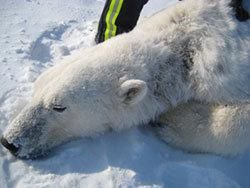
© USGSThis polar bear was sedated to study its fur loss and oozing sores on the left side of its neck.
Wildlife experts are studying whether fur loss and open sores detected in nine polar bears in recent weeks is widespread and related to similar incidents among seals and walruses.

The bears were among 33 spotted near Barrow, Alaska, during routine survey work along the Arctic coastline. Tests showed they had "alopecia, or loss of fur, and other skin lesions," the U.S. Geological Survey said in a statement. "The animals were otherwise healthy in appearance and behavior."

Blood and tissue samples were collected from the sedated polar bears to see if the symptoms are related to those seen in ringed seals and walruses.

Patchy hair loss has been seen before in polar bears, but the high prevalence in those spotted recently and the earlier seal and walrus incidents raise a concern, Reuters quoted Tony DeGange, the chief biologist for the USGS in Alaska, as saying.

"There's a lot we don't know yet," he said, "whether we're dealing with something that's different or something that's the same."

Comment: Ruling out Fukushima, the following is in reference to Radiation on the skin, using Radiation Therapy in this instance.

Moist Reaction

"Peeling skin during radiation therapy can lead to the formation of sores and ulcers, as noted by the National Cancer Institute. This happens more commonly in areas where there are skin folds, such as under the breasts or buttocks, and may also occur where the skin is thinner, such as the neck. If a patient develops an ulcer or sore, he should let the physician or nurse know so antibiotics can be prescribed if necessary."

Of course Fukushima can be ruled out.


Stop

Massive Dolphin Die-Off in Peru May Remain a Mystery

Image
© flickr/lowjumpingfrog
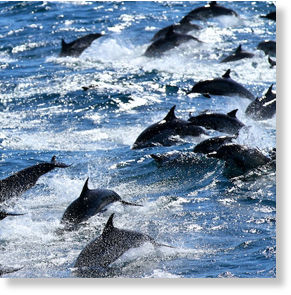
Thousands of dead or dying dolphins have washed ashore in Peru since January, a marine mystery potentially caused by a combination of stress, pollution and disease.

When a retired fisherman called to report that about 1,500 dolphins had washed up dead on Peru's northern coast, veterinarian Carlos Yaipén's first reaction was, "That's impossible."

But when Yaipén traveled up the coast last week, he counted 615 dead dolphins along a 135-kilometer stretch of coastline.

Now, the death toll could be as high as 2,800, based on volunteers' counts. Peru's massive dolphin die-off is among the largest ever reported worldwide.

The strandings, which began in January, are a marine mystery that may never be unraveled. Experts say the causes could be acoustic impact from testing for oil or perhaps an unknown virus or other pathogen. Little marine research takes place in Peru, and even in the United States, of 55 marine mammal strandings since 1991, the National Oceanographic and Atmospheric Administration (NOAA) has classified 29 as "undetermined."

Bizarro Earth

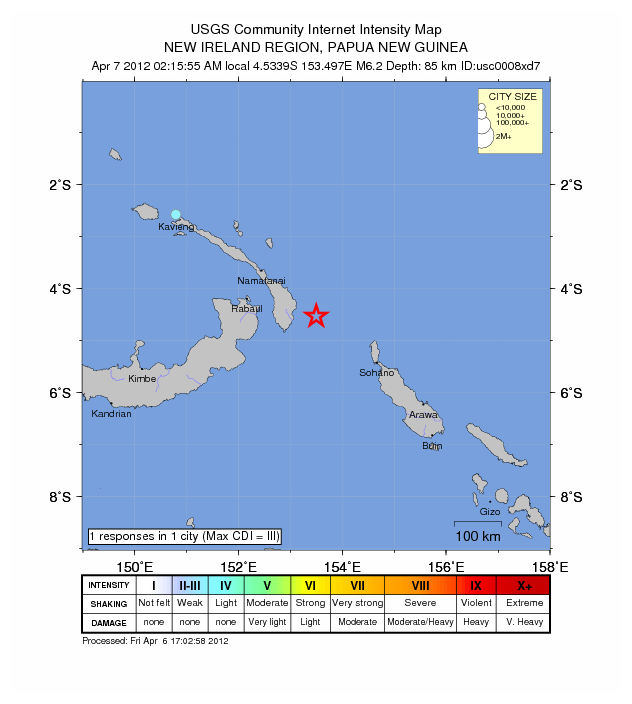
Papua New Guinea - Earthquake Magnitude 6.2

PNG Quake_060412
© USGSEarthquake Location
Date-Time
Friday, April 06, 2012 at 16:15:55 UTC

Saturday, April 07, 2012 at 02:15:55 AM at epicenter

Time of Earthquake in other Time Zones

Location
4.534°S, 153.497°E

Depth
85.4 km (53.1 miles)

Region
NEW IRELAND REGION, PAPUA NEW GUINEA

Distances
52 km (32 miles) E of Taron, New Ireland, PNG

150 km (93 miles) ESE of Rabaul, New Britain, PNG

884 km (549 miles) NE of PORT MORESBY, Papua New Guinea

2543 km (1580 miles) N of BRISBANE, Queensland, Australia

Attention

Fukushima's Radioactivity Found in California Kelp

Image
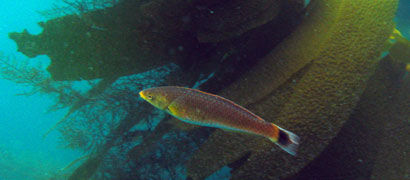
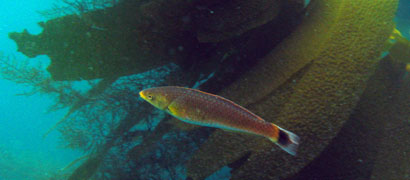
© Richard Ling/flickrSome radioactive material probably accumulated in fish that eat California's giant kelp – including señorita, pictured above. There is no data on what iodine 131, which has a half life of only eight days, might do to fish.
Kelp off Southern California was contaminated with short-lived radioisotopes a month after Japan's Fukushima accident, a sign that the spilled radiation reached the state's coastline, according to a new scientific study. Scientists tested giant kelp from the ocean off Orange County and other locations after the March, 2011 accident and detected radioactive iodine at peak concentrations 250-fold higher than levels found in West Coast kelp before the nuclear accident. "Basically we saw it in all the California kelp blades we sampled," said biology professor Steven Manley of California State University, Long Beach. The radioactivity had no known effects on the giant kelp, or on fish and other marine life, and it was undetectable when the kelp was tested again a month later. Iodine 131 "has an eight-day half life so it's pretty much all gone," Manley said. "But this shows what happens half a world away does effect what happens here. I don't think these levels are harmful but it's better if we don't have it at all."

Kelp off Southern California was contaminated with short-lived radioisotopes a month after Japan's Fukushima accident, a sign that the spilled radiation reached the state's urban coastline, according to a new scientific study.

Scientists from California State University, Long Beach tested giant kelp collected in the ocean off Orange County and other locations after the March, 2011 accident, and detected radioactive iodine, which was released from the damaged nuclear reactor.

The largest concentration was about 250-fold higher than levels found in kelp before the accident.

"Basically we saw it in all the California kelp blades we sampled," said Steven Manley, a Cal State Long Beach biology professor who specializes in kelp.

The radioactivity had no known effects on the giant kelp, or on fish and other marine life, and it was undetectable a month later.

Iodine 131 "has an eight-day half life so it's pretty much all gone," Manley said. "But this shows what happens half a world away does effect what happens here. I don't think these levels are harmful but it's better if we don't have it at all."

A year ago, Manley watched coverage of the tsunami and Fukushima accident and wondered what impact it might have on California's marine life, particularly his favorite subject matter - kelp.

Spread in large, dense, brown forests across the ocean off California, Macrocystis pyrifera, known as giant kelp, is the largest of all algae and grows faster than virtually any other life on Earth. It accumulates iodine so Manley realized it would be a useful dosimeter to check how far radioactive material spreads.

"Kelp forests are some of the most productive ecosystems on Earth," he said. "I thought this would be an opportunity because one thing about macrocystis is it has a large surface canopy," which means it is continually exposed to the air - and whatever contaminants are in it.

In addition, giant kelp concentrates radioactive iodine 10,000-fold - for every one molecule in the water there would be 10,000 in its tissues.

Kelp was collected at three sites off Orange County, as well as Palos Verdes Peninsula in Los Angeles County, Santa Barbara, Pacific Grove and Santa Cruz. The highest concentration of iodine 131 was found in the kelp off Corona del Mar, which receives runoff from a large portion of Orange County. Its kelp was collected on April 15 of last year and tested five days later.

X

China Builds Scores of Dams in Earthquake Hazard Zones

Image
© Marshall SegalWater rushes through the Three Gorges Dam on the Yangtze River in central China
More than 130 large dams built, under construction, or proposed in western China's seismic hazard zones could trigger disastrous environmental consequences such as earthquakes and giant waves, finds a new report from the Canadian watchdog group Probe International.

The report shows that 98.6 percent of the dams being constructed in western China are located in high to moderate seismic hazard zones.

The location of large dams near clusters of recorded earthquakes with magnitudes greater than 4.9, and especially when the earthquake focal points are also close to the surface, "is cause for grave concern," said the report's author geologist "John Jackson."

John Jackson is a pseudonym for a geologist with detailed knowledge of western China who wishes to remain anonymous to protect his sources.

In a worst-case scenario, Jackson reports, dams could collapse, creating a giant wave that would inundate everything in its path, including downstream dams, causing great loss of life and property.

Bizarro Earth

Dead Catfish at Boyne River Mouth

Dead Catfish
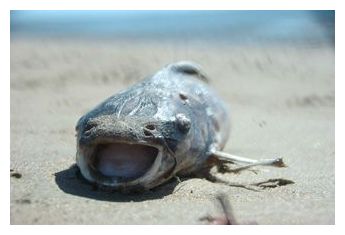
© David Sparkes / The ObserverMore than 100 dead catfish have been found at the Boyne River Mouth in recent days.

Mystery surrounds the appearance of more than a hundred dead catfish washed up at the Boyne River Mouth.

Residents have been finding the fish since Monday. Along the high tide line on Boyne Island, dead catfish were strewn every few metres along the high tide line from the morning before.

A spokesperson from the Department of Environment and Heritage Protection (DEHP) confirmed staff had inspected a section of the Boyne River on Monday and yesterday following reports of dead fish.

"Departmental staff have found over 100 dead catfish between the mouth of the Boyne River and the Bruce Highway bridge, approximately 20 kilometres south of Gladstone.

"The cause of death is currently unknown. Departmental staff are investigating and have conducted water quality monitoring and sampling.

"The water quality monitoring undertaken on 4 April 2012 identified reduced salinity levels due to freshwater inflow. All other monitoring results have found water quality is consistent with those of a healthy waterway."

Igloo

Carbon Dioxide Linked to End of Last Ice Age

CO2 and Ice Age
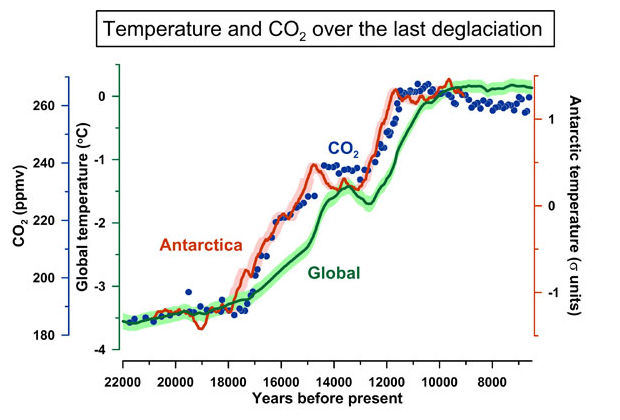
© Jeremy ShakunThis graph shows Antarctica warming up slightly before atmospheric carbon dioxide rose and well before global temperatures warmed. In a new study, researchers explain that a change in the Earth's orbit resulted in a change in ocean circulation that prompted the Antarctic to warm before the rest of the planet.

The circumstances that ended the last ice age, somewhere between 19,000 and 10,000 years ago, have been unclear. In particular, scientists aren't sure how carbon dioxide, a greenhouse gas, played into the giant melt.

New research indicates it did in fact help drive this prehistoric episode of global warming, even though it did not kick it off. A change in the Earth's orbit likely started of the melt, setting off a chain of events, according to the researchers.

The ambiguity about the end of the ice age originates in the Antarctic. Ice cores from the continent reveal a problematic time lag: Temperatures appeared to begin warming before atmospheric carbon dioxide increased. This has led scientists to question how increasing carbon dioxide - a frequently cited cause for global warming now and in the distant past - factored into the end of the last ice age. Global warming skeptics have also cited this as evidence carbon dioxide produced by humans is not responsible for modern global warming.

But the data from Antarctica alone offer too narrow a perspective to represent what was happening on a global scale, according to lead study researcher Jeremy Shakun of Harvard University.

"These ice cores only tell you about the temperatures in Antarctica where they are from, and if you think about today the same way, you don't want to look at one thermometer record from London or New York to prove or disprove global warming," Shakun said during a press conference on Tuesday (April 3).

Attention

Deadly Bacteria Lurk in Deepwater Horizon Tar Balls

Tarball
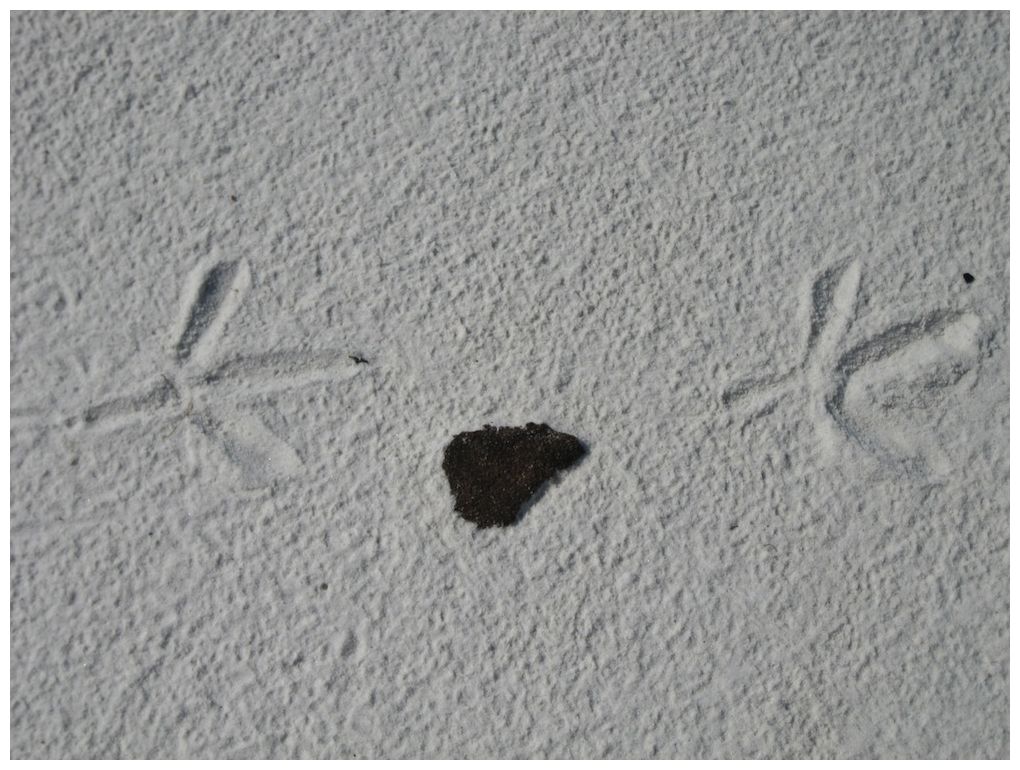
© Neal Parry, Regional Coordinator – Gulf of Mexico & Caribbean, Marine Debris Program, Office of Response and Restoration, National Ocean ServiceBird footprints over tarball, taken on 19 Aug 2010, Mississippi Sound (Petit Bois Island).
Nearly two years after the Deepwater Horizon disaster gushed millions of barrels of oil into the Gulf of Mexico, tar balls from the spill still turn up on Alabama's shores after storms. Now, one researcher is recommending that people steer clear of these tar balls after studies find them chock-full of potentially deadly bacteria.

In research published online November 2011 in the journal EcoHealth, Auburn University microbiologist Cova Arias and colleagues discovered that Deepwater Horizon tar balls found months after the spill contained high levels of bacteria, including 10 times the level of Vibrio vulnificus as found in the surrounding sand, a finding first reported by the Associated Press. V. vulnificus is the leading cause of seafood-borne disease fatalities nationwide, and it has a fatality rate of 20 to 30 percent when it infects skin wounds.

"We don't know what the real risk is at this point," Arias told LiveScience. But to be safe, beachgoers should avoid handling the tar balls, she said.

About 4.9 million barrels of oil, or 205 million gallons, spilled from a riser pipe in the seafloor after the Deepwater Horizon rig exploded and sank in late April 2010. Some of that oil persists in the Gulf in the form of tar balls.

Blackbox

Exploding Kitchen Tiles, Ground SWELLING in Watertown, WI


Binoculars

Tornado-Wrecked Dallas Begins Assessing Damage

Image
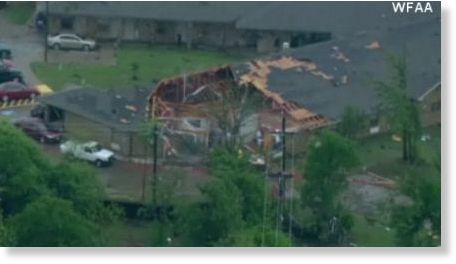
US: Dallas, Texas - The tornado hurtled toward the nursing home. Physical therapist Patti Gilroy said she saw the swirling mass barreling down through the back door, after herding patients into the hallway in the order trained: walkers, wheelchairs, then beds.

"It wasn't like a freight train like everybody says it is," said Gilroy, who rounded up dozens to safety at Green Oaks Nursing and Rehabilitation Center. "It sounded like a bomb hit. And we hit the floor, and everybody was praying. It was shocking."

A destructive reminder of a young tornado season Wednesday left thousands without power and hundreds of homes pummeled or worse Wednesday, after the National Weather Service said as many as a dozen twisters touched down in a wrecking-ball swath of violent weather that stretched across Dallas and Fort Worth. Despite the intensity of the slow-moving storms, as of late Tuesday no fatalities or serious injuries had been reported, though there were several less serious injuries.

The exact number of tornadoes Tuesday wasn't expected to be known until surveyors fanned across North Texas, looking for clues among the debris that blanketed yards and rooftops peeled off slats.

The Red Cross put a preliminary estimate of damaged homes at 650. In the southern Dallas suburb of Lancaster, where damage was especially widespread, around 150 people remained in a shelter Tuesday night.