Earth ChangesS


Bizarro Earth

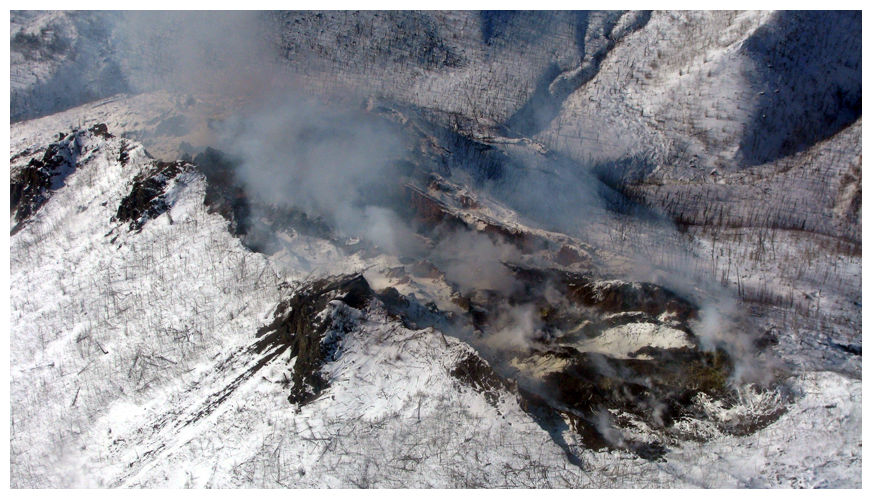
Mysterious underground fire perplexes Alaska town

Underground fire
© Ed Christensen/National Parks ServiceThe people of Eagle, Alaska, are getting worried about an underground fire 40 kilometres outside of town that's been burning and spewing noxious smoke for more than a year.
Residents of Eagle, Alaska, are getting worried about possibly toxic gases wafting into town from a mysterious underground fire on a nearby mountain that's been burning for almost a year.

Nobody seems to know exactly what's burning. Experts suspect it's either a volcano forming or natural gas or oil burning in underground shale deposits. Whatever it is, the fire has been burning on a remote mountaintop, about 40 kilometres north of the community since last October at least.

When the wind is right, residents can smell noxious smoke all over town.

Comment: The planet is opening up!

This is further evidence that SOTT is on the right track about 'climate change': *localized* warming, within an overall trend of global cooling, is the result of increased volcanic and subterranean activity.


Red Flag

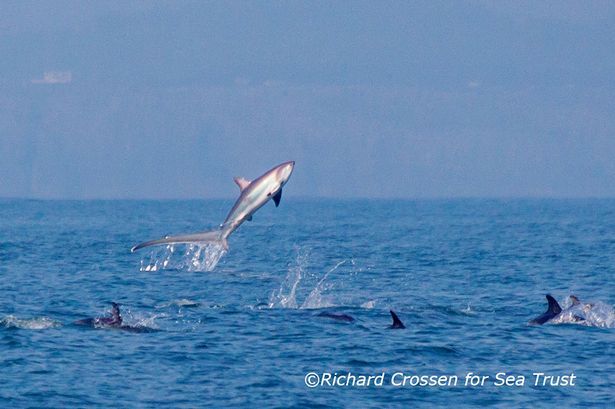
Rare thresher shark pictured leaping from water off Welsh coastline

Shark, believed to weigh 1,000lb and be up to 16ft in length, spotted among pod of dolphins off Welsh coastline on Monday

Image
© Richard Crossen/Sea TrusThe thresher shark off the coast of Milford Haven
A huge shark has been sighted leaping from the water among a group of hundreds of common dolphins just off the coast of Pembrokeshire.

This spectacular photograph of the rare thresher shark was taken from half a mile away off Milford Haven, by a photographer who was surveying dolphins in the outer Bristol Channel with the Sea Trust.

Sea Trust director Cliff Benson, who was also on the boat, said: "It was a good sized animal. I would say its body was at least eight to ten feet long and its tail was another five to six feet long. It would have weighed at least 1,000lb."

He added: "This was an extremely rare sighting. Unlike dolphins, which breathe air, sharks rarely come to the surface of the water. If you offered to pay someone £1,000 to get a photograph like this, they would not be able to."

The shark was seen on Monday afternoon, among a pod of several hundred dolphins - many of which had small calves.

Arrow Down

Avian botulism killing thousands of waterfowl; molting birds cannot leave Tule Lake refuge, California

Thousands of birds are dead and dying in wildlife refuges south of from avian botulism.
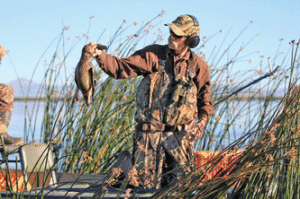
The botulism has spread mostly to mallards, which are being fished out daily by refuge staff and volunteers riding in fan boats.
Image
© Steven Silton

Drought conditions have relegated flightless waterfowl to limited habitat in Tule Lake in lieu of the larger, but currently dry, Lower Klamath Lake.

"When ducks molt, they lose all their flight feathers and are completely flightless for about a month," said refuge biologist Dave Mauser. "It doesn't help that for a month they're stuck in a marsh with disease."

Windsock

Mile-high dust storm engulfs Phoenix, Arizona

Phoenix is left blanketed in grit after the Arizona city was enveloped by a massive sand storm.


A towering wall of dust blew over the city of Phoenix on Monday caused by thunderstorms in western Arizona.

Visibility in the area dropped below a quarter of a mile as winds of up to 60mph downed power lines and trees.

Arizona's monsoon season lasts from June to October. In recent years it has produced massive dust storms, known as "haboobs", sometimes stretching over 100 miles.

Snowflake Cold

Rare late August snowstorm for Iceland

"A very well organised and unusual storm for late August."

"(A low) will cross Greenland mid week and sets it's sights on Iceland Friday into Saturday, deepening on approach," says Mark Vogan Blog. "This system will have some very cold air attached and while strong to gale force winds will likely be a significant feature, the most noteworthy aspect to this storm which pressure down to the mid 970s in millibars, could be the cold temperatures and snow"

"...this looks to be a very well organised and unusual storm for late August even though this fairly high latitude can and does seen deep lows at this time of year. It's the cold that comes with it which could well grab weather headlines this weekend bringing a rare late August snowstorm to Iceland.

http://www.markvoganweather.com/2013/08/26/iceland-storm-snow-potential-uks-first-taste-autumn/

Thanks to Ralph Fato for this link

Bizarro Earth

USGS: Earthquake Magnitude 6.1 - NW of Raoul Island, New Zealand

Raoul Island Quake_280813
© USGS
Event Time
2013-08-28 02:54:41 UTC
2013-08-28 14:54:41 UTC+12:00 at epicenter

Location

27.795°S 179.672°E depth=488.6km (303.6mi)

Nearby Cities
288km (179mi) NW of Raoul Island, New Zealand
902km (560mi) SW of Nuku'alofa, Tonga
1014km (630mi) NNE of Whangarei, New Zealand
1076km (669mi) S of Suva, Fiji
1100km (684mi) NNE of North Shore, New Zealand

Technical Details

Cloud Precipitation

Mudslides and flash flooding kill 14 in eastern Mexico


More than a dozen people have died in eastern Mexico, in landslides triggered by heavy rain caused by tropical depression Fernand.Thirteen people were killed when mud engulfed their homes on hillsides in Veracruz state.Another man drowned after being swept away by fast-flowing flood waters in neighbouring Oaxaca.

Fernand made landfall near the Atlantic port city of Veracruz on Monday and weakened as it moved north-west.Veracruz Governor Javier Duarte has asked the federal government to declare an emergency in 92 municipalities, so they can receive recovery funds.

Phoenix

9 scary facts about the Yosemite fire

Just another wildfire? Nope. This one's different. Here's why.

No one knows what started the Rim Fire, the 160,000 180,000 acre blaze that's ripping through the western side of Yosemite National Park. But nearly 4,000 firefighters have been dispatched to try to stop it using helicopters, bulldozers, and flame retardants. Although the situation is starting to look up - 20 percent of the fire is now contained, up from 7 percent just two days ago - the authorities predict the fire will keep spreading, and fast, in days to come.

There are many reasons to be concerned about such a fire in Yosemite, even if you don't live in California: For starters, it's in our premier national park. Yosemite, which is about the size of Rhode Island, sees around 4 million visitors per year and is home to iconic groves of sequoia trees, endangered species like the California bighorn sheep, and some of the most famous peaks in the country, such as Half Dome and El Capitan. But the very things that make Yosemite so beautiful - its pristine condition, steep ravines, and tall trees - are also fueling this fire and making it difficult to contain.

Bomb

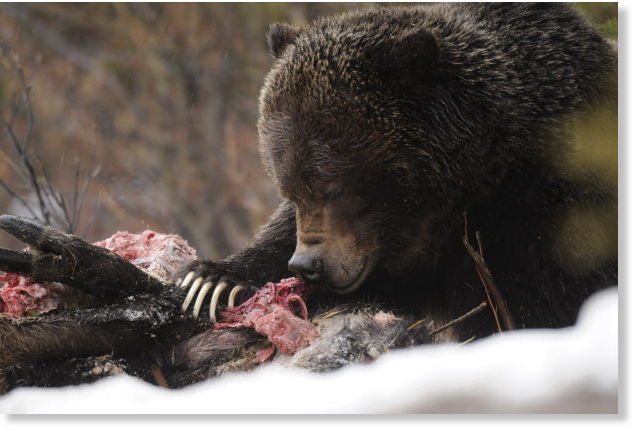
A grizzly bear ate a black bear in Banff

Image
© Dan Ralfa, Parks Canada/Calgary HeraldGrizzly Bear #122 feeding on a moose carcass. The picture was taken in April 2013.

Never get between No. 122 and his dinner - or you might become his dinner.

That's the large male grizzly bear in Banff National Park who earlier this month ate a black bear.

Officials reopened the the Sundance Canyon area in Banff National Park on Tuesday after they were sure No. 122 had moved on. A group of hikers stumbled upon the giant bear feasting on a carcass earlier in August, which an investigation by park officials revealed to be the remains of a small black bear.

"It had been completely consumed," Steve Michel, a human wildlife conflict specialist with Banff National Park, told the Calgary Herald. "There was nothing remaining other than a skull, a hide, the four paws and some bones."

Sherlock

Scientists find culprit for mysterious dolphin deaths

Image
© Unknown
Nearly 500 dolphins have washed up on the eastern seaboard this year, almost four times the usual number, and the mystery has left many oceanographers scrambling for possible causes. But after intensive testing, the National Oceanic and Atmospheric Administration has found a likely culprit: morbilivirus. It's a measles-like contagion that can cause pneumonia-like symptoms in dolphins, and has been linked to previous die-offs in 1988 and 1992. NOAA is reporting that all of the 27 carcasses they've examined have either tested positive for the disease or are suspected for infection based on visible symptoms.