Earth ChangesS


Igloo

Colder weather heads for U.S. as ice set to coat Texas

Image
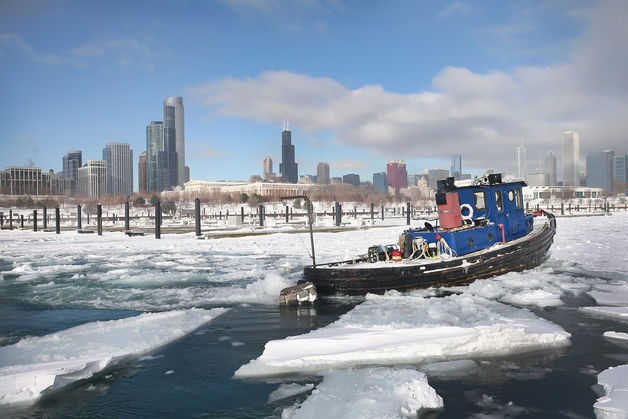
© Scott Olson/Getty ImagesThe tugboat Commissioner breaks up ice in Burnham Harbor near the Loop on January 21, 2014 in Chicago, Illinois. Temperatures in Chicago fell lower than the South Pole this month as freezing weather boosted energy consumption, grounded thousands of flights across the U.S. and disrupted operations at refineries and natural gas production sites.
Parts of southern Texas may get a rare coating of ice as temperatures plunging across the U.S. portend an even sharper cold snap to come.

Temperatures across the eastern U.S. and parts of Ontario and Quebec will be at least 8 degrees below normal through Jan. 27, said Matt Rogers, president of the Commodity Weather Group LLC in Bethesda, Maryland. Next week will be colder, he said.

"The crazy thing is that the current cold snap this week looks to be a bit more modest in the face of next week's outbreak," Rogers said. "The cold coming for the end of January is sufficient to make this the coldest month of the century so far and the coldest the Lower 48 has felt in at least 20 years."

Temperatures in Chicago fell lower than the South Pole this month as freezing weather boosted energy consumption, grounded thousands of flights across the U.S. and disrupted operations at refineries and natural gas production sites.

The natural gas-weight heating degree days value for January is expected to reach 1,062.9, higher than the five-year average of 949.5 and the coldest since 2001, Rogers said.

The value is determined by subtracting the daily average temperature from a base of 65 degrees Fahrenheit, the resulting number is a measure of how cold it is and how much energy is needed to keep homes and warm.

Cold Front

"A wave of low pressure along the cold front currently settling into the southern states is expected to spread a rare coating of ice across southeast Texas and southwestern Louisiana," the National Weather Service said.

Extinguisher

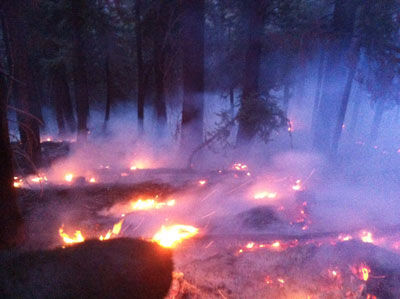
'Unprecedented' for January: Wildfire breaks out in middle of the night in cold mountains of California

Image
© North Lake Tahoe Protection District
Firefighters have contained a small wildland fire that flared up north of Incline Village early Friday morning.

Firefighters with the cold mountains of California Fire Protection District first got a report of the fire around 2:30 am.

It was burning above the Allison Subdivision near Ralston Court and Jennifer Street.

Crews took more than an hour and a half to reach the fire's edge after hiking about a mile through thick and heavy vegetation.

And they got it contained pretty quickly, though it continued to put up smoke for a while afterward.

Firefighters say our drought conditions can mean fires can start even in January. "This is one of the driest water years on record, this is really unprecedented for this area. Hopefully we get some moisture soon," says John Washington of the U.S. Forest Service.

Firefighters urge campers to only light campfires in designated campgrounds, and say it's important for homeowners to create defensible space around their property.

No structures were threatened.

The U.S. Forest Service has taken command of this fire.

The cause remains under investigation. If anyone has information regarding this incident, call Assistant Fire Marshal, Mark Regan at 775-461-6200.

Snowflake

Kashmir remains cut off due to heaviest January snowfall in a decade

Kashmir snowfall
© Unknown
Kashmir remained cut-off from the rest of the country for the second day today with road and air links to the Valley snapped due to snowfall, the heaviest in a decade in the month of January.

The Srinagar-Jammu National Highway was closed for traffic, while no flights operated from the airport here following heavy snowfall yesterday. However, there were no reports of fresh snowfall from any part of the Valley during the night.

"The national highway is closed for traffic today. No vehicle will be allowed to ply on the road," a Traffic Department spokesman said here.

He said the 294-km arterial highway - the only road-link between Kashmir Valley and the rest of the country - was being cleared of snow and could be made motorable later in the day.

No flights to and fro Srinagar Airport operated yesterday due to continuous snowfall. However, there are chances of the airport being made operational in the afternoon.

Phoenix

More winter wildfire weirdness as forest fires break out in Oregon

Image
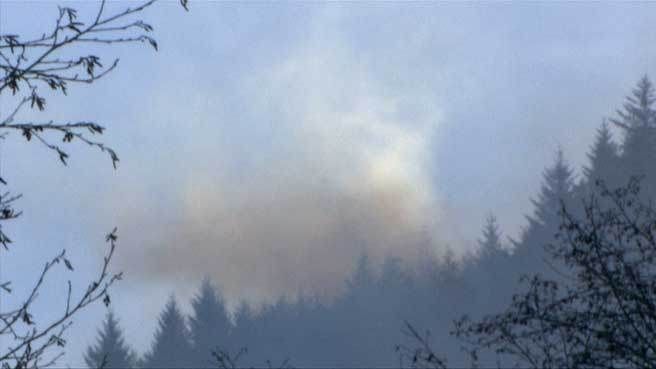
© KOIN 6 NewsTwo wildland fires, with a total size of 125 acres, are burning along the Oregon Coast near Arch Cape, which is south of Cannon Beach, Jan. 24, 2014
The Oregon Department of Forestry confirms two wildland fires, with a total size of 125 acres, are burning along the Oregon Coast near Arch Cape, which is south of Cannon Beach.

The Shingle Fire was first reported at around 10 a.m. Thursday on private timberland. As of 9:45 a.m. Friday, crews estimated the fire to be about 25 acres in size. The Falcon Fire, which likely spawned off the Single Fire, was reported shortly after 10 p.m. Thursday in the same general area. The fire has grown in size to an estimated 100 acres, according to ODF spokesman Tom Bennett. Both were still burning as of 9:30 a.m. Friday.

Both the Shingle and Falcon fires rekindled from slash burns, officials told KOIN 6 News.

The fire area is located near the tunnel that leads to Arch Cape. There have been no evacuations as no structures are threatened. The closest structure was more than two to three miles east of the fires, Bennett said. Residents in some coastal towns should expect smoky conditions. Firefighters had hoped a logging road would help stop the spread of the Falcon Fire. However, the wind allowed it to jump the road.

Comment: Sure, it's 'mild' in Oregon relative to the extreme cold in the eastern US, but it's still only reaching daytime highs of 11C!

See also:

Winter wildfire weirdness continues as warnings spread to chilly Arkansas

While East Coast freezes, West Coast burns: crews battle wildfire in Rural Placer County, California


Bizarro Earth

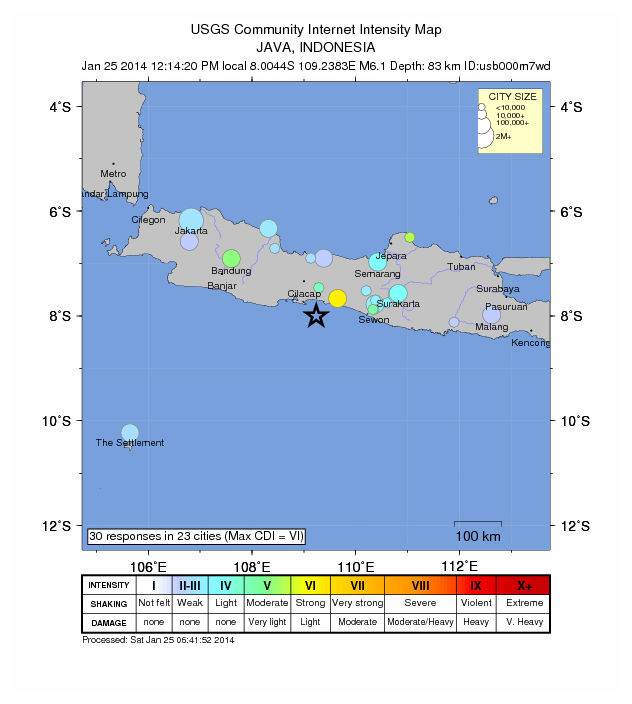
USGS: Earthquake Magnitude 6.1 - 39km SSE of Adipala, Indonesia

Adipala Quake_250114
© USGS
Event Time
2014-01-25 05:14:20 UTC
2014-01-25 12:14:20 UTC+07:00 at epicenter

Location
8.004°S 109.238°E depth=83.2km (51.7mi)

Nearby Cities
39km (24mi) SSE of Adipala, Indonesia
41km (25mi) S of Kroya, Indonesia
53km (33mi) SW of Gombong, Indonesia
54km (34mi) S of Banyumas, Indonesia
330km (205mi) SE of Jakarta, Indonesia

Technical Details

Heart - Black

Radioactive waste dumped by oil companies is seeping out of the ground in North Dakota

Radioactive Waste
© AlterNet

After oil companies and state executives in North Dakota hid the news from the public that nearly 300 oil spills occured between 2011 and 2013, radioactive toxic sludge is brimming back up to the surface, bubbling forth from the ground and mixing with fresh water across the state.

In late 2013, the shale oil industry in North Dakota received national attention when a train carrying explosive "Bakken" oil derailed and exploded near the town of Cassleton on December 30. Eighteen rail cars attached to the train also spilled 400,000 gallons of crude oil--one of the biggest spills ever recorded in the United States.

The train accident, along with the hundreds of other spillages over the last two years, was symptomatic of the hydraulic fracturing fever that has gripped the North Dakota since 2006, when a petroleum geologist discovered a massive oil field producing from the Bakken rock formation deep beneath the western part of the state.

North Dakota is now the number two oil producer in the country (behind Texas), and it is producing about a million barrels of oil a day. Environmentalists say the speed of the boom has not only encouraged sloppy practices that lead to spills, but has also resulted in a proliferation of illegal chemical dumping in landfills and fracking wells.

Stop

Russia predicts Far East tsunami in 2014

Image
© RIA Novosti. Vladimir FedorenkoRussia Predicts Far East Tsunami in 2014
Russia's Emergencies Ministry warned Friday that an earthquake and ensuing tsunami are expected to hit Russia's Far East this year.

The earthquake is predicted to strike off the southwestern coast of Sakhalin Island, to the north of the epicenter of a 2007 quake in the town of Nevelsk, the ministry said.

It was not immediately clear when the tsunami was expected, or whether it would pose any danger to local residents. The Nevelsk quake killed two people, injured dozens and left some 2,000 people homeless.

Fish

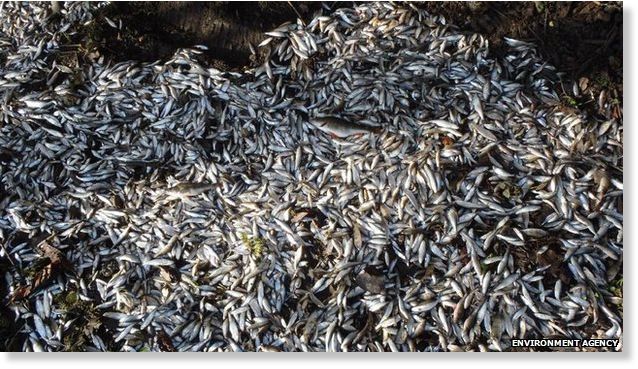
UK: River Thames fish found dead after Goring flood levels recede

Thames Fish Dead
© Environment AgencyMany of the fish found in Goring following receding flood waters were juveniles
Thousands of trapped fish have been found dead on land near the River Thames after flood waters receded.

A mixture of perch, roach, dace, ruffe and minnow were found on Goring farmland in Oxfordshire on Thursday.

The Environment Agency (EA) said the unusual incident was due to the "severity and longevity" of the floods.

Fisheries officer Tom Sherwood said he urged the public to report any fish found in trapped areas.

Igloo

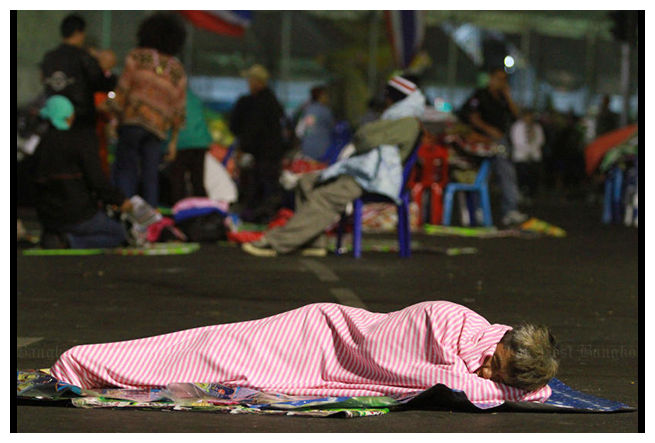
Death toll mounts as unusually long Thai cold spell continues

Cold Spell_1
© The Bangkok Post
The unusually long cold spell across the North, Northeast and Central regions has killed 63 people in the past three months and Bangkok has suffered its coldest night in three decades.

Sophon Mekthon, director general of the Disease Control Department, said on Thursday that the 63 fatalities were reported in 27 provinces between Oct 22, 2013 and Jan 19, 2014.

Most of the fatalities were men. The youngest was a one-month-old baby and the oldest was 81 years old. A Cambodian and a British national were among the victims.

The northern border province of Chiang Rai had the most deaths, with six, followed by Sa Kaeo and Nakhon Ratchasima in the Northeast with five each.

Forty-five provinces have been declared cold-spell disaster zones and more than 25 million people have been affected by the cold weather.

Ice Cube

Fox becomes latest to freeze solid in Scandinavia's lakes, following fish and moose

Image
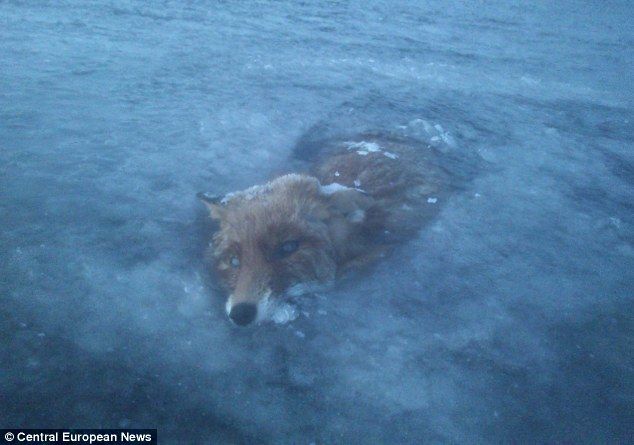
The fox was found frozen solid in the ice on a lake in southern Sweden
A fox has become the latest victims to the freezing temperatures on Scandinavia's waters as it was found frozen solid in a lake in southern Sweden.

The animal was discovered by a skater on Lake Bunn, near Jönköping, who originally thought it was a piece of foam rubber, but found the poor fox dead in the ice with its head just above the surface.

It follows recent 'animal ice deaths' in Scandinavia, where an entire shoal of fish were photographed off the coast of Norway just days after a moose had suffered the same fate.