Earth ChangesS


Bizarro Earth

Earth's magnetic field is weakening 10 times faster now

Earth's Magnetic Field
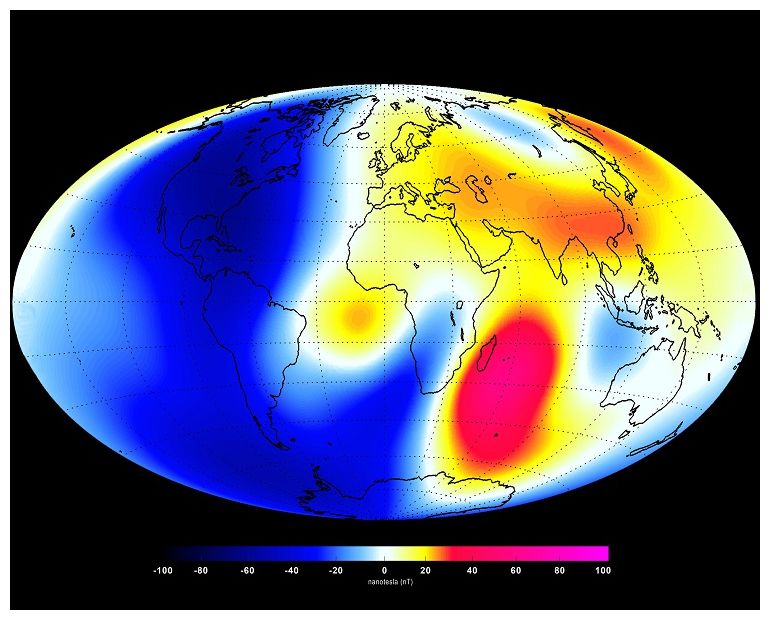
© ESA/DTUChanges measured by the Swarm satellite over the past 6 months shows that Earth's magnetic field is changing. Shades of red show areas where it is strengthening, and shades of blue show areas that are weakening.
Earth's magnetic field, which protects the planet from huge blasts of deadly solar radiation, has been weakening over the past six months, according to data collected by a European Space Agency (ESA) satellite array called Swarm.

The biggest weak spots in the magnetic field - which extends 370,000 miles (600,000 kilometers) above the planet's surface - have sprung up over the Western Hemisphere, while the field has strengthened over areas like the southern Indian Ocean, according to the magnetometers onboard the Swarm satellites - three separate satellites floating in tandem.

The scientists who conducted the study are still unsure why the magnetic field is weakening, but one likely reason is that Earth's magnetic poles are getting ready to flip, said Rune Floberghagen, the ESA's Swarm mission manager. In fact, the data suggest magnetic north is moving toward Siberia.

"Such a flip is not instantaneous, but would take many hundred if not a few thousand years," Floberghagen told Live Science. "They have happened many times in the past."

Cloud Lightning

Japan battered by 50ft high waves as 155mph Typhoon Neoguri hits land - 600,000 advised to leave

Image
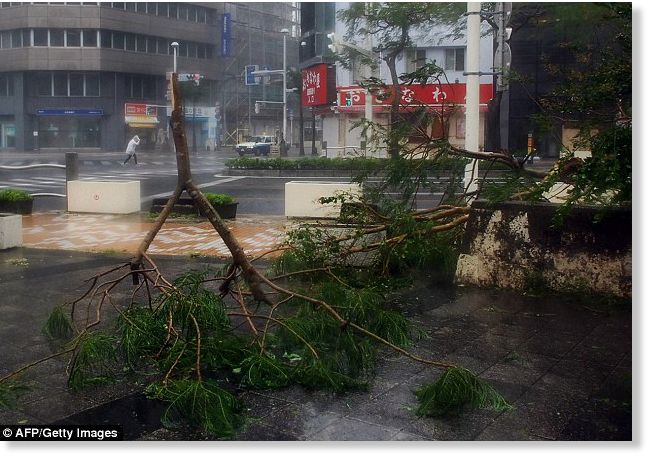
Ripped apart: The streets of Naha, on the southern Okinawa Island, were strewn with debris as tree branches were ripped apart by Typhoon Neogrui
A powerful typhoon has pounded southern Japan as residents took refuge from destructive winds, towering waves and storm surges.

Airports closed and residents were evacuated from low-lying areas and shorelines as Typhoon Neoguri was passing through the islands comprising the southern Okinawa prefecture.

The storm has sustained winds of 108mph per hour and gusts up to 154mph, the Japan Meteorological Agency said.


Comment: This year has already seen a large increase in the number of big storms reported across the globe as compared to 2013. See chart below.


Cloud Lightning

Heavy hailstorm damages windows and trees in Sofia, Bulgaria

Image
© BGNES/Gergana Kostadinova.Extremely heavy hailstorm hit Sofia, Tuesday afternoon.
A powerful hailstorm hit Bulgaria's capital city of Sofia, Tuesday afternoon minutes before 5 o'clock.

Pieces of ice the size of a walnut poured down for more than ten minutes without stopping. The disastrous hail has broken tens of cars' windshields, windows of buildings, tree branches all over the city.

The downpour caused traffic jams in the city center. Some of the main streets have been flooded and traffic is hampered.


Cloud Lightning

Reports of extreme hailstorms in North America and Europe

Image
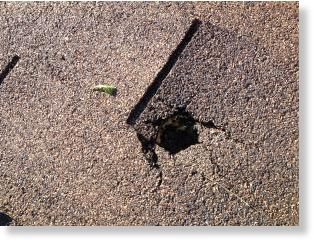
© Norman LucasA hole in Norman Lucas' roof caused by baseball sized hail.
"This is Mini-Ice-Age/Wild Jet Stream Age stuff," says astrophysicist Piers Corbyn.

------------------------------------------------------------------------------------------------------------------

"The news about damage caused by very large hail keeps popping up on the Internet," says reader Argiris Diamantis. "People are hiding in their basements because of the giant hail stones."

-----------------------------------------------------------------------------------------------------------------

Hailstones as big as softballs

Three people sustained head injuries on Saturday afternoon near a lake west of Bismarck, North Dakota after a severe storm dropped hailstones as large as softballs.

Hailstones of this size can be fatal. Luckily, it's been 14 years since the last known fatality directly caused by hail in the United States.

A hailstone slightly larger than a baseball can fall at a rate of more than 100 MPH according to NOAA, so it's a surprising fact that more people aren't injured or killed by hailstorms more often.

Hail Seriously Injures Three in North Dakota

Alarm Clock

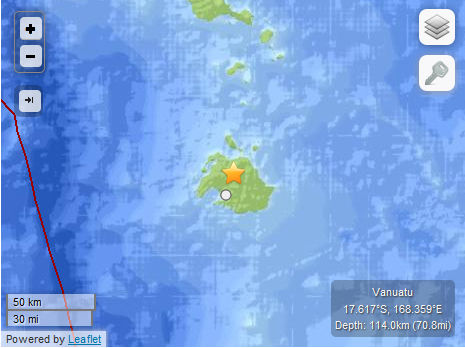
USGS: Earthquake Magnitude 6.3 - 13km NNE of Port-Vila, Vanuatu

Earthquake 6.3 Vanuatu
© USGS
Event Time
2014-07-08 12:56:26 UTC
2014-07-08 23:56:26 UTC+11:00 at epicenter

Location
17.617°S 168.359°E depth=114.0km (70.8mi)

Nearby Cities
13km (8mi) NNE of Port-Vila, Vanuatu
263km (163mi) SSE of Luganville, Vanuatu
382km (237mi) NNE of We, New Caledonia
540km (336mi) NNE of Dumbea, New Caledonia
13km (8mi) NNE of Port-Vila, Vanuatu

Scientific data

Bizarro Earth

Vast majority of some 2,500 earthquakes in Oklahoma the last five years linked to fracking

Image
© AFP Photo / David McNew
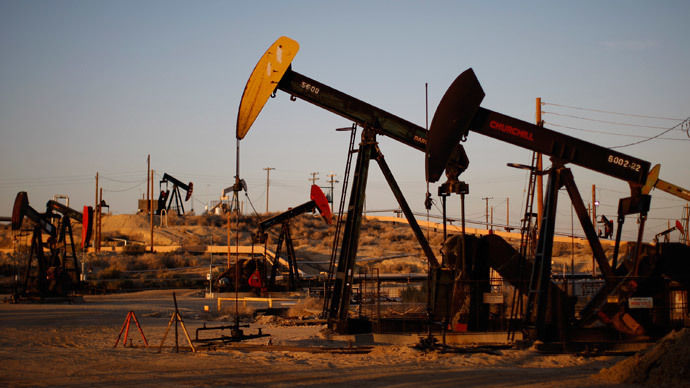
The last five years have seen Oklahoma experience more than 2,500 earthquakes - the vast majority of which are being connected to the oil and gas exploration process of fracking.

Although past studies have also suggested Oklahoma's earthquake spike is related to fracking, this is the first time scientists have pinned such numbers to the controversial procedure. Notably, they found that fracking could also be responsible for earthquakes occurring nearly 20 miles away from drilling and waste deposit sites.

According to Scientific American, Oklahoma has seen more than 230 earthquakes registering magnitudes of 3.0 or higher in this year alone. Before 2008, the state only averaged one of these earthquakes a year.

In a report published by the journal Science, researchers from Cornell University and the University of Colorado found that roughly 20 percent of all the earthquakes that occurred in the central and eastern United States were caused by activity at just four fracking wells situated near the town of Jones, Oklahoma.

Bizarro Earth

Kamchatka volcano spews new ash plume 8 km into sky

Shiveluch Volcano
© Vesti.Ru
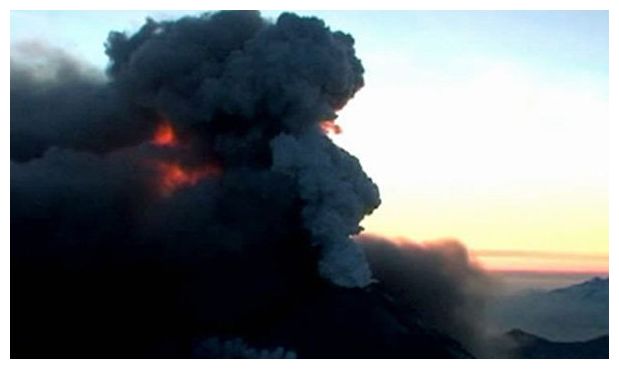
Shiveluch, one of the largest and most active volcanos of Russia's far-eastern Kamchatka Peninsula, has spewed a plume of ash as high as 8 km into the air, the Kamchatka Emergency Service reported on Sunday.

"The wind is driving the ash cloud southeastwards. There are no populated centers along its path," the report says.

Although no ash fallouts have been registered in the Ust-Kamchatsky district, rescuers have recommended tourist operators to cancel tours in the vicinity of the volcano. The orange-level volcanic alert has been issued for aircraft flying over the peninsula.

It's the second ash plume ejected by Shiveluch since the beginning of July. On July 1, a cloud of ash shot up 7 km above sea-level. The town of Klyuchi with a population of 5,000 is the nearest community to the 2,500-high volcano, 45 km away from it.

After Shiveluch intensified in May 2009, a crack about 30 m deep appeared in its dome.

Cloud Lightning

Astronaut films amazing lightning footage from Space Station

American astronaut Reid Wiseman is currently orbiting the Earth aboard the International Space Station, and has been sending a steady stream of fascinating photos and videos of his home planet.

In this Vine, he captured hypnotic lightning flashes from within a thunderstorm above Houston, Texas.


Cloud Precipitation

Recent Brazil flood evacuees increase tenfold to over 50,000

Recife flood
© AFPPeople wait to cross a flooded street during a torrential rain in Recife on June 26, 2014 during the 2014 FIFA World Cup in Brazil
Severe flooding caused by a week of torrential rain in southern Brazil has forced more than 50,000 people from their homes, officials said Sunday, increasing an earlier estimate almost tenfold.

The emergency agency for Santa Catarina state said 40,000 people had been forced to leave their homes, while neighboring Rio Grande do Sul said 10,700 people had evacuated, revising earlier estimates as the extent of the damage became clear.

Windsock

'Once in decades' super typhoon Neoguri to hit Japan, emergency warnings issued

Typhoon Neoguri
© NASAAn image from NASA's Terra satellite shows Typhoon Neoguri in the Pacific Ocean approaching Japan. Waves of up to 14 metres (46 feet) are expected.
Japan's weather agency on Monday issued emergency warnings to urge people in the country's southern islands to take maximum precautions as a super typhoon described as a "once in decades storm" is set to rake the Okinawa island chain with heavy rain and powerful winds.

Typhoon Neoguri was already gusting at more than 250 km an hour (150 mph) and may pick up still more power as it moves northwest, growing into an "extremely intense" storm by Tuesday, the Japan Meteorological Agency (JMA) said.

But it was not expected to be as strong as Typhoon Haiyan, which killed thousands in the Philippines last year.

Comment: For more on the growing trend towards weird weather and climate extremes see:
SOTT Earth Changes Video Summary - June 2014