Getting out of the water at my local surf break in Pacifica, a beach town just south of San Francisco, I went to rinse off my wet suit and surfboard at the oceanfront showers, only to find this sign: "Due to the drought the available shower heads are reduced. Please limit shower time."
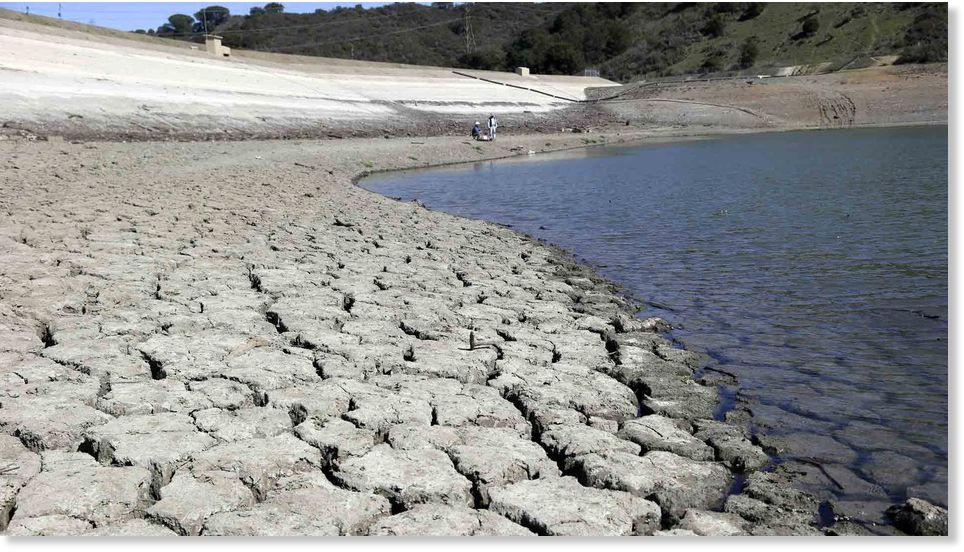
Yes, you can laugh that California's epic drought is even hitting people who spend their time in the water. Or that, finally, urban dwellers are feeling the pinch of an environmental catastrophe that has devastated the state's farms and ranches.
Yet the move by Pacifica to shut off showers at popular surf spots is a sign that coastal cities, where the bulk of California's population resides, are belatedly getting serious about saving water. And a new report from the California Water Resources Control Board shows that such efforts are making a difference.
For instance, the North Coast County Water District, which serves Pacifica's 39,000 residents, has cut its water consumption 26 percent in August compared with the previous year. That means on average, each Pacifica resident used about 2,434 gallons of water in August, compared with 3,283 gallons in August 2013.
That helped California cut statewide water consumption by 11.5 percent in August, up from 7.5 percent in July, and 4 percent in June compared to the previous year, according to the report.










Comment: These little foraminiferas seem to be the hot ticket item in oceanic research of late. They are also being studied for ocean temperature variants (see Warm Gulf Stream water continued to flow into icy Nordic seas during last Ice Age)
Even with the iodate application analyzing iodine-to-calcium ratios, the findings are first and foremost still estimates. It is unclear from this article as to whether the foraminiferas are the only defining edge considered in this comparison. It is also unlikely that this research could historically stretch the findings to broad-stroke a human influence on global warming, since this would "theoretically" be the first-of-its-kind "climate alteration" along with the falsely maligned culprit CO2. (Unbiased research shows global warming is happening at this time to all the planets in the solar system.) If the OMZs are present, and have been periodically for eons, it may be due to repeated cycles of a grander nature than the comparatively recent meddling of human activity.
It is more likely that methane released into the oceans (increasingly happening NOW) would overwhelm any influence added CO2 could have to produce a warming effect. Methane is 21 times more potent a greenhouse gas and, by the way, greatly affects the level of oxygenation in both deep and shallow ocean waters since the aerobic oxidation of methane consumes oxygen. Methane-caused oxygen depletion has been proven to create or expand OMZs.