Earth ChangesS


Ice Cube

Cold snap sets records in several districts of south Florida

Image
The National Weather Service says brisk temperatures Sunday in the Naples area have broken the previous record.

Temperatures in the area only reached a high of 71 degrees, which makes it the area's coolest high temperature since 1962, when the high topped out at 75 degrees, said Barry Baxter, a meteorologist at the National Weather Service.

Temperatures in South Florida and the Keys also have broken records.

The temperature fell morning to 52 degrees in Miami, breaking the previous record of 54 degrees in 1993. In West Palm Beach, the temperature dipped to 49 degrees, below the previous record of 51 degrees in 1993.

The low temperature in Key West fell to 61 degrees, breaking the previous record of 62 degrees set in 1957.

Temperatures only reached a high of 71 degrees in Miami, breaking a record set at 73 degrees in 1949. In West Palm Beach, temperatures peaked at 69 degrees, breaking the 1964 record of 72.

Cloud Precipitation

Southcentral Europe hit by severe weather, heavy rain and floods

Image
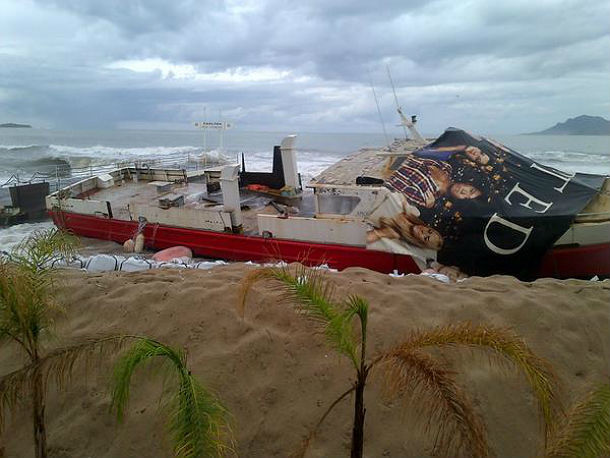
© Eyten BendennoueDamage after storm impacted beach near Cannes on November 4, 2014.
Parts of southern and central Europe were hit by severe weather over the last 5 days. The storm system already delivered heavy rainfall to parts of southern France, southern Switzerland, northern Italy, western Austria, western Slovenia and northwestern Croatia.

Rainfall in excess of 175 mm (7 inches) inundated Nice, France. A 300 mm of rain was recorded in Kotschach, Austria and at the same time, 265 mm (10.5 inches) fell in Cevio, Switzerland. The system also delivered heavy snowfall in western Alps. Over 91 cm (36 inches) of snow was recorded at Andermatt, Switzerland.

More torrential rainfall is expected in northeast Italy, southern Austria and Slovenia on November 8, 2014.

Comment: See also: 'Flood of extremes' - Earth changes in the last month


Cloud Lightning

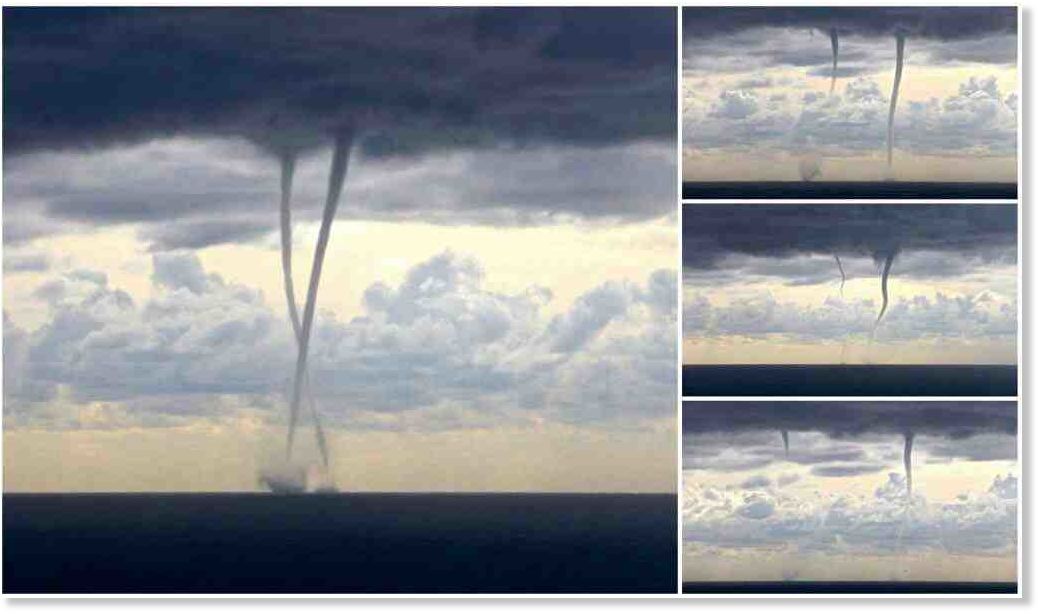
Two waterspouts filmed off Ligurian coast, Italy

Image
© YouTube/liguriainside
Two waterspouts formed simultaneously off the coast of western Liguria, Italy, on November 6, as a thunderstorm moved through the area. Both dissipated before reaching land. The waterspouts were viewable from Diana Marina, Cervo and Andora, according to a local report. This footage was recorded from Diana Marina.


Bizarro Earth

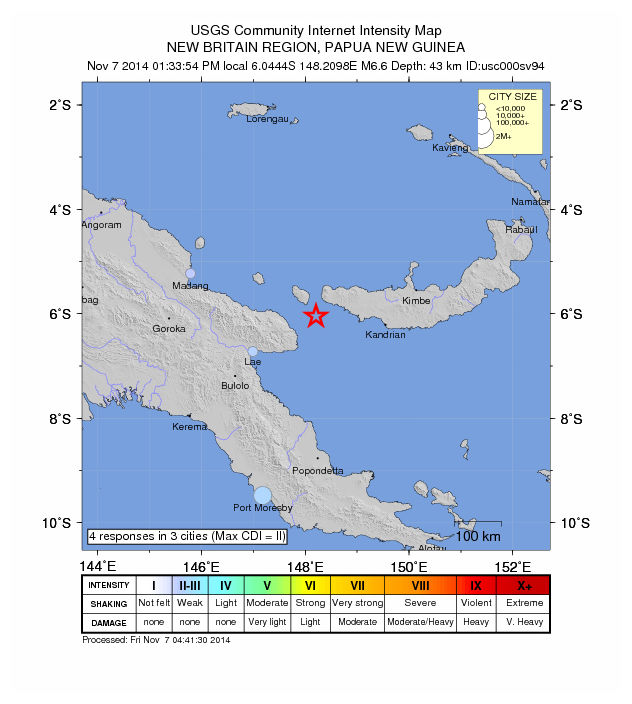
USGS: Earthquake Magnitude 6.6 - 72km NNE of Finschhafen, Papua New Guinea

Finschhafen Quake_071114
© USGS
Event Time
2014-11-07 03:33:54 UTC
2014-11-07 13:33:54 UTC+10:00 at epicenter

Location
6.044°S 148.210°E depth=43.2km (26.8mi)

Nearby Cities
72km (45mi) NNE of Finschhafen, Papua New Guinea
154km (96mi) ENE of Lae, Papua New Guinea
214km (133mi) NE of Bulolo, Papua New Guinea
218km (135mi) NE of Wau, Papua New Guinea
392km (244mi) NNE of Port Moresby, Papua New

Scientific Data

Boat

Unusual animal behaviour: Sea lion chases down fishing boat and jumps on board

Image
Incredible footage shows a sea lion chasing down a fishing boat before leaping on board to collect a fish

An amusing video has emerged of a sea lion jumping onto the back of a fishing boat.

The video, captured off the coast of Cabo San Lucas, Mexico late last month, shows the determined seal trailing behind the boat before leaping on board to collect a piece of fish.

After collecting the fish, the sea lion reverses back into the sea and swims away.

"Sea Lions often follow fishing boats in Cabo San Lucas in the hope of getting a free meal," the filmer wrote online.


Source: Newsflare / tony1971

Sun

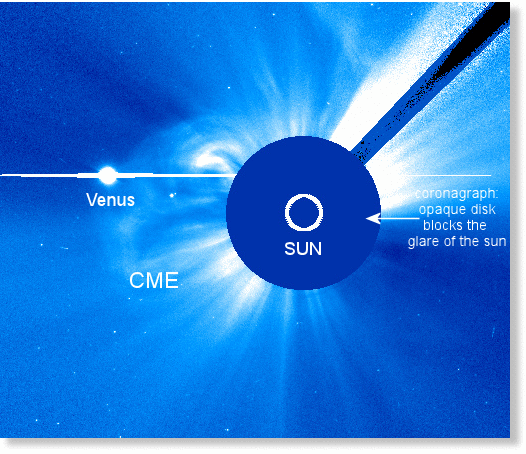
Sunspot AR2205 is crackling with M-class solar flares hurling multiple CMEs into space

Image
© SOHO
Sunspot AR2205 is crackling with M-class solar flares. The blasts have hurled multiple CMEs into space, but so far none poses a threat to Earth. This movie from SOHO shows several storm clouds billowing over the sun's eastern limb on Nov. 5-6. Because AR2205 is not yet directly facing Earth, the CMEs are sailing wide of our planet. In the movie, Venus appears to be enveloped by the CMEs, but not really. The second planet from the sun is behind the clouds, not inside them.

More eruptions are in the offing. AR2205 has an unstable 'beta-gamma-delta' magnetic field that harbors energy for strong flares and CMEs. NOAA forecasters estimate a 55% chance of M-flares and a 25% chance of X-flares during the next 24 hours.

Sun

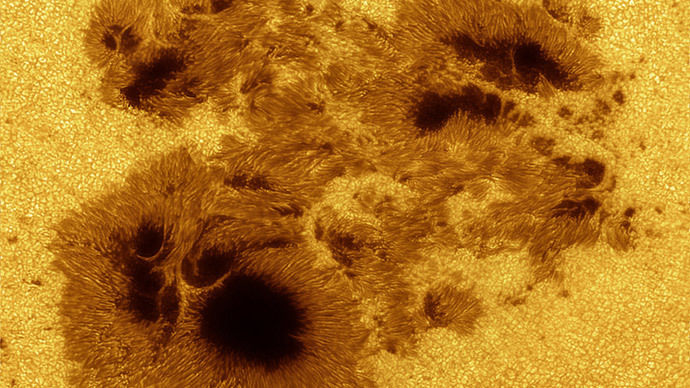
Sunspot AR12191 - the size of Jupiter and largest sunspot in over two decades, unleashed five X-class solar flares

sunspot AR 12192
© nasa.gov
The Earth's biggest sunspot in over two decades has unleashed a barrage of solar flares, including five in the strongest, X-class, over a period of eight days, a NASA video shows.

The sunspot, called Active Region 12192, the size of the planet Jupiter, was caught on camera producing flares between October 19 and October 27, when the phenomenon was visible from Earth. It's one of the biggest sunspots of all time, ranking 33rd out of almost 33,000, Space.com reports.

In addition to being biggest since 1990, AR 12192 is also interesting because it didn't produce any coronal mass ejections - outbursts of hot plasma associated with solar flares, which are releases of energy.

Windsock

Quickly strengthening monster storm may be most intense ever for Alaska

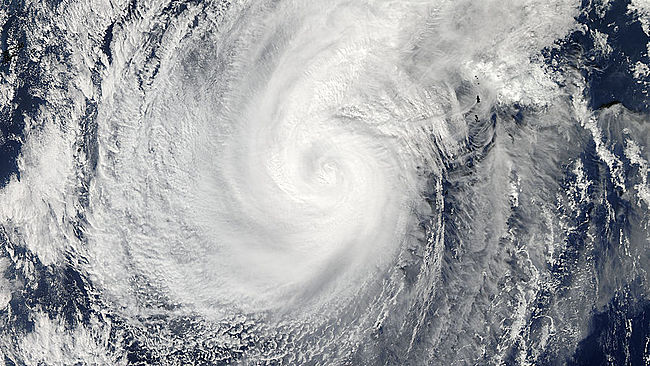
A powerful storm is slated to move over the Bering Sea this weekend, possibly becoming one of the most intense storms to ever impact the region.The former Super Typhoon Nuri is forecast to track northward into the Bering Sea, located in between Alaska and Russia, on Friday, losing its tropical characteristics as it does so.
Image
© Satellite Image/NASAVisible satellite image capture Typhoon Nuri as it churned over the West Pacific on Nov. 5, 2014.
At this point, the system will undergo rapid intensification, producing howling winds as the central pressure plummets to near record levels.Due to the massive size of the storm, impacts can be felt hundreds of miles away from the storm's center through much of the weekend.

Large waves and hurricane-force winds are expected to be the highest impacts with waves in some areas topping 45 feet Friday night and into Saturday.Waves this large can quickly turn deadly, tossing around ships sailing in the area.

Waves and swells are not expected to be nearly this high along the west coast of Alaska. However, they may still be strong enough to cause flooding and erosion in coastal areas.

Comment: Alaska's Aleutian Islands targeted from remnant of Typhoon Nuri as 'intense Sea Storm'


Ice Cube

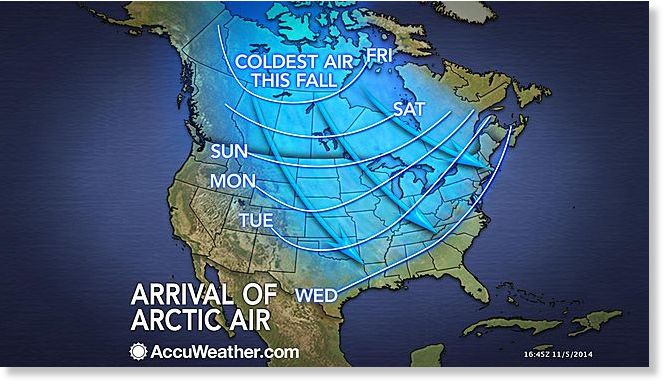
Central and Eastern U.S. states preparing to be hit with an early 'Polar Vortex'

Image
The atmosphere is preparing to send part of the polar vortex southward toward the United States next week with an outbreak of arctic air and lake-effect snow.

The polar vortex is a large pocket of very cold air, typically the coldest air in the Northern Hemisphere, which sits over the polar region. Occasionally, this pocket of very cold air can get dislodged farther south than normal, leading to cold outbreaks in Canada and the U.S.

The main blast of cold air associated with the plunging polar vortex will swing southeastward into the Central and Eastern states spanning Sunday, Nov. 9, to Friday, Nov. 14, 2014. According to AccuWeather Long Range Expert Paul Pastelok, "Areas from the northern and central Plains to the Great Lakes, the upper Gulf Coast and the Appalachians will feel significant impact from the arctic outbreak."

Cloud Precipitation

Rain, wind warnings issued for Metro Vancouver

Image
© CBCThe heavy rains and strong winds will continue as a deep Pacific low pressure system moving across the region.
Environment Canada has issued a strong winds and heavy rain warning for Metro Vancouver, as wind on west Vancouver Island is expected to reach speeds of up to 100 km/h.

In a special weather alert, the agency warns that between 30 and 40 mm of rain are expected on Thursday, while southwesterly winds could reach speeds of 90 km/h in Metro Vancouver.

Meanwhile, wind warnings are also in place for Greater Victoria, Inland Vancouver Island and the Southern Gulf Islands, where gusts are expected to reach a similar speed.

Environment Canada has also issued a wind warning for west Vancouver Island, ahead of very strong winds, gusting up to 100 km/h.