Earth ChangesS


Arrow Down

4.8 earthquake in Kansas shakes up residents across Oklahoma

Image
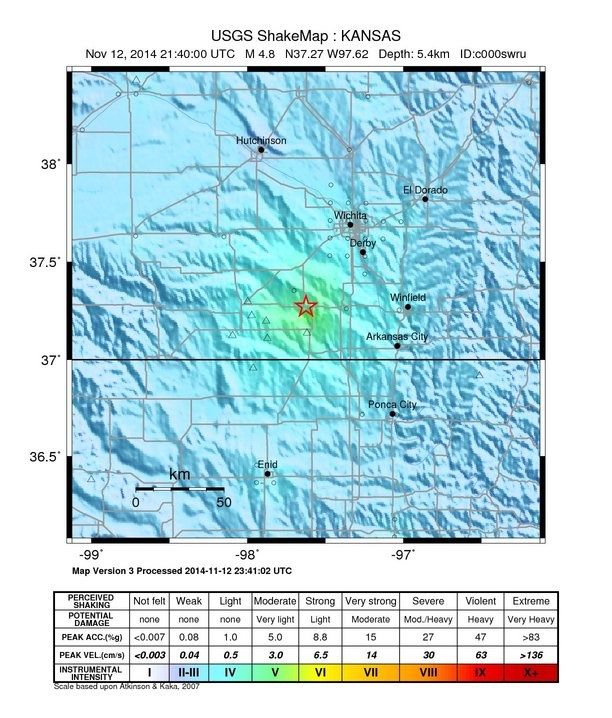
M4.8 - 13km S of Conway Springs, Kansas
A large earthquake that originated in Kansas was felt by residents across Oklahoma, Wednesday afternoon.

The 4.8 magnitude temblor rumbled at 3:40 p.m., eight miles to the south of Conway Springs, Kansas, or about 124 miles north of the Oklahoma City metro, at a depth of three miles.

Several viewers called and wrote in to News 9 reporting to have felt the quake, some even as far south as Norman, Okla. So far there have been no reports of damage or injuries related to this earthquake.

According to the United States Geological Survey (USGS), earthquakes with magnitudes ranging from 2.5 to 3.0 are generally the smallest ones felt by humans. Damage is more likely with earthquakes at magnitudes 4.0 and higher.

Cloud Precipitation

UK bracing for gale force winds and floods as conveyer belt of winter storms approach

Somerset floods

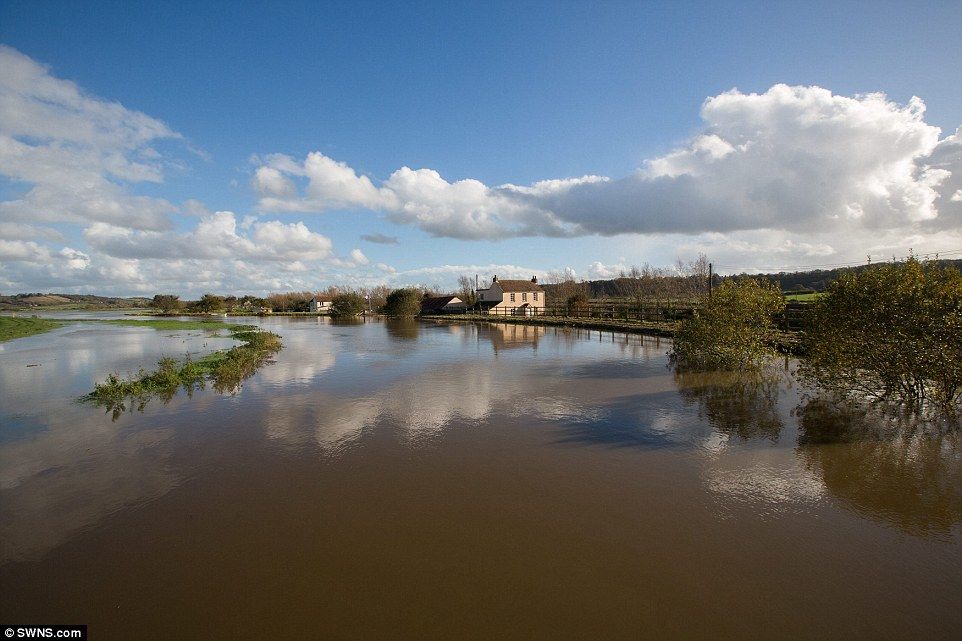
The rivers in the area, including the River Parrett, rose by a staggering two metres, amid further warnings of localised flooding
Residents in Somerset are bracing themselves for another round of catastrophic flooding after the area's main river rose to a dangerous level, amid warnings of a 'conveyor belt' of winter storms.

Heavy rain has caused the River Parrett at Burrowbridge, near Bridgwater, to rise by a staggering two metres, leaving it just one metre away from bursting its banks.

The perilously-high levels caused the water to spill over into dozens of houses and gardens, just 11 months since the last major flooding incident in Somerset.

It comes less than two weeks after the Environment Agency finished dredging two of the area's rivers in an attempt to prevent future flooding.

Igloo

Coldest ever November temperatures recorded in Colorado: Up to a foot of snow expected

Image
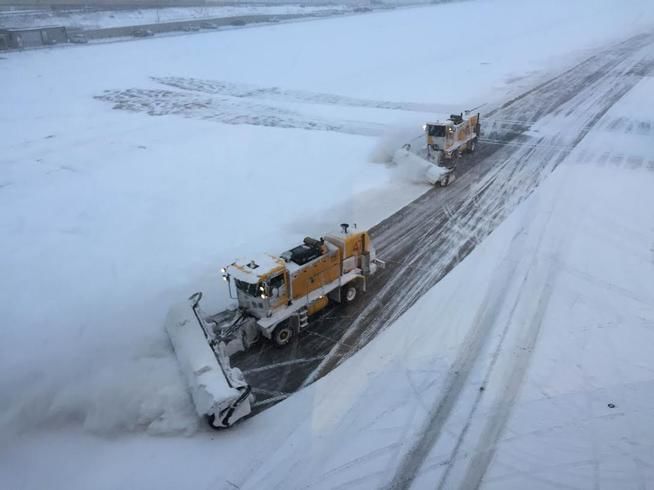
© Ken Lyons/Denver PostSnowplows clear the runways and taxiways at Denver International Airport early Wednesday, Nov. 12, 2014.
Bundle up, Denver.

And don't plan on getting anywhere in a hurry. Ice- and snow-covered roads were snarled with traffic. Minor delays were reported at Denver International Airport Wednesday morning. Morning flights can expect an hour delay, DIA spokesman Heath Montgomery said.

"We have some blowing snow, icy conditions, but things are running very smoothly, overall," he said.

Weather forecasters say records could be broken Wednesday as day three of the deep freeze continues.

"Very, very cold tonight," said David Barjenbruch, a meteorologist at the National Weather Service in Boulder. "Very, very cold today, too."'

The weather service said the high temperature in Denver on Wednesday is forecasted to reach 5 degrees, with a 100 percent chance of snow.

The coldest temperature ever recorded for a high on Nov. 12 in Denver is 9 degrees, set in 1916. The weather service said that mark could fall, along with the record low for this date of -4.

Denver set a record low high on Tuesday at 16 degrees, breaking a mark from 1916.

Wind chill values will make temperatures feel as cold as -17 Wednesday. Just before 6 a.m., the temperature at Denver International Airport was 1 degree.

Ice Cube

Record November lows and record snowfalls for South and East U.S. - Up to 2 feet of snow in places

Image
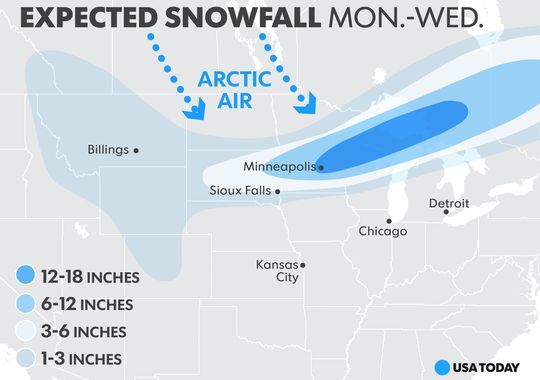
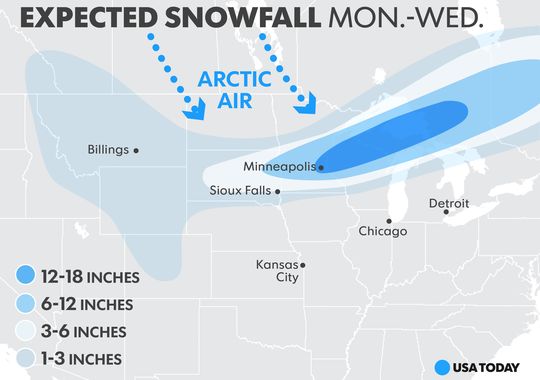
© Source AccuWeather, As of Nov. 10.(Photo: Janet Loehrke, USA TODAY)
Arctic air will plunge toward the South and East on Wednesday and Thursday, after as much as 2 feet of record-breaking snow buried portions of the upper Midwest.

Temperatures only made it into the single digits, teens and 20s Tuesday across much of the north-central U.S. - 20 to 40 degrees below average for many areas, the National Weather Service said.

Wind chills were as cold as minus 20 in parts of western Montana. By Wednesday morning, wind chills could drop to minus 35 in some spots - low enough to cause frostbite in 10 minutes.

Weather service meteorologist Paul Kocin said the cold air will reach the Appalachians to mid-South by Wednesday morning and then hit the East Coast by Thursday morning. The East Coast will see cooler temperatures but be spared from the dramatic lows in the middle of the country, Kocin said.

Freezing temperatures are still possible in parts of the South and East, AccuWeather meteorologist Alex Sosnowski said.

The heaviest snow fell across Minnesota, Wisconsin and the Upper Peninsula of Michigan. Ishpeming in northern Michigan picked up 24.5 inches of snow as of late Tuesday afternoon, the highest total from the storm so far, according to the weather service.

Marquette, Mich., got socked with 21.5 inches of snow so far, creating treacherous driving conditions.

At least two people were killed in Minnesota on icy roads, the Minnesota State Patrol said.

Comment: Read Earth Changes and the Human-Cosmic Connection for more on the science behind the crazy weather we've been having here on the big blue marble.
"While official science portrays the crazy weather, more frequent sinkholes, increased meteor fireball activity, and intensifying earthquakes as phenomena that are unrelated, research put together by Pierre and Laura strongly suggests that all this (and more!) is intimately connected and may stem from a common cause.

In times past, people understood that the human mind and states of collective human experience influence cosmic and earthly phenomena. How might today's 'wars and rumors of wars', global 'austerity measures', and the mass protest movements breaking out everywhere play into the climate 'changing'?"
SOTT Talk Radio show #70: Earth changes in an electric universe: Is climate change really man-made?


Attention

Flashback Dolphin attacking swimmers in Slidell, Louisiana

Image
© FOX 8Dolphin swimming in canal
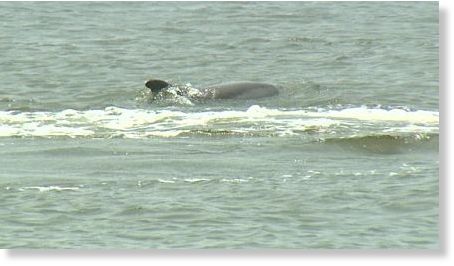
A wild dolphin is attacking swimmers and boaters in a canal behind Lakeshore Estates in Slidell.

The dolphin has actually been in the canal since 2005, but has just now become aggressive.

It's a calm and peaceful scene. The water behind Lakeshore Estates is un-usually quiet on this Friday, until suddenly up pops a fin.

Lakeshore Estates resident Greg Walters says the male dolphin has lived behind his home since just after Katrina. Walters explains, "The dolphin was raised back here and then all of a sudden I think the mother disappeared and the dolphin just stayed here."

But in recent months, the dolphin has taken to biting people.

Last week, a teen was bit as he was washing off his hands in the water, while standing in his boat.

Walters knows two people who've been attacked in the past few months saying, "Dolphin grabbed my niece by the hand. She pulled her hand out of the mouth, and in doing so ripped the tendons out of her hand and had to go to the emergency room."

Comment: See also: Dolphin 'attacks' five swimmers in Galway Bay, Ireland

Aggressive dolphin tried to push swimmer underwater off the coast of Ireland

Dolphin attacks swimmers in Doolin Harbor, Ireland

Rise of the killer dolphins: 'Alarming' rise in fatal attacks on porpoises leaves experts puzzled in Wales


Snowflake

Cold air to freeze East, set stage for rounds of snowfall

Image
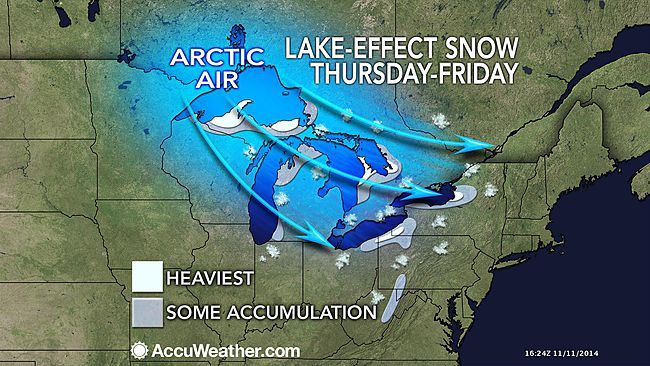
Cold air building over the Central states will expand toward the East during the balance of the week and will be accompanied by snow in some locations.

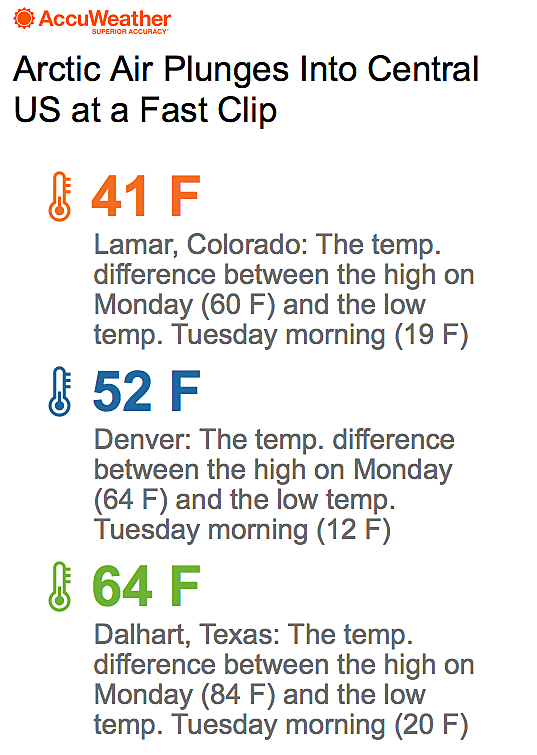
Temperatures will be slashed by 20 to 30 degrees compared to the start of this week.

High temperatures mainly in the 40s during the later part of this week will replace highs in the 60s in New York City, Philadelphia and Washington, D.C. AccuWeather RealFeel® Temperatures will plunge into the 20s and 30s at times during the daylight hours.

However, the temperature drops will not be as extreme in the East as they were over the Central states.
Image
The air will get cold enough at night to bring the first freeze to portions of the South, including Atlanta, and the Interstate-95 corridor.

Unlike chilly air episodes thus far this season, this particular cold outbreak will have staying power and is likely to last well into next week.

In much of the Appalachians and many areas on the western slopes of the mountains, high temperatures most days will be no better than the 30s.

Bands of snow and flurries will set up downwind of the Great Lakes.

The first areas to experience the lake-effect snow will be across parts of Michigan and northern Wisconsin beginning at midweek in the wake of the Upper Midwest snowstorm.

According to AccuWeather Chief Meteorologist Elliot Abrams, "Some areas around the lower Great Lakes that have escaped lake-effect snowfall thus far this season will have their first accumulation later this week."

Blackbox

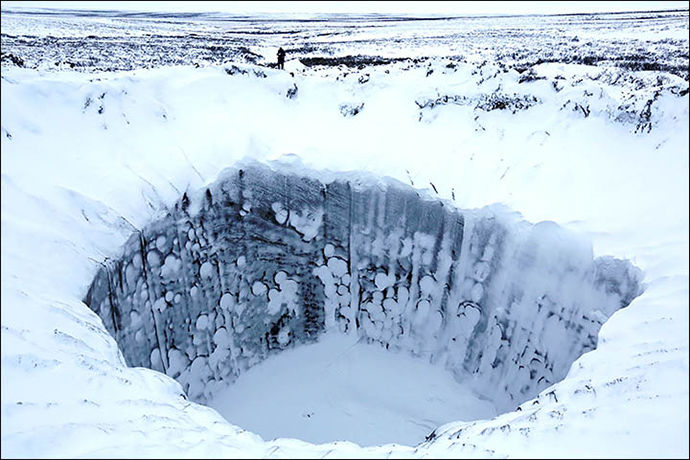
Stunning beauty inside mysterious Yamal Crater in Siberia

Image
© Vladimir Pushkarev / Russian Centre of Arctic Exploration
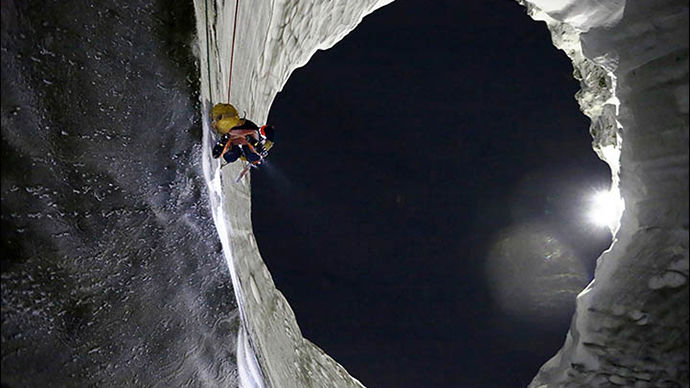
Russian scientists have explored a newly-formed and mysterious crater in Siberia. Theу hope their research will shed light on the origin of the hole in the land that locals call 'the end of the world.'

The scientists were waiting for winter to freeze the walls of the crater, so that they could climb down 10.5 meters to its base. Director of the Russian Centre of Arctic Exploration and the expedition's leader, Vladimir Pushkarev, told The Siberian Times, "We managed to go down into the funnel, all was successful. We used climbing equipment, and it is easier to do this in winter than in summer, with the ground now hard."

Image
© Vladimir Pushkarev / Russian Centre of Arctic Exploration
"We took all the probes we planned, and made measurements. Now scientists need time to process all the data and only then can they draw conclusions," he added.

Comment: For more in-depth coverage see:


Snowflake

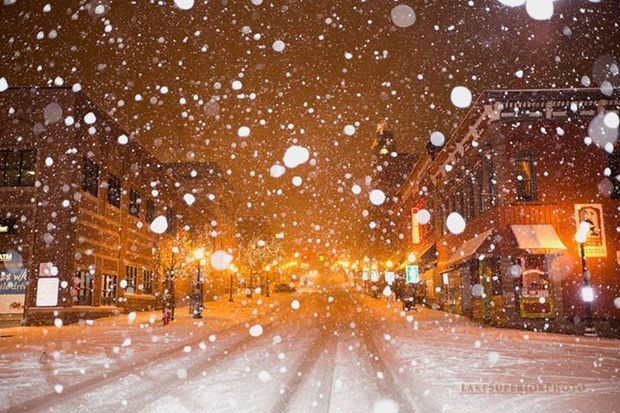
Three feet of snow gets dumped on northern Michigan

Image
© lakesuperiorphoto.comThe big, wet flakes of snow fall on downtown Marquette on Monday, November 10, 2014.
A pre-winter chill, with the possibility of light snow flurries, has settled in over the metro Detroit area, but southern Michigan residents can be thankful they don't live further north.

Parts of the Upper Peninsula are buried in as much as 3 feet of snow this morning.

As of this morning, 36.1 inches of snow had fallen since Monday in Marquette County near Negaunee. Up to 2 feet fell in other parts of the Upper Peninsula with lower totals along the Lake Michigan shoreline, the Associated Press reports.

Detroit today will see highs in the upper 30s with perhaps a few flurries, said National Weather Service meteorologist Sara Schultz. A few more flurries are possible Thursday from the morning into the afternoon, and highs from now into the weekend are to be in the 30s with lows in the 20s.

Up North, meteorologist Justin Titus says a major winter storm system that brought all that snow to the U.P. has moved out of the area, but lake-effect snow of 8 to 15 inches is forecast along Lake Superior through Saturday, according to the Associated Press.

Magnify

Mysterious fungal disease proves deadly in wild snakes

Image
© Southeastern Cooperative Wildlife Disease StudyThis Georgian mud snake died from snake fungal disease.
The female mud snake found May 28 in Georgia had cloudy eyes and patches of white, thickened scales. A strange, dark-gray material covered the inside of her mouth, and the skin on the front of her face had peeled away, leaving behind an angry red mess.

In fact, the deadly fungus that caused this snake's injuries is killing snakes across the Midwest and Eastern United States, said Matthew Allender, a clinical assistant professor of zoo and wildlife medicine at the University of Illinois at Urbana-Champaign.

Little is known about the condition, which is called snake fungal disease, but researchers are now investigating how snakes catch it, fight it and can eventually die from it.

Within the next year, researchers may know more about antifungal medications, as well as what temperatures might impede the fungi's growth, Allender said.

Cloud Grey

High winds, power outages in Pacific Northwest from powerful 'winterlike air mass'

Image
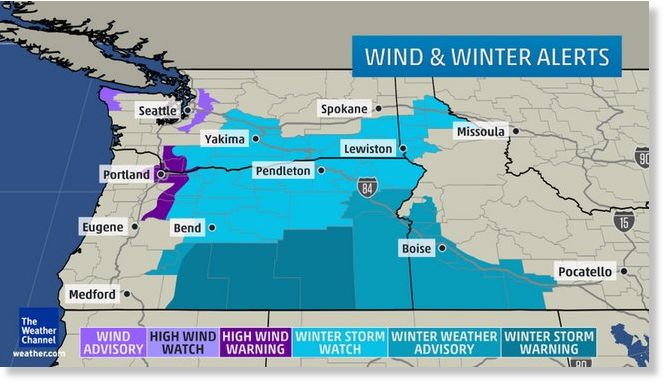
Strong winds broke out in parts of the Pacific Northwest Tuesday and Wednesday, prompting high wind warnings for parts of western Washington and northwest Oregon, injuring one person in Portland and blowing trees onto houses in the Seattle-Tacoma area. At least 66,000 customers were still without power Wednesday morning in the two states as winds continued to knock down trees and power lines.

The winds are the result of the same winterlike air mass that has plunged all the way south to the Gulf Coast and eastward into the Ohio Valley behind a powerful cold front. A powerhouse high-pressure zone over western Canada and the northern U.S. is also trying to literally push this frigid but shallow air through gaps in the Rocky Mountains and from there into the Northwest, where it faces a second obstacle in the form of the Cascade Range.

The high, whose central pressure was 1051 millibars (31.03 inches of mercury) over Canada's Northwest Territories Tuesday afternoon, has proven plenty strong enough to do just that. Winds began howling before sunrise Tuesday in the Columbia River Gorge just east of Portland, Oregon -- the most prominent gap in the Cascades, cutting a 4,000-foot-deep valley through the mountains.