Earth ChangesS


Igloo

Researchers estimate 150,000 Adelie penguins have died after being landlocked by colossal iceberg in Antarctica

Adelie penguins
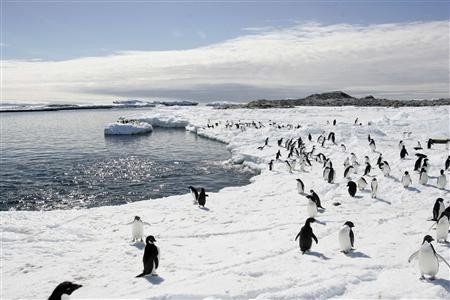
© ReutersAdelie penguins walk on the ice at Cape Denison in Antarctica, on 12 December 2009.
An estimated 150,000 Adelie penguins living in Antarctica have died after a huge iceberg the size of Luxemburg became lodged near their colony. The grounding of the colossal iceberg in Cape Denison in Commonwealth Bay left the colony effectively landlocked.

This meant the mid-sized penguins, that range from 46cm-71 cm (18in-28in), had to trek 60km to the sea to feed on their favoured krill. Their habitat used to sit on the edge of a large expanse of open water but in 2010 a massive iceberg measuring 2,900km sq became lodged in the bay, rendering the colony of Penguins landlocked.

In the last five years the colony was dwindled in size, as the perilous journey has claimed the lives of 150,000 of the penguins, according to research carried out by the Climate Change Research Centre at Australia's University of New South Wales. And scientists warned that the colony is set to disappear in just 20 years unless the sea ice breaks up or the iceberg, named B09B, becomes dislodged.

Researchers in an article in Antarctic Science said: "The arrival of iceberg B09B in Commonwealth Bay, East Antarctica, and subsequent fast ice expansion has dramatically increased the distance Adélie penguins breeding at Cape Denison must travel in search of food. "The Cape Denison population could be extirpated within 20 years unless B09B relocates or the now perennial fast ice within the bay breaks out. This has provided a natural experiment to investigate the impact of iceberg stranding events and sea ice expansion along the East Antarctic coast."

But all is not lost, a study of another colony of Adelie penguins located just 8km from the coast of Commonwealth Bay is thriving, the researchers said. And new findings from other studies suggest that between the last ice age through to 1,000 years ago, some species of penguins have benefited from climate warming and retreating ice.

Attention

Dead whale calf found off Samaná, Dominican Republic was 'stillborn'

 A whale calf
A daed whale calf
A whale calf was found dead Friday in the waters of the Cabo Samaná Natural Monument, where according to the Environment Ministry was apparently stillborn.

In a statement, Environment said a preliminary report on the dead whale's condition showed that people weren't involved.

Moreover, the 4.35-meter long calf didn't show visible signs of entanglement or bruises.

"The calf was found dead floating on the water next to the monument of Talanquera, as confirmed by the provincial director and rangers from that district," the statement said.

"Apparently, this whale was a few hours old since it still had the umbilical cord. It's normal during the humpback whales visitation season," said marine biologist Omar Reynoso, quoted by elcaribe.com.do.

Alarm Clock

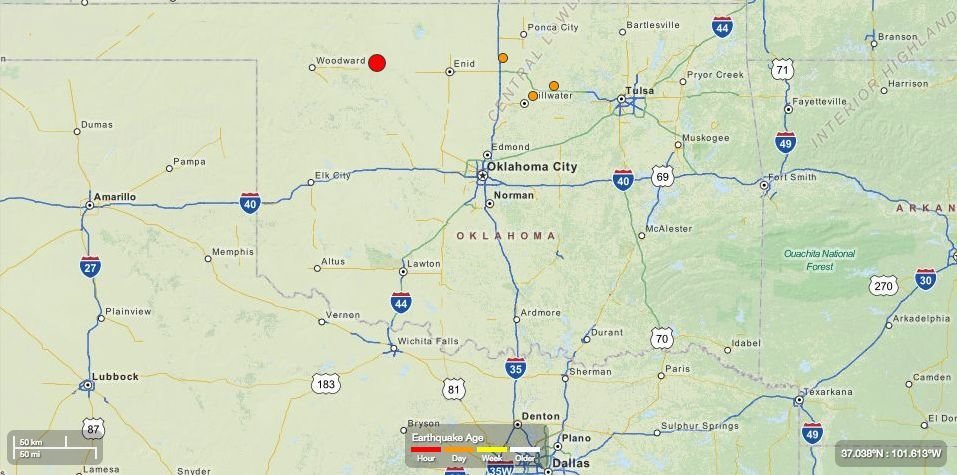
5.1 magnitude earthquake rattles Oklahoma; third largest in state's history

Oklahoma earthquake
© USGS
The third largest earthquake in recorded state history rocked parts of western Oklahoma on Saturday morning near the site of other large, recent temblors.

The quake registered a 5.1 magnitude and was recorded northwest of Fairview just after 11 a.m., according to preliminary estimates from the U.S. Geological Survey.

A 3.9 aftershock followed the earthquake, according to the USGS.

At 5.1, the temblor will be the state's third largest earthquake, according to Oklahoma Geological Survey data.

The state's largest earthquake is a 5.6 recorded out of Prague in 2011.

Saturday's quake surpassed a 4.8 recorded on Jan. 6 as this year's largest earthquake. Both the 4.8 and Saturday's 5.1 were centered near Fairview, according to USGS data.

Comment: Hundreds more earthquakes shake Oklahoma in 2015 setting new state record


Attention

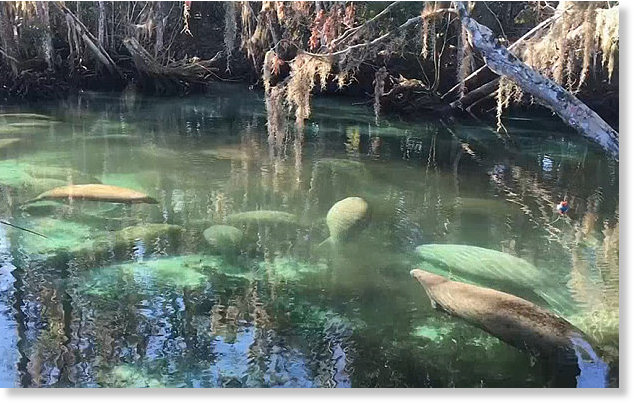
Around 500 manatees crowd into a Florida spring to stay warm

Hundreds of manatees swim in the warmer spring water
© APTNHundreds of manatees swim in the warmer spring water
Like most sensible creatures, manatees, the sea cows that live in the waters around the US state of Florida, seek warmth when it's cold.

On Thursday morning, roughly 500 of the gentle, aquatic giants crowded into the Three Sisters Springs as temperatures along Florida's Gulf Coast dipped below 10 degrees Celsius.

The springs have been periodically closed to swimmers because of the large concentration of the endangered animals.

But that hasn't stopped visitors from flocking to the boardwalk to gawk at the behemoths, which can weigh up to 590kgs.

Manatees are very susceptible to cold weather.

They can suffer hypothermia and cold stress and will eventually die if they are in water below 20 degrees Celsius.


Cloud Precipitation

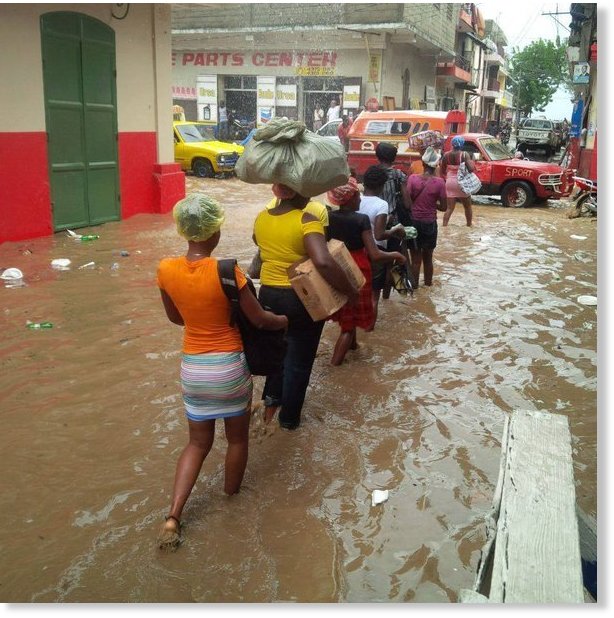
Floods hit Dominican Republic and Haiti following 8 inches of rain in 24 hours

floods in Haiti
Flood in Haiti
Heavy rain affected the northern part of the Caribbean island of Hispaniola between 09 and 11 February 2016, resulting in flooding in parts of both Dominican Republic and Haiti.

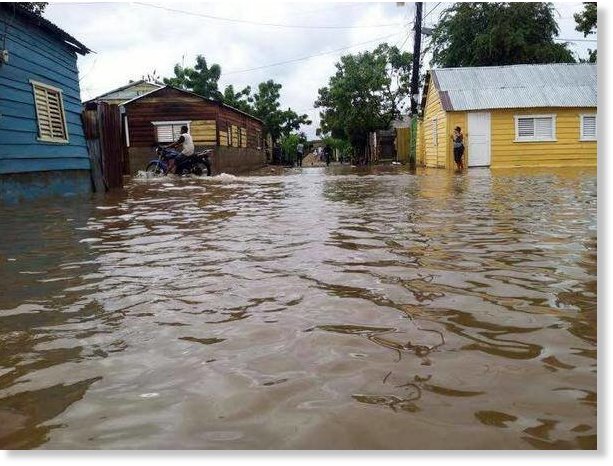
Dominican Republic

Flood in Dominican Republic
© Onelio DominguezFlood in Dominican Republic
After a long period of intense drought, Puerto Plata Province on the northern coast of Dominican Republic saw 216 mm of rain in 24 hours in Puerto Plata station, between 10 and 11 February 2016.

According to local media, the San Marcos River and the Camú River overflowed, causing flooding in the municipalities of Puerto Plata, Montellano and Villa Isabela. Several houses are reported to be affected by local inundations in La Sabana, Las Cruces de Martín Alonso, Tasajera, Estrecho Abajo, El Estrecho, Ranchito de los Vargas communities.

The country's Operational Centre for Emergencies (Centro de Operaciones de Emergencias - COE) declared, on 11 February, an alert for possible flash-floods and landslides in the Puerto Plata, Montecristi, Dajabon, Santiago Rodríguez and Valverde Provinces.

As many as 15,000 people were evacuated after severe floods struck in the Dominican Republic in February 2015.

Snowflake

Costa Rica: Frost covers Irazú volcano in the middle of summer

escarcha costa rica
© Rutaalterna.org
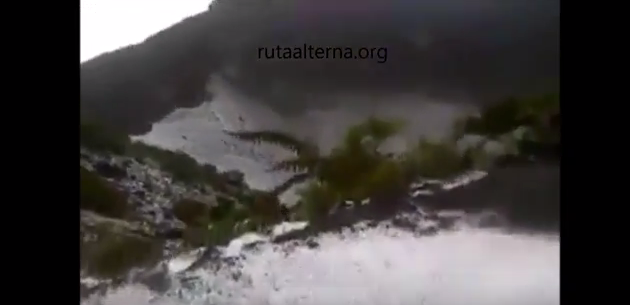
This is how the Irazu Volcano National Park looks right now.


Comment: Frost in tropical Costa Rica in the middle of its summer? Nothing to see here folks, keep believing in global warming! Alternatively, you can have a look at these articles:


Arrow Down

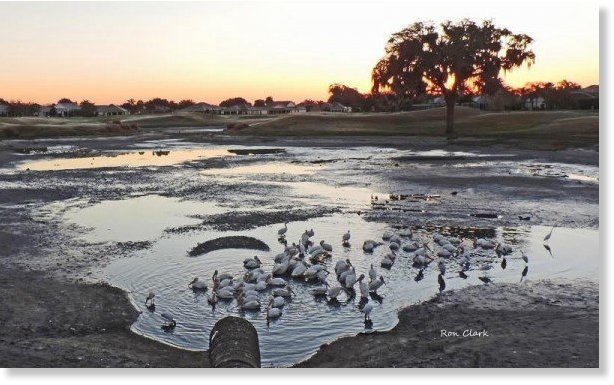
Sinkhole drains pond at golf course in The Villages, Florida

Birds feast on fish after a sinkhole prompted the water to drain from a retention pond at Pimlico Executive Golf Course.
A sinkhole has drained a retention pond at Pimlico Executive Golf Course.

Sam Wartinbee of District Property Management confirmed Thursday morning that a sinkhole, about eight feet across, caused the pond to drain.

He said that work to fill in the sinkhole will be taking place but did not offer an immediate timeline.

Birds were making the most of the situation, feasting on fish left at the bottom of the pond.

Attention

Series of earthquakes reported under Mount Rainier, Washington

Mount Rainier
A series of earthquakes were recorded under Mount Rainier Thursday morning.

The Pacific Northwest Seismic Network reports a "little swarm of quakes" shook under the mountain for about 20 minutes.
Yesterday morning, there was a little swarm of quakes under #MountRainier for 20 mins or so. https://t.co/IfDLt2iZye pic.twitter.com/vrxQgLLuwp — PNSN (@PNSN1) February 12, 2016
Don't read into the quakes too much. Earthquakes like that are fairly common, according to John Vidale of the Seismic Network. They don't signify much, he says.

"Those swarms probably appear several times a year," he added.

The stronger shaking occurred at 3:41 a.m. when a 1.45-magnitude quake was recorded.

Cloud Lightning

La Niña expected in the next months for the first time in 4 years

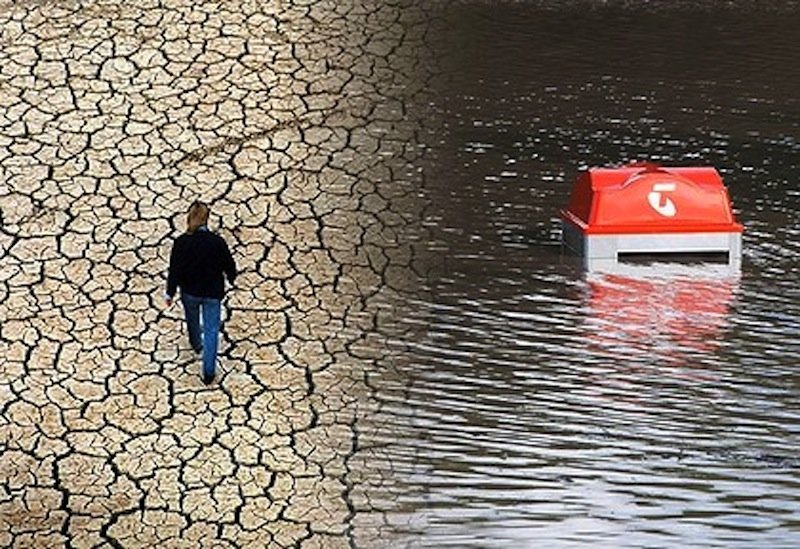
Drought and flooding
© mihpatte.com
Even as the El Nino weather phenomenon continues to impact global temperatures and crops, its counterpart La Nina is increasingly expected to emerge in the coming months for the first time in four years.

The return of La Nina, Spanish for "the girl" and characterized by unusually cold ocean temperatures, is possible later this year, the U.S. government forecaster said Thursday. It joined other forecasters in projecting La Nina could follow on the heels of one of the strongest El Ninos on record.

Weather models indicate La Nina conditions, which tend to occur unpredictably every two to seven years, may emerge in the Northern Hemisphere fall, while El Nino - which means "the little boy" in Spanish - is expected to dissipate during the late spring or early summer, the National Weather Service's Climate Prediction Center (CPC) said in its monthly forecast.

The phenomenon can be less damaging than El Nino, but severe La Ninas are linked to floods, droughts and hurricanes.Even though CPC is not on official watch for La Nina, the probability is trending towards one, said Michelle L'Heureux, a CPC climate scientist and El Nino/La Nina expert.

When La Nina last appeared from August 2011 to March 2012, it hurt corn and soybean crops in Argentina and Brazil, brought the worst drought in a century to Texas and increased the number of storms that threatened U.S. coastal regions, like Hurricane Irene.

Energy and agricultural commodities have been roiled by the current and much-watched El Nino, which involves a pattern of warmer ocean surface temperatures in the eastern and central Pacific every few years.

Over the last year, El Nino has parched fields in the Philippines and Indonesia, brought unseasonable rains to areas of South America, driven up global food prices, and caused flash floods in Somalia that destroyed thousands of homes.

El Nino is likely to keep affecting temperature and precipitation patterns across the United States in the upcoming months, CPC said in its forecast.
"As we get into the spring, we'd still expect to see some influence. Folks need to keep their eyes on El Nino," CPC's L'Heureux said.

Comment: El Niño and La Niña are opposite phases in the El Niño-Southern Oscillation (ENSO) cycle. La Niña is sometimes referred to as the cold phase and El Niño, the warm phase. Combining these two phases, we are likely to see more extreme weather and planetary upheaval on the planet. You can read more about it here.

Also see our latest Earth Changes video summary for January for the latest in extreme weather, earth changes and fireballs.

SOTT Summary Video - January 2015: Extreme Weather, Earth Changes, and Fireballs


Question

Mysterious boom heard in Howard City, Michigan

Boom
Several people living near Howard City reported that they felt and heard a loud boom Thursday morning.

WZZM 13 received several messages on our Facebook page from people saying they felt a rumble similar to an earthquake or sonic boom.

"The whole ground was shaking, the house was shaking," said Sue Eastman of Coral. It was just before 10 a.m. Thursday when she heard the loud boom. As she was trying to figure out what was going on, so were several others.

Christine Rizor of Howard City thought it was an earthquake. "I was sitting in a chair and all the sudden, it was like a big shake. I was like, 'Whoa!'"

Kasey Field, also in Howard City, posted about it on social media. "I had people from all over the lake area. They felt it in Morley and Evart. In Sears, they heard it up there."