Earth ChangesS


Attention

Eruption warning issued for Mount Io volcano in Japan

Mount Io
© Wikipedia/ Miya.mMount Io
Japan's weather agency on Sunday issued an alert for the possible eruption of a volcano in the southwest of the country.

The Japan Meteorological Agency (JMA) said that following an increase in noticeable seismic activity and based on recent eruptions, Mt. Io, which spans both Miyazaki and Kagoshima prefectures, has been issued with a no-entry warning.

The municipal government of Ebino city has declared a no-entry zone around the crater of Mt. Io, which is part of the Kirishima mountains, according to the Kyodo News Agency.

JMA said the alert was issued in light of more than 30 volcanic-related temblors being recorded as of noon Sunday, following increased volcanic activity at the 1,317-meter volcano since last year, in the Kyushu region of Japan.

Cloud Lightning

Five die as storm hits Durban, South Africa

Durban storm
Durban was on Saturday counting the cost of a storm that left at least five people dead and a dozen injured.

The storm that ripped through the Durban area on Friday night delivered a deluge of rain and hail with strong winds that uprooted trees and collapsed walls.

One of those walls collapsed in Durban's Westville suburb, killing a 55-year-old man.

ER24 spokesman Werner Vermaak said paramedics on the scene were informed that the man, another adult and two teenagers went to inspect the wall before it collapsed.

"‎At this stage it is not clear if they suspected damage to the wall and thus went to investigate. The wall collapsed on the man and pinned him under the rubble and water for some time."


Attention

5.9 magnitude earthquake at Western Indian-Antarctic Ridge

earthquake
2016-02-27 21:29:43 UTC

UTC time: Saturday, February 27, 2016 21:29 PM

Your time: 2016-02-27T21:29:43Z

Magnitude Type: mb

USGS page: M 5.9 - Western Indian-Antarctic Ridge

USGS status: Reviewed by a seismologist

Reports from the public: 0 people

Attention

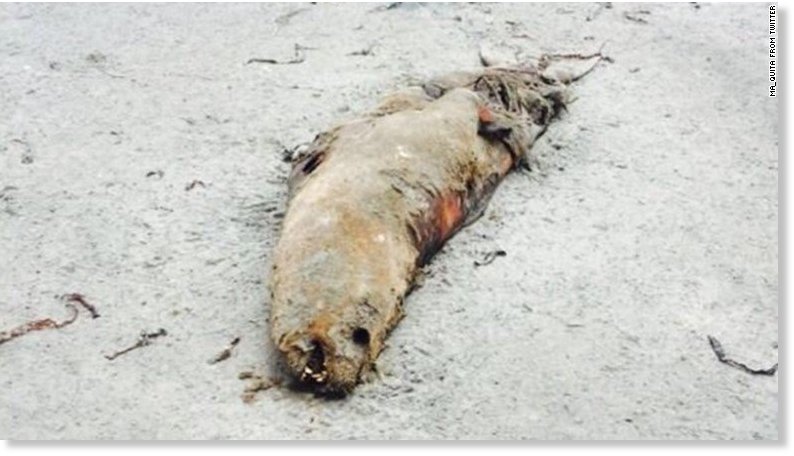
Hundreds of dead sea lions wash up in Chile

Dead sea lion
Most of the dead sea lions that are washing up along northern Chile are newborn pups. The deaths are part of a widespread die-off observed elsewhere on South America's Pacific coastline.
Marine researchers have found more than 100 dead sea lions -- most of them newborns -- washed ashore along a relatively small peninsula in northern Chile over the past three months, part of a more widespread die-off being observed elsewhere on South America's Pacific coast.

"This is happening along the entire coast of northern Chile and we're getting reports that it's also happening in Peru, our neighbor to the north," researcher Carlos Guerra-Correa told CNN. "We could be talking about hundreds of sea lions washing up ashore dead in the entire region."

The South American sea lion (Otaria flavescens) is the species affected by the die-off observed in the area of the Mejillones Peninsula in Antofagasta province, where the researchers routinely conduct marine studies.


Butterfly

UN science report warns of fewer bees and other pollinators

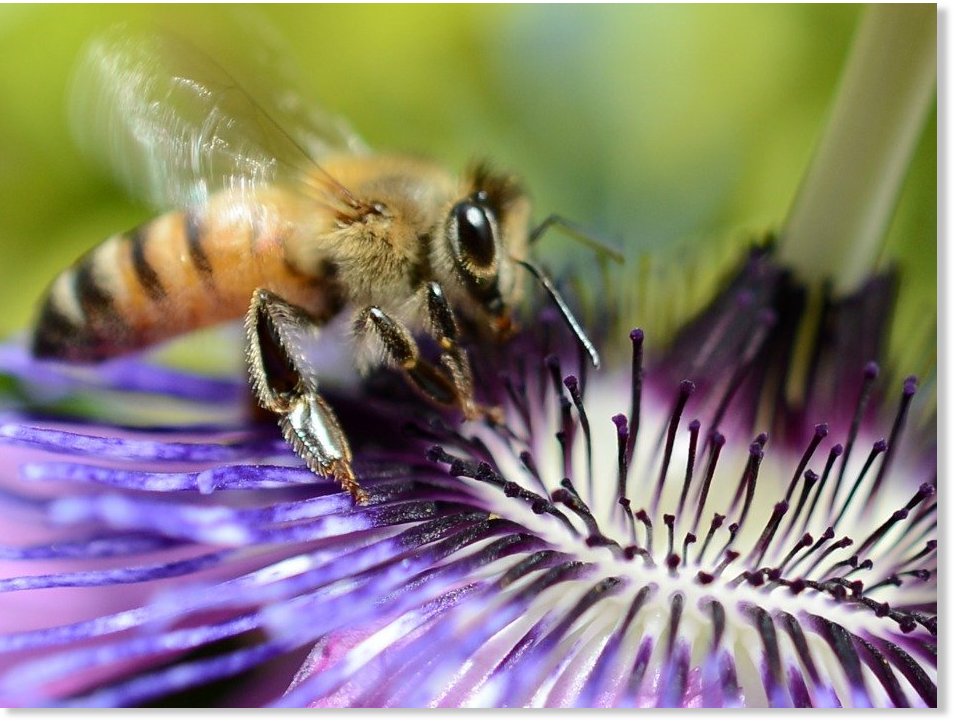
A bee collects nectar from a flower on April 24, 2012 in Los Angeles, California.

Many species of wild bees, butterflies and other critters that pollinate plants are shrinking toward extinction, and the world needs to do something about it before our food supply suffers, a new United Nations scientific mega-report warns.

The 20,000 or so species of pollinators are key to hundreds of billions of dollars' worth of crops each year — from fruits and vegetables to coffee and chocolate. Yet 2 out of 5 species of invertebrate pollinators, such as bees and butterflies, are on the path toward extinction, said the first-of-its-kind report. Pollinators with backbones, such as hummingbirds and bats, are only slightly better off, with 1 in 6 species facing extinction.

"We are in a period of decline and there are going to be increasing consequences," said report lead author Simon Potts, director of the Centre for Agri-Environmental Research at the University of Reading in England.

And it's not just honeybees. In some aspects they're doing better than many of their wild counterparts, like the bumblebee, despite dramatic long-term declines in the United States and a mysterious disorder that has waned.


Bug

Invasion of beetles along beaches in Argentina

Beetle invasion
© Marce RodriguizBeetle invasion
A biblical beetle invasion has started along the beaches of Mar de Ajó and San Bernardo in Argentina.

The strange phenomenon surprised locals and tourists, but the cause of this insect plague remains unexplained.


Beetles
Beetle mania

Cloud Grey

Mesmerizing von Karman vortices appear near South Korea

Von Karman vortices captured via satellite on Feb. 25, 2016, south of Jeju Island.
© CIRA/Colorado StateVon Karman vortices captured via satellite on Feb. 25, 2016, south of Jeju Island.
Winds blowing over South Korea's Jeju island Thursday gave rise to a chain of magnificent swirling clouds known as von Karman vortex streets.

Satellite images show beautiful whirlpool-shaped cloud formations downwind of the island in the East China Sea. The swirls are lined up one after another comprising the so-called "street" in the sky.

"[W]hen fluids encounter obstacles, they can form spiral eddies," wrote NASA, in an explanation as to how these vortices form.

The obstacle in this case is the volcanic high terrain on Jeju Island which the air flows around, leaving behind an area of low pressure downwind on the island's opposite side, where the air begins spinning counterclockwise forming a vortex. As one vortex forms and moves off to the south, another follows in its wake forming the vortex street.

Attention

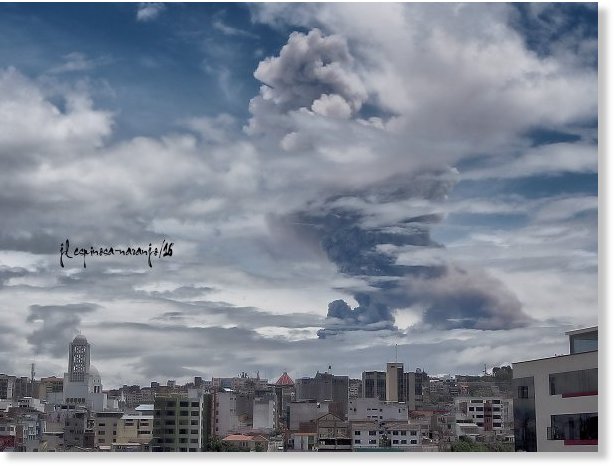
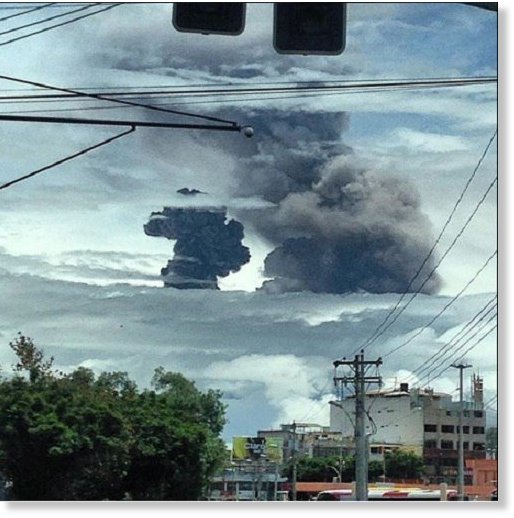
Tungurahua volcano in Ecuador: Explosion produces ash plume 5000 meters tall

Eruption plume of Tungurahua volcano
© J.L Espinosa-Naranjo @Ambalaser / twitter)Eruption plume of Tungurahua volcano yesterday
Two moderately large explosions occurred at the volcano yesterday noon from 12:12 local time. The first and larger explosion produced an ash plume that rose approx. 5000 meters above the summit.

The ash plume dispersed mainly to the west and northwest where ash fall occurred in areas including Choglontús, Pillate, Cahuaji and El Manzano.

According to IGEPN, the eruption - which came after a 3 months interval of quiet since last November - was most likely NOT the result of new magma, but instead of accumulated gas pressure in the upper conduit. Magmatic gasses (H2O, CO2 etc) still contained in older magma inside the conduit was being released quietly as the magma continued to cool and crystallize, but most of these gasses were being trapped beneath a solid plug. With time, the gas pressure increased to the critical point: the plug gave way in yesterday's explosions.

The explosion itself, a typical so-called "vulcanian"-type eruption, was preceded only by a short (lasting little more than an hour), but intense seismic swarm of shallow earthquakes caused by internal fluid movements and rock fracturing as pressurized gasses started to disintegrate the overlying plug.

Tungurahua volcano eruption in Ecuador on February 26, 2016
© TwitterTungurahua volcano eruption in Ecuador on February 26, 2016

Attention

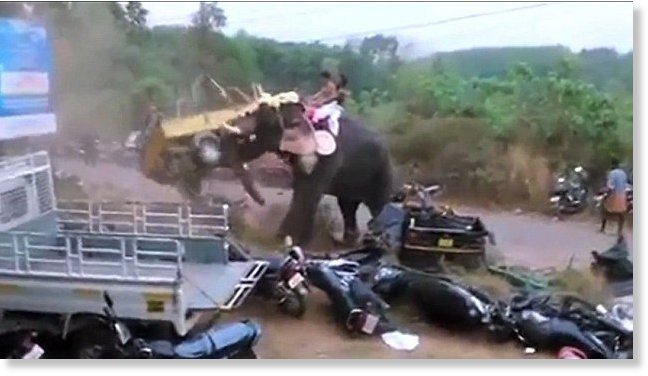
Peeved pachyderm: Elephant goes on the rampage in Kerala, India

 Elephant picking up vehicles and smashing them.
Pick-up van: A religious festival went awry when an elephant began picking up vehicles and smashing them. Devidasan was taking part in a festival at the Bhagavathi Temple in Kerala on Thursday
A religious festival went awry when an elephant began picking up vehicles and smashing them.

The great creature, named Devidasan, was taking part in a festival at the Bhagavathi Temple in the south Indian state of Kerala on Thursday.

However he proved to be at the end of the tether when he started destroying vehicles in his path.

He picked up a motorbike with his trunk before proving his herculean strength by grabbing an auto-rickshaw as though it were a toy and smashing it on the ground.

Devidasan then turned his violence on a nearby pick-up van, throwing it into the air three times before overturning it on its side.

Two mahouts (people who work with elephants) were on the back of the animal throughout the ordeal trying to control him.


Fire

Methane explosion in Russian coal mine kills 4, dozens trapped

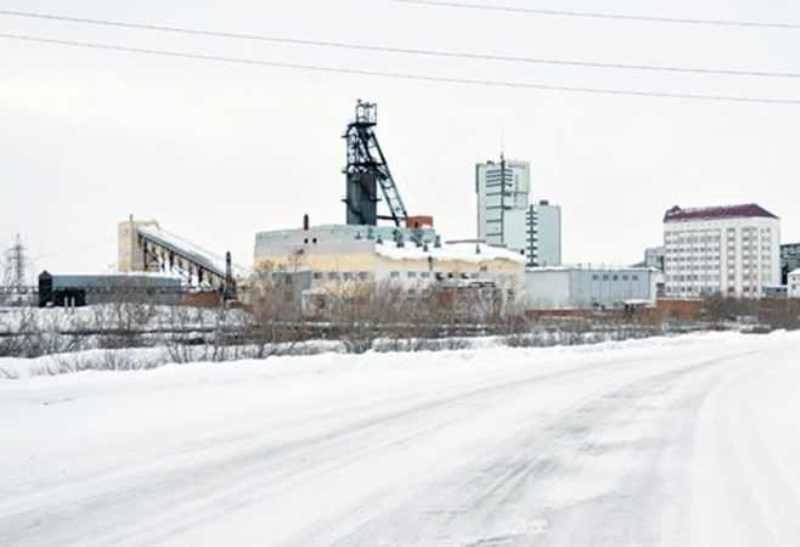
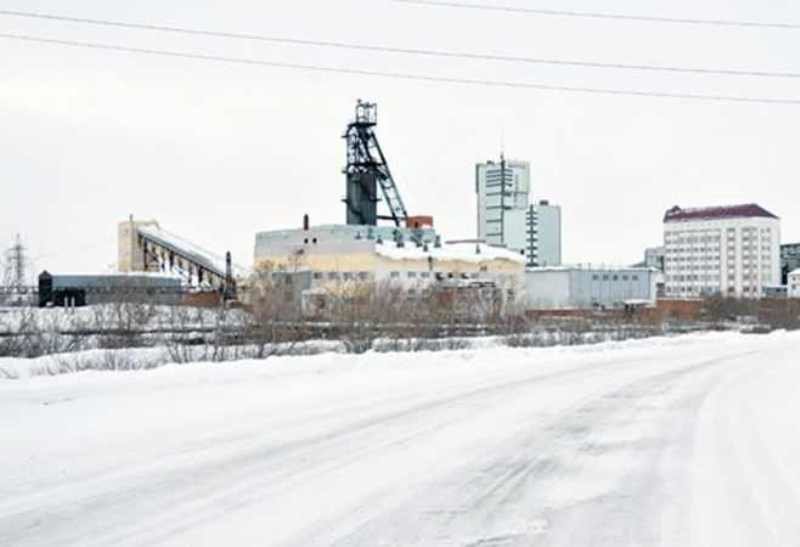
Severnaya coal mine explosion
© Vorkutaugol
At least four miners were killed after a structural collapse at a coal mine in northern Russia, and the rescue operation was further complicated by a second explosion when emergency workers were trying to reach dozens of miners trapped underground, officials and media reports said Friday.

About 110 coal miners were underground at the "Severnaya" coal mine — operated by the Vorkutaugol company in the northern region of Komi — when a seismic jolt caused part of the structure to collapse on Thursday, the regional branch of the Emergency Situations Ministry said in a statement. Shortly before midnight, 80 of the miners had been rescued, the ministry said. Eight of them had suffered injuries.

Rescuers have also recovered the bodies of four more miners, while 26 others were listed as missing as of Friday afternoon, according to Russian media reports.

About an hour after the initial jolt, when attempts to evacuate workers were already underway, the mine suffered a second "explosion," Vorkutaugol technical director Igor Paykin said, the Interfax news agency reported Friday.

The second blast caused additional structural collapses in the mine, stoked a fire, and caused clouds of smoke to fill the mine shaft, Paykin was quoted as saying.

"It appears impossible to extinguish it [the fire] through ordinary methods," he said, Interfax reported. "We will look into the option of temporarily isolating the combustion section."

Comment: According to Vorkutaugol, the mine's owner, a methane explosion was responsible for the tragedy. The company said:
"According to preliminary data, the accident at the Severnaya mine was caused by the sudden discharge and explosion of methane in the mining area. This was confirmed by Russian Emergency Situations Ministry laboratory tests,"