Earth ChangesS


Cloud Precipitation

Floods in Mongolia leave at least 12 dead

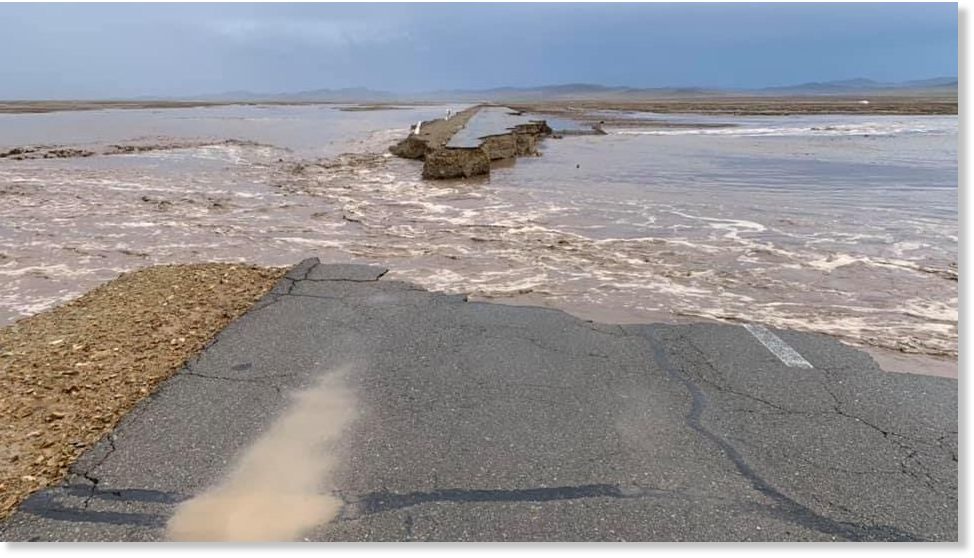
floods in Mongolia, June 2019.
© National Emergency Management Agency (NEMA) MongoliaFloods in Mongolia, June 2019.
National Emergency Management Agency (NEMA) in Mongolia reports that as many as 12 people have lost their lives in recent flooding in the country.

Mongolia Red Cross said that heavy rain began on 15 June, 2019, causing flooding in parts of the capital, Ulaanbaatar and nearby areas including Lun, Bayantsogt, and Bayankhangai in Töv Province.

Many roads have been blocked and drivers left stranded. Some flights from Ulaanbaatar were cancelled or delayed. The heavy rain was accompanied by strong winds. Several buildings suffered severe damage and 2 buildings were completely destroyed in Bayantsogt.

Meteorological and Environmental Monitoring Agency said that between 15 and 16 June, 82mm of rain fell in parts of Töv Province. Rivers levels in affected areas jumped by over 1 metre.

Seismograph

Shallow 6.0-magnitude quake hits Kermadec Islands - 3rd in 2 days, 4th for region

graph
A magnitude-6.0 earthquake jolted 135 km east-northeast of L'Esperance Rock, New Zealand at 06:02:05 GMT on Monday, the U.S. Geological Survey said.

The epicenter, with a depth of 16.0 km, was initially determined to be at 30.9381 degrees south latitude and 177.5972 degrees west longitude.

Comment: Strong shallow 6.1 magnitude earthquake strikes NE of Tonga

New Zealand earthquake: Tsunami threat cancelled after 7.2 tremor strikes Kermadec Islands

Second strong earthquake (magnitude 6.6) hits Kermadec Islands - third for the region within 8 hours


Cloud Precipitation

France to declare natural disaster after violent storms devastate crops in south east

Hail-damaged apricots at an orchard in La Roche-de-Glun in southeast France
© AFPHail-damaged apricots at an orchard in La Roche-de-Glun in southeast France on Sunday
Farmers in southeast France counted the costs from lost harvests on Sunday after a fierce storm battered the region with hail the size of ping-pong balls, decimating orchards and vineyards just as the summer season was kicking into high gear.

"Pretty much my entire harvest is ruined," said Gregory Chardon who grows apricots, peaches and cherries at his farm in La Roche-de-Glun in the Drome department, about an hour's drive south of Lyon.

Even the netting strung over his fields was no match for the tempest of hail which suddenly struck on Saturday afternoon, strewing the ground with damaged fruit and broken branches.

"The damage is enormous and widely spread -- cereals, greenhouse and vegetable farms, and vineyards as well," Chardon said.

In the neighbouring village of Pont-de-L'Isere, Aurelien Esprit showed apricots littering the ground and battered apple trees at his orchards in a Facebook video.

"Unfortunately the season ended for us last night. I don't think I'm going to make it this time," he said.


Comment: Last week hailstones the size of GRAPEFRUITS battered countries across Europe.


Attention

More than 260 dead dolphins found along Gulf of Mexico Coast since February 1st

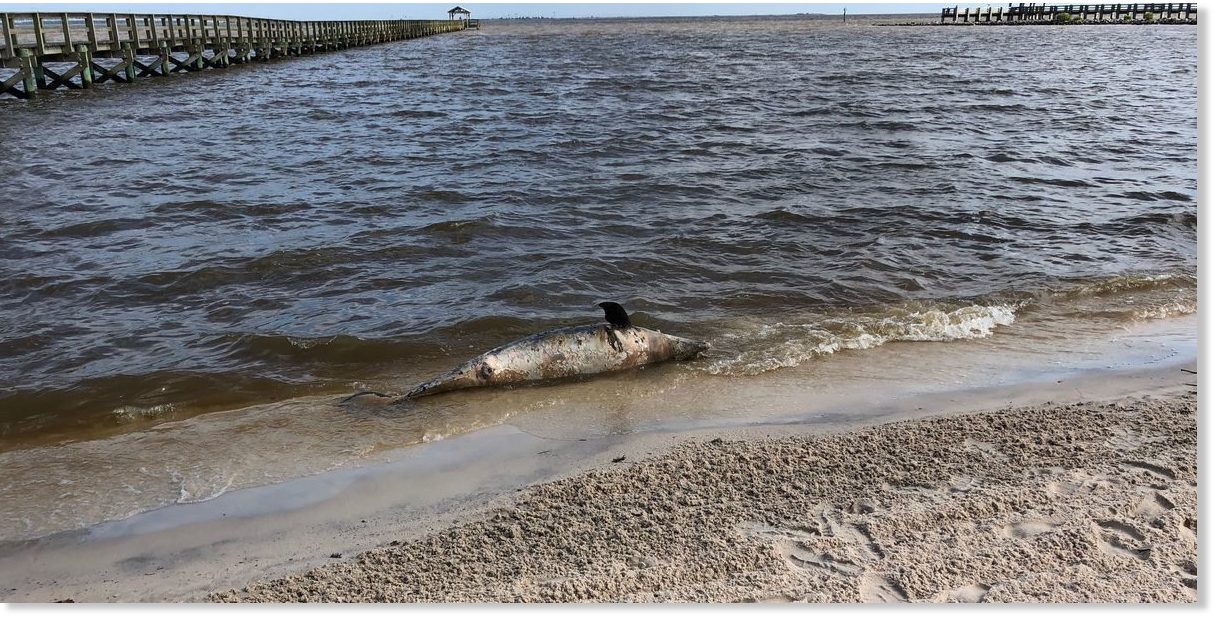
A third dead dolphin washed ashore Tuesday morning on Front Beach in Ocean Springs.
© WLOXA third dead dolphin washed ashore Tuesday morning on Front Beach in Ocean Springs.
NOAA declares an unusual mortality event

More than 260 dolphins have been found stranded along the northern Gulf of Mexico since February 1st.

According to The National Oceanic and Atmospheric Administration, that's three times the usual amount. The increase has prompted NOAA Fisheries to declare an Unusual Mortality Event

This declaration allows an investigative team to look into the high number of dolphin deaths stretching from Louisiana through the Florida panhandle.

Dr. Terri Rowles, NOAA Fisheries Coordinator, has issued a statement informing the public what to do if they come into contact with any stranded mammals.

Propaganda

Adapt 2030 Ice Age Report: The real story of Greenland ice melt June 2019

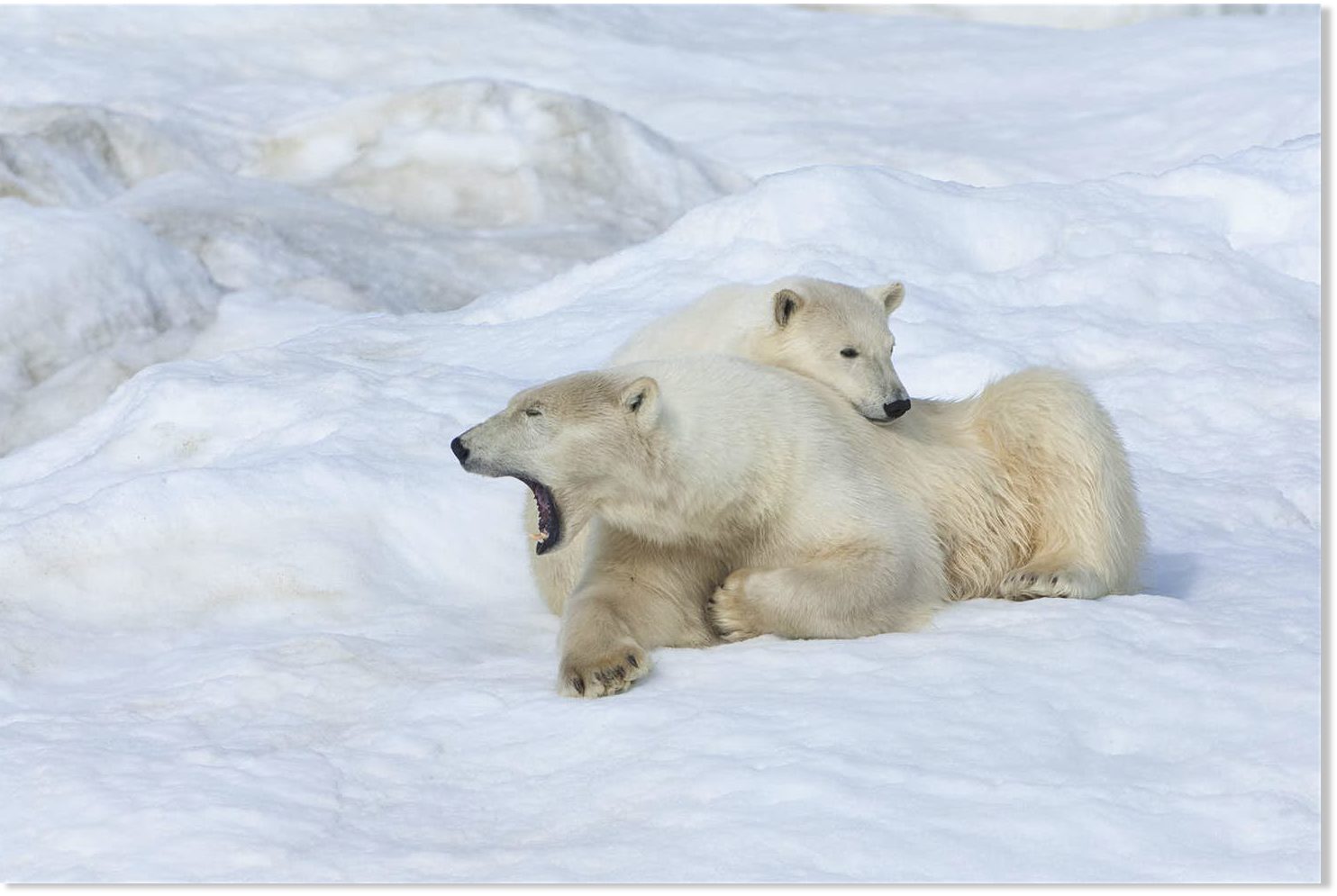
polar bear
So many newspapers across the planet writing about unprecedented Greenland Ice Melt and the lowest ever Arctic Sea Ice. Lets delve into each of these claims by the main stream publications and how close to reality they are factually, or is it a cycle we are seeing in the climate.


Sources

Attention

Second strong earthquake (magnitude 6.6) hits Kermadec Islands - third for the region within 8 hours

graph
The Ministry of Civil Defence and Emergency Management has cleared New Zealand of a second tsunami threat following another earthquake near the Kermadec Islands.

The region was rocked by a second earthquake a short time ago which registered magnitude 6.6 following a magnitude 7.0 at 10.55am.

The second earthquake struck shortly before 5.30pm.

"There is no tsunami threat to New Zealand following the M6.6 Kermadec Islands region earthquake," MCDEM said on Twitter.

Comment: Details of the other two: Strong shallow 6.1 magnitude earthquake strikes NE of Tonga

New Zealand earthquake: Tsunami threat cancelled after 7.2 tremor strikes Kermadec Islands


Attention

Mexico's Popocatépetl volcano erupts firing ash to 32,000 feet (9.8 KM)

volcano
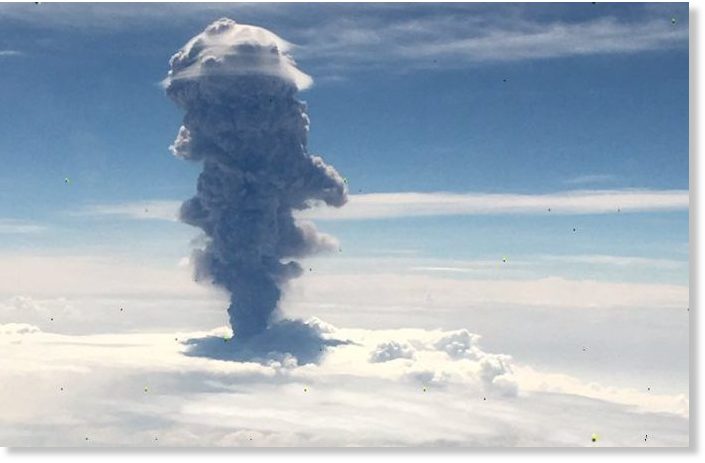
Mexico's Popocatépetl continued its eruptive uptick in style at 15:40 UTC on June 14, with a strong Vulcanian-Type Explosion — one of the volcano's largest eruptions in years.

The Volcanic Ash Advisory Center (VAAC) Washington has warned of a thick ash column rising to at least 32,000 feet (9.8 km) a.s.l. and moving in a NE direction at 30-35 kts .

Particulates ejected to altitudes above 32,800 feet (10km) or FL328 —and into the stratosphere— have a direct cooling effect on the planet.

Twitter was quickly clogged with awesome photos and footage:


Cloud Precipitation

Violent storm batters parts of Switzerland

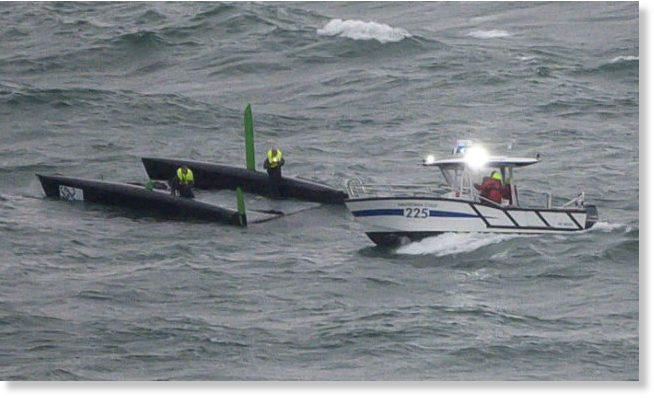
A police speedboat rescues a boat capsized after a massive storm during the Bol d'Or sailing race on Lake Geneva.
© Fabrice Coffrini/AFPA police speedboat rescues a boat capsized after a massive storm during the Bol d'Or sailing race on Lake Geneva.
A woman has drowned in Lake Geneva when her sightseeing boat sank as a violent storm battered parts of Switzerland on Saturday, police said.

A man who was in the same boat was able to swim to another vessel from where he fired "two flares", Joanna Matta, police spokeswoman for the canton (region) of Geneva, told AFP.

The man told officers that the woman had been "passing through Geneva" and that the storm had taken them "by surprise", Matta said.

Three police boats and emergency services rushed to the scene. Police divers later retrieved the woman's body from the lake.


Seismograph

Strong shallow 6.1 magnitude earthquake strikes NE of Tonga

graph
A magnitude 6.1 earthquake struck on Sunday centred 97km north-east of Ohonua, on the Pacific island of Tonga, the US Geological Survey reported.

The quake hit at 2156 GMT on Saturday with an epicentre depth of 10km, the US global quake monitor said.

The Pacific Tsunami Warning Centre issued no alerts, and there were no immediate reports of damage or casualties.

The reported epicentre lies within the so-called Pacific Ring of Fire, an area of regular seismic activity.

In February 2018, a 7.5 magnitude earthquake in Papua New Guinea killed 150 people and destroyed hundreds of buildings.

Source: AFP

Comment: An hour later in the same region of the Pacific ocean: New Zealand earthquake: Tsunami threat cancelled after 7.2 tremor strikes Kermadec Islands


Seismograph

New Zealand earthquake: Tsunami threat cancelled after 7.2 tremor strikes Kermadec Islands

New Zealand quake
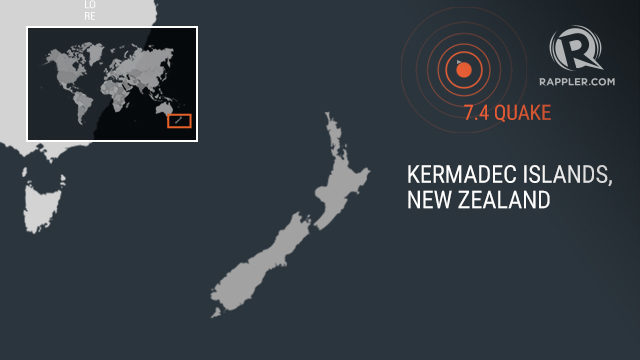
© Rappler
The Ministry of Civil Defence Management and GNS Science in New Zealand are currently investigating the possibility of a tsunami hitting the country following the colossal quake.

The earthquake hit the Kermadec Islands, approximately 620 miles northeast of New Zealand. The colossal quake hit at 11.54pm BST (11.54am local time) according to the USGS.

The New Zealand Civil Defense released a statement saying: "We are assessing whether the M7.4 Kermadec Islands region earthquake poses any tsunami threat to New Zealand.

"If a tsunami has been generated it is not likely to arrive in New Zealand for at least two hours."

The USGS reported that the quake had a depth of 21 miles.

The epicentre was around 93 miles (150km) from L'Esperance rock halfway between New Zealand and Tongo.