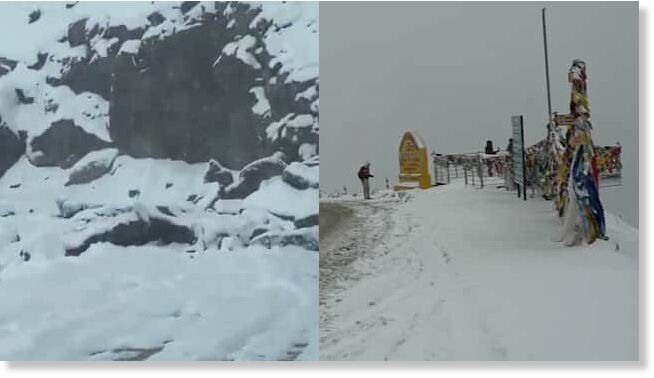
Heavy snowfall over the past 24 hours has forced the closure of Khardung-La Pass in Ladakh, one of the highest motorable roads in the world, disrupting movement of vehicles and supplies.
Officials said traffic was suspended after the road turned slippery and unsafe due to snow accumulation, with authorities taking precautionary measures to prevent accidents.
Snow clearance operations will be launched once weather conditions improve, while travelers have been advised to avoid the route until further notice.
Situated at over 17,500 feet, Khardung-La is a vital link connecting Leh with Shyok and Nubra valleys, and its closure impacts locals, tourists, and the transport of essential goods.
The Meteorological Department has forecast more light to moderate snowfall in the upper reaches of Ladakh over the next 48 hours and urged caution for those planning high-altitude journeys.
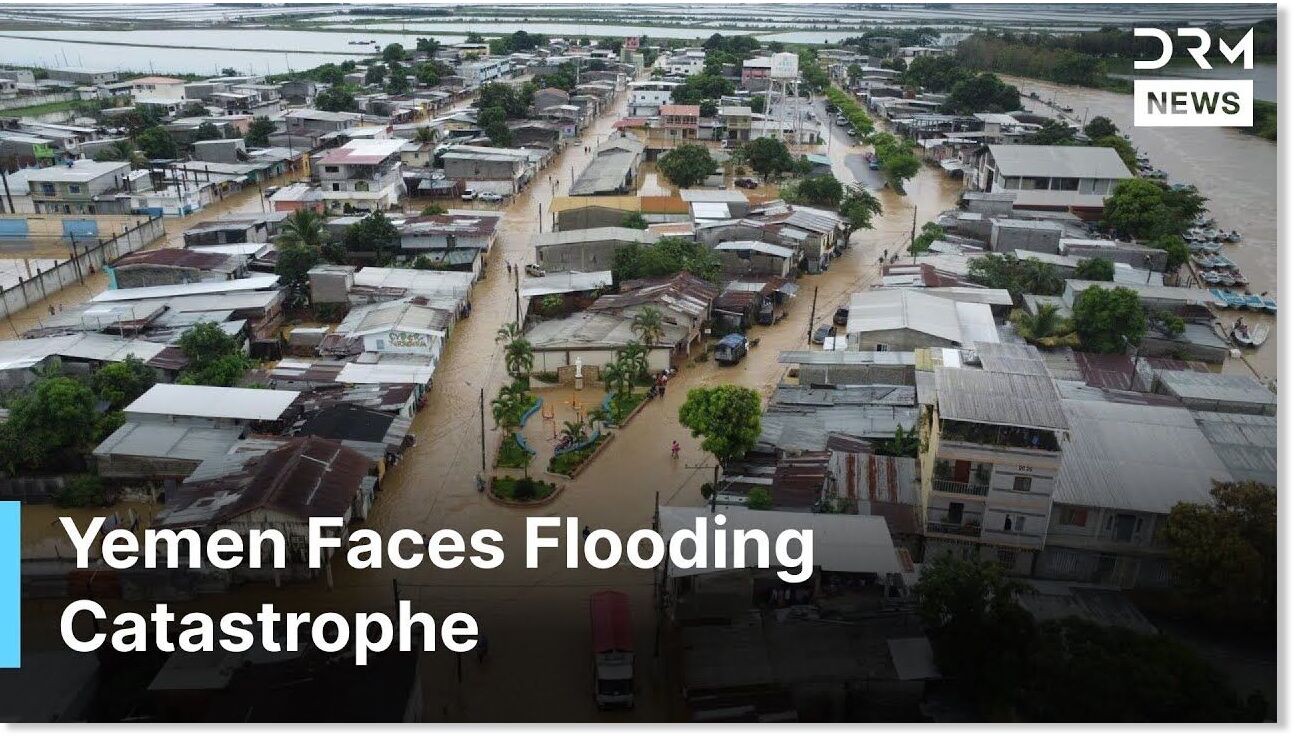
Flooded residential areas in Jammu after record-breaking 190.4 mm rainfall, the heaviest August downpour in 99 years.
Unusually heavy rainfall lashed Jammu division on Sunday, with Jammu city recording its highest precipitation for the month of August in the last 99 years — 190.4 mm in just 24 hours. This is the second-highest single-day rainfall in nearly a century, officials from the Meteorological Department confirmed.
The city's previous August record was 189.6 mm, logged on August 11, 2022. The all-time highest single-day rainfall in Jammu over the last 100 years remains 228.6 mm, recorded on August 5, 1926.
According to the Meteorological Department, Jammu city recorded 190.4 mm of rainfall till 8:30 am Sunday, followed by Jammu Airport with 166.0 mm, Chatha with 98.5 mm, and Bakore with 45.5 mm.
"This is the second-highest rainfall ever recorded in Jammu in August in almost a century. The increasing frequency of such heavy downpours indicates changing weather patterns in the region," officials said.
Khanh Vu and Minh Nguyen Reuters Mon, 25 Aug 2025 11:13 UTC
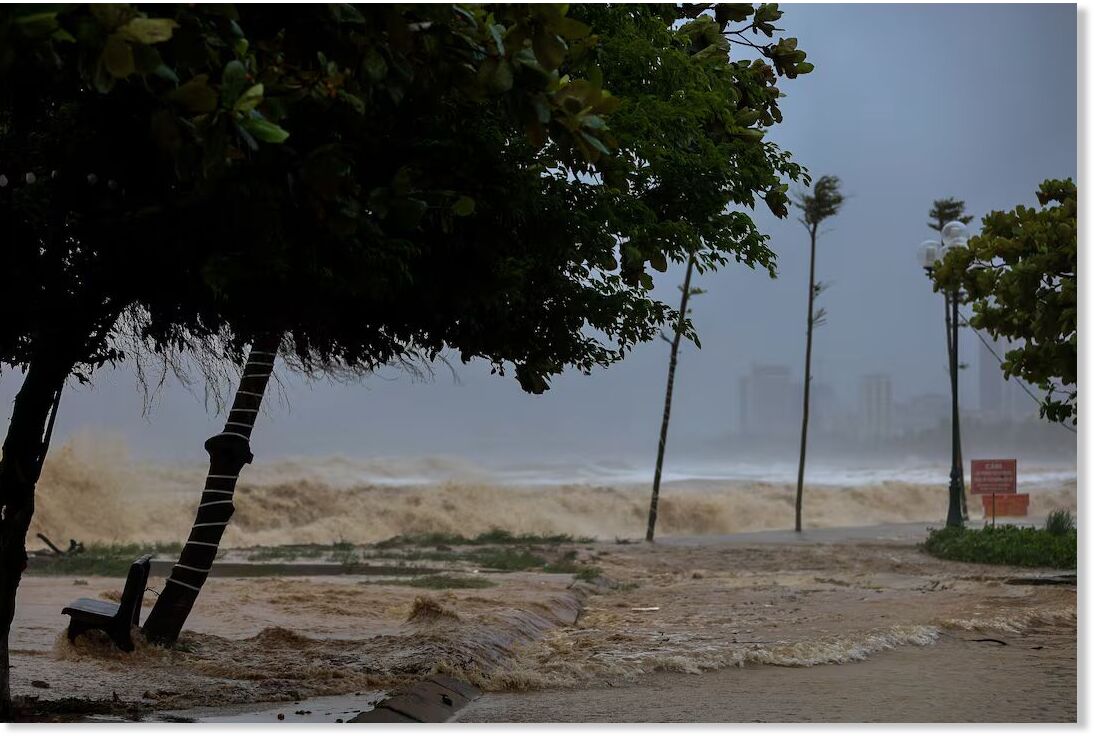
Typhoon Kajiki brought torrential rains to Vietnam's north central coast on Monday, felling trees and flooding homes, despite wind speeds tapering off from earlier in the day.
As of 0900 GMT, Kajiki was on the coast of Nghe An and Ha Tinh provinces, with wind speed easing to 118-133 kph from as strong as 166 kph, according to the country's weather agency.
"It's terrifying," said Dang Xuan Phuong, a 48-year-old resident of Cua Lo, a tourism town in Nghe An province directly hit by the storm.
"When I look down from the higher floors I could see waves as tall as 2 metres, and the water has flooded the roads around us," Phuong told Reuters.
Three people died and at least 13 were injured after Typhoon Kajiki tore into Vietnam, toppling trees, flooding streets and knocking out power to more than 1.6 million people.
The victims included a 90-year-old man whose house collapsed in the rain and a man who was electrocuted while trying to secure his roof in Nghe An province, according to state media. Another man was killed in Ha Tinh province as the storm passed through.
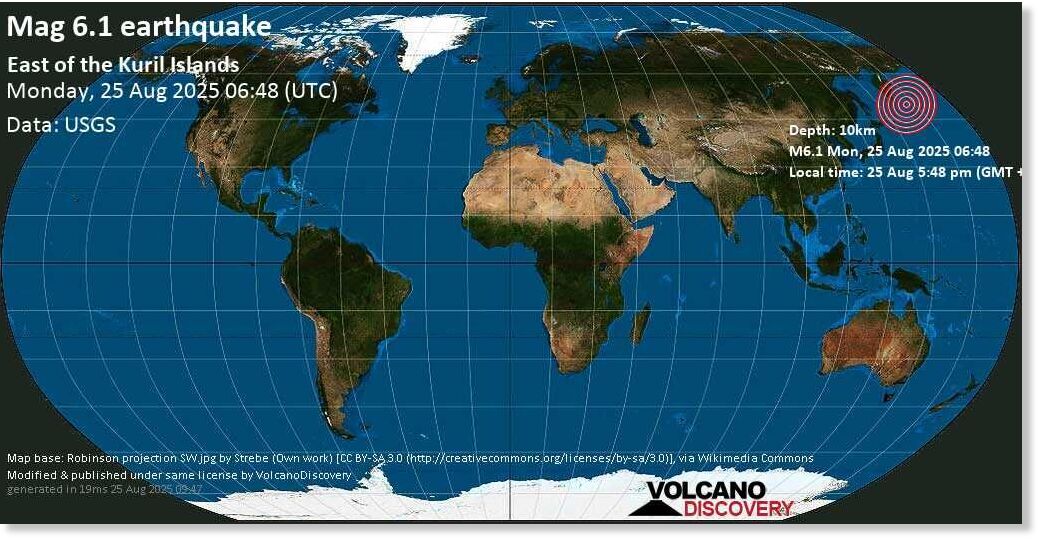
An earthquake with a magnitude of 6.1 jolted east of the Kuril Islands at 0648 GMT on Monday, the U.S. Geological Survey said.
The epicenter, with a depth of 10.0 km, was initially determined to be at 49.39 degrees north latitude and 160.04 degrees east longitude, News.Az reports, citing foreign media.
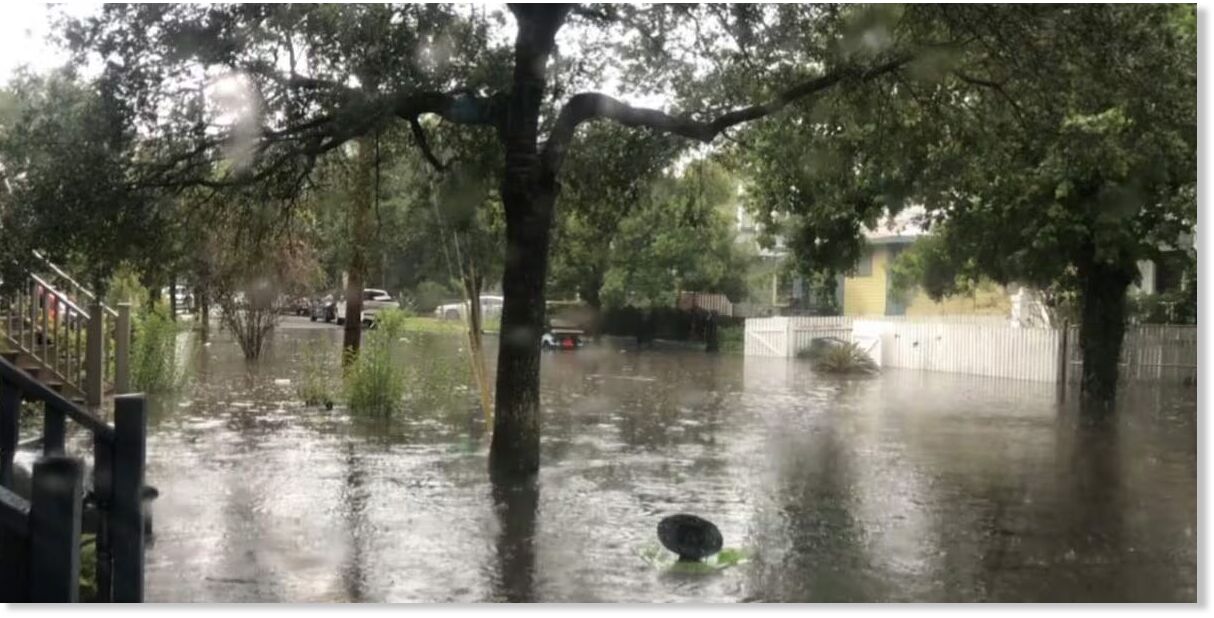
Dangerous flash flooding caused major issues on the roads in South Carolina. Charleston set a daily record on Friday, with over four inches of rain. That nearly doubled the old record, which was set back in 2008.
Two people died in central Mexico from flooding caused by heavy rains, local authorities said on Saturday, as severe downpours continued to batter parts of the country.
Two bodies were found in the city of Queretaro shortly before midnight Friday, a civil protection report said.
"They were swept away by rainwater," the report said.
Queretaro faced heavy rainfall on Saturday, causing damage to property and prompting federal authorities to initiate a military emergency response plan.
Olivia Allahusen Daily Mail Sat, 23 Aug 2025 12:53 UTC
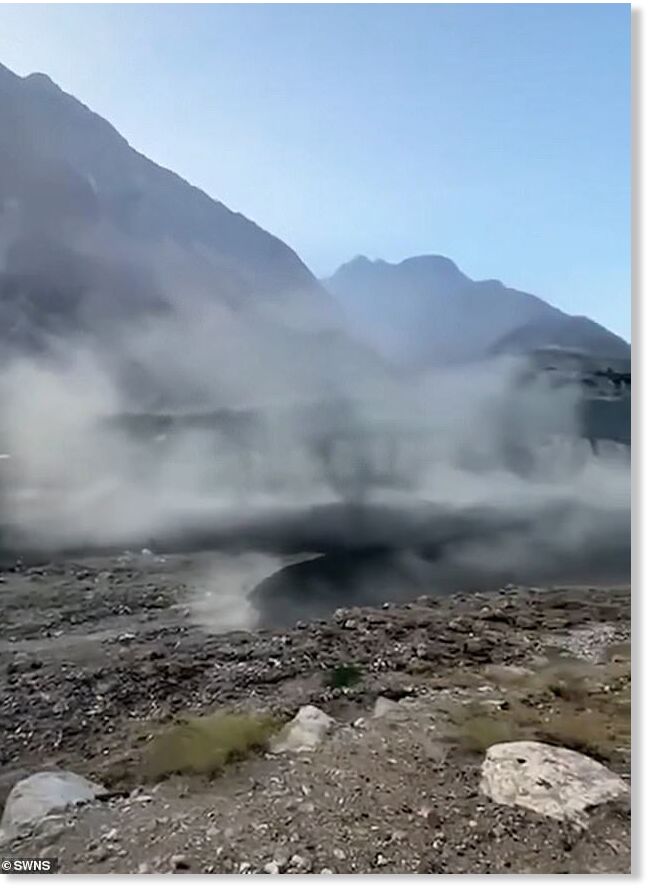
A shocking video shows a huge flood tearing through a remote mountain village in Pakistan following a massive glacial burst - leaving homes submerged by water
A shocking video shows a huge flood tearing through a remote mountain village in Pakistan following a massive glacial burst - leaving homes submerged by water.
The clip, shot from a hillside opposite Talidas village in Ghizer, northern Pakistan, captures walls of muddy water smashing through fields and roads on Friday morning.
One house on higher ground is seen collapsing as the torrent hits.
A glacial burst is the sudden and catastrophic release of a large volume of water from a lake contained by a glacier.
The disaster began in the early hours when shepherds heard rumbling in the mountains around 2.30am and ran back to warn villagers.
The midnight alert gave families precious time to move to higher ground before the water surged into Talidas just after 6.30am.
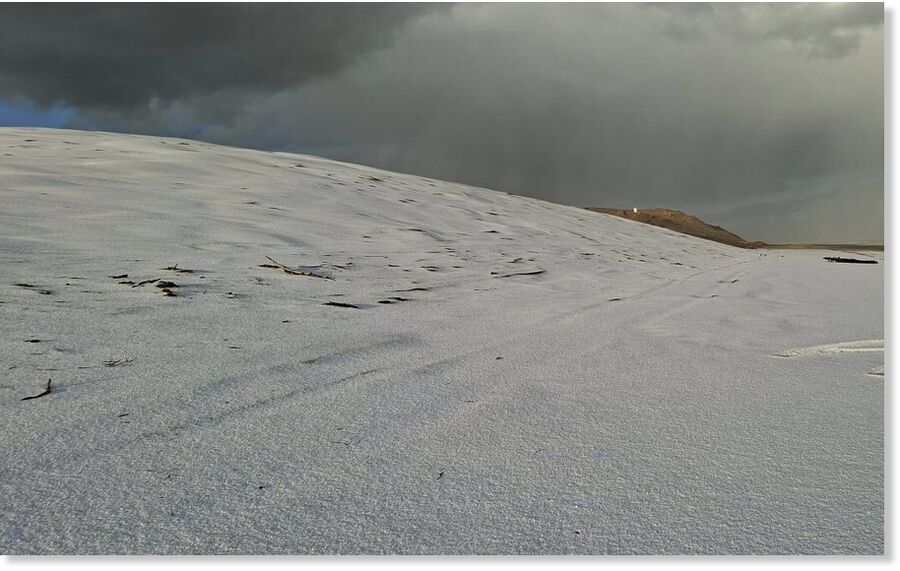
Two Northland fishermen stumbled on a scene resembling a winter wonderland after a freak hail storm left hundreds of metres of a remote beach blanketed in ice.
David Bishop, of Kerikeri, and his mate Bryce Taylor, of Glinks Gully, had been fishing at the entrance of Kaipara Harbour on Saturday when they decided to call it a day around 5pm.
Their route home took them around Pouto Point, past the historic lighthouse, and north up Ripiro Beach towards Dargaville.
A few hundred metres north of the lighthouse they saw something that had them rubbing their eyes in disbelief.
"When we were fishing we heard a bit of thunder, but no rain or anything, so sweet as, we finished fishing and come around the corner past the lighthouse, and then it was like, 'Holy s***!' We just couldn't believe it."
Comment: Update August 26
The Independent reports: