Science of the SpiritS


Attention

Scientists designing method to remove fear, boost 'confidence' and alter individual preferences via brain simulation

Brain Cells
© Ezra.com
Seika, Japan — If modern science conceived of a way to "pluck" unwanted fears, thoughts, and preferences from your mind, is that that something you would be interested in? It sounds impossible, but a new study on non-conscious brain stimulation may just make it a reality. Via a combination of artificial intelligence and brain scanning technology, scientists in Japan say they've discovered avenues to remove specific fears, boost confidence, and even alter individual preferences.

They believe that in the future these techniques may lead to new treatments for patients dealing with issues like PTSD or generalized anxiety disorder.

All of this is incredibly promising, but researchers admit they haven't perfected their approach just yet. While the treatment they developed has proven effective with many, some individuals haven't seen the same benefits.

Info

Study provides detailed look on the neuroscience of placebo effects

A new meta-analysis gives the most detailed look yet at the neuroscience of placebo effects.
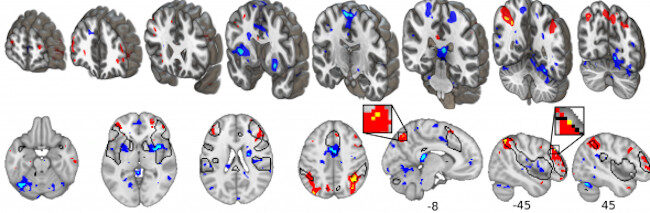
fMRI Scans
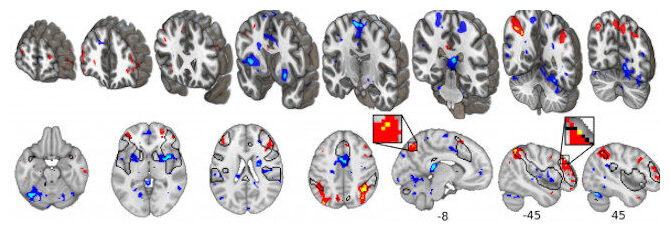
© Image provided by M.Zunhammer et al.fMRI activity during pain is reduced in the areas shown in blue. Many of these are involved in constructing the experience of pain. Activity is increased in the areas shown in red and yellow, which involve the control of cognition and memory.
Much of the benefit that a person gets from taking a real drug or receiving a treatment to alleviate pain is due to an individual's mindset, not to the drug itself, according to previous research. Understanding the neural mechanisms driving this placebo effect has long been a challenge. A meta-analysis published in Nature Communications finds that placebo treatments meant to reduce pain, known as placebo analgesia, reduce pain-related activity in multiple areas of the brain.

Previous research of this kind has relied on small-scale studies, so until now, researchers did not know whether the neural mechanisms underlying placebo effects observed to date would hold up across larger samples. This study represents the first large-scale mega-analysis, which looks at individual participants' whole brain images. It enabled researchers to look at parts of the brain they did not have sufficient resolution to see in the past. The analysis comprised 20 neuroimaging studies with 600 healthy participants. The results provide new insight on the size, localization, significance and heterogeneity of placebo effects on pain-related brain activity.

The research reflects the work of an international collaborative effort by the Placebo Neuroimaging Consortium, led by Tor Wager, the Diana L. Taylor Distinguished Professor in Neuroscience and Ulrike Bingel, a professor at the Center for Translational Neuro- and Behavioral Sciences in the Department of Neurology at University Hospital Essen, for which Matthias Zunhammer and Tamás Spisák at the University Hospital Essen served as co-authors. The meta-analysis is the second with this sample and builds on the team's earlier research using an established pain marker developed earlier by Wager's lab.

Brain

Psychological 'signature' for the extremist mind uncovered by Cambridge researchers

antifa riot seattle january 2021
Antifa continued its destruction of Seattle despite Biden's election win
Researchers have mapped an underlying "psychological signature" for people who are predisposed to holding extreme social, political or religious attitudes, and support violence in the name of ideology.

A new study suggests that a particular mix of personality traits and unconscious cognition - the ways our brains take in basic information - is a strong predictor for extremist views across a range of beliefs, including nationalism and religious fervour.

These mental characteristics include poorer working memory and slower "perceptual strategies" - the unconscious processing of changing stimuli, such as shape and colour - as well as tendencies towards impulsivity and sensation seeking.

This combination of cognitive and emotional attributes predicts the endorsement of violence in support of a person's ideological "group", according to findings published today in Philosophical Transactions of the Royal Society B.

The study also maps the psychological signatures that underpin fierce political conservatism, as well as "dogmatism": people who have a fixed worldview and are resistant to evidence.

Psychologists found that conservatism is linked to cognitive "caution": slow-and-accurate unconscious decision-making, compared to the fast-and-imprecise "perceptual strategies" found in more liberal minds.

Brains of more dogmatic people are slower to process perceptual evidence, but they are more impulsive personality-wise. The mental signature for extremism across the board is a blend of conservative and dogmatic psychologies.

Info

Scientists 'talk' to sleeping people by invading their dreams

Sleep Experiment
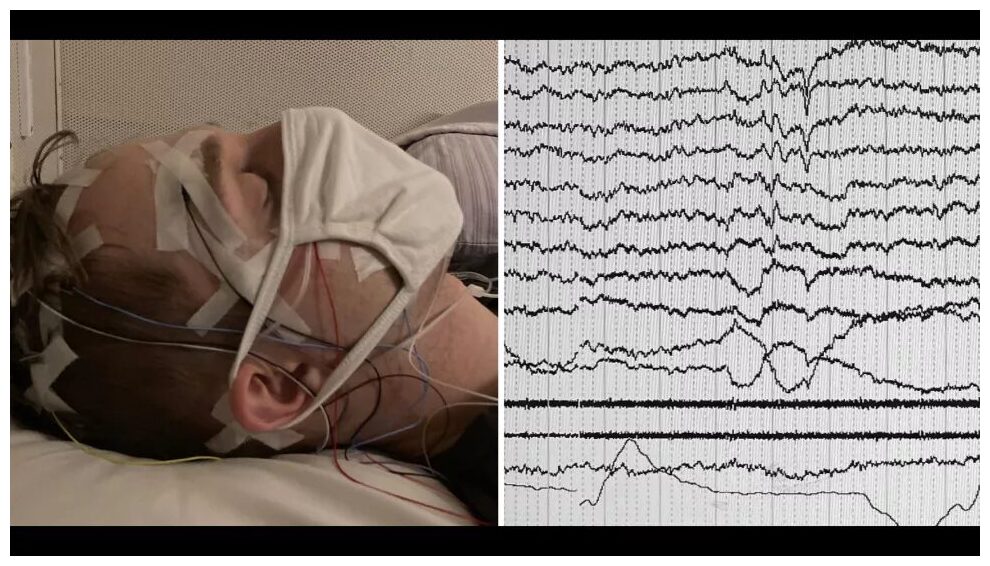
© K KonkolyA participant sleeping in the lab as electrical signals from his brain and eyes are displayed on a computer monitor.
Scientists have successfully "talked" to a sleeping person in real-time by invading their dreams, a new study shows. The researchers say it's like trying to communicate with an astronaut on another world.

Dreamers can follow instructions, solve simple math problems and answer yes-no questions without ever waking up, according to the results of four experiments described Thursday (Feb. 18) in the journal Current Biology.

The researchers communicated directly with sleeping participants by asking them questions and having them respond with eye or facial movements during lucid dreams — when people are at minimum aware that they are dreaming. (Some lucid dreamers can control what happens in their dreams.)

"You might expect that if you were to try to communicate with somebody who was asleep, they just wouldn't answer," study first author Karen Konkoly, a cognitive neuroscientist at Northwestern University in Illinois, told Live Science. Although Konkoly hoped the real-time communication would work, she said she "didn't believe it" when someone first responded to her questions from their dream.

People dream every night, but scientists don't fully understand why we dream. Studying dreams is difficult because people often forget or distort details after waking up. That's in part because the brain doesn't form many new memories while sleeping and has a limited capacity to accurately store information after the dream has ended, according to the study.

Info

Women better at reading minds than men says new study

Mind Reading
© AdobeStockThe study highlights a new psychological method for assessing 'mind-reading' abilities.
A new approach to 'mind-reading' has been developed by researchers at the University of Bath, Cardiff, and London to improve how well we understand what others are thinking. And it transpires that women are much better than men at putting themselves in someone else's shoes.

Mind-reading, sometimes referred to in psychology as 'mentalising', is an important ability enabling us to pick-up on subtle behavioural cues that might indicate that someone we are speaking to is thinking something that they are not saying (e.g. being sarcastic or even lying).

The researchers say that we all have different mind-reading abilities, with some of us inherently better than others. The fact that not all of us are good at mind-reading can cause challenges - in particular for people with autism where it can lead to social struggles in building or maintaining relationships.

To identify those people who have difficulties and to provide them with appropriate support, the team at Bath designed a new mind-reading test, which draws on data from over 4,000 autistic and non-autistic people in the UK and US.

Book 2

Suspense novelist Michael Prescott explores the non-fiction of life after death

michael prescott
Although Michael Prescott is best known as the New York Times and USA Today bestselling author of 22 suspense novels, he is also known for his blog dealing primarily with paranormal and life after death subjects. Over the past 20 years he has produced more than 1,600 blog posts with more than 50,000 comments by readers.

The end result is a departure from his fiction writing with his just-released The Far Horizon: Perspectives on Life Beyond Death, published by White Crow Books. He begins the book by examining some of the best evidence coming to us from psychical research and parapsychology over the past 138 years, since the organization of the Society for Psychical Research, then asking why, if it is so good, it is not more widely known and accepted. He offers four models of after-death consciousness, discussing each one in separate chapters. "In all four models, the space-time universe rendered by our subjective perception is the tip of the iceberg, with the other nine-tenths hidden from sight," Prescott explains. "Vast expanses of reality and vast realms of consciousness lie submerged beneath the surface, difficult for us to access. Difficult, but not impossible, as mystics, shamans, mediums, and psychics have attested throughout history."

As anyone who has thoroughly studied the evidence knows, much of it is vague, abstruse, convoluted, and often inconsistent with established religious dogma and doctrine, as well as with mainstream science. A very abstract picture of the afterlife emerges, one requiring much discernment. In effect, so much of it seems beyond human comprehension. Nevertheless, enough of it is discernible that the open-minded investigator can begin to see intelligence and clarity in the abstractness. Prescott (below) masterfully makes sense out of what seems like so much nonsense to many. As he states, it need not be "a baffling anomaly," but it can be seen as "a logical extension of our experience of reality here and now."

People 2

Best of the Web: What humans can learn from the mice utopia experiment

Mouse
In 1950, an American ethologist named John Calhoun created a series of experiments to test the effects of overpopulation on the behaviour of social animals. The animals which Calhoun chose for his experiments where mice (and later on rats). He chose rodents as these reproduce rapidly thus allowing him to observe the development of several generations of mice in a relatively short space of time.

Calhoun and his researchers found that in a space-limited/resource unlimited environment, the population of mice would explode; peak-out and then collapse to extinction. This test was replicated several times and it was found that these led to the same outcome each time. The reason for this phenomenon was found to derived from social decay which worsened with each generation. The social decay led to unrest in the environment, which in turn led to sub replacement fertility. It was concluded that nature has a limit in which social animals can interact.

John Calhoun's experiments gained world-wide recognition and his expertise was sought after by government bodies such as NASA. They present a useful yet grim insight into what could be our own future, for no matter how many times Calhoun repeated the experiment, the results led to the same inevitable conclusion: extinction.


Comment: See also: The myth of overpopulation


Music

Study finds neural benefits of early music training

Musical Notes
© CSA Images/Getty Images
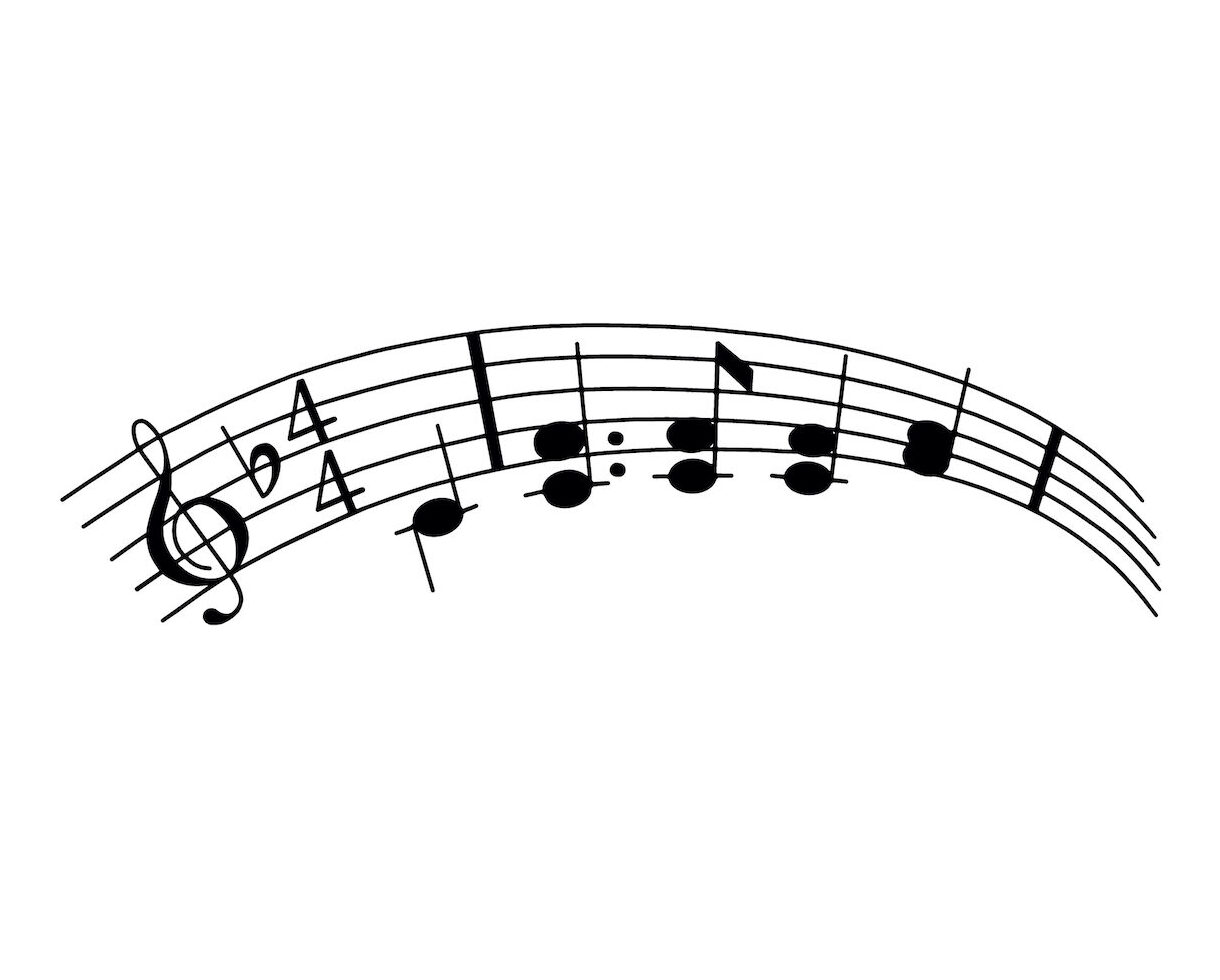
Musicians have more brain connections than non-musicians, according to new research published in the Journal of Neuroscience, and these connections are stronger in those who started training at a younger age.

This difference appeared whether or not musicians have perfect or absolute pitch, a rare talent to identify a musical note without any reference, and signifies the benefit of environmental stimulation for brain development.

"Our findings underline how the human brain is shaped by experience such as long-term, intensive music training," says lead author Simon Leipold, from the University of Zurich, Switzerland.

"This experience-dependent plasticity might be particularly strong for individuals who start intensive training early in life."

The work builds on research over the past couple of decades with experienced musicians using modern neuroimaging techniques to explore how the brain changes with dedicated training.

"Musicians have excellent listening skills," explains Leipold. "For example, they hear very subtle differences in pitch, and these enhanced auditory abilities are accompanied by functional differences in relevant brain regions when probed by a task."

Studies have also found that some brain regions of musicians are larger, such as those involved in music production.

Brain

Study: Generational trauma can change brain circuitry of an unborn baby

Sonogram baby
© Amital
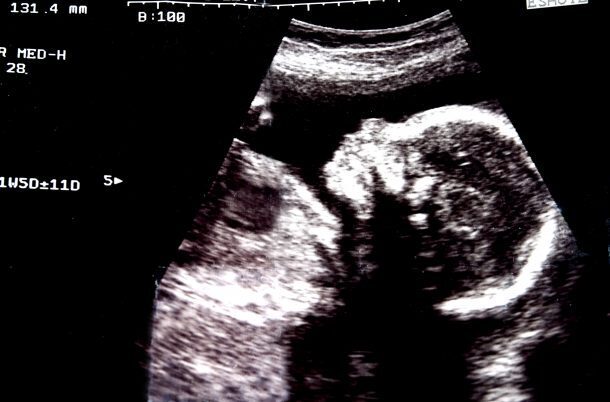
Scientists have found that mothers who have suffered childhood trauma can pass this memory down to an unborn baby - scans showed altered brain circuitry in young children

The experience of generational trauma is often found in descendants of genocide survivors, or families which suffered from extreme poverty. It can be found in people that don't on paper appear to have suffered. Generational trauma is shadowy, often unknown to people who suffer it. The experience of trauma exists everywhere, in people who have faced things that pushed their minds to switch to survival mode.

"It can be silent, covert, and undefined, surfacing through nuances and inadvertently taught or implied throughout someone's life from an early age onward," licensed clinical psychologist and parenting evaluator Melanie English, PhD, explained to Health.

Info

Bigelow Institute for Consciousness Studies offers prize money to find out if there is life after death

George Knapp interviews Robert Bigelow
© KLAS-TVGeorge Knapp interviews Robert Bigelow.
Mystery Wire — Is there credible evidence to support the existence of an afterlife? A Las Vegas businessman says he will spend a million dollars to find out.

Las Vegas space entrepreneur Robert Bigelow, known for his funding of UFO research projects, has launched a new project.

Today, the Bigelow Institute for Consciousness Studies (BICS) announced a global essay contest. BICS is seeking input from scientists, religious scholars, consciousness researchers, and anyone else who can provide evidence of an afterlife.

As an incentive, BICS will award $500,000 for the top essay, $300,000 for the second best, and $150,000 for third place.

"The Bigelow Institute for Consciousness Studies, was formed to try to conduct research and facilitate research into the possibility of the survival of human consciousness beyond bodily death, Bigelow told Mystery Wire in an exclusive interview, "and, if that is true, then to explore what is the other side all about?"