Science of the SpiritS


People 2

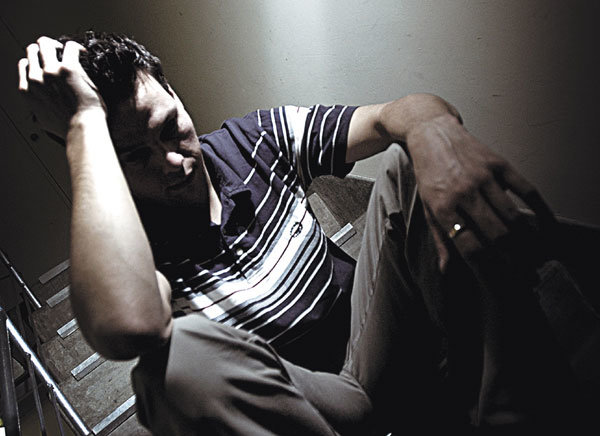
A man's challenge of emotional presence

Onandaga cave
Awhile back, I was taking a tour of a cave in Missouri. As our trolley rolled through the cavern, I was surprised to see people taking pictures....of the walls of the cave. Not pictures of the cavern or some spectacular formation of stalagmites, just pictures of the wall. Rock. I found this rather bewildering and couldn't imagine these folks looking back in a few years at these dimly lit pictures or sharing them with their unfortunate friends.

This is perhaps an extreme example, but it's also something I see whenever I go on vacation. There are people who seemingly cannot walk a few feet without stopping to take a picture. You're seeing this phenomenon at music concerts, too. Instead of holding up a lighter, people hold up their digital cameras to snap a photo.

I've never been much of a picture person myself. To me the payoff - the documentation of a moment in time - is not worth the interruption of the moment itself. I want to soak the whole experience into my brain as it happens, letting it flow and taking it in through both my eyes instead of through the lens of a camera.

Of course I understand the desire to capture memories and recognize that for a photography buff, taking the picture is the experience. And how many pictures you like to take isn't a big deal or test of your manliness. Rather, I mention my feelings about picture taking simply because it relates to my philosophy toward life itself. My goal is to be as fully present in every moment of my life as possible. And I humbly submit that this goal is one that every man should strive for.

Being fully present in all aspects of our lives - emotional, physical, and mental - is a manful way to live. It involves the self-control necessary to focus and engage body and soul with the world, while avoiding being distracted from what really matters. And it requires the bravery to face the world head on - to open oneself up to both unmitigated pain and undiluted joy. The easier path is to pursue every shiny thing that crosses our way or to numb ourselves and sleepwalk through life. But the easy path is not the path of true manliness. Isn't it about time you started showing up for your life?

Comment: Also see


Heart

The amygdala is associated with charitable giving and positive social behavior, not just fear

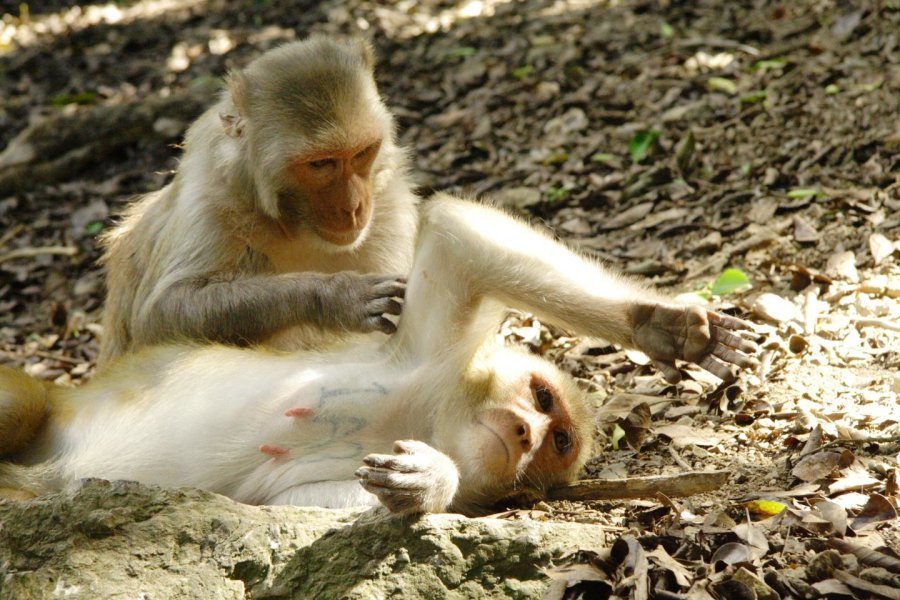
rhesus macaque grooming
© Lauren BrentOne rhesus macaque grooming another, the primary way these monkeys act prosocially toward one another. Work with these animals helped University of Pennsylvania researcher Michael Platt and other scientists draw their conclusions about the function of the amygdala.
The amygdala, a small structure at the front end of the brain's temporal lobe, has long been associated with negative behaviors generally, and specifically with fear. But new research from Michael Platt, the James S. Riepe University Professor in the psychology, neuroscience and marketing departments at the University of Pennsylvania, along with Steve Chang from Yale University and collaborators from Duke, shows this collection of nuclei can also influence positive social functions like kindness and what might be called charitable giving in humans.

Such a link could have implications for people with autism, schizophrenia or anxiety-related disorders, Platt said.

"What we're trying to do is both identify and understand the basic brain mechanism that allows us to be kind to each other and to respond to the experiences of other individuals," he said. "We're also trying to use that knowledge to evaluate potential therapies that could improve the function of these neural circuits, especially for those who have difficulty connecting with others."

Comment:


Crusader

Serving the dying: Death midwives

Dying
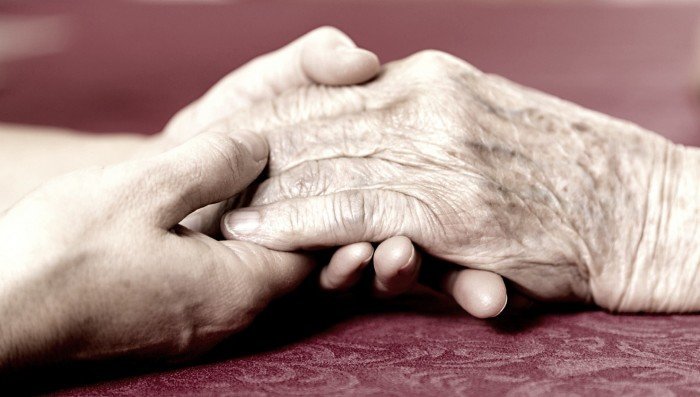
Western society has grown increasingly fearful of aging and death. But an increasing number of people are stepping forward to love and comfort the dying.

They call themselves death doulas, or death midwives. Some prefer the term 'end-of-life doula' or 'soul midwife.' And some, like me, are simply hospice volunteers. The roles vary, as do the titles. Some are paid, but most are not. Nevertheless these people are connected by a common thread—they are all drawn towards serving the dying. And whatever the moniker, a growing number of individuals, many with a background in yoga and meditation, are joining them.

Comment: See more: The Health and Wellness Show - Death: No One Gets Out of Here Alive


Family

Helping others can protect you from the stress of getting lost in your own problems

stress depression
You may think you're too overwhelmed with your personal troubles to cheer up a sad friend, the same way you're too busy at work to take a moment to recognize a colleague. But research suggests you're hardly doing yourself any favors by focusing on your own problems at the expense of supporting others.

According to a new small study, helping others can actually protect you from the negative effects of stress. For the study, researchers at the University of California, Los Angeles and the Yale University School of Medicine recruited 77 adults between ages 18 and 44. Each evening for two weeks, participants received a reminder to complete a series of questionnaires.

One questionnaire asked about any stressful events they'd experienced, related to work, relationships, finances, and other domains. Another asked participants to indicate any prosocial (helping) behaviors they'd demonstrated, from holding open a door to helping out with schoolwork. Other surveys asked participants to report how often they'd experienced certain positive and negative emotions that day, and to rate their mental health for that day on a scale from 0 to 100.

Comment: See also:

The Greatest Epidemic Sickness Known to Humanity
SOTT Talk Radio #64 - The 'Wetiko Virus' and Collective Psychosis: Interview With Paul Levy


Snakes in Suits

Keep calm and get out: What no one will tell you about dealing with the office psychopath

Psychopath
© Unknown
"My boss is a psychopath". It is such a common complaint that is has become a cliché, but this is because there are some psychological disorders that work very nicely in clearing a career path to the top.

Psychopaths, narcissists and machiavellians are known as the "dark triad" in leadership. They can be charming, charismatic and convincing (when they need you) and they project the sort of self-confidence and certainty that is reassuring in a chaotic world, says leadership and culture consultant, Quentin Jones.

While one per cent of the general population is psychopathic, it is four times that percentage among CEOs, according to research. These people are drawn to positions of power and fame and, all too often, our organisations reward them despite the bullying and destruction they leave in their wakes, says Jones, the managing director of CLS360.

Management writers will say you can deal with a bully by confronting them, or telling management or human resources - which may work if you are not dealing with a boss. A truly malevolent personality will chew you up and spit out your remains with distain.

Comment: Dealing with a cold blooded 'dark triad' individual is, as a rule, dangerously confusing. If they have an individual in their sights they are notoriously persistent in doing everything they can to take them down. But being aware is half the battle, and seeking serious and competent support, while becoming better informed, is the best way to avoid serious harm. Check out:


Clipboard

What's the secret to writing painlessly & productively?

writing
© Thomas Pullin
I first encountered Robert Boice's name about three years ago, somewhere online; after that, it started popping up every other month. Boice, I learned, was a US psychologist who'd cracked the secret of how to write painlessly and productively. Years ago, he'd recorded this wisdom in a book, now out of print, which a handful of fans discussed in reverent tones, but with a title that seemed like a deliberate bid for obscurity: How Writers Journey To Comfort And Fluency. Also, it was absurdly expensive: used copies sold for £130. Still, I'm a sucker for writing advice, especially when so closely guarded. So this month, I succumbed: I found a copy at the saner (if still eye-watering) price of £68, and a plain green print-on-demand hardback arrived in the post. So if you hunger to write more, but instead find yourself procrastinating, or stifled by panic, or writer's block, I can reveal that the solution to your troubles is...

Comment: Writing by hand benefits the brain: The lowdown on longhand


Hourglass

Zen Gardner: What really matters?

Birds
It's amazing how the big questions in life are pushed to the end of the line. Sure everyone wonders about the "big stuff" on and off, but their lives are too preoccupied with other issues that they've been told are more pressing and important - when it's nothing of the sort.

This applies directly to the on-going awakening and how to put our best foot forward in times like these. How best can we be used to effect change? What is the most productive and effective course of action in our personal lives?

With everything at stake at this crucial juncture in history these questions become profoundly important. And the answers just may surprise each of us.

Comment: We were made for these times


Heart - Black

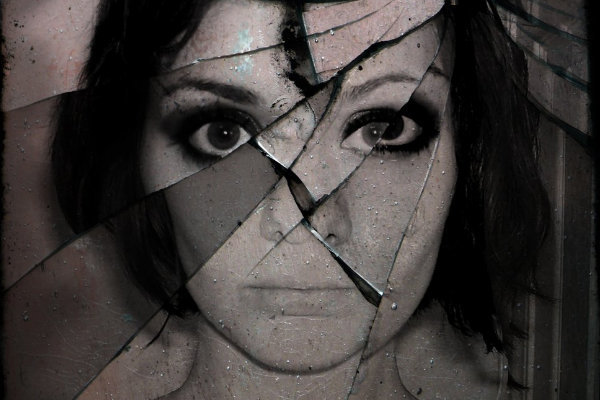
Healing the Mother wound that was inflicted on you as a child

broken woman image
I want you to take a moment and think about the kind of relationship you had with your mother.

What did it look like? How did it feel? Do your thoughts drift to the good times, or do they dwell on the bad times?

Our mothers were pivotal players in our development as children and they formed the very foundation of our emotional and psychological growth. To this very day our mothers continue to influence us both through our deeply ingrained perceptions of life and through our feelings towards ourselves and other people.

But although our mothers may have tried their very best to nurture us, our relationships with them may have been laced with undercurrents of shame, guilt and obligation. In fact, we may continue to carry unresolved grief, fear, disappointment and resentment towards our mothers long into our adult lives. This deep pain is usually the result of unhealed core wounds that are passed on from generation to generation.

Comment:


Sherlock

Finding your hidden cognitive biases

narrow mind, cognitive bias
In cognitive psychology, there is an effect called the "better-than-average" effect.

The basic concept of an "average" implies that 50% of people will be below average, and 50% of people will be above average. However, when you ask people if they're below or above average when it comes to any particular skill (e.g., driving or singing in tune), far more people will rate themselves as above average than the 50% that would be expected.

Likewise, even when we know about certain cognitive biases, we often think of ourselves as being immune to those biases. We think "Other people might fall into that cognitive trap, but I'm too smart for that."

If you're looking to optimize your thinking, it can be worthwhile to look at which cognitive biases you see yourself as being immune to.

Comment: While we like to think we're rational human beings, we are actually prone to hundreds of proven biases that cause us to think and act irrationally:


Toys

Why adults have to stop trying so darn hard to control how children play

Children playing
© Daily Record
"Cut it out!" a little girl screams at the top of her lungs.

"Yeah!" Another girl yells. "Back away!"

I look over in the far corner of the woods to see a small group of girls holding hands and forming what looks to be a wall in front of a teepee they just created. A little boy stands in front of them with a face that is beet red. He is shaking from head to toe.

"I will NOT!" he yells back. "You have to let me play! That is the rules!" He gets dangerously close to them.

Comment: