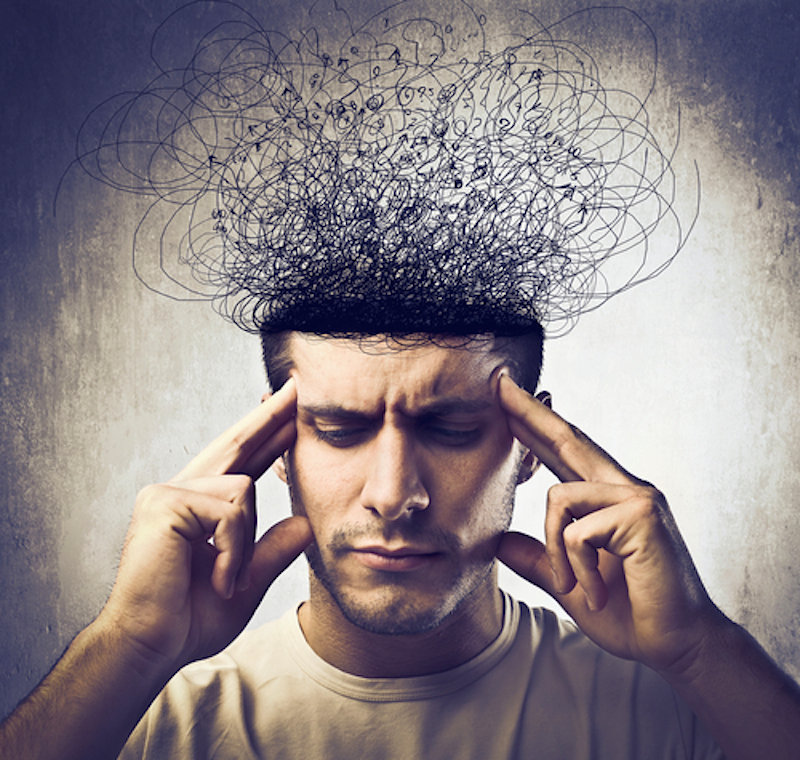
© insights.dice.comCritical Thinking or Religion: thought processed or processed thought
Scientists have found critical thinking is suppressed in the brains of people who believe in the supernatural.
Published in PLOS One, their study examines how
the parts of the brain responsible for empathy and analytical reasoning are linked to faith and spiritual thinking. It suggests religious beliefs and scientific thinking clash because different brain areas are involved in both cognitive processes.
People who believe in the supernatural appear to suppress areas associated with critical thinking. "From what we understand about the brain, the leap of faith to belief in the supernatural amounts to pushing aside the critical/analytical way of thinking...", says lead author Tony Jack, a professor of philosophy at Case Western Reserve.
More empathy, more religionIn previous research, Jack and colleagues had identified, thanks to fMRI scans,
two networks of neurons that competed with each other to let individuals see the the world either in religious or in scientific terms. They say the brain has an
analytical network of neurons which triggered critical thinking and a
social network which enabled empathy towards other and spiritual thinking. Participants who went through the scans were
presented with a physical or ethical problem. To solve it, the brain appeared to
boost activity in one of the two networks, while suppressing the other.
Comment: In conjunction with our religious practices and spiritual beliefs, whatever we define those to be, we can easily find ways to boost our awareness, increase cognitive thinking, study and apply scientific concepts while appreciating life and what it offers on a spiritual level. In a normal person, both religious practices and scientific thinking can reside equally unsuppressed as one tempers the other, creating a balance.
As part of
the PLOS One study (but not mentioned in this article), psychopathy is identified as 'callous effect'—an absence of emotional response to pain and suffering in others, with serious deficits in: interpersonal connection, prosocial behavior, moral reasoning. A psychopath
does not have the conflict between moral concern and analytical thinking because
there is no moral concern. This suggests that
the psychopath does not have two neuron networks operational. While normal people may have an 'either/or' choice of neuron networks dependent on need and circumstances, the psychopathic brain utilizes only one.
For more on this topic from the PLOS One study, see also:
Study of thinking patterns and religious beliefs indicates non-believers report same personality traits as psychopaths



















Comment: Want more wisdom and better judgement? What controls heart rate variability? The vagus nerve does, and you can learn how to stimulate it with the Éiriú Eolas meditation program.