Science of the SpiritS


People 2

People are naturally attracted to those whose emotions they understand

emotional attraction
People rated someone's attractiveness after they demonstrated emotions including happiness and fear.

Almost everyone has experienced a near instant attraction to another person, whether just social or something more.

According to new research, neuroscientists now think this could be down to an instant ability to read facial emotions.

People who find each other's emotions easy to read are naturally drawn to each other.

Reading emotions successfully gives people the feeling of understanding and connectedness.

Magnify

The reasons why some couples differ so much in their physical attractiveness

blind date

Are couples who are mismatched in physical attractiveness just as happy?


Partners who get to know each other over time tend to differ more in physical attractiveness, a recent study finds.

In contrast, couples who get involved with each other soon after meeting are often much close in physical attractiveness.

Professor Eli Finkel, who co-authored the study, explained:

Bulb

Imagery effective way to enhance memory, reduce false memories, study finds

memory
© Yellow Hat
Atlanta -- Using imagery is an effective way to improve memory and decrease certain types of false memories, according to researchers at Georgia State University.

Their study examined how creating images affected the ability to accurately recall conceptually related word lists as well as rhyming word lists. People who were instructed to create images of the list words in their head were able to recall more words than people who didn't create images, and they didn't recall false memories as often. False memories occur when a person recalls something that didn't happen or remembers something inaccurately.

The findings are published in the Journal of General Psychology.

"Creating images improved participants' memories and helped them commit fewer errors, regardless of what kind of list we gave them," said Merrin Oliver, lead author of the study and a Ph.D. student in the educational psychology program in the College of Education & Human Development at Georgia State.

Comment: The information in the article speaks to the benefits of a more active type of thinking and remembering. Modern life, technology, entertainment, etc., have gotten people out of the habit of using their brains actively in favour of a more passive mode. The brain is like a muscle: the more you use it, the more it can do.


Heart

Life lessons learned from a near-death experience

woman on newspaper
© unknownAnita Moorjani
She was dying...

Anita Moorjani remembers feeling her spirit leave the bounds of her cancer-ridden body and drift into another dimension. All of her loved ones, including her husband, assumed she would take her last breath in moments.

As she drifted towards death, she experienced something magical: "I was engulfed in a total feeling of love," she explained. "I also experienced extreme clarity of why I had the cancer, why I had come into this life in the first place, what role everyone in my family played, and generally how life works."

"When I crossed over, I realized that I had been making decisions and living life from a place of fear rather than love. This approach to life had made me sick."

Comment: Who is making your decisions?


People 2

Caring too much about what others think of you could be holding you back

The eyes of others our prisons; their thoughts our cages. - Virginia Woolf
goldfish
Your mother has always said you are smart, but lack ambition.

A former boss once praised you for your creativity, but said you were too unorganized.

One of your college professors complimented you on your research skills, but criticized your "scatterbrained" writing style.

Each of those sets of comments contains what could be perceived as positive and negative feedback, if you evaluate them objectively.

Cassiopaea

Access your inner shaman: Using the universal life force to heal your body

We live in a sea of subtle energies. We can become conscious of them and learn to use them.
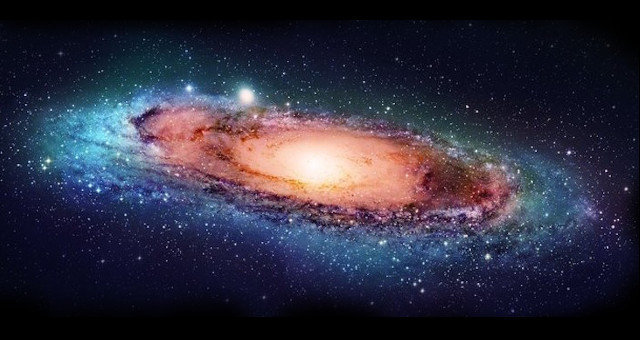
andromeda
Ancient cultures understood that we live in a vast sea of energy. They understood that the planets and stars are conscious beings who communicate with each other. They believed that the trees serve as antennas, which allow natural subtle energies and information to flow up from the Earth to the stars and planets, and from all other celestial bodies into the Earth. They taught that everything and every being has consciousness and channels this energy according to its capabilities, to help facilitate this essential cosmic dialogue. In fact, they understood that all matter, including the physical body, is a gathering of this universal energy. They recognized that our thoughts and emotions are a form of energy, and that when these are in harmony with the living universal energy field, we become clear channels. Then, the life force of the Earth and cosmos flows through us more smoothly and abundantly, guiding our evolution as new perspectives are revealed and advanced abilities are awakened within us. These abilities include heightened creativity, extrasensory perception and the ability to bring about dramatic physical healing. Shamans learn to feel, sense and use this energy without filtering or distorting it. They often refer to this process as becoming a "hollow bone".

Question

Why are the mysteries of the pineal gland ignored by mainstream media?

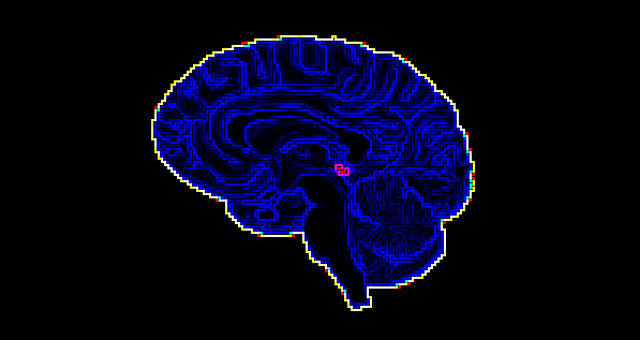
pineal gland
There is an endocrine gland within our bodies that, when unimpeded, receives more blood flow per cubic volume than almost any organ in the body, including the heart.[1][2] It has been written about in masked language, or painted in art throughout the ages, and represented in a staggering number of ways for thousands of years - yet modern medicine hasn't found it interesting enough to study clinically - or has it?

The pineal gland's true purpose is shrouded in mystery. Is this intentional?

Will it take an information coup to keep us from being estranged from the cosmic gifts which so many of our ancestors refer to as being locked within this tiny pine-cone shaped mass of cells, or is there modern, scientific corroboration for what the ancients called the Epicenter of Enlightenment just waiting for us to peruse?

Comment: For more on the pineal gland see:


Fire

Dr. Kelly Brogan: Sometimes suffering is inevitable

suffering
Challenges can be exactly what the doctor ordered. Sometimes even tragedy is part of our path.

Productivity. Certainty. Predictability. Consistency.

These words feel like a cozy blanket to our minds. And, at least since the Industrial Revolution, it has been a shared agreement that these values amplify and support the economy while also offering the average citizen an opportunity to opt into an illusion of safety. It is an illusion because there is no room for true individuality in a society that prizes a sense of safety over all else. There is no room for growth, there is no room for transformation, and there is no room for suffering. Writer and researcher Graham Hancock calls this the War on Consciousness, exacted through narrow definitions of permissible states of consciousness (and support of chemicals that suppress consciousness) in support of corporate and governmental control.

Perhaps this is the prison cell that we willingly walk into, sighing with relief as the door locks shut.

Bulb

Increase your dopamine levels and feel good naturally

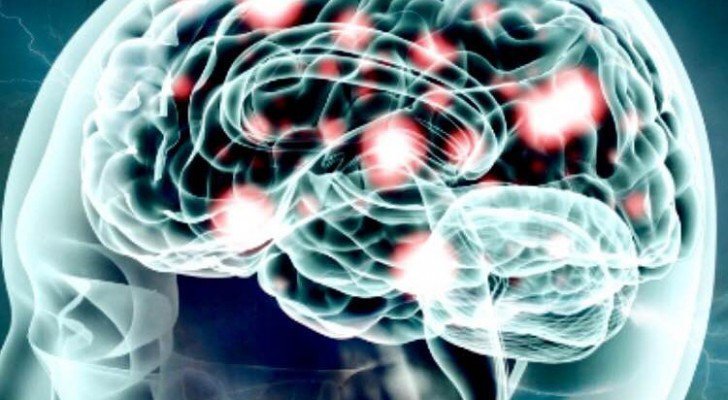
brain firing
"Dopamine is a neurotransmitter that helps control the brain's reward and pleasure centers. Dopamine also helps regulate movement and emotional response, and it enables us not only to see rewards, but to take action to move toward them." - Psychology Today

There are a lot of articles on the internet about dopamine and how it affects your mood, behavior, energy, and focus. What's not commonly spoken about, however, is how dopamine is affected by your perception. Discussed more rarely still is the reason why your dopamine levels may be low. Below are 10 ways to increase your dopamine levels, courtesy of Power of Positivity, as well as my own observations regarding the underlying issues which may have led to each situation, and how to tackle them.

Einstein

Mathematical ability revealed in brain scans

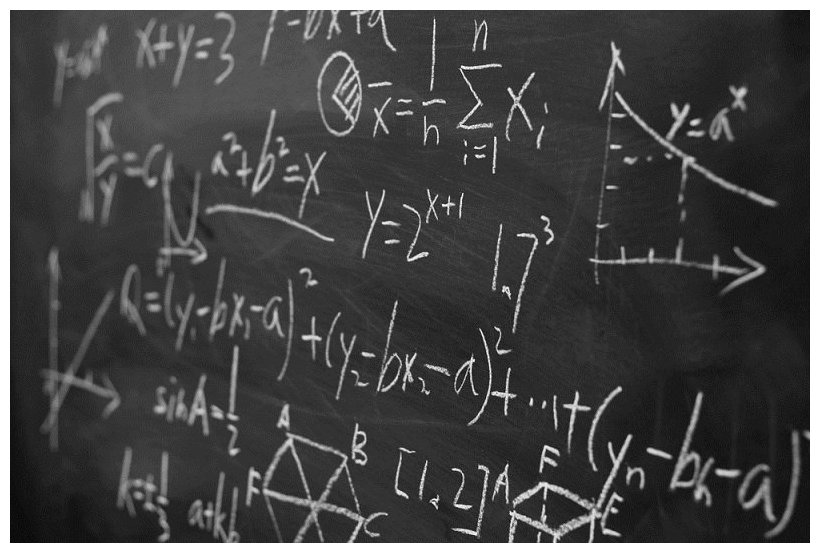
Mathematical problems
© Christian ChanHow your brain processes complex mathematical problems is very different from how it processes language.
Albert Einstein once said that his mathematical genius had nothing to do with language: "Words and language, whether written or spoken, do not seem to play any part in my thought processes."

And now high-definition brain scans prove he had a point. The ways that the brain processes language and complex mathematical concepts are quite different, according to a new study.

The notion that humans first developed mathematical abilities as an offshoot of early forms of language has been a long-standing hypothesis, according to the study authors. And some studies have suggested that the way the brain wrangles abstract math concepts has more in common with language processing than it does with simple number recognition and formula computing.

But this idea has opponents — including many mathematicians, the researchers noted — who argue that understanding complex math involves perception pathways that differ greatly from those that untangle words.

To find out which idea held true, researchers turned to a type of noninvasive scan called fMRI (functional magnetic resonance imaging), which creates high-resolution images that can map changes in neural activity triggered by blood flow. In that way, researchers would be able to see which parts of the brain lit up during different types of tasks.

For the experiments in the study, the scientists selected 15 subjects who were trained mathematicians and 15 subjects who were well educated but did not specialize in math. The researchers posed a series of statements to each subject on a range of topics — math and nonmath — which participants were asked to identify as "true," "false" or "meaningless."