Society's ChildS


Stormtrooper

US: Mother battles Michigan over daughter's medication

Maryanne Godboldo forced medication
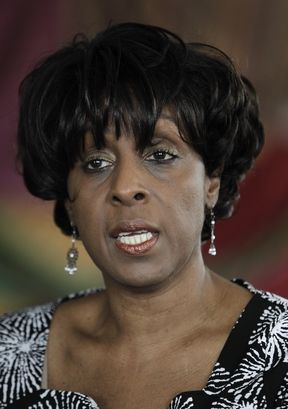
© AP Photo/Paul SancyaThis May 12, 2011 photo shows Maryanne Godboldo in Detroit. Godboldo is locked in a battle with Michigan's Department of Human Services over her right to determine whether her physically impaired daughter should continue taking the anti-psychotic drug Risperdal, since she claims the girl has responded better to holistic treatment.
Frustration over her physically impaired daughter's medical care led Maryanne Godboldo to lash out at what she considered state interference and into a 12-hour standoff when Detroit police came to take the girl away.

When it ended, the unemployed mother was in handcuffs; her daughter placed in a psychiatric hospital for children.

Godboldo now is locked in a bitter battle with Michigan's Department of Human Services over her right to determine whether the girl should continue taking the anti-psychotic drug Risperdal and the government's responsibility to look after the child's welfare.

Godboldo doesn't trust doctors much - she blames some of the girl's past medical problems on possible physician negligence and complications from childhood immunizations, but did not name the doctors or release her daughter's medical records to The Associated Press. She claims the girl has responded better to holistic treatment that does not include Risperdal.

But the state is not budging on its assertion that without the proper medication, Ariana is at risk.

"Our mandate is to go into court and prove there is medical neglect," said Human Services Director Maura Corrigan, who declined to speak directly about Godboldo's case due to the ongoing court proceedings.

"Is there harm to the child? That's what we are trying to assess," Corrigan told the AP in a recent interview.

A defiant Godboldo still believes she was right to defy police, despite five days in jail and criminal charges, including discharge of a firearm, three counts of assault with a dangerous weapon and resisting officers.

"I was in my home. Why should I come out? They were invading my home," Godboldo said.

Heart - Black

Malaysia: Sexual violence has reached epidemic levels

All Women's Action Society (Awam) notes with concern The Malay Mail's front page story (May 19) on the alarming rate of sex crimes statistic saying that 10 women become victims of rape every day and that in average every two-and-a-half-hours one woman gets raped, according to latest statistics released by Bukit Aman.

However, we'd like to add that while these police statistics are alarming, they don't convey the true scale of the crime. Applying the general rule of thumb that only one in 10 cases of rape is reported, the more accurate picture is approximately one rape happens every 15 minutes in this country.

Heart - Black

El Salvador Sees Epidemic of Violence Against Women

El Salvador violence against women
A rise in brutal killings of women, known as "femicides," in El Salvador can be blamed on various factors, from gender inequality to organized crime to a society hollowed out by gang culture, features common to many parts of Central America.

Non-governmental organization Salvadoran Women for Peace (Organizacion de Mujeres Salvadoreñas por la Paz - ORMUSA), which tracks violence against women, reported that, according to police statistics, there were 160 such murders committed in the country in the first three months of the year. This would put the country on track for a record 640 such killings in 2011 - higher than any year since the organization began to track the issue in 1999.

Radar

Why Privacy Matters Even if You Have 'Nothing to Hide'

Image
© Unk.
When the government gathers or analyzes personal information, many people say they're not worried. "I've got nothing to hide," they declare. "Only if you're doing something wrong should you worry, and then you don't deserve to keep it private."

The nothing-to-hide argument pervades discussions about privacy. The data-security expert Bruce Schneier calls it the "most common retort against privacy advocates." The legal scholar Geoffrey Stone refers to it as an "all-too-common refrain." In its most compelling form, it is an argument that the privacy interest is generally minimal, thus making the contest with security concerns a foreordained victory for security.

The nothing-to-hide argument is everywhere. In Britain, for example, the government has installed millions of public-surveillance cameras in cities and towns, which are watched by officials via closed-circuit television. In a campaign slogan for the program, the government declares: "If you've got nothing to hide, you've got nothing to fear." Variations of nothing-to-hide arguments frequently appear in blogs, letters to the editor, television news interviews, and other forums. One blogger in the United States, in reference to profiling people for national-security purposes, declares: "I don't mind people wanting to find out things about me, I've got nothing to hide! Which is why I support [the government's] efforts to find terrorists by monitoring our phone calls!"

Attention

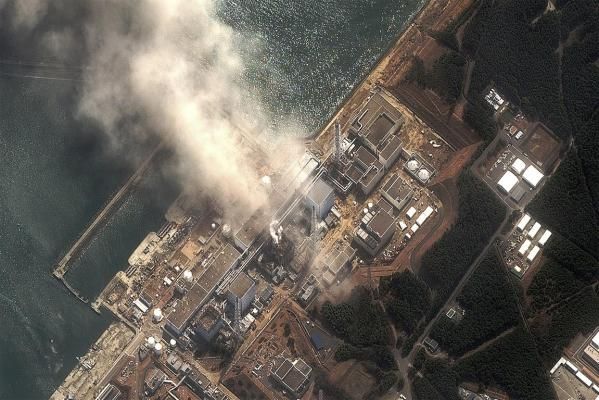
Japan: Total 250 tons of radioactive water leaked into sea early May

Fukushima plant
© n/a
Highly contaminated radioactive water that leaked into the sea in earlier May from a pit near a seawater intake of the No. 3 reactor at the Fukushima Daiichi nuclear power plant totaled 250 tons and contained an estimated 20 terabecquerels of radioactive substances, Tokyo Electric Power Co said Saturday.

The estimated amount of radioactive substances from the plant, crippled by the March 11 earthquake and ensuing tsunami, is about 100 times the annual allowable limit for release outside the plant, said TEPCO.

Megaphone

Spain's Socialists routed in elections

Image
© Emilio Naranjo/EPAFrom left: The mayor of Madrid, Alberto Ruiz-Gallardón, People's party president, Mariano Rajoy, and president of the region of Madrid, Esperanza Aguirre, celebrate.
The opposition People's party hopes to turn local and regional poll momentum into victory at a national level

Spain's ruling Socialists have suffered stinging losses in local and regional elections and now face a balancing act between voter anger over high unemployment and investor demands for strict austerity measures.

A week of protests by Spaniards fed up with the stagnant economy and the EU's highest jobless rate preceded Sunday's elections, which left the Socialists out of power in most of the country's cities and almost all the 17 autonomous regions.

Pressure could now grow from inside and outside the Socialist party for the prime minister, José Luis Rodríguez Zapatero, to call early elections, although he vowed on Sunday night to hang on to the end of his term in March next year.

Popcorn

Judgment Day No Show

Image
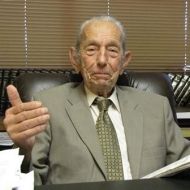
© UnknownUS pastor Harold Camping spent millions on billboard posters announcing Judgment Day.
SINCE you're reading this, you'll know a prediction that civilisation was due to end last night failed to come true.

US pastor Harold Camping, 89, spent millions on billboard posters announcing Judgment Day.

He said the end would come as the clock struck 6pm in the world's various time zones.

Camping explained the time was exactly 7,000 years since the flood in the biblical story of Noah's Ark.

He added 200 million would ascend to heaven and the Earth would finally be consumed by a fireball on October 21.

Chalkboard

Doomsayer confused as world doesn't end

Image
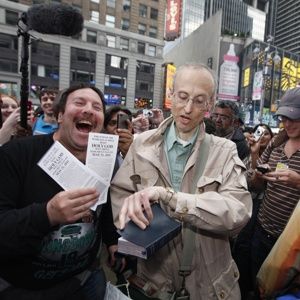
© Angel ChevresttAPOCALYPSE NO! Amid guffaws, Doomsday "prophet" Robert Fitzpatrick (center), who spent $140,000 on Rapture get-the-word-out ads, counts down the seconds to the realization that it isn't over till it's over -- and it's NOT over!

That's a Wrapture.

When the world did not end at precisely 6 p.m. yesterday, Doomsday prophet Robert Fitzpatrick's fragile grasp on reality crumbled.

"I don't understand why nothing is happening," said Fitzpatrick, flipping through his Bible for clues to why Rapture failed to show up on time.

"It's not a mistake. I did what I had to do. I did what the Bible said," he said, looking increasingly disheveled and confused as he stood in Times Square before mocking crowds.

A kooky Christian cult predicted that corpses would line the streets and deadly earthquakes would swallow up sinners beginning at 11:59 p.m. Jerusalem time on May 21, 2011.

Bizarro Earth

Apocalypse? Not now, despite all the signs

Image
© Jean-Pierre Mestanza/Jersey JournalGroup predicts May 21, 2011 as Judgment Day
At 6 p.m. today, several things happened in New Jersey: a car accident in Edison, rain in Sparta. A PATH train pulled into Newark Penn Station.

But the world did not end.

"Nope," said State Police Sgt. Stephen Jones. "We're still here."

He added that no unusual activity had been reported.

May 21 had been long predicted as the day the world would begin coming to an end by Christian evangelist Harold Camping, an 89-year-old retired civil engineer who has built a multimillion-dollar nonprofit ministry and radio network based on his apocalyptic prediction.

Camping predicted that some 200 million people would be saved and ascend to heaven while those left behind would die in earthquakes, plagues and other calamities until Earth is consumed by a fireball on Oct. 21.

In New Jersey, none of this came to pass.

Eagle

US: FBI and CIA Ordered to Release Documents in Mysterious Death of Kenney Trentadue

Image
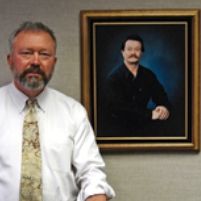
© UnknownJesse Trentadue with a portrait of his brother Kenney
Sixteen years after the death of convicted felon Kenney Trentadue, the FBI and CIA have been ordered to turn over documents about the man whose family believes he was wrongfully murdered by the federal government after the Oklahoma City bombing.

Trentadue's brother, attorney Jesse Trentadue, has sought information from the federal agencies for five years, filing multiple Freedom of Information Act (FOIA) requests. The government continued to avoid turning over records to Jesse Trentadue, leading to his filing a lawsuit in a Utah federal court.

Judge Clark Waddoups ruled last week that CIA and FBI officials must comply with the FOIA requests. Waddoups added that the agencies must provide evidence that computer drives and other files at an evidence control center in Oklahoma City and the FBI's crime lab have been thoroughly searched.

On June 10, 1995, Kenney Trentadue was arrested at the Mexican border for drunk driving. The convicted bank robber was held in a Southern California prison for several weeks. Because of parole violations in Oklahoma, on August 18 he was transferred to a federal detention facility in Oklahoma City, where, four months earlier, Timothy McVeigh and Terry Nichols had blown up the Alfred P. Murrah Federal Building, killing 168 people.