
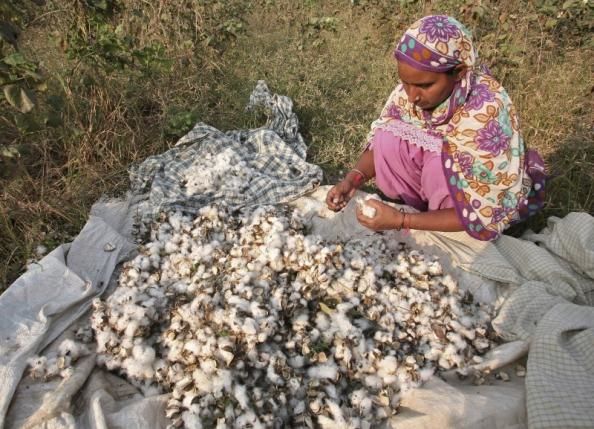
© Reuters/Munish SharmaJaswinder Kaur, a farmer, removes whitefly pest from cotton pods after plucking them from her damaged Bt cotton field on the outskirts of Bhatinda in Punjab, India, in this October 28, 2015 file photo.
The use of spurious pesticides has exacerbated losses in the genetically modified (GM) cotton crop in northern India after an attack by whitefly, a pest, say officials. If unchecked, some of India's roughly $26 billion in annual farm exports could be hit.
Made secretly and given names that sometimes resemble the original, counterfeits account for up to 30 percent of the $4 billion pesticide market, according to a government-endorsed study.
And they are gaining market share in what is the world's No.4 pesticide maker and sixth biggest exporter.
Influential dealers in small towns peddle high-margin fake products to gullible farmers, in turn hurting established firms like Syngenta, Bayer CropScience, DuPont, BASF, PI Industries, Rallis India and Excel Crop Care.
"We are illiterate farmers; we seek advice from the vendor and just spray on the crop," said Harbans Singh, a farmer in Punjab's Bathinda region, whose three-acre (1.2-hectare) GM cotton crop was damaged by whitefly this year.
"It's a double loss when you see the crop wilting away and your money is spent on pesticides that don't work."





















Comment: Who meets the demand and the growing appetite of Americans for drugs? Well there's a few names that come to mind.