Life for many in Damascus, Syria is beginning to regain a sense of normalcy. Once besieged by foreign fighters, the ancient city and it's residents struggle to rebuild their lives, land and livelihood, rejoicing in the simple mundanity of day-to-day life.
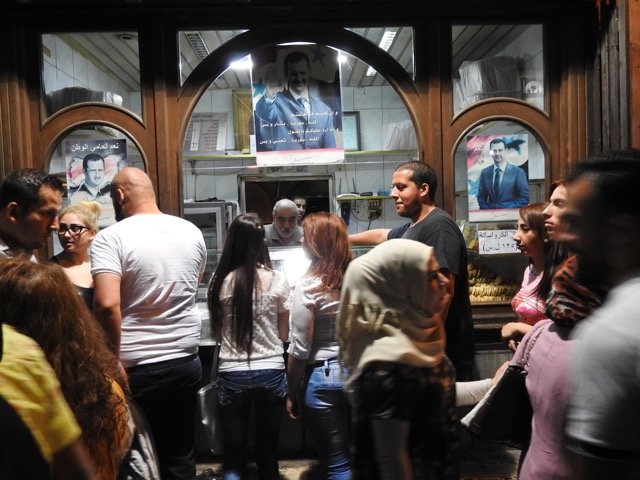
© Eva BartlettThe croissant stand in Aamarie district of Thomas Gate is known not only to Damascenes but visitors from other areas of Syria. While prices for most goods have risen all across Syria, the stand keeps its prices low: 125 Syrian pounds per sumptuous croissant. On the first day of ‘Eid celebrations the stand is packed.
On prior visits to Damascus, staying in the Old City, the sound of mortars being fired from terrorist-held districts outside of the city was a constant. In recent months, the mortars on Damascus have stopped. Previously, Jebhat al-Nusra (Al Qaeda in Syria), Jaysh al-Islam and the Free Syrian Army, among other terrorist factions, rained mortars daily on residential areas of Damascus, hitting schools, homes, vehicles and pedestrians, killing and maiming indiscriminately, leaving civilians, including children, with
critical injuries and
amputations.
With the recent absence of mortars, Damascenes have opened outdoor establishments where before it was formerly too dangerous. Sidewalks cafes and outdoor eateries open at night were unthinkable less than half a year ago, let alone rooftop cafes and lounges. Although Syrians suffer immensely from an economy devastated by war and western sanctions, in Damascus there is a renewed sense of defiance, a refusal to give in, or as a young man in his twenties visiting from Aleppo said: "They have their own war against death by living."



















Comment: Another example of the legal system degrading female victims of rape.
Rape Culture in America - How the system protects the rapists and fails the victims