Puppet MastersS

Eye 2

Best of the Web: The pathology of the elite class

On RAI with Paul Jay, Chris Hedges discusses the psychology of the super rich; their sense of entitlement, the dehumanization of workers, and mistaken belief that their wealth will insulate them from the coming storms


Paul Jay, Senior Editor, TRNN: Welcome to The Real News Network. I'm Paul Jay in Baltimore. And welcome to Reality Asserts Itself. A few weeks ago, we did a series of interviews with Chris Hedges, and one of the things we talked about was the weakness of the left, the weakness of the people's movement, if you will. Well, we're going to continue that discussion now. And Chris joins us again in the studio.

Chris, as everyone probably knows by now, is a Pulitzer Prize-winning journalist and a senior fellow at the Nation Institute. Along with Joe Sacco he wrote the New York Times bestseller Days of Destruction, Days of Revolt. And he writes a weekly column for Truthdig.

Thanks for joining us.

Chris Hedges, Journalist, Senior Fellow at the Nation Institute: Thank you.

Jay: So last time we talked a lot about something you had said in 2008 and you've written more recently about: one of the greatest weaknesses of the left was not creating a viable vision of what an alternative politics and economy looks like, a viable vision of a socialism. But you've written more recently about some other weaknesses, you could say, of the people's movement, and here's one. And I'll read it back. This is a piece you wrote called "Let's Get This Class War Started", which I guess is a play on Pink's song, is it? "Let's Get This Party Started". The quote is: "The inability to grasp the pathology of our oligarchic rulers is one of our gravest faults." What are you talking about?

Hedges: Because we don't understand the pathology of the rich. We've been saturated with cultural images and a kind of cultural deification of wealth and those who have wealth. We are being--you know, they present people of immense wealth as somehow leaders--oracles, even. And we don't grasp internally what it is an oligarchic class is finally about or how venal and morally bankrupt they are. We need to recover the language of class warfare and grasp what is happening to us, and we need to shatter this self-delusion that somehow if, as Obama says, we work hard enough and study hard enough, we can be one of them. The fact is, the people who created the economic mess that we're in were the best-educated people in the country--Larry Summers, a former president of Harvard, and others. The issue is not education. The issue is greed. And I, unfortunately, had the experience of being shipped off to a private boarding school at the age of ten as a scholarship student and live--I was one of 16 kids on scholarship, and I lived among the super-rich and I watched them. And I think much of my hatred of authority and my repugnance for the ruling elite comes from having been among them for so long.

Che Guevara

Afghanistan agrees to pact with Iran, while resisting U.S. accord

Image
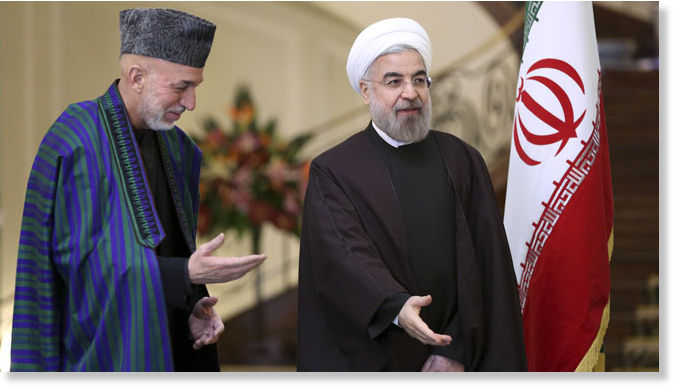
© AP Photo/Ebrahim NorooziIran's President Hassan Rouhani, right, stands with Afghan President Hamid Karzai, before their meeting at Tehran's Saadabad Palace in Iran, Sunday, Dec. 8, 2013. Karzai arrived in Tehran for a one-day visit on Sunday to discuss regional and international issues with Iranian officials.
Afghan President Hamid Karzai agreed on a cooperation pact with Iran, despite continuing to resist signing a security agreement with the U.S., Reuters reported.

Karzai made the deal with Iranian President Hassan Rouhani in Tehran Sunday.

"Afghanistan agreed on a long-term friendship and cooperation pact with Iran," Karzai's spokesman Aimal Faizi said, according to Reuters. "The pact will be for long-term political, security, economic and cultural cooperation, regional peace and security."

Afghanistan signed a cooperation pact with Iran in August covering mainly security issues, but Faizi said the proposed new agreement would have a broader scope.

Rouhani said Sunday his country opposes the presence of foreign forces in Afghanistan and the region, saying their presence generates tension, the official IRNA news agency reported.

Cowboy Hat

Edward Snowden to give evidence to EU parliament, says MEP

Image
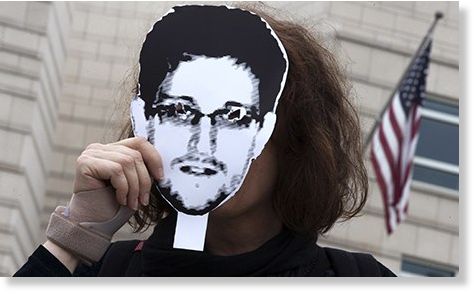
© Thomas Peter/ReutersA protester holds a portrait of Edward Snowden outside the US embassy in Berlin.
British Conservatives oppose video appearance by NSA whistleblower, which Green MEP says could happen this year

The European parliament is lining up Edward Snowden to give evidence by video link this month, in spite of resistance by British Conservatives, a Green MEP has announced.

Jan Philipp Albrecht, a German Green MEP, said parliamentarians wanted Snowden to appear before the assembly's committee on civil liberties, justice and home affairs (LIBE).

Albrecht said it would represent a great success for the parliament's investigation into mass surveillance of EU citizens.

He said: "Half a year after the first publications from his collection of numerous NSA documents, the truth of which has not so far been refuted, there are still consequences as far as political responsibility is concerned.

The basic political will is there. Now we will need to see if we can get a formal majority for a hearing and hope Snowden can keep his promise to answer questions on the affair."

The LIBE committee would most likely want questions on what role other European information services played in data gathering for the NSA, and whether servers and data networks in the EU were used as part of the process.

Handcuffs

Australians fighting in Syria: 2 men arrested in Sydney after police raids

Attorney general worried about the 'radicalisation of Australians' after men charged with foreign incursion offences
police arrest men
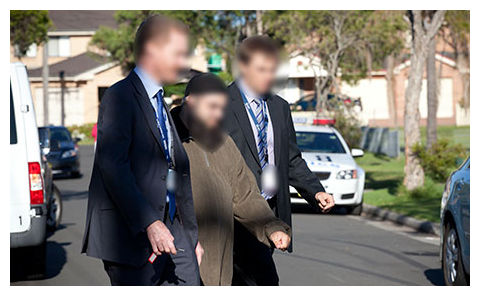
© AFPPolice arrest one of two men suspected of involvement with the conflict in Syria.
The attorney general has said he is worried about the "radicalisation of Australians" after police charged two Sydney men with foreign incursion offences related to Australians fighting alongside rebel groups in Syria. Officers from the joint counter terrorism team, involving Australian federal police and New South Wales police, arrested the two men in simultaneous raids on Tuesday after a four-month investigation.

Police alleged that a 39-year-old man from St Helen's Park was involved in the recruitment and assistance of six people travelling to Syria to fight alongside the rebel group Jabhat al-Nusra and other al-Qaeda affiliates. The AFP expect him to face seven charges. A 23-year-old from Lidcombe, who the AFP believe was preparing to travel to Syria, was also arrested. He is said to be facing four charges.

The two men are facing charges under the Crimes (Foreign Incursions and Recruitment) Act 1978, with penalties of up to 10 years imprisonment if found guilty.

Beaker

Whose sarin? Fitting the intelligence around the policy, this time with respect to Syria

Image
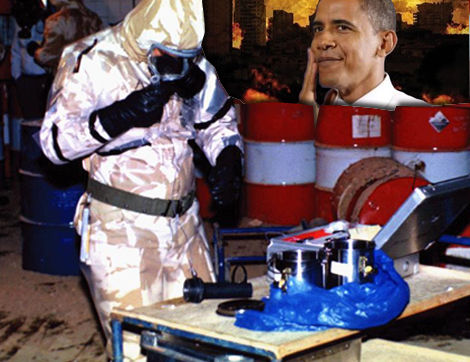
Barack Obama did not tell the whole story this autumn when he tried to make the case that Bashar al-Assad was responsible for the chemical weapons attack near Damascus on 21 August. In some instances, he omitted important intelligence, and in others he presented assumptions as facts. Most significant, he failed to acknowledge something known to the US intelligence community: that the Syrian army is not the only party in the country's civil war with access to sarin, the nerve agent that a UN study concluded - without assessing responsibility - had been used in the rocket attack. In the months before the attack, the American intelligence agencies produced a series of highly classified reports, culminating in a formal Operations Order - a planning document that precedes a ground invasion - citing evidence that the al-Nusra Front, a jihadi group affiliated with al-Qaida, had mastered the mechanics of creating sarin and was capable of manufacturing it in quantity. When the attack occurred al-Nusra should have been a suspect, but the administration cherry-picked intelligence to justify a strike against Assad.

In his nationally televised speech about Syria on 10 September, Obama laid the blame for the nerve gas attack on the rebel-held suburb of Eastern Ghouta firmly on Assad's government, and made it clear he was prepared to back up his earlier public warnings that any use of chemical weapons would cross a 'red line': 'Assad's government gassed to death over a thousand people,' he said. 'We know the Assad regime was responsible ... And that is why, after careful deliberation, I determined that it is in the national security interests of the United States to respond to the Assad regime's use of chemical weapons through a targeted military strike.' Obama was going to war to back up a public threat, but he was doing so without knowing for sure who did what in the early morning of 21 August.

Wolf

Vlad the Merciful: Putin issues amnesty for 25,000 political prisoners

The members of the Pussy Riot punk band, Greenpeace activists and protesters jailed after the May 2012 Bolotnaya demonstration will be freed in an amnesty dedicated to the 20th anniversary of the Russian Constitution, Russian media report.

greenpeace protest
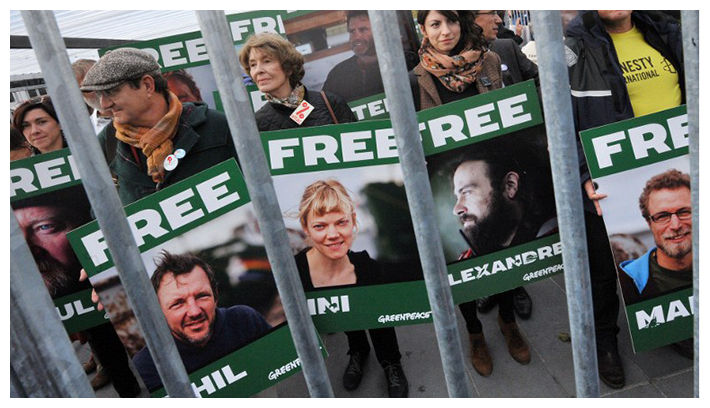
© AFP Photo / Pierre AndrieuHonorary President of non-profit organisation ATTAC, Susan George (Center L), holds a sign bearing the portrait of a jailed Greenpeace activist alongside other protesters taking part in a demonstration calling for the release of a group of Greenpeace activists imprisoned in Russia, on October 31, 2013, in Paris.
A total of 25,000 people will be freed under the amnesty initiated by President Putin, Interfax cited Vladimir Vasilyev, deputy speaker of parliament, as saying.

"Around 1,300 people will be released from prison, and 17,500 people will be relieved of non-custodial sentences. In addition, criminal proceedings against nearly 6,000 can be terminated," Vasilyev said.

Several Russian media including Izvestia and Vedomosti newspapers have obtained a copy of the draft amnesty, which was submitted to the parliament by President Vladimir Putin on Monday.

According to the papers, the participants in such high-profile cases as the Pussy Riot Cathedral protest, Greenpeace's Arctic Sunrise boarding of an oil rig and the Bolotnaya Square riots will all be granted amnesty.

Bad Guys

'Schizophrenic' US foreign policy pushing Arab states toward Russia, Bahrain warns

Image

Obama administration's stance on Iran and Syria could see US lose influence in the Middle East, Bahrain's rulers warn.

America's "schizophrenic" approach to the Middle East could result in many key Arab states deciding to align themselves more closely with Russia, the rulers of Bahrain warned on Sunday.

In an exclusive interview with The Telegraph, Sheikh Salman bin Hamad al-Khalifa, the Crown Prince of Bahrain, warned that Barack Obama's administration would lose influence in the region if it persisted with what a "transient and reactive" foreign policy.

There has been a sharp rise in tensions between Washington and several major Arab states in the wake of last month's controversial interim agreement with Iran over its nuclear programme.

Citing President Obama's handling of the recent crisis over Syria's chemical weapons, which allowed Russian President Vladimir Putin to seize the initiative, Sheikh Salman said some states were now seriously reviewing their relations with the US.

Comment: Note the country making this statement. Bahrain, along with Saudi Arabia and Qatar, is a corrupt little client state of the US in the Middle East and one of the main exporters of terrorism and terrorists to Syria and promoters of the phony "civil war" there, which was an attempt to undermine Iranian influence in the region. So no wonder that the psychos in power in Bahrain, like in Saudi and Qatar, are trying to pressure the US into increasing the pressure on Iran by threatening to 'switch sides' and increase their support for and collaboration with Russia.


Bad Guys

Congress to Obama: Cancel Iran deal

Image
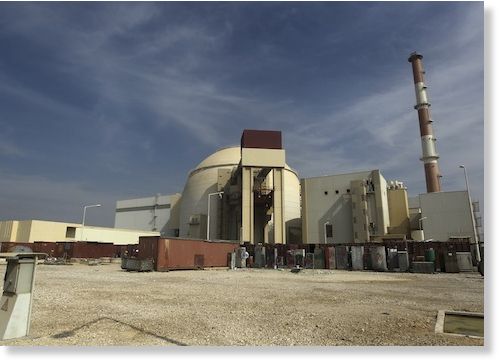
© APIran's Bushehr nuclear power plant
Congressional opposition to the recently announced nuclear accord with Iran reached a critical tipping point this week as lawmakers from both sides of the aisle publicly lambasted the deal while pushing for tighter economic sanctions on Tehran.

As the details of an interim nuclear deal reached last month in Geneva become clear, Congressional opposition has grown, leaving the White House to sell a deal that even its allies have dubbed as worrisome.

The White House held a classified briefing with members of Congress on Wednesday to push them against passing new sanctions in 2014, giving Iran at least another year of economic reprieve, according to Rep. Brad Sherman (D., Calif.).

"They want to convince us not to take any action in the first five or six months of 2014," Sherman said on the House floor during a Special Order on Iran organized Wednesday evening by Rep. Peter Roskam (R., Ill.). "That means, in effect, we are not going to take action in 2014."

Star of David

Iran refuses to recognize Israel at U.N.

Image
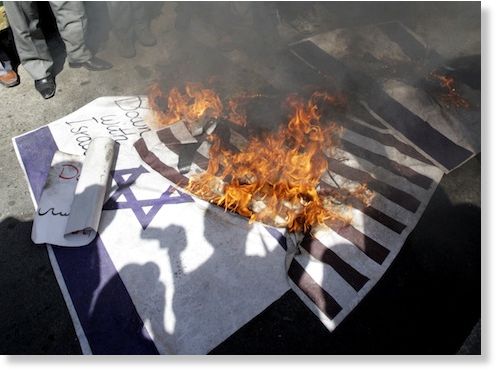
© APIranians burning Israeli and American flags in 2012
Iran publicly refused to recognize "the Israeli regime" during a full meeting on Thursday of the United Nations General Assembly (UNGA).

The move appeared to stun not a single onlooker at the United Nations, but prompted a sharp response from Israel's ambassador to the U.N.

During the opening moments of the 68th UNGA's 60th plenary meeting, Iran's representative took the floor to reiterate her country's distaste for the Jewish state.

The UNGA meeting was held to mark a procedural - and typically uneventful - vote in which nations meet to approve the credentials of various U.N. member states.

While Iran, like every other nation, voted in favor of the measure, its representative sought to explain that its support should not be interpreted as recognition of Israel.

"We would like to reiterate my government's position that our support for this document should be in no way be considered as the recognition of the Israeli regime," Iran's representative said. "I wish my statement in this regard to be recorded and registered in the final recording of this meeting."

Iran was the only member state to offer an on-the-record statement regarding the vote.

Magnify

Timeline: 10 years of crisis in Ukraine

Image
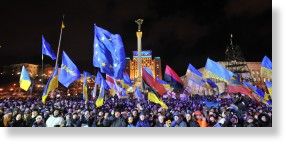
© Getty ImagesProtesters in Kiev's Independence Square, Dec 2013
November 22 2004 In Ukraine's second round election, the Central Electoral Commission declares pro-Russian incumbent Viktor Yanukovich the winner. Viktor Yushchenko, the leader of the opposition decries widespread voter fraud and electoral irregularities.

November 23 2004 An estimated 500,000 protestors assemble in Kiev's Independence Square. The Orange Revolution is born. Ukraine's Supreme Court suspends publication of the election results pending an investigation.

December 8 2004 Following the Supreme Court's annulment of the elections, a December re-run of the disputed presidential election is announced. Protesters scale down their demonstration and government employees return to work.

December 11 Doctors in Vienna announce that tests have confirmed that Yushchenko was poisoned with a dioxin.

December 27 2004 Polls close on the third round of voting, with results showing a handsome margin of victory for Yushchenko. Yanukovich resigns as Prime Minister following his failed court action against the latest results. He says he cannot work with Yushchenko loyalists.