OF THE
TIMES
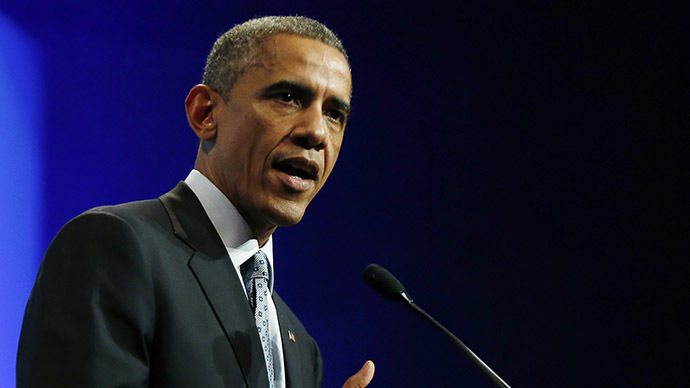
At the same time, though, Obama said the attack should serve as a wake-up call to Congress and prompt lawmakers in Washington, DC to get serious about implementing cybersecurity legislation in the wake of what is only the latest hack to be endured by a major American company.
North Korean hackers, seeking revenge for the movie, stole millions of documents, including emails, health records and financial information that they dished out to the world.
...while the gains of the orange-bedecked "chestnut revolution" are Ukraine's, the campaign is an American creation, a sophisticated and brilliantly conceived exercise in western branding and mass marketing that, in four countries in four years, has been used to try to salvage rigged elections and topple unsavoury regimes.
Funded and organised by the US government, deploying US consultancies, pollsters, diplomats, the two big American parties and US non-government organisations, the campaign was first used in Europe in Belgrade in 2000 to beat Slobodan Milosevic at the ballot box.
Richard Miles, the US ambassador in Belgrade, played a key role. And by last year, as US ambassador in Tbilisi, he repeated the trick in Georgia, coaching Mikhail Saakashvili in how to bring down Eduard Shevardnadze.
Ten months after the success in Belgrade, the US ambassador in Minsk, Michael Kozak, a veteran of similar operations in central America, notably in Nicaragua, organised a near identical campaign to try to defeat the Belarus hardman, Alexander Lukashenko.
That one failed. "There will be no Kostunica in Belarus," the Belarus president declared, referring to the victory in Belgrade.
But experience gained in Serbia, Georgia and Belarus has been invaluable in plotting to beat the regime of Leonid Kuchma in Kiev.
The operation - engineering democracy through the ballot box and civil disobedience - is now so slick that the methods have matured into a template for winning other people's elections.Not only has Ukraine suffered because of this admitted US-backed political destabilization over the years, but as revealed by the Guardian and other sources, all of Eastern Europe has fallen prey to this brand of foreign-backed subversion, manipulation, and regime change. Considering this documented fact, the prospect of Wall Street and Washington trying likewise in Russia itself is not only possible, it has already been tried before, with likely attempts in the future only inevitable.
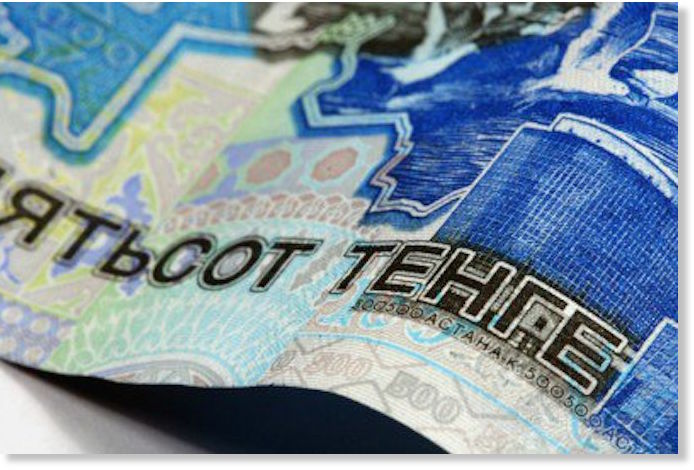
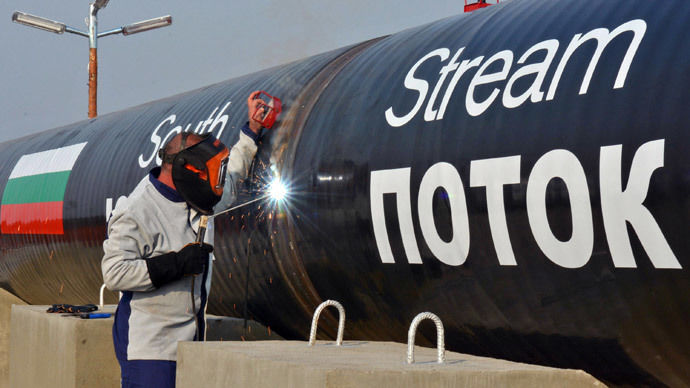
Russia could fall back on its 150 billion yuan (HK$189.8 billion) currency swap agreement with China if the rouble continues to plunge.Most of the sanctions placed upon Russia oil companies and investment banks stem primarily from several ground-breaking agreements the Eurasian state has made this year to facilitate the selling of oil and other products in currencies other than the dollar.
If the swap deal is activated for this purpose, it would mark the first time China is called upon to use its currency to bail out another currency in crisis. The deal was signed by the two central banks in October, when Premier Li Keqiang visited Russia.
"Russia badly needs liquidity support and the swap line could be an ideal tool," said Bank of Communications chief economist Lian Ping.
The swap allows the central banks to directly buy yuan and rouble in the two currencies, rather than via the US dollar.
Two bankers close to the People's Bank of China said it was meant to reduce the role of the US dollar if China and Russia need to help each other overcome a liquidity squeeze. - South China Morning Post

The combined effect produced by Western sanctions and low oil prices proves that there's no place for Russia in the international financial system, believes British prime minister David Cameron, urging for more pressure on Moscow.Being a mere pawn of the global pathocracy, what else are we to expect from Cameron than an extra kick in the guts as the Russian bear was seemingly lying on the ground. But is Russia really not fit to be part of the international financial system, and is it 'the end of Russia'?
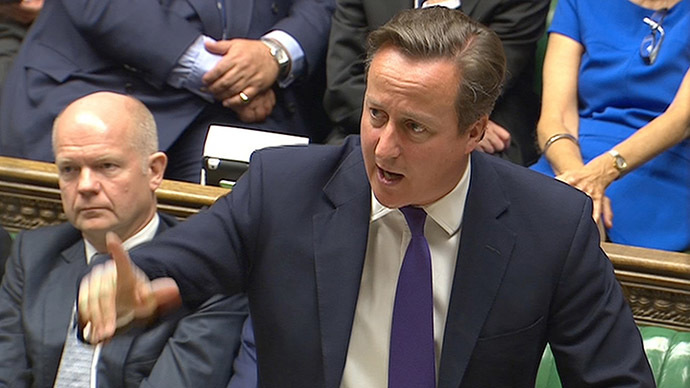
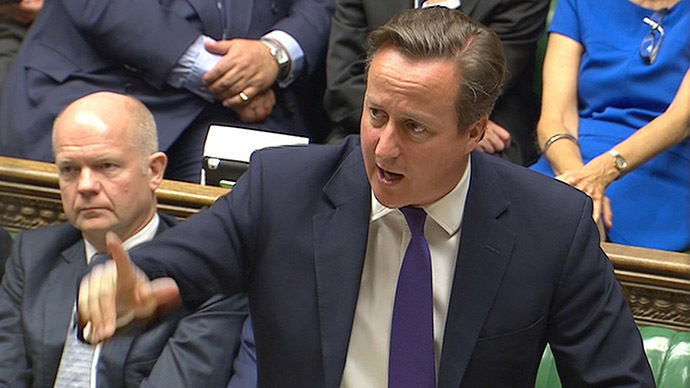
"We should stand up very firmly against the Russian aggression that's taking place," Cameron said before the Parliament on Wednesday.
"As President Putin exulted at the Winter Olympics in Sochi 10 months ago, aides assured him Russia was rich enough to withstand the financial repercussions from a possible incursion into Ukraine, according to two officials involved in the talks. That conclusion now looks like a grave miscalculation. Russia has driven interest rates to punishing levels and spent at least $87 billion, or 17 percent, of its foreign-exchange reserves trying to prevent a collapse in the ruble from spiraling into a panic. So far, nothing has worked."The team of three Bloomberg news reporters write there that, "Putin now confronts the nation's most serious economic crisis since 1998," and that the reason is "Putin's pride." They say that, "When rising crude prices were firing the economy, Russia's swelling reserves became a symbol of economic might and a point of pride for Putin."
Comment: After stating that the U.S. government has no evidence to implicate North Korea in the hacking, the following New York Times article would admit that the NSA has been trying to hack and infiltrate North Korea's computer network for years. And if that wasn't enough the U.S. government is considering relisting North Korea as a state sponsor of terrorism. Double standards and exceptionalism at work.