
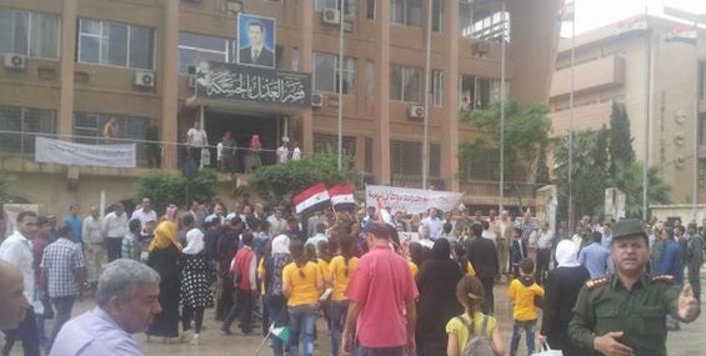
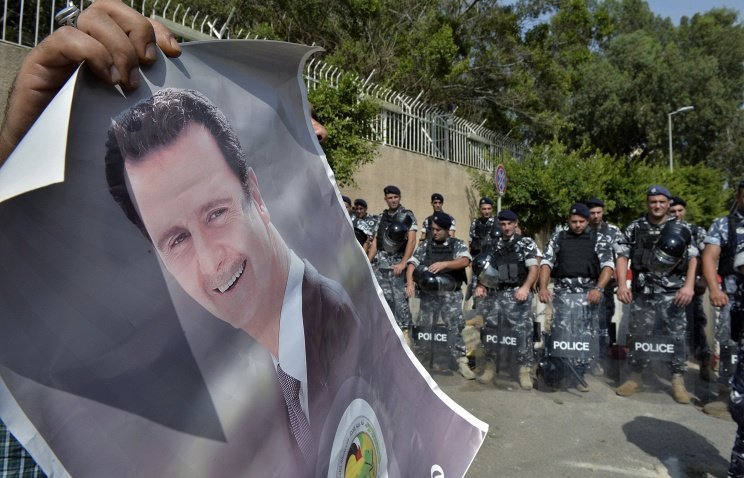
People of Hasakah, who were angry with the arrival of 250 US soldiers to the Kurdish-controlled town of Rumeilan without Syrian government's mandate, condemned "the US imperialism" and the "illegal presence" of US troops in the Hasakah province, Iraq-based Ara News reported.
State-run SANA news agency cited Hasakah Governor Mohamad Zaal al-Ali as saying "The stand of Hasakah people is a confirmation that the existence of such [American] troops in Rumelan means a conspiracy against Syrian people, who refuse to let those who supported terrorism against their country to have their troops on Syrian soil," reported.
A similar rally had earlier been held on Wednesday as local residents called for American Troops expulsion from their country.
"We are categorically against the impermissible and flagrant violation of our country's sovereignty. We will not allow American boots on our soil. We are also against any plans for a division or federalization of Syria," Al-Hasakah Governor Mohammad Zaal told on Wednesday.
On April 28, US President Barack Obama announced that Washington would "deploy up to 250 additional US personnel in Syria including Special Forces." They are reportedly expected to train the Syrian Democratic Forces.










Comment: Meanwhile, the Turk who claimed responsibility for killing the Russian pilot in Syria was cleared of all charges in a Turkish court for the murder. Contradicting his earlier statements, he argued that he repeatedly ordered his militants to take the pilot prisoner. Celik's lawyer had this to say: Simple: they're all guilty, of one crime or another. How about attempted murder?