

© Martin Petty/Reuters
In a nutshell, the non-stop drama, as ASEAN (Association of Southeast Asian Nations) diplomats told me, is all about "escalation-management protocols." Translation: how to prevent any unilateral outburst that could be interpreted as warlike.
Compounding the problem is that ASEAN can't seem to manage its own internal protocols. This past Tuesday offered a graphic illustration, after a special ASEAN-China Foreign Ministers' meeting in Yuxi.
First ASEAN issued a communiqué. Then it retracted it. As much as that reflects internal dissent among the 10 nation group, it also happens to puncture the Pentagon myth of China's "isolation".
Meanwhile, a D-Day is approaching; the ruling, by the Permanent Court of Arbitration in The Hague, on a territorial dispute brought by the Philippines in 2013. The ruling should come by late July or early August. Even if - as expected - it goes against Beijing that still should not be reason to install an insurmountable ASEAN-China divide.
Connie Rahakundini, president of the Indonesian Institute for Maritime Studies (IIMS), framed the question for Xinhua. There is an 'ASEAN plus' mechanism already in place - which is a sort of debate forum including China. And ASEAN is also establishing a code of conduct to prevent unilateral moves.
The problem with the case in The Hague is that the Philippines did not try to solve it bilaterally; off the record, ASEAN diplomats admit that would be the only solution.
So no wonder Beijing decided not to be a part of the arbitration procedure, and preemptively rejects whatever ruling (which is non-binding anyway), insisting the court has no jurisdiction. The Philippines case is about territorial sovereignty and maritime delimitation; these are subject to general international law, not the United Nations Convention on the Law of the Sea (UNCLOS).

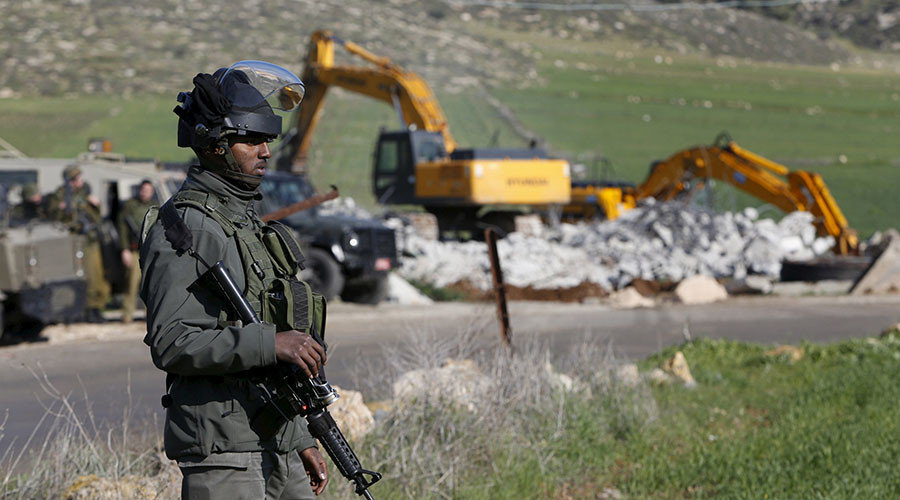

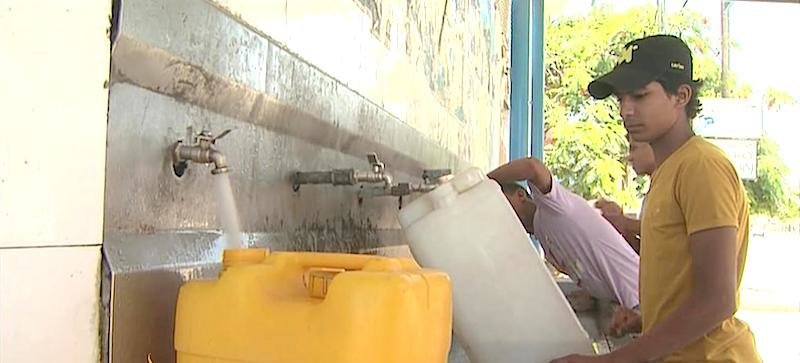









Comment: Just another example of Israeli slow genocide of the Palestinian people. A burst pipe? Maximum a few days fix. Amnesty International's observations that 200K Palestinians have no access to running water and require permission to collect it themselves just about says it all. Cut and dry.