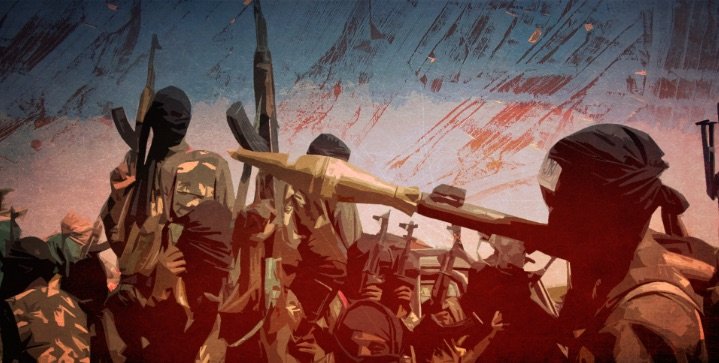
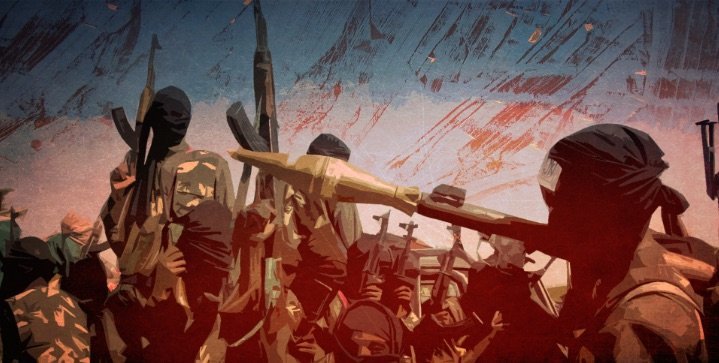
Since the collapse of the Somali government in 1991, the constant struggle and chaos had engulfed the country. Corruption, violence, strong external influence and insecurity are some of the factors which are common in Somali's day-to-day politics. From all of this, radicalised and extremist groups have emerged and started to take hold of the society, especially in the south of the country. Al Shabaab was originally formed from the Al-Itihaad Al-Islamiya group, which emerged in the post regime change in the nineties. Al-Itihaad Al-Islamiya (AIAI) was focused on implementing strong Sharia law, seizing strategic locations in the country and bringing order and control in previously lawless areas. Though this may seem like a solid plan, establishing some kind of order in a chaotic region, even through Sharia, is better than total lawlessness; the Ethiopian government had other plans. Neighbouring state, Ethiopia, which is predominantly Christian, saw the rise of Islamism, Wahhabism and Salafism as a serious threat in Somalia. Al-Itihaad Al-Islamiya as well as the Islamic Courts Union (ICU) were destroyed by the Ethiopian military operations in 2004 and 2006, leaving only the most hardcore elements of these organisations still standing, thus the Al Shabaab, or "the youth", emerged.
The rise of Al Shabaab from the shadows was rather quick, the group rapidly grew from a core of just 33 to a force of more than 5,000 troops in less than four years.
Their motivation and main objective at that time was to drive the Ethiopian forces out of the country; of course, that had to be done by a strong insurgency, which Al Shabaab was eager to lead. Though the Ethiopians managed to quell ICU and the AIAI, Al Shabaab, which rose from it ashes, was much more radical and determined in its ideas of implementing Sharia law and some form of an Islamic caliphate/state.
Ethiopia's military actions hardened Somalis' religious views and made a fertile ground for spreading extreme religious ideologies, which made recruitment and funding for Al Shabaab much easier. After the withdrawal of Ethiopian forces in 2009, a split occurred in Al Shaabab: two conflicting factions were trying to impose their own views and doctrine on the group. One was led by Sheikh Aweys, a spiritual leader with fundamentally domestic aims, and Sheikh Moktar Ali Zubeyr also known as Godane (educated in Pakistan), who had a more ambitious and extremist agenda, which ultimately prevailed and took control over the group.
At that moment, the Al Shabaab agenda changed from nationalistic to a more global and ideological rhetoric, which ended with pledging allegiance to Osama Bin Laden and promoting Al Qaeda's jihad across the horn of Africa.

















Comment: Psychopaths survive and thrive in corporate environments, and through their control of corporations and governments, they now rule our world. They have created the structures that keep the majority of us enslaved and will continue to plunder the earth until normal people learn to understand their machinations and find constructive ways to offset their predatory influence.