Puppet MastersS


Eye 1

Philippine leader links 150 judges, politicians to illegal drugs, calls it a "pandemic"

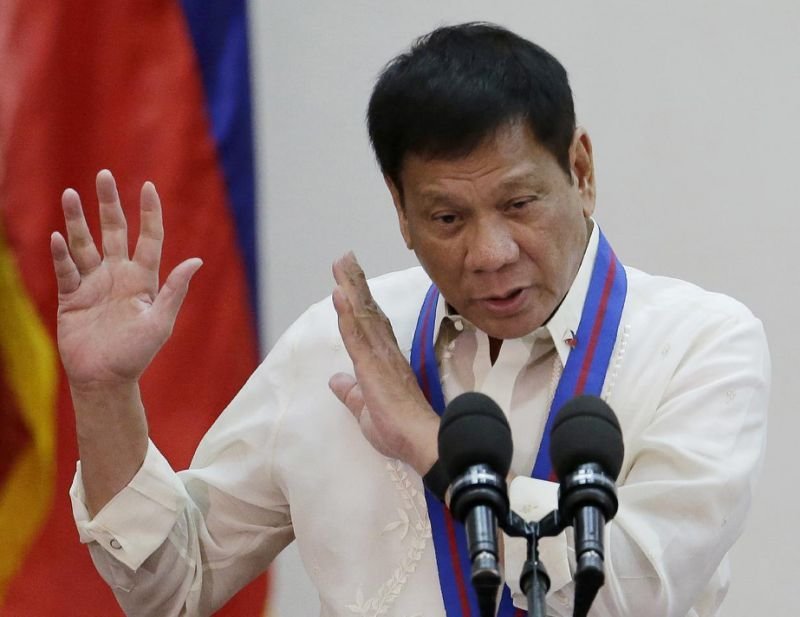
Philippine President Rodrigo Duterte
Philippine President Rodrigo Duterte publicly linked more than 150 judges, mayors, lawmakers, police and military personnel to illegal drugs Sunday, ordering them to surrender for investigation as he ratcheted up his bloody war against what he calls a "pandemic."

Duterte promptly relieved members of the military and police he named from their current posts and ordered government security personnel to be withdrawn from politicians he identified in a nationally televised speech. He also ordered gun licenses of those named revoked.

"All military and police who are attached to these people, I'm giving you 24 hours to report to your mother unit or I will whack you. I'll dismiss you from the service," Duterte said in the speech at a military camp in southern Davao city.

He said that the list of politicians, judges and law enforcers given to him by the military and police might or might not be true, but that he had a duty to disclose to the public how the drug problem had become so pervasive.

Vader

Top NATO general advocates greater confrontation with Russia as Moscow offers bid to ease tensions

North Atlantic Council
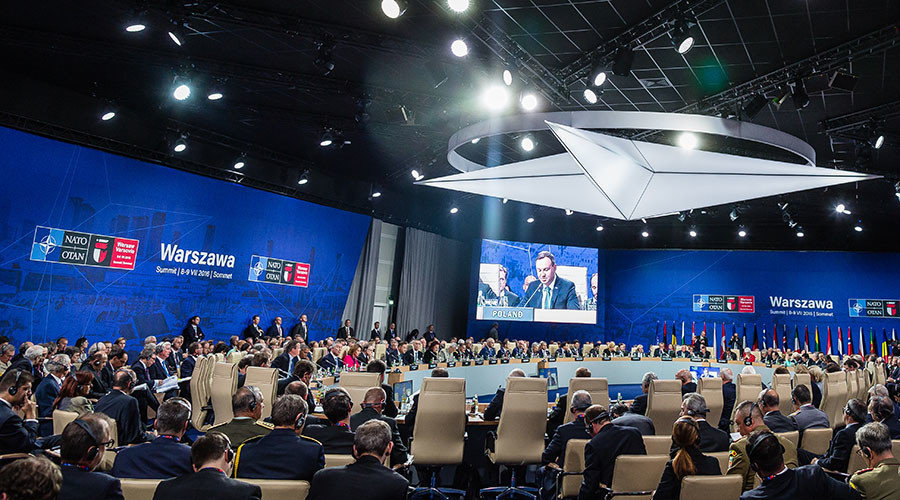
© Wojtek Radwanski / AFPGeneral view of the meeting of heads of state of the North Atlantic Council (NAC) taking place during a NATO summit on July 8, 2016 in Warsaw, Poland.
Politicians in NATO states are too slow in making decisions on confronting Russia, one of the bloc's top military chiefs has complained. The hawkish remarks come after Moscow said it had offered to return to the table in a bid to ease tensions. Securing consensus among NATO political leaders on how to confront Russia takes too long, and is in sharp contrast with troops, who are ready to deploy at short notice, said General Denis Mercier, head of the Allied Command for Transformation (ACT), one of the two top military positions in the bloc.

"It's one of the lessons from Ukraine," Gen Mercier told the Financial Times. "High responsiveness relies on two points. On the military side it relies on the ability to operate very quickly. But it also relies on responsiveness in political decisions." Heads of NATO states failed to act as rapidly as the troops, the General complained: "We can have forces ready to deploy in 24 hours but they are only going to do that if the [North Atlantic Council] gives them the order."

The North Atlantic Council (NAC) is NATO's governing political body in charge of making decisions on deployment of troops, and every proposal has to be voted for unanimously. Relations between Moscow and NATO have nosedived since Crimea's reunification with Russia and the outbreak of the Ukrainian crisis in 2014. Though Russia repeatedly denied any involvement in the conflict in Eastern Ukraine, the bloc has launched a massive military build-up in Eastern Europe.

Comment: It's a worrying sign of the insanity bubbling over within NATO when we see one of its top officials advocate greater confrontation with Russia when Moscow tries to extend an olive branch. There is absolutely no evidence of Russian interest in overtaking its neighbors, yet that doesn't stop the West from inventing ridiculous scenarios where Russia behaves like NATO actually does.


Eye 1

The world's most aggressive cyber army doesn't belong to Russia

NSA facility
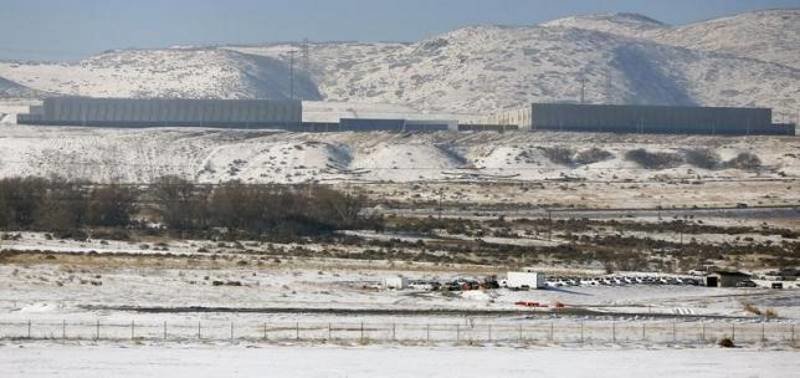
© Jim Urquhart/Reuters A National Security Agency data gathering facility in Bluffdale, about 25 miles (40 km) south of Salt Lake City, Utah, December 16, 2013.
National attention is focused on Russian eavesdroppers' possible targeting of U.S. presidential candidates and the Democratic Congressional Campaign Committee. Yet, leaked top-secret National Security Agency documents show that the Obama administration has long been involved in major bugging operations against the election campaigns -- and the presidents -- of even its closest allies.

The United States is, by far, the world's most aggressive nation when it comes to cyberspying and cyberwarfare. The National Security Agency has been eavesdropping on foreign cities, politicians, elections and entire countries since it first turned on its receivers in 1952. Just as other countries, including Russia, attempt to do to the United States. What is new is a country leaking the intercepts back to the public of the target nation through a middleperson.

There is a strange irony in this. Russia, if it is actually involved in the hacking of the computers of the Democratic National Committee, could be attempting to influence a U.S. election by leaking to the American public the falsehoods of its leaders. This is a tactic Washington used against the Soviet Union and other countries during the Cold War.

Snakes in Suits

Cameron showers loyal allies with £900K taxpayer-funded 'golden goodbyes'

Former Britain's Prime Minister David Cameron
© Suzanne Plunkett / Reuters
Ex-Prime Minister David Cameron splurged almost £1 million of public money on "golden goodbyes" for loyal ministers and aides, it has emerged.

Faithful colleagues and advisers, including former Chancellor George Osborne, two other ministers and 21 aides, received payoffs of up to £70,000 (US$91,000) each, according to reports.

An investigation by the Sunday Times estimates the total bill could surpass £900,000.

Labour leader Jeremy Corbyn has lashed out at the former PM, branding his behavior "cronyism."

Eye 1

MI5 'mind reading unit' claims it foiled potential terrorist attacks

mind reading machine
© Michaela Rehle / Reuters
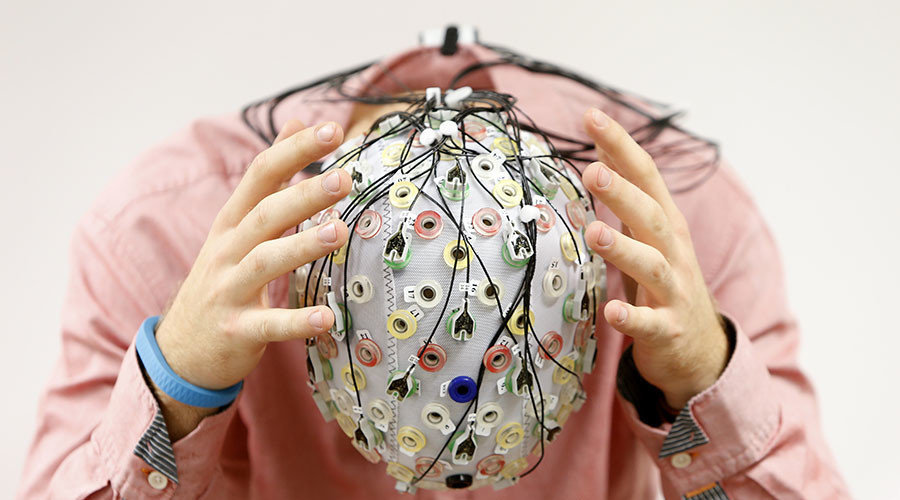
Up to seven potential terror attacks across Britain have been uncovered and stopped over the past year by a special MI5 unit which reads the minds of would-be attackers, the agency says.

MI5's Behavioural Science Unit (BSU), made up of criminologists, psychologists and other academics, was launched in 2004 to analyze suspects' behaviors to determine whether they are about to carry out an attack.

The BSU's aim is to find out whether those flagged as potential threats are "talkers or walkers" - those who boast or those who are prepared to act, according to The Sunday Times.

People selected for surveillance are chosen through intelligence gathered from the agency's network of informants, as well as from the public.

Comment: This smacks of propaganda to make people believe all of the private data collection is working which obfuscates the real reason for spying on the public.


Snakes in Suits

'Never Trump' movement: Former CIA officer to run for US President as independent candidate

Evan McMullin
© Facebook
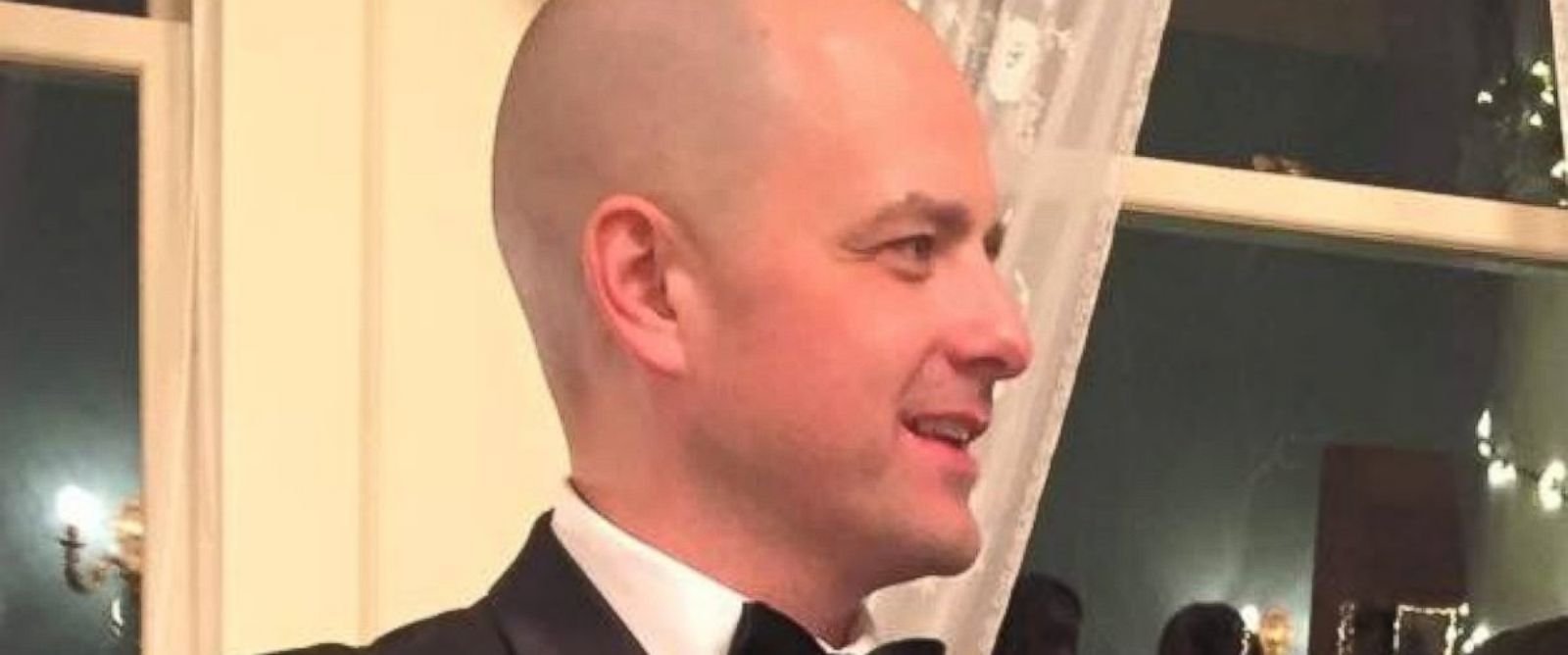
Evan McMullin, a former CIA counterterrorism officer, will run for president as a third-party conservative alternative to Donald Trump, GOP operatives working to back the candidate told ABC News today.

The operatives working on McMullin's bid resigned from Better for America in order to work on his candidacy. The operatives from the group, a 501(c)(4) organization that cannot officially endorse or back McMullin's bid, has been working for months on trying to select a candidate and get on ballots throughout the country. In some states, like Texas, they will likely have to sue to get on the ballot. A 501(c)(4) is an issue-based nonprofit that can raise unlimited funds and does not have to disclose its donors.

It's an extreme uphill climb, but they are confident McMullin, 40, can act as a disruptor who they hope can peel off some red states in a race where some Republicans are still resistant to Donald Trump.

Yoda

Farsighted: Putin predicted the rise of an 'Islamic State' in 1999

Putin
ISIS, or the Islamic State of Iraq and Syria (Daesh) is not a novel phenomenon. It is a salafi-jihadist cult, propped up by the Saudi state and seasoned with US dollars. It achieves certain foreign policy objectives, and is largely out in the open in the modern day. Russia has previously fought off its predecessor - Al Qaeda. Both of the Chechen wars of the 1990s were funded and aided by Saudi Arabia and the US. NGOs such as Medicins Sans Frontiers were documented to have been smuggling supplies to the Chechen rebels, at the cost of hundreds of thousands of lives on both sides of the conflict.

On New Year's Eve 1999, Vladimir Putin would inherit the Russian presidency. With it, he inherited a very damaged and weary country. Given that the previous President, Boris Yeltsin, was in no physical state to rule - it is evident that Putin's work started long before his inauguration. In the 1990s and early 2000s, Russia was plagued by horrific acts of terrorism (Beslan, Nord-ost, etc), which in Western media were packaged as acts of "Chechen freedom fighters."

Should the rebels prevail, Putin envisaged the extensive loss of Russia's territories and the possibility of an 'Islamic State'. Not only was the Russian government successful in their military campaign, despite a crumbling economy at the time, but they were able to mend ties with Chechen leaders, who today staunchly oppose radical Islam. With this understanding in mind, Putin's decision to engage in the 2015 Syrian campaign was completely logical. He knows where it leads and doing nothing is not an option.

Comment: This video encapsulates the essential Putin. Care for his people, a firm grasp of the problems before Russia and their source, plus the resolute will he had to work at solving them. To have such a leader on the world stage today is fortunate indeed.


War Whore

U.S. think-tank admits planning 'safe havens' for western mercenaries to achieve regime change in Syria

Syria rebels
© AFP 2016/ Omar haj kadour
Since the onset of the war in Syria, corporate-financier funded think tanks engineering American and European foreign policy made it clear that establishing no-fly zones and "safe havens" in Syria would be an incremental step toward achieving regime change and rendering the nation divided and destroyed as US policymakers had done to Afghanistan, Iraq, and Libya beforehand.

In particular, The Brookings Institution has - for years now - published paper after paper regarding the establishment of such "safe havens" in Syria under a variety of geopolitical, strategic, and tactical ploys.

As early as 2012, in a Brookings paper titled, "Assessing Options for Regime Change," its policymakers would state (emphasis added):
An alternative is for diplomatic efforts to focus first on how to end the violence and how to gain humanitarian access, as is being done under Annan's leadership. This may lead to the creation of safe-havens and humanitarian corridors, which would have to be backed by limited military power. This would, of course, fall short of U.S. goals for Syria and could preserve Asad in power. From that starting point, however, it is possible that a broad coalition with the appropriate international mandate could add further coercive action to its efforts.
Brookings had hoped that the corridors and safe havens would provide a foothold from which additional covert and overt Western military power could be wielded to ultimately overthrow the government in Damascus and render Syria a perpetually divided and destroyed nation, incapable of impeding Western regional ambitions well into the foreseeable future.

Comment: The Brookings Institute's plan to destroy Syria: ISIS creates the 'safe zones', U.S. military moves in


Info

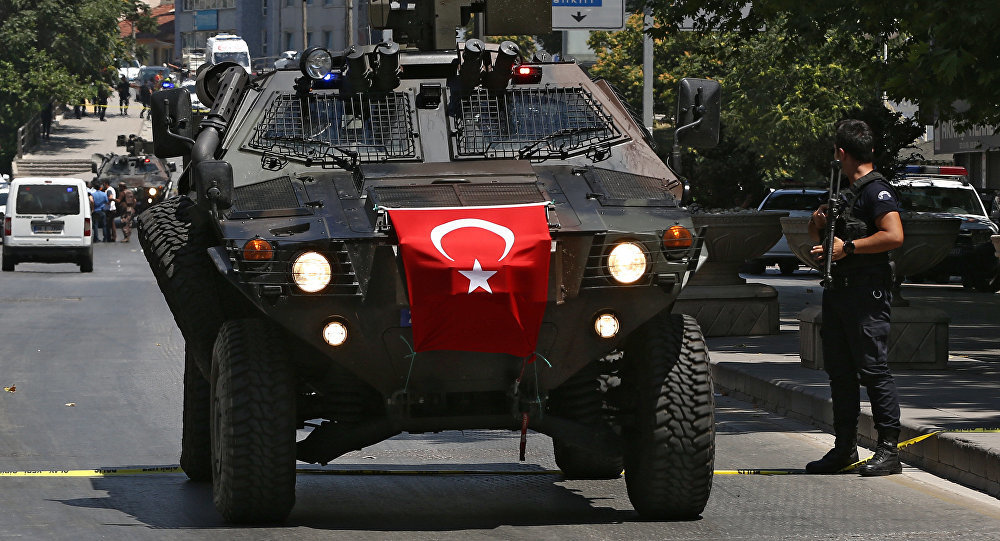
Turkey lifts state of emergency ban on public servant's annual leave

Turkish police
© AP Photo/ Hussein Malla
Turkey lifts the ban preventing public servants to take annual leaves declared under the state of emergency, Deputy Prime Minister Numan Kurtulmus said Monday.

A three-month state of emergency declared by Turkish President Recep Tayyip Erdogan following the failed July 15 coup has seen the arrests of more than 10,000 people and a sweeping purge of more than 50,000 judges, civil servants, military officers and educators, according to published reports.

"The suspension of public servants' leaves removed as of today," Kurtulmus said at press conference as quoted by Daily Sabah newspaper.

Under the state of emergency, Erdogan can enact new laws bypassing the nation's legislature and it also imposes restrictions on public gatherings.

Comment: 'Gift from God'! Erdogan reasserts dominance with huge Istanbul rally


Arrow Down

China imports and exports decline amid weak global economy

China workers
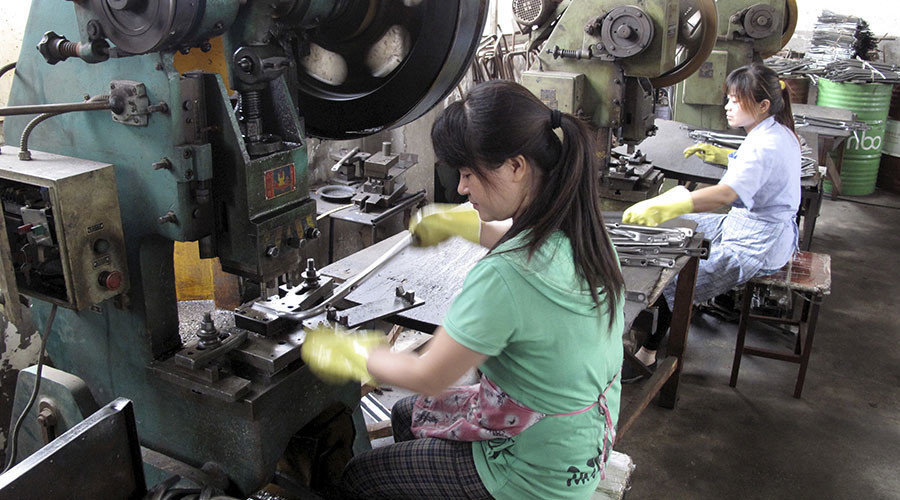
© John Ruwitch / ReutersWorkers make metal parts at a factory of the Changzhou Wujin Zhengda Vehicle Industry Co. Ltd in China
Chinese customs authorities reported on Monday a weaker than expected trade performance, with a further decline both in exports and imports pointing to weakness in global demand and economic outlook. Exports fell by 4.4 percent to $184.7 billion in July compared with a year earlier, according to the General Administration of Customs. They have fallen 12 out of the past 13 months.

"Signs of stronger manufacturing activity among many of China's key trading partners has so far failed to lift export growth," Capital Economics' China economist Julian Evans-Pritchard said in a note."The country's export growth is likely to remain subdued for some time," he added.

China's imports were also down by 12.5 percent to $132.4 billion in July, extending the decline for 21 consecutive months. This suggests domestic demand is slumping despite government measures to stimulate economic growth. "I think (the drop in imports) is mainly from the demand side," said Ma Xiaoping, an economist at HSBC in Beijing, as cited by Reuters. He added that government efforts to cut overcapacity could produce an even bigger drop in demand in the next few quarters.