
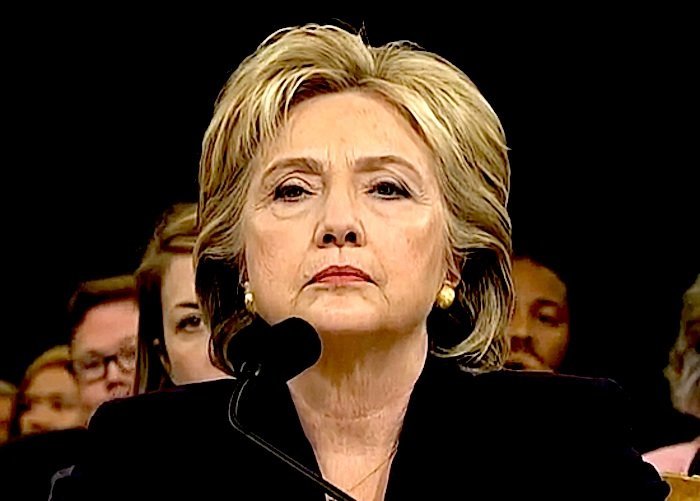
© commons.wikimedia.org
Comment: It is a misnomer to say Moscow is backing Trump. Russia is not, cannot be, involved in the US election nor back a US politician for President. This is different from preference or working ability.
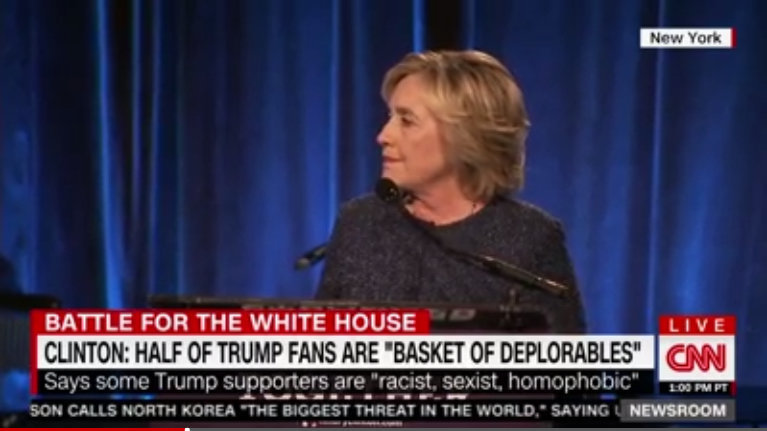
If Hillary Clinton is elected president, the world will remember Aug. 25 as the day she began the Second Cold War. In a speech last month nominally about Donald Trump, Clinton called Russian President Vladimir Putin the godfather of right-wing, extreme nationalism. To Kremlin-watchers, those were not random epithets. Two years earlier, in the most famous address of his career, Putin accused the West of backing an armed seizure of power in Ukraine by "extremists, nationalists, and right-wingers." Clinton had not merely insulted Russia's president: She had done so in his own words. Worse, they were words originally directed at neo-Nazis. In Moscow, this was seen as a reprise of Clinton's comments comparing Putin to Hitler. It injected an element of personal animus into an already strained relationship — but, more importantly, it set up Putin as the representative of an ideology that is fundamentally opposed to the United States.
Comment: If Putin holds the "Hitler" personae, then presumably the American public will miss or overlook the stronger homegrown likeness. Unfortunately for Clinton, the label doesn't stick.









Comment: A candidate in the US presidential bid has to become distinguished from 'the other.' If one can't do that on merit (of which Clinton is completely lacking), there is always the ability to lie, cheat and fake it, no matter the cost to the process, the people, the world's eye, or personal integrity (of which Clinton has none). Is she dangerous? Oh yes. Imagine: 'Psychopathy for President.'