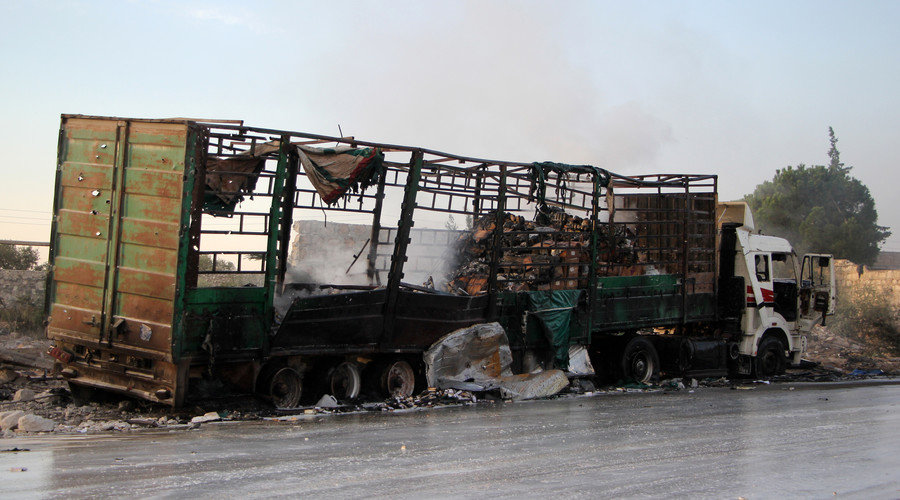
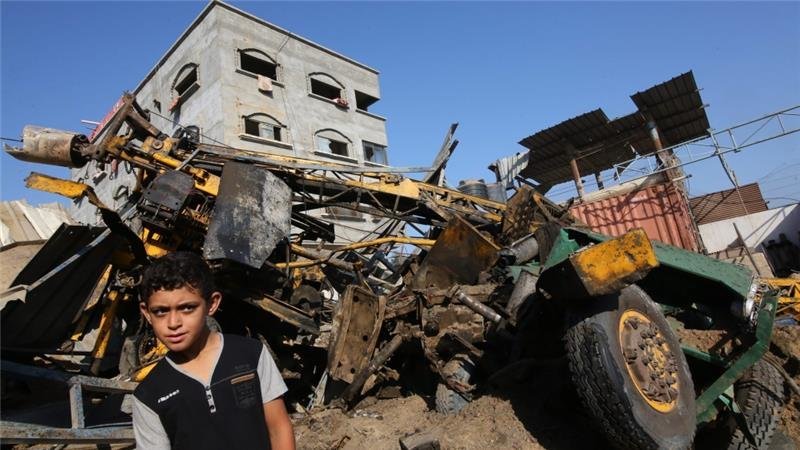
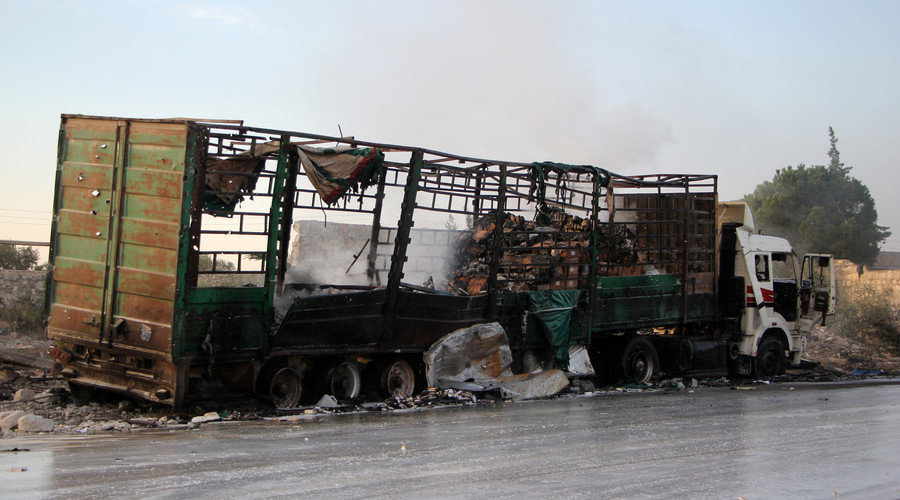
© Omar Haj Kadour / AFPA damaged truck carrying aid is seen on the side of the road in the town of Orum al-Kubra on the western outskirts of the northern Syrian city of Aleppo on September 20, 2016, the morning after a convoy delivering attacked by unknown parties.
The current situation in Syria may look like a confusing mess, but we think there are enough clues to make some sense of it. It all comes down to a statement UN ambassador Churkin made after his close encounter with Samantha "Kill 'em to save 'em" Power: "Who is in charge in Washington? Is it the White House or the Pentagon?" The Pentagon and CIA are rabidly anti-Assad; they don't want a ceasefire. Kerry and the State Department appear - at least on the surface - to want the ceasefire to succeed, despite their continued anti-Assad rhetoric. That doesn't necessarily mean their aims and objectives are the same as Russia's when it comes to Syria, but if we give them the benefit of the doubt, at the very least they aren't completely insane like Ash Carter and the rest of the war hawks. What makes us think that?
Unless Kerry and the rest of the negotiating team are complete idiots, they must have known that a simple repeat of the February ceasefire would not work, for the simple reason that the February ceasefire
did not work. The lengthy negotiations and the U.S.-requested secrecy of the specific details suggest that the U.S. made major concessions. They could have refused to go forward, blaming Russia for unrealistic demands or some other such nonsense. But they didn't. And the publicly known goals of the agreement are all agreeable to Syria and Russia and align with their intentions throughout the course of the war for the past year or so: cooperation in the fight against Nusra and Daesh, separation of "moderate" and Nusra elements (i.e., a face-saving way for the U.S. to save some of its Nusra proxies), and humanitarian aid.
These haven't been U.S. goals in the war, but by agreeing to them, the U.S. can appear to be on the right side of history and morality. What the U.S. really needed was a face-saving way of scaling back their failed strategy without being totally discredited. For the saner factions in Washington, this apparently means scaling back the demands for regime change (Assad's future was not even mentioned in the agreement), saving some of their proxies (by rebranding some as moderates and hanging others out to dry in joint U.S.-Russian airstrikes), and perhaps leaving open an eventual plan B later down the line in the political process utilizing the remaining "opposition". Bottom line: the "military" solution isn't working; the Syrians are steadily winning against all brand of anti-government jihadists. (The real moderates sign truce agreements with the government.)











Comment: More of Obama's 'legacy':