
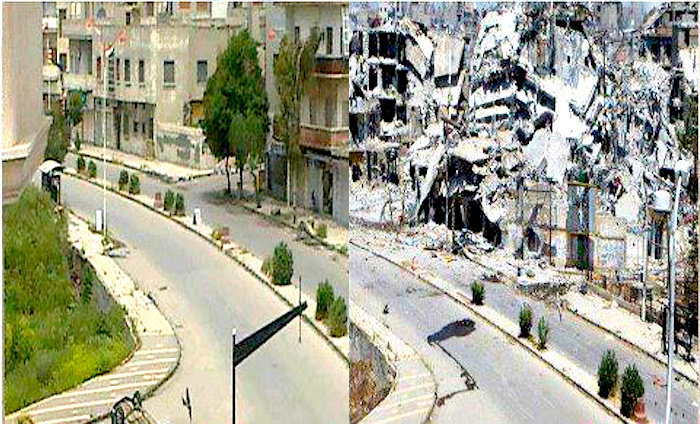
© PinterestHoms: Before and After
2) Assad is the recognized legitimate leader of Syria by the whole world.
3) There was no unrest in Syria until a country 8,000 miles away decided they didn't like Assad - who the hell knows why. Just a guess: Assad wasn't going to let said country steal Syrian resources for pennies on the dollar. Said country was not Russia but the USA. No little non-nuclear armed country can refuse these type of American "requests" - there will be consequences. The consequence for Syria was the funding of a rebel insurgency.
4) That actions like this violate international law means nothing to the USA, especially when their "request" (demand) for access to cheap resources is turned down.




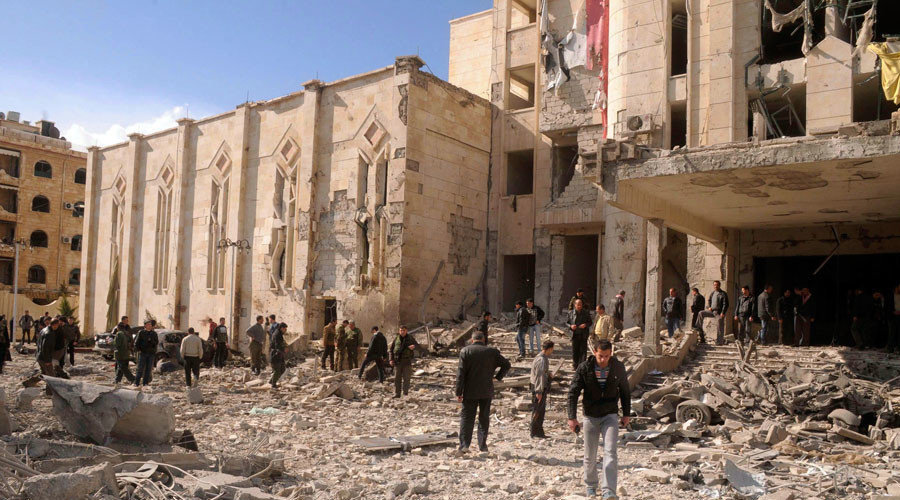

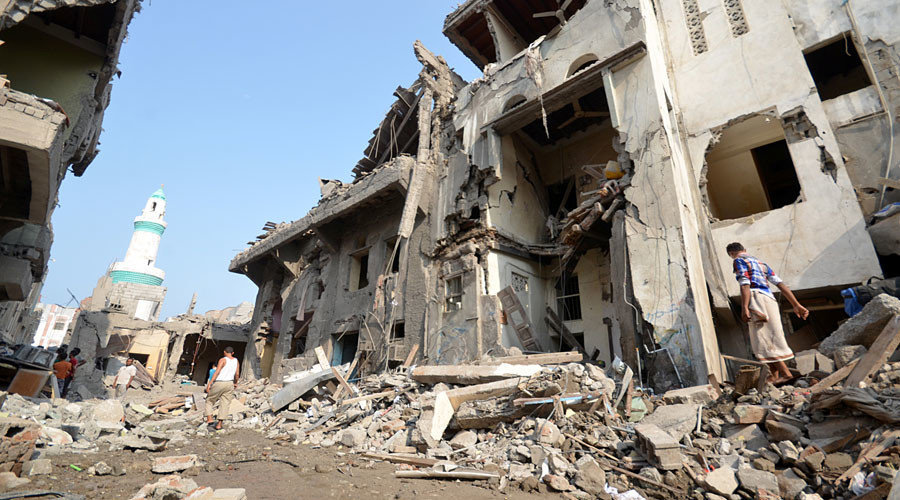


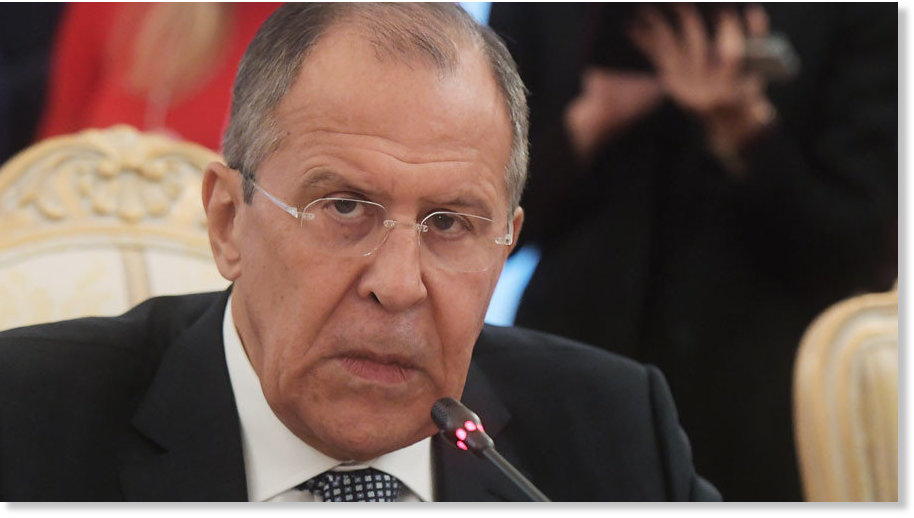


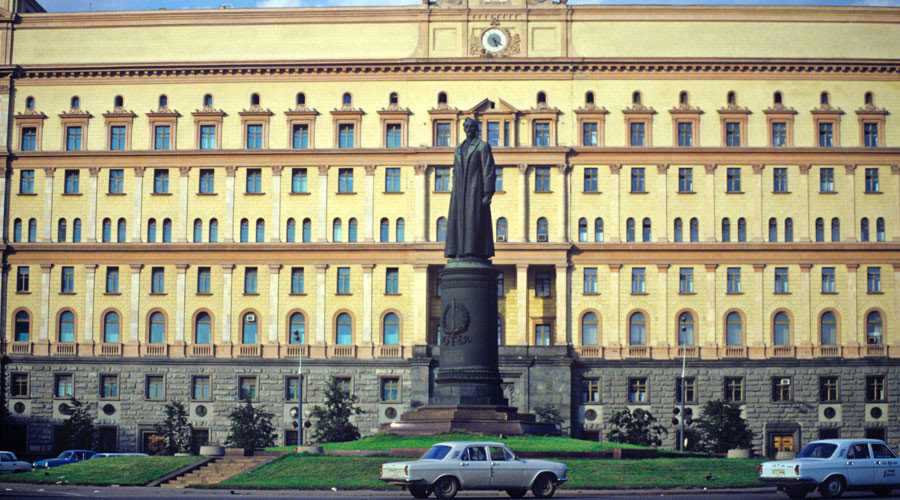


Comment: In this case, pictures speak louder than words to convey the devastation left behind and the ongoing atrocities suffered by the Syrian people.