Puppet MastersS


Attention

Beijing seizes US underwater 'oceanographic' drone in South China Sea

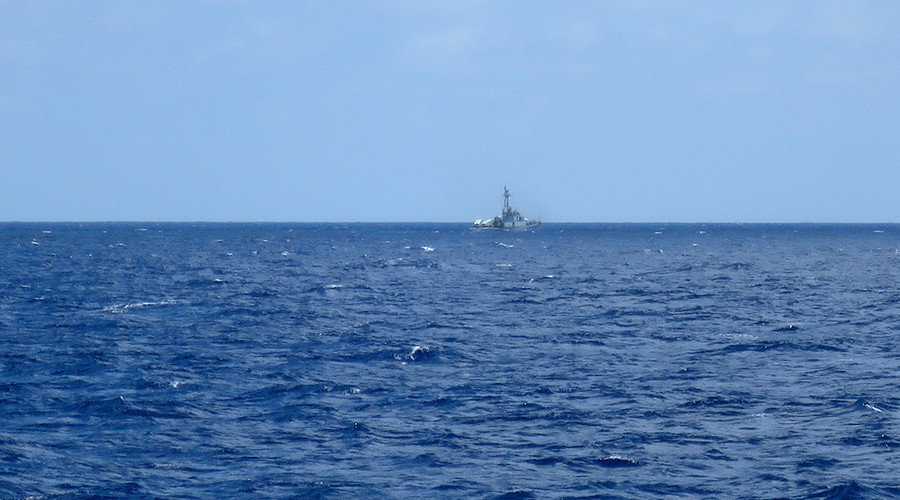
Chinese navy frigate
© Martin Petty / Reuters
A Chinese navy warship seized an underwater drone deployed by an American oceanographic vessel in international waters.

The mission of the survey ship, USS Bowditch, had been sampling and data collection of surface, midwater and ocean floor measurements.

The Bowditch was sailing about 100 miles off the port at Subic Bay when the incident happened. The survey ship had stopped to pick up two underwater drones when a Chinese naval ship that had been shadowing the Bowditch put a small boat into the water. The small boat came up alongside and the Chinese crew took one of the drones.

Comment: China Seized An Unmanned U.S. Navy Sub - That Was Possibly Legal
Aside from the details of this case which do not yet know (there is a tit-for-tat ongoing between the U.S. and Chinese Navy in the South-China-Sea) the legal issue involved here could get quite complicate.

Many militaries and commercial shipping companies are working on unmanned ships. But there is no case law and no international law yet that is applicable for unmanned shipping. The Laws of the Sea and the Law of Salvage all consider, to my best knowledge, only manned shipping.

This spring I discussed this problem over lunch with some people working in commercial cargo shipping here in Hamburg. The first plans for unmanned commercial cargo liners had just come up. They had no ready answers to the open legal questions.

The Chinese can simply say: "We saw a ship or submarine that seemed to be somewhat erratic in its movements. It did not respond to direct bridge to bridge bull horn calls. No crew was seen on board. We reasonably considered it a danger to international shipping. We salvaged it. If it is yours we will give it back (after a thorough inspection) if you pay us the usual applicable salvage award."

What can the U.S. in a legally straight way respond? How will it respond?

How would a British Navy Captain react if some unannounced unmanned ship came up through the English Channel? He would probably ask: "Is that ship possibly out of control or damaged? How would I know? Is it a danger to the dense general shipping here? Should I salvage it? Should I sink it?"

What would the legal answers be?

It took centuries until all nations agreed to some common Law of the Sea. I wonder how long it will take to make that applicable for unmanned shipping. With probably millions of dollars worth of cargo on such ships the problems could soon escalate.

Is it "pirating" or "salvaging" when someone enters up and takes control of such a ship? I don't know and reading the law hasn't helped.

The Chinese were possibly well within their rights when they took control of the unmanned U.S. Navy sub. But do not expect the U.S. Navy to support that legal position. Until of course the day it captures some unmanned Chinese ship.


Attention

North Carolina Republicans strip power from incoming Dem governor after days of protests and arrests

NC police arrest protester
© CBS North Carolina / YouTube
The Republican-led North Carolina legislature has passed special session measures that will weaken powers vested in the state governor, an office the Democratic Party won in a close election this fall.

Demonstrators gathered at the state legislative building again on Friday to resume protests of hastened efforts by North Carolina's Republican legislators that would sap various powers from incoming governor Roy Cooper, a Democrat who was previously the state's attorney general. In a close election, Cooper defeated Republican incumbent Pat McCrory last month and will be sworn into office on January 7.

Yet the demonstrations did not stop the Republican majority, which two bills that seek to shift certain powers from the governor's office to the Republican-dominated legislature or Republican-held state positions. McCrory signed Senate Bill 4 shortly after passage. The other bill awaits approval from McCrory, according to the News & Observer.

Eye 1

No surprise, EU extends Russia sanctions over Ukraine crisis

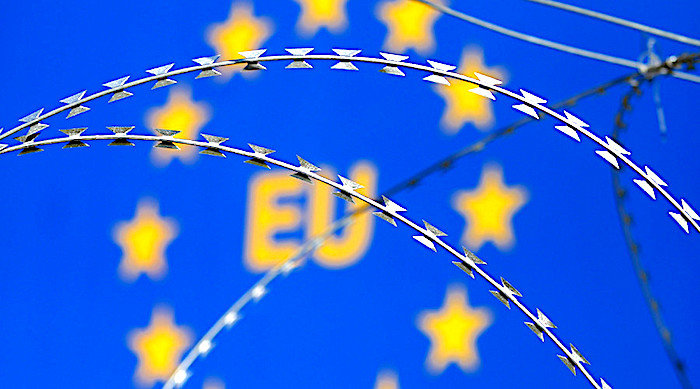
barbed wire
© RT.com'Barb'arians
The EU will leave the economic sanctions it has imposed on Russia in place for another six months, saying that "not enough progress" has been made in fulfilling the Minsk peace agreement, to which Kiev is a party. "It was clear that we would prolong the sanctions for six months," European Council President Donald Tusk told a press conference following the EU summit in Brussels, noting that, although "some of our colleagues would prefer [to extend sanctions] maybe [for] 12 months," there was not much of a debate on the issue.

Reuters reported that Poland was one of the states that had been pushing for a longer extension, but its proposal was dismissed by other countries, particularly Italy, which has opposed the sanctions on previous occasions, saying they are detrimental to its economy.

When asked if the EU might change its approach to Russia, including its sanctions policy, after President-elect Donald Trump assumes the US presidency in January, Tusk refused to speculate, saying that "we have too many signals." At the same time, he noted that the leaders had not discussed introducing an additional package of punitive measures against Russia in connection with situation in Syria.

The EU leaders cited a lack of progress in implementing the Minsk Accords as their justification for extending the sanctions. That agreement outlines steps that should be taken to secure a political resolution of the military conflict between rebels in the self-proclaimed Peoples' Republics of Donetsk and Lugansk in eastern Ukraine, and the coup-installed government in Kiev. The EU alleges that Moscow is backing the rebels militarily and influencing their rapprochement with Kiev.

Comment: EU might just want to refresh its memory as to who created the Ukraine crisis in the first place. Meanwhile, Russia has become more self-sufficient and is making deals with other countries not under the propaganda veil of the EU and USA.


Attention

Severe austerity measures for Brazil: Constitutional amendment to freeze education, health spending until 2037

Brazil protestors
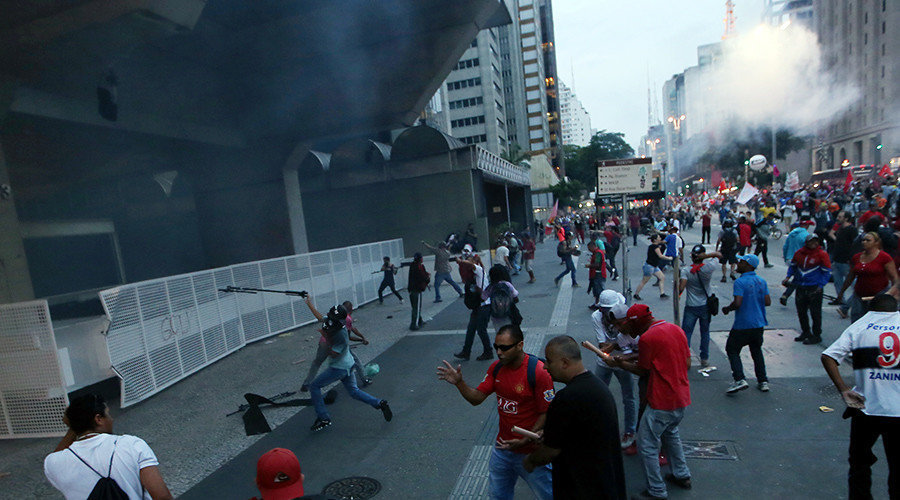
© Paulo Whitaker / ReutersAnti-government demonstrators throw objects at the main entrance of the Sao Paulo Industry Federation (FIESP) building during a protest against the constitutional amendment PEC 55, which limits public spending in Sao Paulo, Brazil, December 13, 2016
A new constitutional amendment has gone into effect in Brazil which is set to freeze government spending on things like healthcare, education, pensions, infrastructure, and defense until 2037.

The amendment has a clause which says the freeze can be revised in a decade, but that would require a 60 percent majority in parliament, which could prove next to impossible for Brazil's fractious legislative system.

The spending cap can only increase with the inflation rate, and will not depend on economic or population growth, while education spending per child will drop by over 30 percent, and healthcare funding per patient will be reduced by 10 percent, according to Paulo Zahluth Bastos, an economics professor at the University of Campinas, as quoted by Vox.

At the same time, Temer has pledged to introduce a stimulus package to appease the outrage: the government will write off some of the taxes owed by companies, as well as letting others pay off their debts in installments. The authorities are also set to make sure banks and credit card companies reduce the time they take to process payments, or lower the fees they charge businesses.

The stimulus package announcement comes a few days after the latest round of violent clashes erupted in the streets of Brazil, with military police cracking down on hundreds of protesters. The majority of the protesters were reported to be civil servants, many of whom have not been paid for months.

Comment: See also: Protesters clash with military police in Rio, Brazil


Caesar

Obama vows revenge for alleged Russian hacking, Putin's response: 'Stop talking about it or show some proof'

putin obama
Putin has had enough of the relentless barrage of US accusations that he, personally, "hacked the US presidential election."

The Russian president's spokesman, Dmitry Peskov, said on Friday that the US must either stop accusing Russia of meddling in its elections or prove it. Peskov said it was "indecent" of the United States to "groundlessly" accuse Russia of intervention in its elections.

"You need to either stop talking about it, or finally show some kind of proof. Otherwise it just looks very indecent", Peskov told Reporters in Tokyo where Putin is meeting with Japan PM Abe, responding to the latest accusations that Russia was responsible for hacker attacks.

Comment: Who are these 'un-named government officials' everyone keeps using as reliable sources?! This whole idea of Russian hacking is pathetic and unfounded, to reiterate, THERE IS NO PROOF.
putin hack


Cult

Democratic Party aligned with CIA in attempting US coup against Trump government

ODNI statement
The Office of the Director of National Intelligence (ODNI) has refused to endorse the CIA’s assessment of Russian hacking ‘due to a lack of conclusive evidence'
It is nothing short of a massive paradox, bordering on the ridiculous, for the CIA to allege that Russian cyber attacks had influenced the outcome of the recent Presidential election "to favor one candidate over the other" and sought to "undermine confidence in the US electoral system." Seriously?

For the CIA, of all 'intel' sources to make that claim; the least credible, the most culpable of indiscriminate destruction of sovereign nations throughout the world since 1947, some while struggling to become democracies, is directly out of their "How to Initiate Regime Change 101" playbook which has proven so effective in the last sixty years. (See "Legacy of Ashes: History of the CIA" by Tim Weiner) That is sixty years of some of the most unhinged elements in the intelligence gathering world, sixty years of malicious skullduggery as well as unbridled murders and treasonous assassinations including JFK for his efforts to dismantle the Deep State. (See The Devil's Chessboard: Allen Dulles, the CIA and the Rise of America's Secret Government" by David Talbot)

And now the CIA has added a new, politically-motivated Chapter entitled 'Regime Change at Home" including those democratically-challenged Democrats who refuse to accept responsibility for the election loss they themselves created, are now publicly identified as willing pawns and co-conspirators with the CIA. What a way to rebuild the party!

Attention

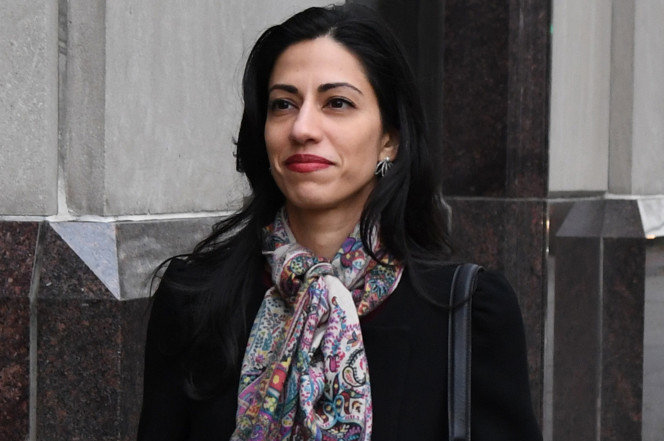
Huma claims she never received FBI warrants for email searches

Huma Abedin
© Paul Martinka
Hillary Clinton aide Huma Abedin told a Manhattan federal judge in a court filing Thursday that neither she nor Anthony Weiner ever received FBI search warrants for emails found on her estranged husband's computer — raising questions about whether FBI warrants for the emails were ever issued, and if so, to whom.

In the letter, Abedin's lawyer said she is unable to comment on a Los Angeles lawyer's request for FBI warrants tied to her emails, because "the government has never provided her with a copy of the warrant it reportedly obtained to search certain emails."

"We understand that Mr. Weiner has likewise not been provided with a copy of the material," said the letter from lawyer Karen Dunn.

Dollar

Don't pay too much attention to mainstream media, advises JP Morgan Chase

chase bank
Chase Bank
In its 'year-forward' 2017 outlook, JPMorgan's Marko Kolanovic warns that:
"In the short-term, with additional rate hikes imminent and the record level of the USD, we are at an increased risk of repeating the scenario from January 2016 where fundamental and systematic investors were selling at the same time in the aftermath of a Fed hike(albeit, some risks are lower this time, such as higher Oil prices and a lack of focus on China/CNY). According to our macroeconomic model, the VIX also appears to be ~3 points too cheap (1 standard deviation) relative to dozens of macroeconomic variables.

So what is driving the VIX and is it still a good measure of equity market risk?There are several factors that can explain the behavior of equity volatility this year. The first one is structural and we described it as market pinning during most of July and August, caused by option positioning. At the peak of market pinning in August, the S&P 500 realized less than 5% annualized volatility and moved less than 10bps on a number of days. As Brexit, the US election, and the September volatility spike were well anticipated events, they also resulted in covering of option hedges, and opportunistic selling of volatility. Low/negative bond yields increased the allure of selling volatility (and buying equities) and put further pressure on volatility levels. Finally, it appears that the time horizon of macro traders has shortened dramatically, likely as a result of increased participation of machines and algorithms that are quicker to adjust to significant events and can eliminate trading activity of slower investors (such as the overnight post-election move).

Megaphone

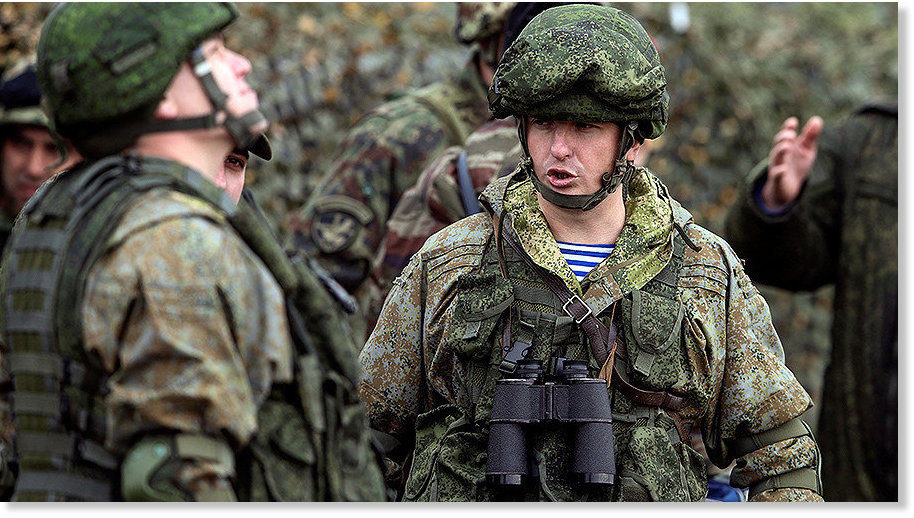
Former London Mayor: Russia no threat to US, spends one-tenth US does on military

Russian soldiers
© Marko Djurica / ReutersRussian soldiers
"The simple fact is the West should have got behind Russia once Assad was clearly not going to be overthrown instead of continuing to prop up terrorist groups trying to replace him", says former London mayor Ken Livingstone.

Rebel fighters and their families in the eastern part of Aleppo are leaving the city.

Their withdrawal was organized by the Russian reconciliation center and the Syrian government. More than five thousand militants and their families are expected to be moved out of eastern Aleppo.

Even before the evacuation started, activist groups such as the White Helmets and the Syrian Observatory for Human Rights claimed pro-Assad forces shot at evacuees. The claims have been denied by locals in Aleppo.

Stock Down

Japan overtakes China as America's top creditor due to declining yuan

Tiananmen Square
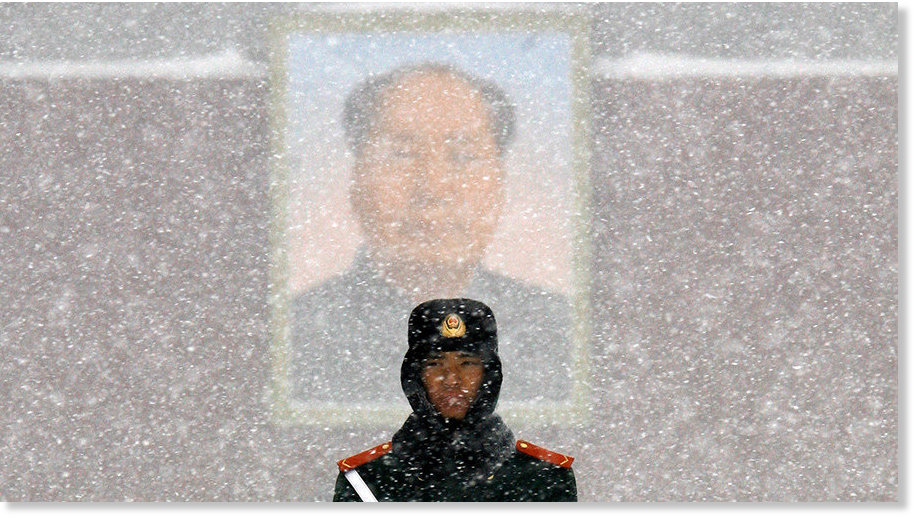
© David Gray / ReutersA paramilitary policeman stands guard in front of the giant portrait of former Chinese Chairman Mao Zedong, on a snow-covered Tiananmen Square in Beijing
The monthly US Treasury Department report shows Japan has overtaken China as America's top foreign creditor. Chinese Treasuries holdings declined to the lowest in more than six years as the country uses currency reserves to support the yuan.

Japan's holdings previously eclipsed China's in February 2015, the first time since the 2008-2009 global financial crisis.

According to the figures released by Washington on Thursday, Beijing held $1.12 trillion in US government bonds, notes, and bills in October, down $41.3 billion from the previous month. That is the lowest investment since July 2010.

Tokyo has also cut its US Treasuries stake, but by a far smaller amount of about $4.5 billion, to $1.132 trillion in October. Its holdings have fallen by about $17.3 billion from a year earlier.

The two countries account for about 37 percent of America's foreign debt holdings. The reserves fell $45.7 billion to $3.12 trillion in October.