Puppet MastersS


Snakes in Suits

Israel arrests tycoon for alleged huge corruption in Africa

Beny Steinmetz
Beny Steinmetz
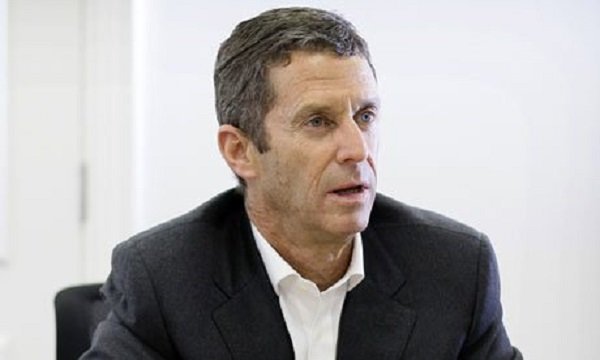
The struggle for worldwide economic justice just got some very good news from Israel. Authorities on December 19 arrested Beny Steinmetz, once the richest man in the country, on suspicions of massive corruption, including bribing and stealing billions from Guinea, one of the poorest nations in Africa. Steinmetz's surprising but welcome apprehension raises the hope that Dan Gertler, another Israeli who has drained billions from the crisis-torn Democratic Republic of Congo, could also finally find himself pursued by justice.

At long last, the Steinmetz case should make clear that corrupt African politicians do not steal alone. There are no brib-ees without bribe-ers.

Comment: More on Beny Steinmetz:


Megaphone

Egypt detains Al-Jazeera journalist for spreading fake news

muslim newspaper
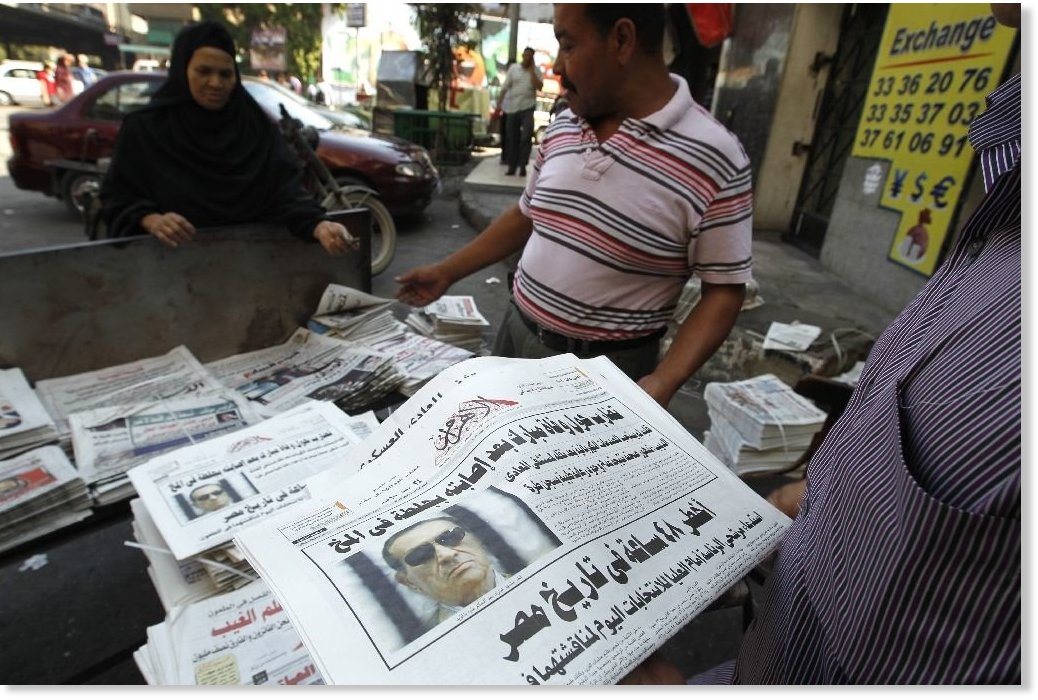
© AFP Photo/Mohammed AbedEgypt accuses the Qatar-based broadcaster of supporting the outlawed Muslim Brotherhood
Egypt has ordered the detention for 15 days of an Al-Jazeera journalist accused of incitement and fabricating news, a prosecution official said on Sunday.

It was the latest move against the Qatar-based broadcaster which Egypt accuses of supporting the outlawed Muslim Brotherhood of ousted president Mohamed Morsi.

Egyptian Mahmoud Hussein, 51, flew to Cairo on Tuesday for a family holiday but was stopped and interrogated at the airport for several hours before being released.

On Friday, police raided his Cairo home and arrested him. He was questioned again on Saturday and Sunday, when prosecutors decided to hold him for 15 days.

The prosecution official said Hussein would be held "pending an investigation into accusations that he incited against the state and broadcast fake news and documentaries".

Comment: Egypt seemingly got this right, since Al-Jazeera IS fake news and creates stories to incite and foment anger.


Eye 1

'Britain lied over Syria & made situation worse, tough talk and little action' UK's ex-ambassador says

Aleppo, Syria
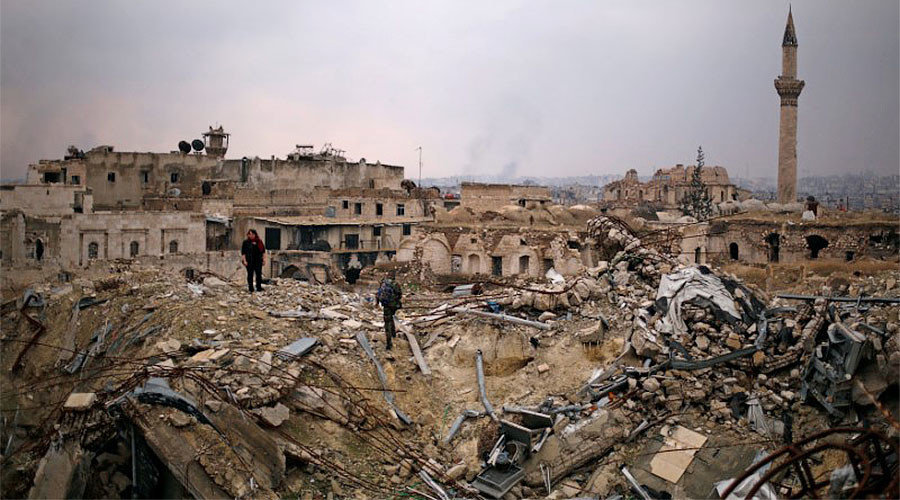
© Omar Sanadiki / Reuters
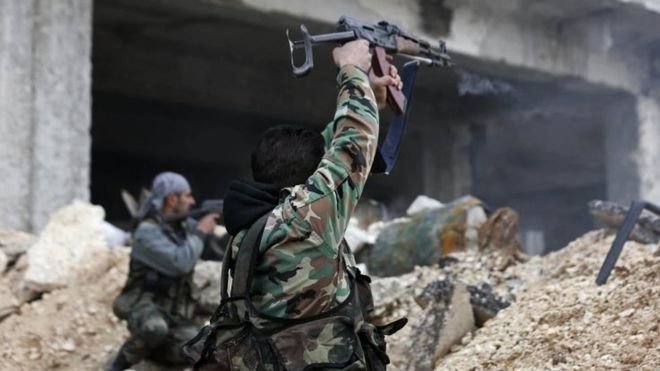
The UK government has lied about Syria's civil war and its policies have "made the situation worse," according to a former British ambassador to the country.

Peter Ford said the Whitehall department led by Boris Johnson and his predecessor Philip Hammond had "gotten Syria wrong every step of the way." Ford, who was Britain's ambassador to Syria from 1999 to 2003, said Britain had misread the situation in the country since the start of the conflict.

He claimed the UK's tough talk followed by little action to back the rebels in Syria had preceded a rebellion that had "only led to hundreds of thousands of civilians being maimed and killed."

"We have made the situation worse," he added.

"It was eminently foreseeable to anyone who was not intoxicated with wishful thinking."

Comment: See also: Aleppo: Thousands of bombs dismantled, hundreds of terrorists captured trying to hide
The United States, Saudi Arabia, Qatar, Turkey, Zionist State, Jordan and Morocco are desperate to extract their spies and terrorism-enablers from Aleppo but cannot do this with the permission of the Syrian government which is planning a resounding public relations coup with their capture. So, it appears the European Union, frustrated by a concatenation of debacles both internally and externally, pushed the Leichtensteinian and Qatari proposal to the GA for debate and vote knowing of its illegality. They simply have no choice but to pressure both Syria and Russia into relenting on the issue of foreigners. Note also the ramping up of lies in the MSM regarding the fate of Syrian citizens. If the truth be told, the United States never cared a bit about the lives of citizens. If anyone should be investigated for war crimes, it should be Obama and Cameron, Salmaan, 'Abdullah of Jordan, Tameem and his ape father and banana mother, Erdoghan and Mileikowski (a/k/a Satanyahu).


Sherlock

What happens when someone checks evidence for Russian hacking? Hint: It all falls apart

russia hacking
Vladimir Putin hacked the US election. We all know that. Part of the reason why we know that is that an internet security firm which stands to gain tons of publicity has said so.

The same firm has also claims the pro-Russian hacking group Fancy Bear is run by the sinister Russian military intelligence, the GRU, and had hacked Ukraine army artillery during the civil war in eastern Ukraine:
But so far, the only evidence pointing to Russian government involvement comes from cybersecurity companies that have studied Advanced Persistent Threat 28, a hacker collective that has attacked many targets over the years -- including the DNC in 2016.

That evidence is best summarized in a 2014 blog post by the security firm FireEye. APT 28 attacks governments and militaries hostile to Russia or strategically important for it. APT 28 appears professional and well-financed. APT 28 uses Russian in its malware. The malware is compiled during working hours in the Moscow time zone.

CrowdStrike, the firm that detected the DNC hack, calls APT 28 Fancy Bear. Until recently, the company's founder, Dmitri Alperovitch, said he had "medium level confidence" that the group was run by the GRU, Russia's military intelligence service.

Now, he says the confidence level has changed to high. The increase comes from the finding by CrowdStrike that a Ukrainian-developed Android application, used to simplify targeting data for the D-30 howitzer, was contaminated with a version of APT 28 malware.

The logic: If the malware implant within the application was used to collect positioning data about Ukrainian artillery units, who else could be in the market for it but the GRU? Ominously, the CrowdStrike report says:
"Open source reporting indicates that Ukrainian artillery forces have lost over 50% of their weapons in the 2 years of conflict and over 80% of D-30 howitzers, the highest percentage of loss of any other artillery pieces in Ukraine's arsenal."
The inference is that the Russians hacked the app used to target the D-30, and so the howitzers were mostly destroyed.

Eye 2

2017: A Year of Transition and Trouble

Jihadi terrorists
Predictions aside, there are obvious trends, plots, and paradigm shifts that will continue onward into the new year, that geopolitical observers should be distinctively aware of.

1. The War in Syria is Not Over

The United States conspired as early as 2007 to overthrow the government of Syria through the use of armed militants - particularly those aligned to Al Qaeda and who enjoy state sponsorship from America's Persian Gulf allies.

The goal of eliminating the Syrian government was not an isolated objective, but rather fits into a much larger geopolitical agenda - including the overthrow of the Iranian government and the movement of militant proxies back into southern Russia and even into western China.

Stormtrooper

Okinawa governor loses court case - rescinds action against US base relocation

governor okinawa
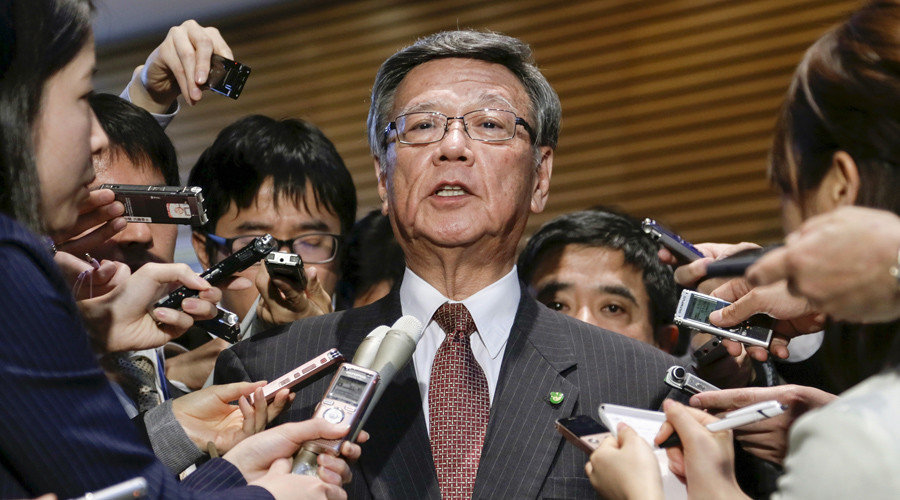
© Kimimasa Mayama / Reuters Okinawa Governor Takeshi Onaga
The governor of Okinawa has reportedly rescinded an action against the relocation of a US airbase, despite being an extremely vocal critic against the presence of American troops on the Japanese island, according to sources cited by Kyodo News.

Governor Takeshi Onaga's apparent decision follows his defeat last week in a lawsuit filed by the central government over a plan to move the US Marine Corps Futenma Air Station from Ginowan to the less-populated area of Henoko, in Nago.

Japan's Supreme Court found that it was illegal for Onaga to revoke the approval granted by his predecessor, Hirokazu Nakaima, for land reclamation required to build replacement runways at the new base.

Onaga revoked the approval in October 2015, which led to a legal dispute between Tokyo and the local Okinawa government. Relocation work in Henoko was suspended in March.

However, despite sources stating that Onaga has rescinded an action against the base relocation, the governor's fight against the move may not be over, as he has previously vowed to thwart it via other means.

Comment: Donald Trump could save a lot of money and make friends for life, if he would close the island's bases and remove this blight on the Okinawan peoples' lives.


Bad Guys

Shady UN probe on Syria war crimes susceptible to influence from crooked donors

Syria
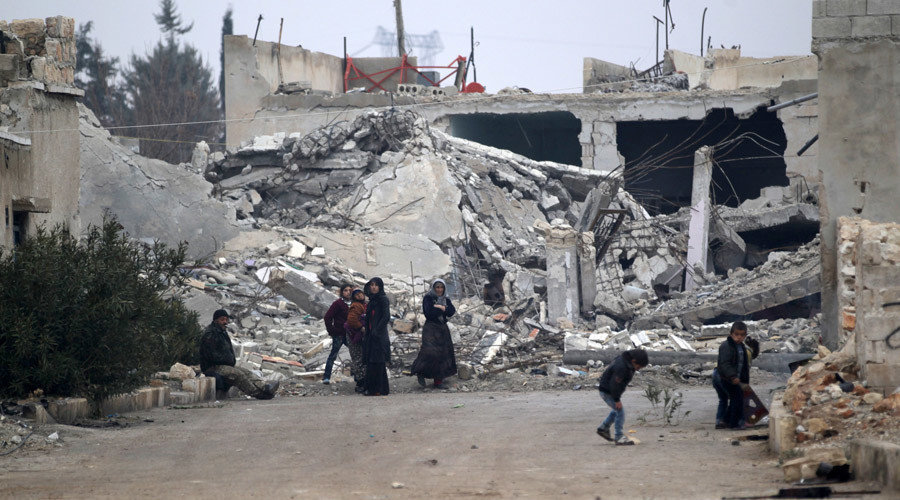
© Khalil Ashawi / ReutersPeople stand near near rubble of damaged buildings in al-Rai town, northern Aleppo countryside, Syria December 25, 2016.
The idea that an investigation "funded by voluntary contributions" will be able to maintain impartiality instead of delivering the results desired by its sponsors is somewhat dubious, said Russia's UN envoy, who derided UNGA's recent resolution on Syria.

The non-binding resolution, approved by the UN General Assembly (UNGA) on Thursday, created a dangerous legal precedent and would not contribute to the cessation of hostilities in Syria, Russia's envoy to the UN, Vitaliy Churkin, told newspaper Rossiyskaya Gazeta (RG).

"This decision of the General Assembly was not right ... we honestly believe that the General Assembly does not have the authority to establish such institutions," said Churkin. "The Secretary General, however, has received corresponding instructions, and it looks like the new Secretary General will have to deal with the issue."

According to Churkin, it has apparently become a common and dangerous practice in the UN, when a flawed resolution which fails to get a consensus within the Security Council instead gets passed through the General Assembly. This is despite the fact that the issues currently under UNSC consideration should not be interfered with by the General Assembly, according to the UN Charter.

People 2

Analysis of Russia And Syria: Different systems for different states

world map syria
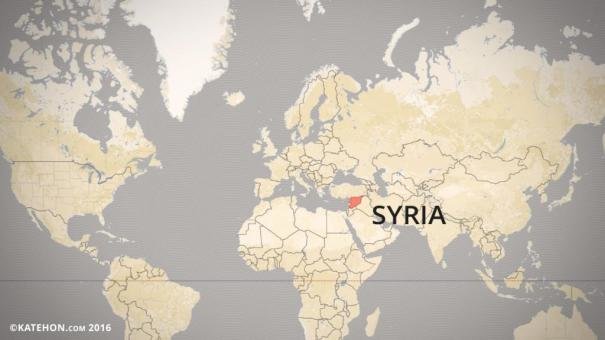
Russia and Syria have a multitude of differences when it comes to their internal political administrative units, and these are important points to reflect upon. The Syrian Arab Republic is a constitutionally unitary state, meaning that no regions or cities have autonomy or "self-rule", whereas the Russian Federation is precisely that - a federation - and large swaths of the country have a political status which grants them a broad degree of freedom to administer themselves as they'd like within certain constitutional boundaries. The reason that these two countries have such fundamentally different domestic political frameworks is due to their unique histories and circumstances. Syria has always been a rich multi-ethnic and multi-confessional civilization for millennia, whereas Russia had only just begun to diversify away from its Russian Slavic roots in the 15th century and continued expanding into the Imperial and nation-state eras. Syria, on the other hand, had been under Ottoman occupation since that time and up until the end of World War II, so it had an entirely different experience entering into the modern era.

Syria's Administrative Past And Present

Syria, due to not having experienced independence for centuries as a result of Ottoman and French occupation, was faced with the difficult task of strengthening its civic-civilizational identity in the era of nation-states, which explains why the country took the steps towards centralizing political control over all of the separate groups inhabiting the country. This was intended to preserve Syria's civilizational unity which had endured for millennia and to not allow it to be torn apart by subnational identity conflict. Because Arabs were the most significant ethnos guiding the historical development of the state, the country was officially named the Syrian Arab Republic in honor of their contributions. Independent Syria continued the policies of inclusivity and secularism which defined its historic civilization, thus allowing all ethnic and confessional groups to feel welcome in the country.

Former President Hafez Assad was insistent that this was the only way for Syria to develop and prosper into the future, which explains why he so strongly preached the need for a unified Syrian identity.

Snakes in Suits

US aims to financially break Russia with arms race

Bald headed eagle with American flag
© Pixabay
Alarm bells about a new arms race between the US and Russia went off this week around the world. President-elect Donald Trump reportedly told US news media "let's bring it on" after Russian leader Vladimir Putin earlier called for a "strengthening" of his country's nuclear capability.

Moscow later clarified that it had no intention of inciting an arms race. Trump's side though remained ambiguous about what the new president meant by "greatly expanding" the American nuclear arsenal.

There is a seductive strategic incentive for Washington to incite a nuclear arms race with Russia. The main objective is not to launch an eventual catastrophic war in which neither side would survive. But rather the objective is to break Russia financially. It's still a kind of warfare, albeit in a different form.


Clipboard

Senior Trump adviser Stephen Miller to write inauguration speech

Stephen Miller
© AP ImagesStephen Miller, Donald Trump's incoming senior White House adviser for policy, wrote most of Trump’s major prepared speeches in 2016
Donald Trump and his top advisers have begun mapping out the themes for his inaugural address next month, as the president-elect has tapped Stephen Miller, his incoming senior White House adviser for policy, to write the historic speech.

Early discussions of the address have focused on laying out some of the structural problems facing the country, and then framing Trump's first-term agenda in more nationalistic than ideological terms. Among the half-dozen areas that Trump is considering issuing a collective call to arms to address are the nation's education system, infrastructure, border security, the state of the military and the economy, in particular, the outsourcing of jobs.

The choice of Miller, the 31-year-old who wrote most of Trump's major prepared speeches in 2016, including his Republican national convention address that was criticized as overly dark, is of no surprise to Trump insiders. Miller played an unusually multi-faceted role on the campaign: a behind-the-scenes policy adviser, Trump's chief speechwriter and a speech-giver himself, becoming a skinny-tie-wearing fixture over the summer at Trump rallies as a warm-up act.

"Steve's a machine," Jason Miller, a Trump aide, said of Miller's prolific writing abilities (the two men aren't related). "I've literally seen him knock out three speeches in a day."