Puppet MastersS

Info

Western Australia joins two-thirds of country to ban hydraulic fracking

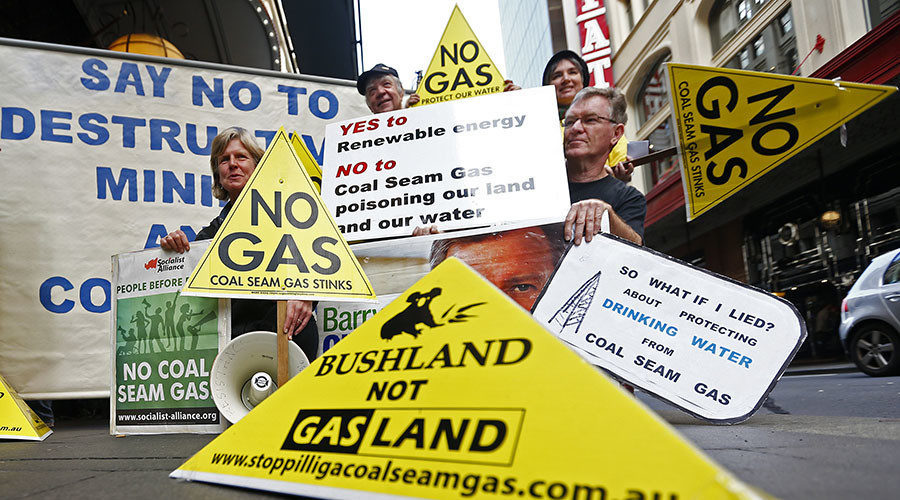
Australial fracking protesters
© Daniel Munoz / Reuters
The largest state in Australia has announced a moratorium on hydraulic fracturing, commonly known as fracking. Western Australia (WA) becomes the fifth state in the country to stop the oil extraction process considered dangerous for the environment.

"We appreciate there is a level of community concern around fracking in WA, which is why we are commissioning an independent scientific inquiry," said Environment Minister Stephen Dawson in a statement posted on his website.

The ban on fracking freezes more than A$380 million (about $300 million) in investment in new onshore projects, said Stedman Ellis, Chief operating officer of Australian Petroleum Production and Exploration Association WA.

With the Tuesday announcement, fracking is now banned or temporarily prohibited on almost two-thirds of Australian territory.

Rocket

China carries out live-fire missile exercise fending off 'surprise' overseas attack

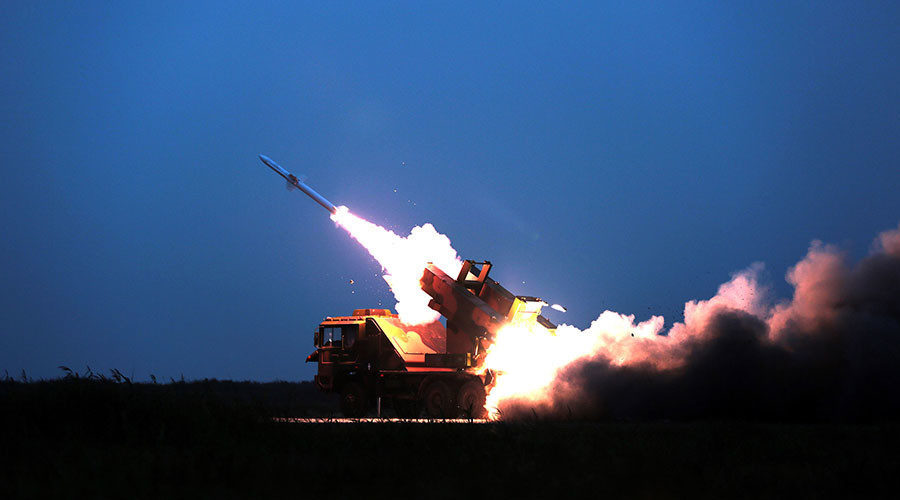
An HQ-6 air-defense missile weapons system
© Li Ming and Xie Biao / eng.chinamil.com.cnAn HQ-6 air-defense missile weapons system.
Beijing has deployed its air defense missile weapons systems to fire at simulated surface and air targets at sea, as the Chinese Air Force said its personnel are to be modified to long distance training, having previously concentrated on territorial air defense.

A Chinese air-defense battalion and surface-to-air missile brigade carried out a live-fire exercise near Bohai Bay in east China on Tuesday, an official website of the Chinese military reported.

The simulated battle drills near the Korean Peninsula were aimed at warding off a "surprise attack" from overseas, the military said.

China's HQ-6 air-defense missile weapons system attached to China's Air Force was tested during the exercise, having successfully fired at simulated sea and aerial targets, it added.

Info

Actions speak louder than words: How 'regime change' wars led to the Korean crisis

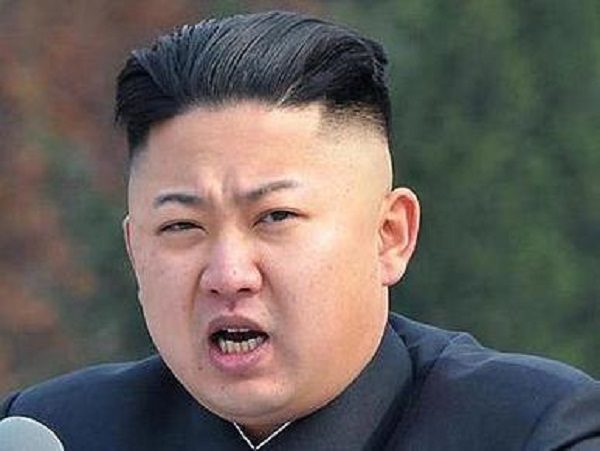
Kim Jong-un
It is a popular meme in the U.S. media to say that North Korean leader Kim Jong Un is "crazy" as he undertakes to develop a nuclear bomb and a missile capacity to deliver it, but he is actually working from a cold logic dictated by the U.S. government's aggressive wars and lack of integrity.

Indeed, the current North Korea crisis, which could end up killing millions of people, can be viewed as a follow-on disaster to President George W. Bush's Iraq War and President Barack Obama's Libyan intervention. Those wars came after the leaders of Iraq and Libya had dismantled their dangerous weapons programs, leaving their countries virtually powerless when the U.S. government chose to invade.

In both cases, the U.S. government also exploited its power over global information to spread lies about the targeted regimes as justification for the invasions - and the world community failed to do anything to block the U.S. aggressions.

And, on a grim personal note, the two leaders, Saddam Hussein and Muammar Gaddafi, were then brutally murdered, Hussein by hanging and Gaddafi by a mob that first sodomized him with a knife.

USA

Victory at last! In America's wars, failure is the new success

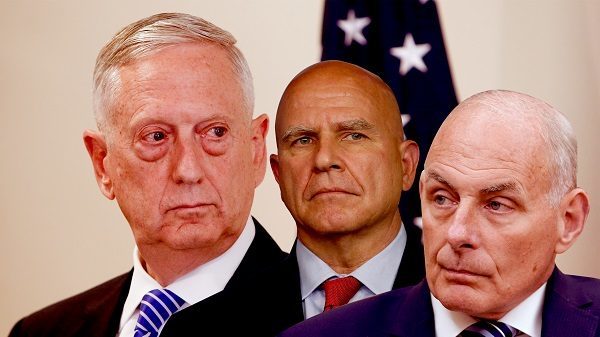
Kelly, Mattis, McMaster
© Photo Illustration by The Daily Beast
It was bloody and brutal, a true generational struggle, but give them credit. In the end, they won when so many lost.

James Comey was axed. Sean Spicer went down in a heap of ashes. Anthony Scaramucci crashed and burned instantaneously. Reince Priebus hung on for dear life but was finally canned. Seven months in, Steve Bannon got the old heave-ho and soon after, his minion, Sebastian Gorka, was unceremoniously shoved out the White House door. In a downpour of potential conflicts of interest and scandal, Carl Icahn bowed out. Gary Cohn has reportedly been at the edge of resignation. And so it goes in the Trump administration.

Except for the generals. Think of them as the last men standing. They did it. They took the high ground in Washington and held it with remarkable panache. Three of them: National Security Advisor Lieutenant General H.R. McMaster, Secretary of Defense and retired Marine General John Mattis, and former head of the Department of Homeland Security, now White House Chief of Staff, retired Marine General John Kelly stand alone, except for President Trump's own family members, at the pinnacle of power in Washington.

Gold Seal

Reality, rumors and ramifications of the Rohingya crisis and the destabilization of Myanmar

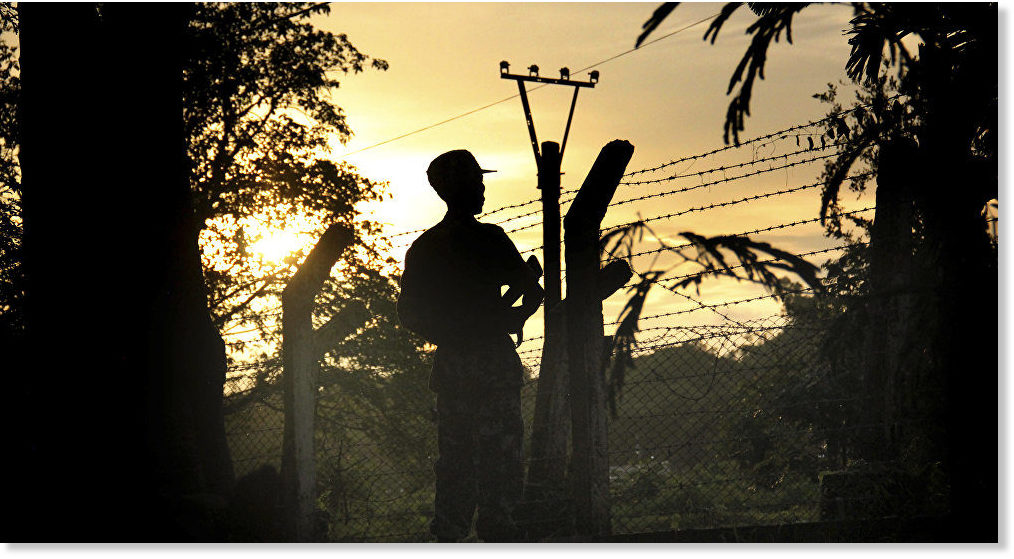
myanmar border guard
© AP Photo/ Esther Htusan
The world, and especially the Ummah, is incensed at what is being portrayed as genocide against Muslims in Myanmar, but the reality of what's happening there is a lot more complex than the simplistic rumors lead one to believe, and the geopolitical ramifications of this crisis could become very far-reaching.

Right off the bat, killing innocent people is wrong, and everyone is justified for feeling outraged when they believe this is happening, as it plainly is in some cases in Myanmar's coastal Rakhine State. The question, though, comes down to identifying who's doing the killing and why, and whether the victims were intentionally targeted or "collateral damage," be it from a military "anti-terrorist" operation or a "rebel" one against the government. It's also important to ponder what the geopolitical ramifications of all of this could be in terms of the larger dynamics at play in the New Cold War.

Comment: See also: Rohingya conflict: Soros and hydrocarbons behind destabilization in Myanmar


Bullseye

Myanmar's leader slams 'fake news' reports over plight of Rohingya Muslims

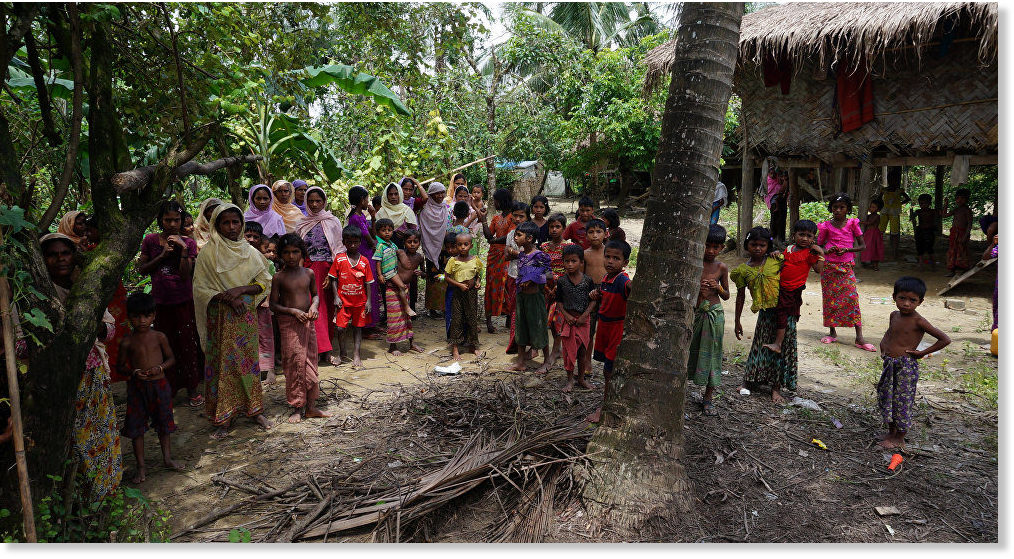
rohingya villagers
© REUTERS/ Simon Lewis
Myanmar's de-facto leader Aung San Suu Kyi responded to growing international criticism of her government by slamming "fake news" reports about the plight of the country's Rohingya Muslims.

Aung San Suu Kyi said on Wednesday that global outrage over the government's treatment of the local Rohingya Muslims was being fueled by "a huge iceberg of misinformation."

Her statement followed the United Nations' call for an end to the government's crackdown on Rohingya Muslims, which has already forced about 146,000 people to flee to neighboring Bangladesh.

The conflict between Myanmar's Buddhists and Rohingya Muslims, widely dismissed in Myanmar as illegal immigrants from Bangladesh, erupted in Rakhine state in late August prompting a wave of protests across the world over what has been dubbed the disproportionate use of force by the government.

Arrow Up

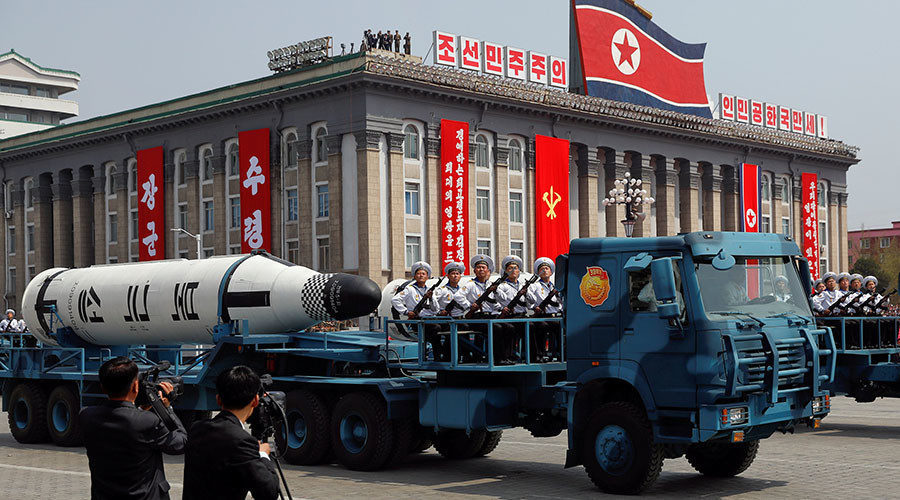
War with North Korea would send oil prices through the roof

North Korea military
© Damir Sagolj / Reuters
An open military conflict in Northern Asia would disrupt more than a third of global seaborne crude oil trade, Wood Mackenzie warned last week amid yet another escalation between North Korea, its neighbors, and the US.

Such a conflict would cripple North Asia's production and refining capacity, the consultancy said. Some 65 percent of Asia's crude oil refining capacity is located in China, Japan, and South Korea, so the effects of an open war would be far-reaching and potentially long-lasting. The most pressing question, then, is how likely such an open conflict is.

Pyongyang seems determined to expand its military capabilities with intercontinental ballistic missiles that can carry a nuclear head. State media claim that the nuclear head is a fact, releasing a photo featuring the country's leader Kim Jong Un inspecting said weapon. After a quick succession of ballistic missile tests over the last couple of months that put South Korea, Japan, and the U.S. on red alert, more nuclear talk from Pyongyang is exactly what the world does not need. Yet it is what we are getting.

Comment: There are a number of reasons why the US will not engage in a hot war with North Korea, and the ramifications of increasing oil prices is one of them. The US has used up much of its political capital to maintain its oil war on Russia, and it has a strongly vested interest in keeping oil prices as low as it can. That said, with the Turkish Stream underway and with mother nature's designs on the Gulf of Mexico, the days of their oil war may be limited.


Arrow Down

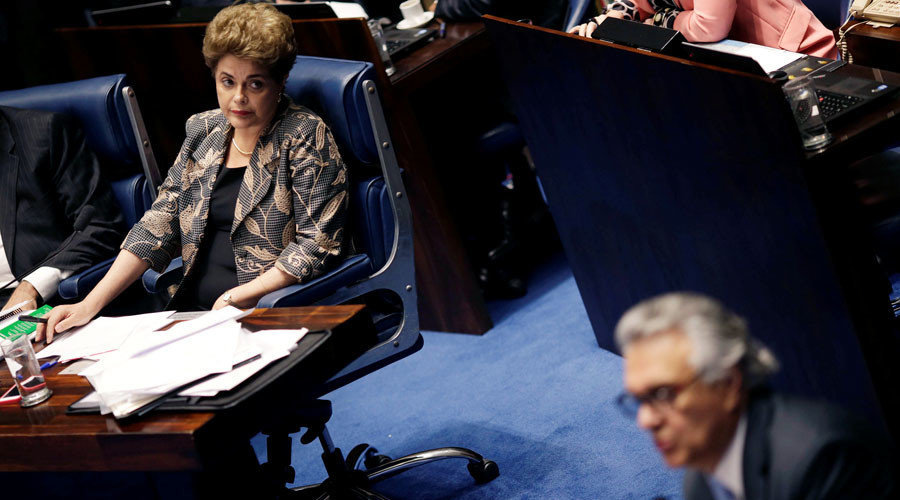
One year after coup against Brazilian President Rousseff, the Temer government has prolonged crisis

Dilma Rousseff impeachment trail
© Ueslei Marcelino / ReutersDilma Rousseff during a final session of debate and voting on Rousseff's impeachment trial in Brasilia, Brazil, August 29, 2016.
Can Brazil's Workers' Party make a comeback, one year after the parliamentary coup against President Dilma Rousseff?

At 1.30pm on August 31 last year, the electronic screen in the Brazilian Senate flashed up the final vote. After nine months of impeachment proceedings, seven days of the final trial in the Senate, and 17 hours of closing speeches, the result was not in doubt: 61 in favor, 21 against. Brazil's Congress had impeached President Dilma Rousseff.

Rousseff's own Workers Party, the PT, called it a coup. So did many thousands of her supporters, and even some critics, among Brazil's social movements and the population at large.

Better Earth

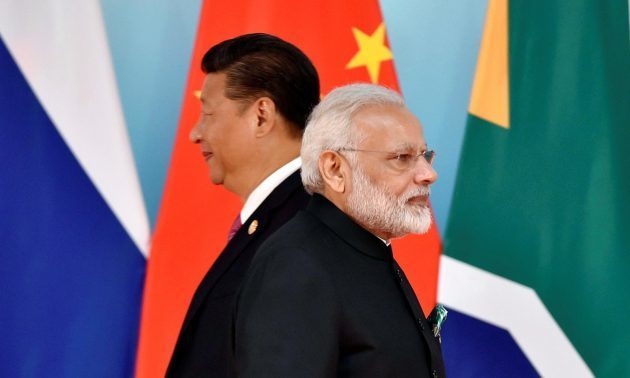
Multi-polar World: The real BRICS bombshell

Xi Jinping and Indian Prime Minister Narendra Modi
© Reuters/Kenzaburo Fukuhara/Pool
Putin reveals 'fair multipolar world' concept in which oil contracts could bypass the US dollar and be traded with oil, yuan and gold.

The annual BRICS summit in Xiamen - where President Xi Jinping was once mayor - could not intervene in a more incandescent geopolitical context.

Once again, it's essential to keep in mind that the current core of BRICS is "RC"; the Russia-China strategic partnership. So in the Korean peninsula chessboard, RC context - with both nations sharing borders with the DPRK - is primordial.

Beijing has imposed a definitive veto on war - of which the Pentagon is very much aware.

Radar

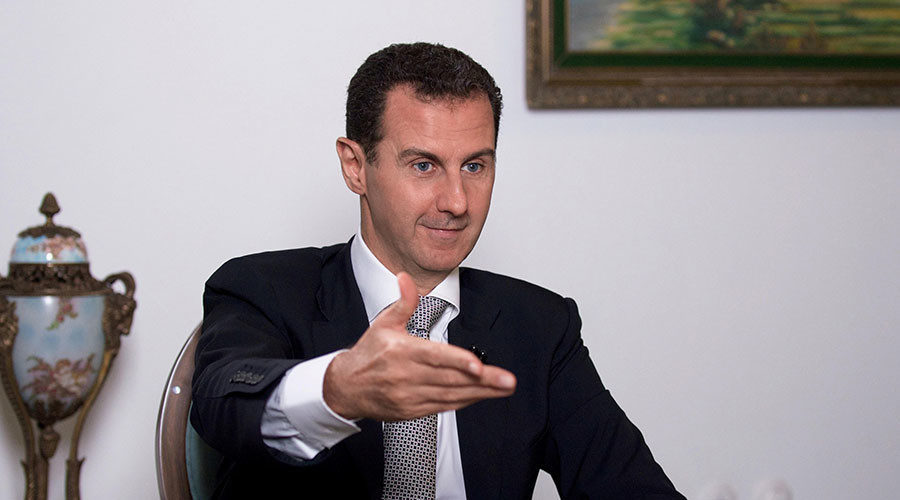
Bashar Assad's Deir ez-Zor victory puts illegal US presence in the spotlight

Bashar Assad
© SANA / Reuters
The symbolic victory for Assad and his allies has galvanized Russia, Iran and Hezbollah like never before in its campaign to rid Syria of terrorist groups. While Iran calls for new talks, Al-Qaeda's days appear numbered.

Deir ez-Zor, once a major staging post of ISIS forces and one not controlled by Kurd-led SDF forces who were taking Raqqa (only about 100 km away), was an attractive military target the Syrian army feverishly pursued. For Assad's government and his allies - Russia, Iran, and Hezbollah - the liberation of the town would provide great symbolism, and Russian air support was undeniably key to those ends.

For Syrian President Bashar Assad, the main thrust of the six-year Syria War is over. For his allies, however, the fall of Deir ez-Zor represents much more than just merely pounding ISIS into submission. But for the Syrian coalition, basking in its glory after its victory against Al-Qaeda groups in Aleppo, Deir ez-Zor has proved beyond any doubt the military effectiveness of this alliance, which needed a clear, uncompromising victory against the terrorist forces.