OF THE
TIMES
"I shrink - I shrink with a horror that I cannot express in words at this continuous slaughter of men in Korea. The war in Korea has already almost destroyed that nation of 20 million people. I have never seen such devastation".MacArthur continues,
"I have seen, I guess, as much blood and disaster as any living man, and it just curdled my stomach the last time I was there [in Korea]. After I looked at the wreckage and those thousands of women and children and everything, I vomited... If you go on indefinitely, you are perpetuating a slaughter such as I have never heard of in the history of mankind".
"This topic (Kurdish autonomy) is open to negotiation and discussion and when we are done eliminating Daesh (aka ISIS), we can sit with our Kurdish sons and reach an understanding on a formula for the future".There are several geo-political implications to this statement.

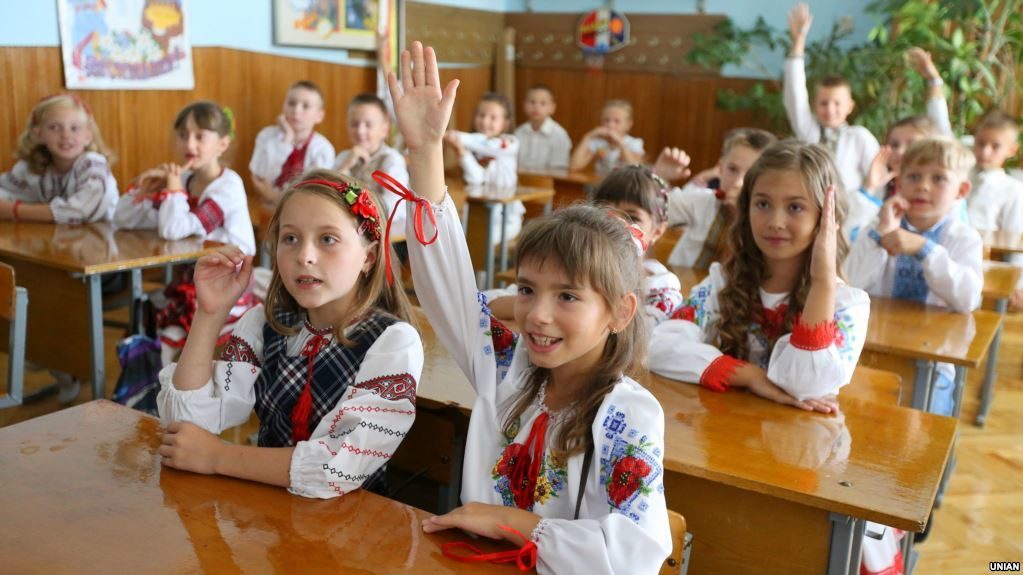
Leshko is not a fan of the bill, which would roll back the option for lessons to be taught in other languages.Hungary's FM released a statement in response:
"I don't like it. Why? Because, for example, I am a Hungarian. I was studying in a Hungarian school and I want my children also to speak Hungarian," she explained. "Maybe they will move to Hungary or maybe they will go there to earn money. In that case, the Hungarian language will be more useful than Ukrainian, I think."
Leshko is not alone in her animosity toward the legislation. Officials from Poland, Romania, Hungary, and Russia -- all countries with significant ethnic communities in Ukraine -- have all heaped vitriol on it.
...Hungarian Foreign Minister Peter Szijjarto said that Ukraine "stabbed Hungary in the back" with the law.We understand that this law is primarily directed against the Russian language, because it dominates the capital, the eastern regions. But in Transcarpathia, it hits the national minorities."-- Yaroslav Halas, spokesman for Zakarpattia Oblast governor...
There are more than 15,000 schools across Ukraine. Of these, according to data from the Ukrainian Education Ministry, Russian is used as the primary language in 581; Romanian in 75; Hungarian in 71; and Polish in five. Some 400,000 students are enrolled at these minority-language schools.
Ethnic Russians make up 17 percent of Ukraine's population of 45 million, according to the World Population Review. Other minorities, including Hungarians, Poles, and Romanians, each make up less than 1 percent of the population.
...
Hennadiy Moskal, the governor of Zakarpattia Oblast, an area in western Ukraine with a sizable Hungarian community, has been one of the more vocal critics of the legislation, claiming it contravenes the European Charter for Regional or Minority Languages.If private individuals in Ukraine, or [Zakarpattia] Governor [Hennadiy] Moskal, want, they can establish a private Hungarian school and fund it."-- Former Justice Minister Serhiy HolovatyyYaroslav Halas, a spokesman for Moskal, expressed what some critics suspect may be the target of the bill.
"We understand that this law is primarily directed against the Russian language, because it dominates the capital, the eastern regions. But in Transcarpathia, it hits the national minorities," he told RFE/RL's Ukrainian Service.
"This law is aimed at protecting the Ukrainian language, but mostly against Russian. It is not aimed at protecting the 150,000 Hungarians or several tens of thousands of Romanians who also live in the Chernivtsi region, or the Odesa region, where Moldovans and Gagauzians live," Halas said.
"Hungary will block all steps within the European Union that would represent a step forward in Ukraine's European integration process in the spirit of the Eastern Partnership program," Hungarian Minister of Foreign Affairs and Trade Péter Szijjártó said in a statement on Tuesday.Good luck back-peddling on this one, Klimkin!
...
Ukraine's Foreign Minister Pavlo Klimkin responded to Hungary's concerns by calling the whole issue a mere "misunderstanding" and offered assurances that Ukraine does care about its citizens of Hungarian origin.
"The meaningful dialog is the way to clear up misunderstandings," Klimkin tweeted, adding that "Ukraine does everything to make our citizens of Hungarian origin feel as comfortable as possible both in the EU and in Ukraine."
"The Ukrainian law on education introduces a de-facto ban on getting an education in any language except Ukrainian. It is not a coincidence that the new law has no mention of Russian or other languages used by the peoples of Ukraine. Apart from the official language - Ukrainian - the law only has some regulations concerning teaching in English," according to the text of the statement published on the parliament's website.
The new law constitutes an act of forced Ukrainization that bluntly violates the European Charter for Regional or Minority Languages, which was ratified by Ukraine, the State Duma lawmakers wrote.
...
"The so called education reform in Ukraine is targeting primarily the destruction of the remains of Russian-language education with the full assimilation of Russian speakers being the main objectives," the statement reads.
"As they maintain the previous line in the language issue, the Ukrainian authorities again provoke the same situation and recreate the same reasons that had become a starting point for the development of the conflict and the civil war in southeastern Ukraine."
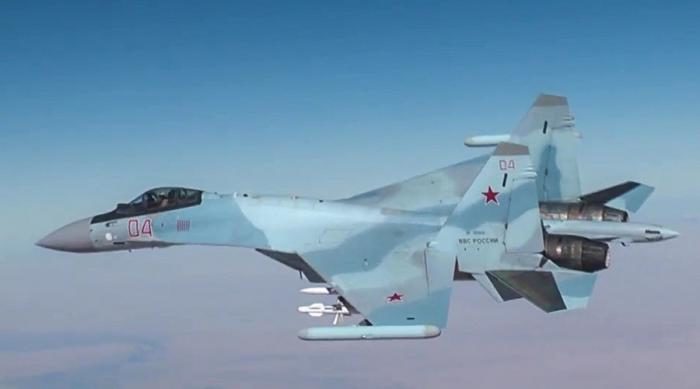
Washington's reported intention to restrict observation flights over the US is yet another example of its tactics to pressure other nations rather than seeking compromise, Russian Deputy Foreign Minister Sergey Ryabkov said on Wednesday.
"Obviously, that is not a partnership move. We don't see this treaty as giving any unilateral advantage to any party. The treaty benefits all parties. It's a necessary valuable document, which should be preserved, but the United States is again demonstrating that it prefers the path of pressure," he said.
...
Ryabkov also stated that any restrictive measures taken by the US against Russia would lead to retaliation.
"Before delivering any statements on the issue we will have to analyze the situation together with our military and decide on what form our response to the Americans will take," he said. "But there will be a response, I have no doubt about it."
Earlier on Tuesday, Mikhail Ulyanov, head of the Russian Foreign Ministry's non-proliferation and arms controls department, suggested that the WSJ publication was likely the result of a deliberate leak from the US government.
"This is strange that even before such moves are formalized, the information gets into the press. This is the signature style of the US diplomacy, which sees no distinction between 'megaphone diplomacy' and real politics," he said.
Comment: Sounds like a page in the US military playbook: despite (false) claims, ineffective upon execution.