Puppet MastersS


Yoda

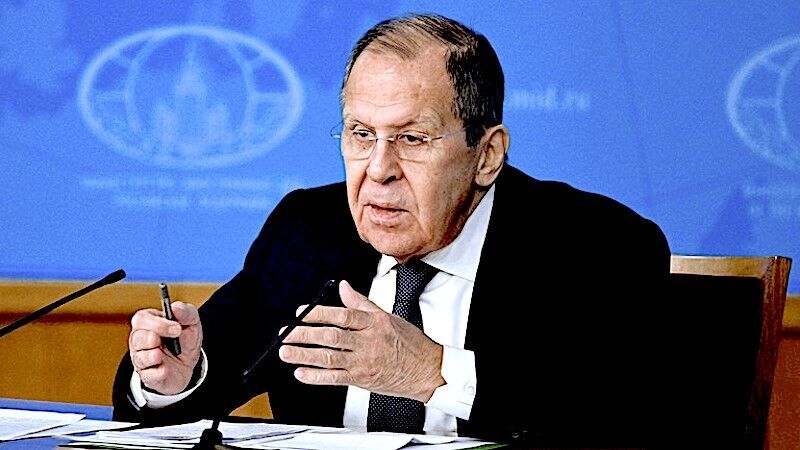
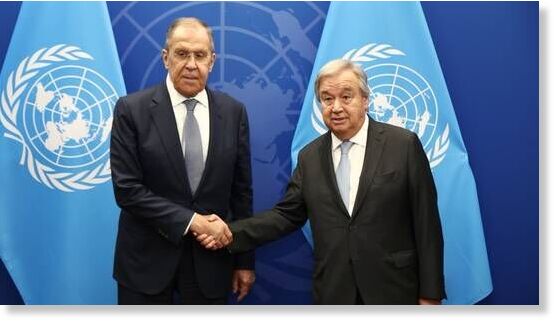
Sergey Lavrov: The UN Charter should be the legal basis for a multipolar world

lavrov
© Sputnik / Sputnik
Eighty years ago, on February 4, 1945, the leaders of the victorious powers of World War II - the Soviet Union, the United States, and the United Kingdom - met at the Yalta Conference to define the contours of the post-war world. Despite their ideological differences, they agreed to eradicate German Nazism and Japanese militarism once and for all. The agreements reached in Crimea were later confirmed and expanded at the Potsdam Peace Conference in July-August 1945.

One of the key outcomes of these negotiations was the creation of the United Nations and the adoption of the UN Charter, which remains the principal source of international law. The purposes and principles enshrined in the Charter are designed to ensure peaceful coexistence and the progressive development of nations. The Yalta-Potsdam system was based on the principle of sovereign equality: No state could claim dominance - all are formally equal, regardless of territory, population, military power, or other factors.

For all its strengths and weaknesses - still debated by scholars - the Yalta-Potsdam order has provided the legal framework for the international system for eight decades. This UN-centered world order has fulfilled its primary role: Preventing another world war. As one expert aptly put it, "The UN has not led us to paradise, but it has saved us from hell."

The veto power enshrined in the Charter is not a 'privilege' but a responsibility for global peacekeeping. It acts as a safeguard against unbalanced decisions and creates space for compromise based on a balance of interests. As the political cornerstone of the Yalta-Potsdam system, the UN remains the only universal platform for developing collective responses to global challenges, whether in maintaining peace and security or fostering socio-economic development.

Broom

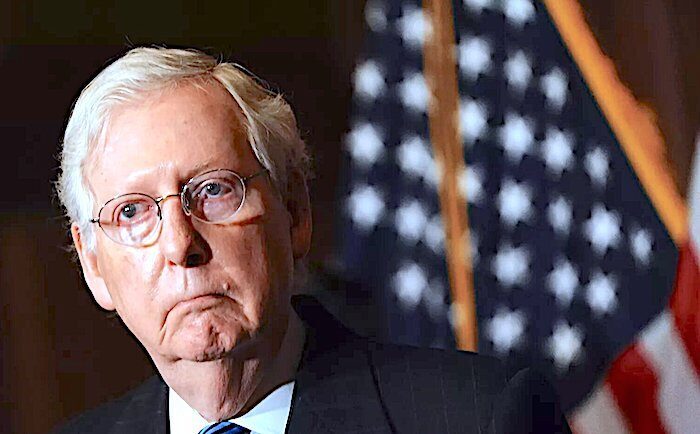
Time to go, old man: Mitch McConnell, 82, fell twice in Senate Chamber

Mitch McConnell
© Kevin Dietsch/Getty ImagesSenate Majority Leader Mitch McConnell
The reports come as concerns continue to mount about the senator's health, following several public episodes in which he has appeared to freeze for several seconds

Republican Senator Mitch McConnell suffered two falls while near the Senate chamber on Wednesday, according to reports.

The Kentucky Republican, 82, fell down a small set of stairs on as he was exiting the chamber after a confirmation vote for Housing and Urban Development Secretary nominee Scott Turner, according to Punchbowl News,

He was quickly assisted by Senators Steve Daines and Markwayne Mullin.

McConnell also fell while inside the chambers, the news outlet said, and he was later pictured being pushed around in a wheelchair.

USA

Misinterpretations of the Evolution of the United States Part 2

Cherokee exodus
© CopyrightThe Trail of Tears, Cherokee Nation by Robert Lindneux In 1838, 4,000 to 8,000 Cherokees died of cold, hunger or exhaustion on the “Trail of Tears.” Under the Indian Removal Act, they left the East Coast of the United States to Europeans and agreed to travel south of the Mississippi River. However, today they are the only Indian tribe that has managed to maintain its way of life without being eradicated by Europeans. This deportation is the example followed by Donald Trump to resolve the Israeli-Palestinian question.
Continuing our analysis of the misinterpretations of the Trump administration's actions, we return to the closure of many federal agencies, the reason why it plans to deport Palestinians, and its approach to the war in Ukraine.

This article follows "Misinterpretations of the Evolution of the United States (1/2)", by Thierry Meyssan, January 28, 2025. (Sott link below)

The Return of Southernism

The United States was both Southern and Federalist. The Southerners having been defeated at the end of the Civil War, their victors imposed the myth according to which this war had pitted slaveholders against abolitionists. In reality, at the beginning of the war, both sides were pro-slavery and, at the end, both were abolitionists. The real issue of the conflict was whether customs fell under the jurisdiction of the states or the federal government.

The Jacksonians, precursors of the Southerners, wanted a "minimal federal state." They thus sent many powers back to the states. This is what Donald Trump did during his first term when he supported sending the issue of abortion from the federal state to the states. Personally, he does not seem to have a strong opinion on this subject. His rival, Kamala Harris, was wrong, as a woke, to present him as a reactionary when half of the states respect women's rights and authorize voluntary termination of pregnancy (IVG). This is one of the main causes of her failure.

When Donald Trump announced the creation of a Department of Government Efficiency (DOGE), he intended to break up a federal administration that decided from Washington how each citizen should live even 2,500 kilometers away. True, he put a libertarian, Elon Musk, in charge, but he is not trying to slim down the federal government through Reaganite liberalism. He is going to dissolve thousands of government agencies, not because they are expensive, but because they are, in his eyes, illegitimate.

Comment: If you missed it: Misinterpretations of US trends (Part 1 of 2)


USA

Trump's 'America First' policy aiming to shatter post-WWII system - Lavrov

lavrov
© Kirill Zykov/RIA NovostiRussian FM Sergey Lavrov • foreign policy press conference • January 14, 2025
The administration of US President Donald Trump sees the UN-based international system and the so-called "rules-based order" as undesirable, and will likely test the limits of both, Russian Foreign Minister Sergey Lavrov has said.

The US and its allies have never followed the UN Charter's principles of equality of states, believing the Yalta-Potsdam agreements to be against their interests, Lavrov wrote in an op-ed published in the Russia in Global Affairs magazine on Tuesday. The agreements were signed by the leaders of the victorious World War II allies in 1945 - the Soviet Union, the US, and the UK - and shaped the post-war world. Lavrov went on to say:
"The West evidently subscribed to these principles with ulterior motives, and then grossly violated them in Yugoslavia, Iraq, Libya, and Ukraine. Still, the UN Charter should not be abandoned, lest the world lose its common guiding values.

"For all its shortcomings and strengths, the Yalta-Potsdam order has provided the international system's normative-legal framework for eight decades. The UN-based world order fulfills its main task − safeguarding everyone against a new world war."
However, the new Trump administration has openly stated that the framework is both outdated and "undesirable," as well as allegedly acting against US interests.

Comment: Perhaps the current system is adequate but not for everyone. Process requires discussion.


Russian Flag

Territorial concessions might precede a ceasefire that leads to new Ukrainian elections

ZelPutTrum
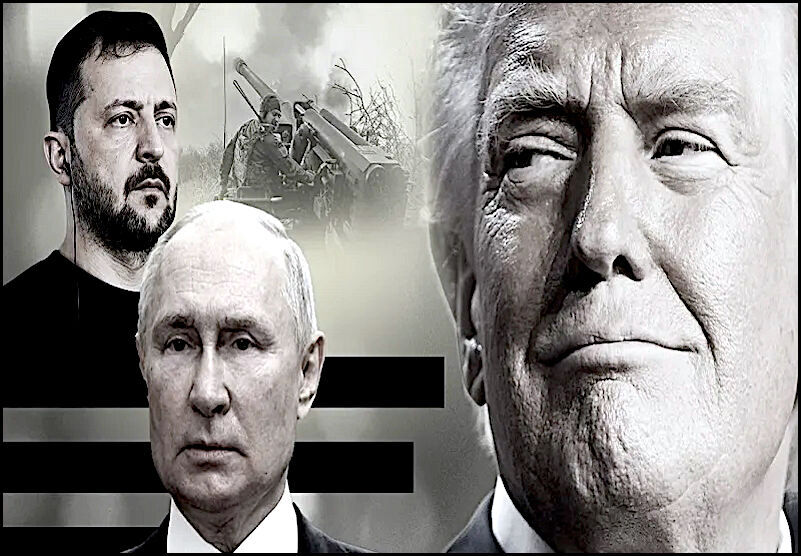
© UnknownUS President Donald Trump • Russian President Vladimir Putin • Ukraine leader Volodymyr Zelensky
The path to peace will predictably be paved by a ceasefire, which will itself likely require some territorial concessions on Ukraine's part in order for Putin to agree to compromise on his associated demands, then new elections can be held for legitimizing peace talks.

Trump's Special Envoy for Ukraine and Russia Keith Kellogg told Reuters that he'd like to see Zelensky hold parliamentary and presidential elections, though that outlet's sources in Kiev claim that Washington has yet to formally request this of him. Ukrainian law stipulates that they can't be conducted during times of marital law, ergo the need to first lift it. That won't happen without a ceasefire, however, but therein lies the problem since Russia's terms for such are unacceptable for Ukraine.

Putin said last June that Russia will freeze hostilities only after Ukraine withdraws from all the territory that his country claims as its own and declares that it no longer wants to join NATO. Negotiations can resume immediately afterwards, but he specified at the time that they'd have to be held with the parliamentary speaker instead of Zelensky, whose legal term expired at the end of May per Putin's reading of the Ukrainian Constitution. He then reiterated this position last week but added a twist.

Comment: There are a lot of 'ifs-mights-coulds-woulds' in Korybko's projections. The final solution, whatever it may be, will be determined and thereafter owned by the principal parties involved.


Clipboard

US failed to track weapons sent to Ukraine - Reuters

delivery
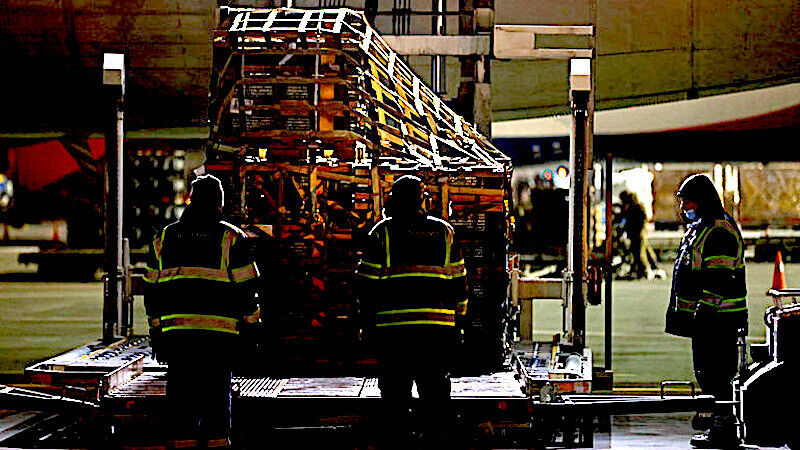
© Getty Images/fileUS delivers military hardware to Ukraine
The chaos reached such proportions that the Pentagon struggled to define what "delivered" meant, the news agency has reported. US officials could not tell whether tens of billions of dollars of weapons sent to Ukraine were actually delivered due to tracking systems failures, Reuters reported on Monday, citing sources.

During the final year of former President Joe Biden's administration, key weapons shipments to Ukraine faced prolonged delays due to concerns about depleting US stockpiles and debates over whether the arms would trigger an escalation with Russia. According to a Reuters investigation, the Pentagon's "chaotic weapons-tracking system in which even the definition of 'delivered' differed among US military branches," was a significant contributor to the overall confusion.

The system failure "skewed" Pentagon data, making it almost impossible to accurately pinpoint weapons in the shipping process, Reuters said, citing reports by the Government Accountability Office (GAO).


Comment: Perhaps 'accountability failure' was the precisely the goal. No one did this better than Biden!


Comment: 'No Accountability' was a multi-layered shield for both sides - US and Ukraine.


Broom

'Scattered to the winds'? CIA offers buyouts to workforce to align with Trump priorities

trump ratcliffe cia
© AFP via Getty Images; Reuters
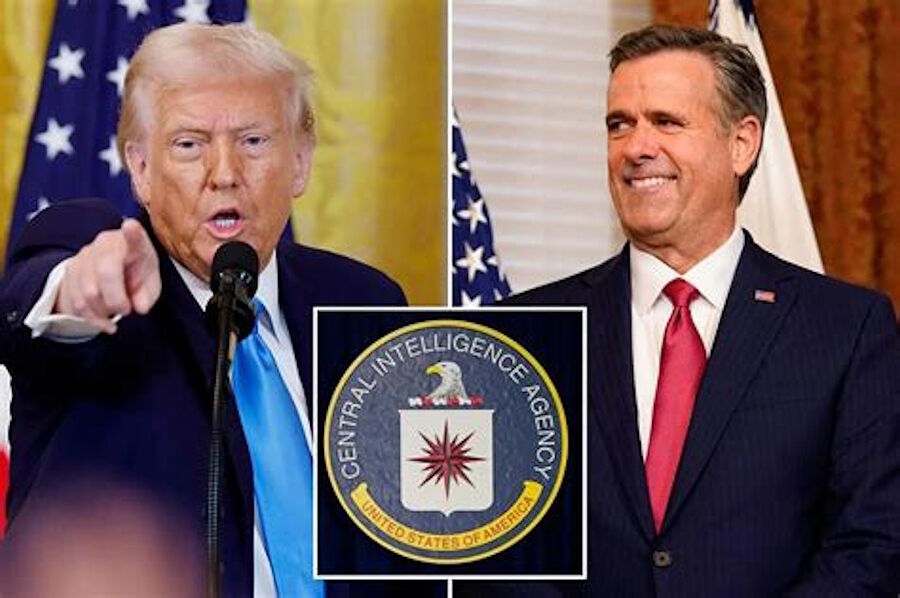
President Donald Trump and CIA Director John Ratcliffe
The Central Intelligence Agency offered buyouts to almost all of its workforce Tuesday, saying it wanted to bring the agency in line with U.S. President Donald Trump's priorities.

A CIA official told USA TODAY that the buyouts were part of an effort by newly confirmed CIA Director John Ratcliffe to ensure that the CIA workforce was responsive to the Trump administration's national security agenda. The move was also part of a broader strategy to bring new energy to the spy agency and provide opportunities for rising leaders to emerge, the official said, speaking on the condition of anonymity.

The news was first reported by the Wall Street Journal, which also said those new agency goals include targeting drug cartels, Trump's trade war and undermining China.

Comment: Trump continues his campaign of shock and awe, his staff tasked with pruning out deadwood in every department. Not even the CIA is sacred.

From Associated Press:
In a statement sent to The Associated Press, the CIA said the buyout offers are part of an effort by Ratcliffe to move swiftly "to ensure the CIA workforce is responsive to the Administration's national security priorities."

"These moves are part of a holistic strategy to infuse the Agency with renewed energy, provide opportunities for rising leaders to emerge, and better position the CIA to deliver on its mission."


Bullseye

Zelensky a 'maniac' to demand NATO nuclear weapons - Moscow

Zelensky
© Jakub Porzycki / Anadolu via Getty Images
Ukrainian leader Vladimir Zelensky's statements on obtaining nuclear weapons are cause for serious concern, Russian Foreign Ministry spokeswoman Maria Zakharova has said. In a social media post on Wednesday, she branded Zelensky a "maniac [gripped by] sick delusions" who could seek a 'dirty bomb'.

Zelensky reiterated his nuclear aspirations in an interview with British television host Piers Morgan on Tuesday, in which he lamented that Kiev traded Soviet-era deterrence "for nothing" in the 1990s.

"Will we be given nuclear weapons? Then let them give us nuclear weapons," Zelensky told Morgan. "What missiles can stop Russia's nuclear missiles? That is a rhetorical question."

He called on NATO to deploy nuclear weapons in Ukraine as a stopgap measure while Kiev awaits accession to the US-led military bloc.

Attention

Hegemony and Propaganda: Love Your Servitude!

Technocracy
© Off-Guardian
Today, we are witnessing a profound transformation. We are increasingly impacted by algorithmic decision-making, artificial intelligence, data proliferation, data harvesting and sophisticated monitoring of how we think and act.

This affects how we work, how we access services and how we relate to and interact with others.

While digital innovations and online platforms offer unparalleled ease, they also raise critical concerns about our independence. The constant connectivity and data-driven decision-making that characterise modern life has major implications. Technological advancements are used to shape preferences and behaviour, and predictably, powerholders use the notion of convenience to manipulate and exert control over populations.

Giant corporations and the state are leveraging what is often termed 'technological solutionism' to establish a digital iron cage of control. By monitoring and predicting our thoughts and actions, these intertwined entities impose a tightening noose of automated systems, suffocating personal liberty.

We are increasingly hurtling toward a reality reminiscent of Aldous Huxley's Brave New World, where a dystopian technocracy merges with a plutocracy. Huxley foresaw a society where the ruling class maintains control not through overt oppression but through subtle manipulation and distraction, effectively creating a system where people are conditioned to accept their servitude without resistance. In this emerging landscape, the values of order, conformity and compliance reign supreme, overshadowing individual freedoms and critical thought.

In agriculture, technocratic control is increasingly evident in the push for a 'one-world agriculture' dominated by AI, genetic engineering and precision farming, all under the sway of a few powerful corporations. Companies like Bayer, Cargill, Corteva, Syngenta, Microsoft and Amazon, along with influential investment firms that hold stock in companies throughout the agrifood chain, aim for the standardisation of food systems.

Their vision is a monopolistic, cloud-driven agricultural framework that prioritises control, dependency and uniformity over diversity and local practices. This approach threatens to reduce our food systems to an even blander, more standardised product line, stripping away traditional farming methods and local knowledge.

In culture as well, the trend is starkly toward standardisation. The goal is to dilute or erase traditional knowledge, local customs and diverse worldviews, creating a bland, uniform, AI-driven existence that can be easily controlled and manipulated. This push extends to a radical alteration of human biology itself through transhumanism.

USA

Trump in 'no rush' to speak with China's Xi

Trump in the Oval office
The US president recently imposed tariffs on Chinese goods, prompting retaliatory measures from Beijing.

US President Donald Trump has stated that he is in "no rush" to engage in discussions with Chinese President Xi Jinping following the recent exchange of tariffs between the United States and China.

Earlier this week, the Trump administration announced a 10% additional tariff on all Chinese imports, which comes on top of existing duties on goods from the country. Beijing responded by filing a suit with the World Trade Organization about Washington's tariffs and has emphasized the importance of dialogue to resolve the situation.

China has also implemented retaliatory tariffs targeting key US exports, including a 15% tariff on coal and liquefied natural gas, and a 10% tariff on crude oil and agricultural machinery. Additionally, China initiated an antitrust investigation into American tech giant Google, signaling a potential broadening of the trade dispute into the technology sector.

During a press conference in the White House on Tuesday, Trump was asked when he intends to hold talks with Xi. The US leader said that he will speak with his Chinese counterpart "at the appropriate time."

"I'm in no rush," Trump told reporters, adding that it remains to be seen what the result of such talks could be and dismissing the impact of China's retaliatory tariffs.

Comment: Trump is throwing his weight around on the geopolitical arena to let the world's leaders know that he is back. Those leaders of jelly fish nature will cave like the Western vassals have done, others who have more a sense of real sovereignty might not be so easy to bully. Time will show what will come out of it once the dust (and the BS) settles.

See also: