Puppet MastersS


Bizarro Earth

Erdogan arrests dozens over social media posts, hundreds of thousands protest Instanbul mayor's detention

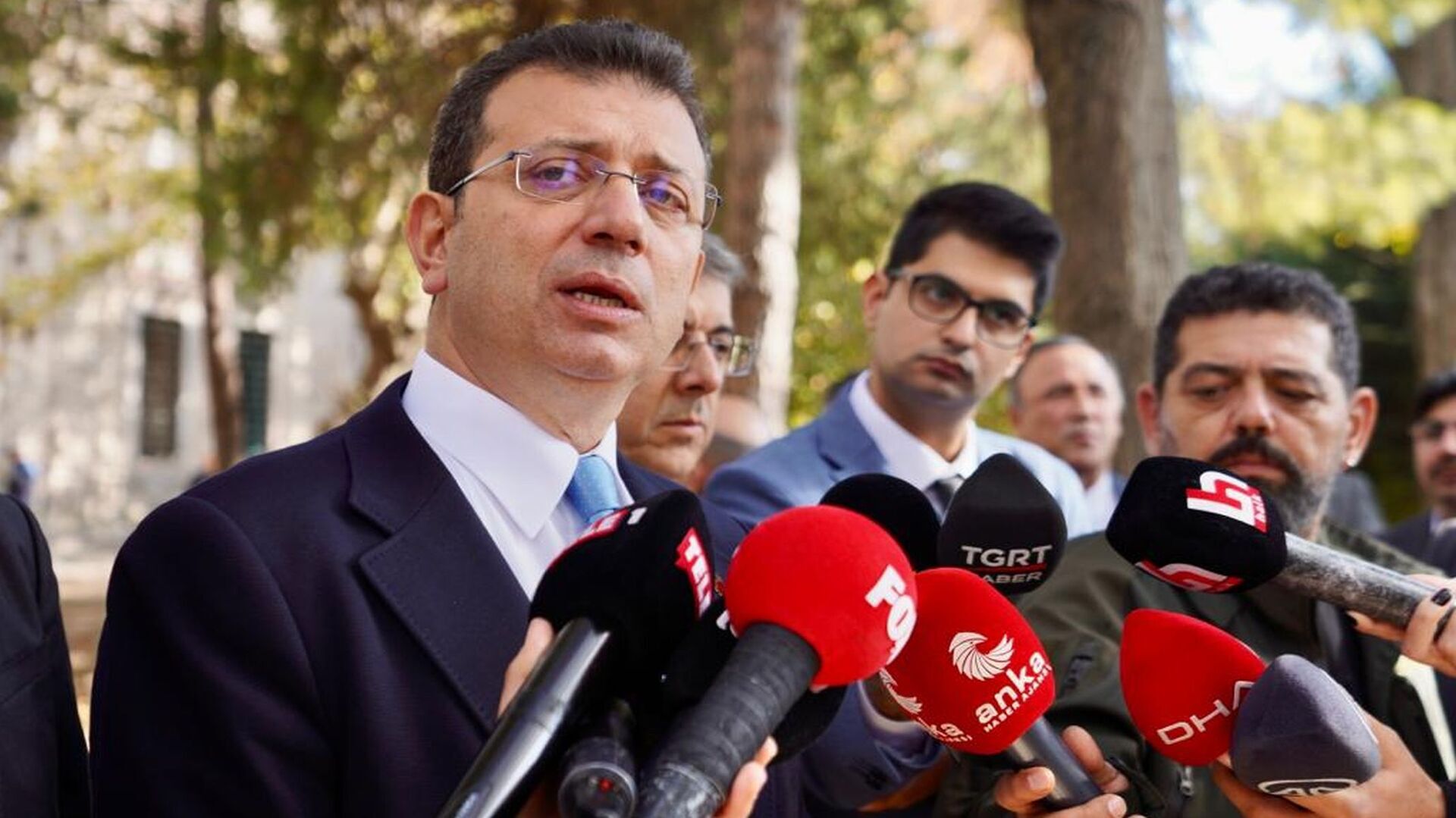
Ekrem Imamoglu, Mayor of Istanbul, Türkiye
Continuing its remarkable parallels with its "developed" yet fascist European and UK neighbors, where a twitter post is enough to get your house raided and land you in jail, overnight Turkish authorities said they arrested 37 people over social media posts criticizing the contentious detention of Istanbul's popular mayor, Ekrem Imamoglu, which triggered a market meltdown as we described.

Police identified 261 "suspicious account managers," Interior Minister Ali Yerlikaya said in a post on X on Thursday.

The suspects made "provocative statements" on social media platforms, Yerlikaya said, accusing them of inciting hatred and provoking people to commit crimes. Cybersecurity forces continue conducting "virtual patrols" around the clock, he said.

Dominoes

After Ukraine, Iran?

Garash
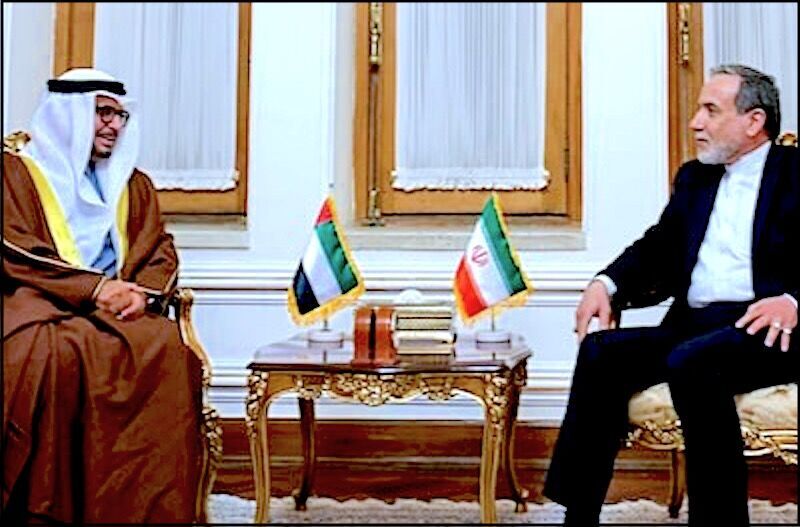
© voltairenet.orgAnwar Garash traveled to Tehran on March 12 to deliver a letter from Donald Trump to the Islaix Republic of Iran
For the "revisionist Zionists" (that is, the successors of Ze'ev Jabotinsky and Benzion Netanyahu — not to be confused with Theodor Herzl's "Zionists"), the time has come, after the victory over Hamas, Hezbollah, and the Assads, to crush Iran.

On the contrary, for Donald Trump, after the pacification of the Ukrainian conflict, the priority should be to pacify the one surrounding Iran.

The press has its eyes fixed on Palestine, but it is around Tehran that peace in the Middle East is being played out.

In Tehran, Iranians are anxiously wondering whether, once their economy is exhausted and they can no longer defend themselves, the Israelis and the United States will bomb them. Under these circumstances, should they or should they not negotiate with the enigmatic President Donald Trump?

On March 2, 2025, Iran's Majlis (Parliament) voted no confidence in Economy and Finance Minister Abdolnaser Hemmati over his handling of the Western economic blockade and the resulting economic crisis. On the same day, his friend Mohammad Javad Zarif, former negotiator of the Joint Comprehensive Nuclear-Test-Ban Treaty (JCPOA) and current Vice President, resigned.

Stop

President Trump: Stop bombing Yemen and exit the Middle East!

Bombing
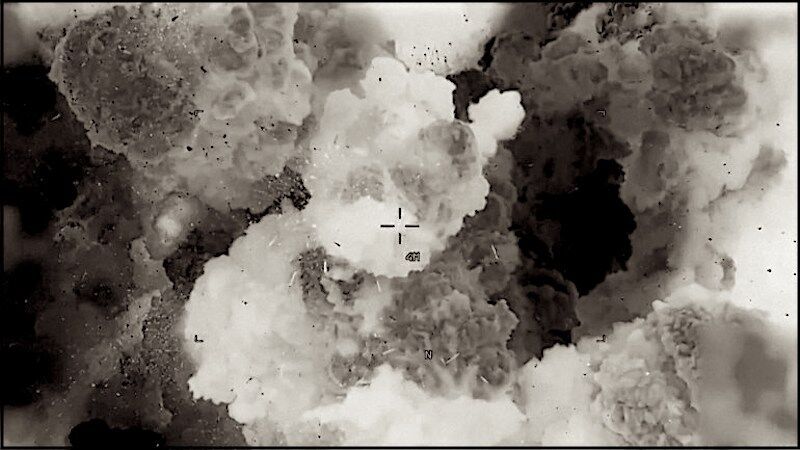
© US Central Command/Screengrab/ReutersSmoke rises from an explosion after a projectile hit a group of buildings at an undisclosed location after Trump launched military strikes against Yemen’s Houthis • March 15, 2025
Over the weekend President Trump ordered a massive military operation against the small country of Yemen. Was Yemen in the process of attacking the United States? No. Did the President in that case go to Congress and seek a declaration of war against the country? No. The fact is, Yemen hadn't even threatened the United States before the bombs started falling.

Last year, candidate Trump strongly criticized the Biden Administration's obsession with foreign interventionism to the detriment of our problems at home. In an interview at the Libertarian National Convention, he criticized Biden's warmongering to podcaster Tim Pool, saying:
"You can solve problems over a telephone. Instead they start dropping bombs. Recently, they're dropping bombs all over Yemen. You don't have to do that."
Yet once in office, Trump turned to military force as his first option.

X

Ukraine won't recognize 'occupied territories'

Andrey Sibiga
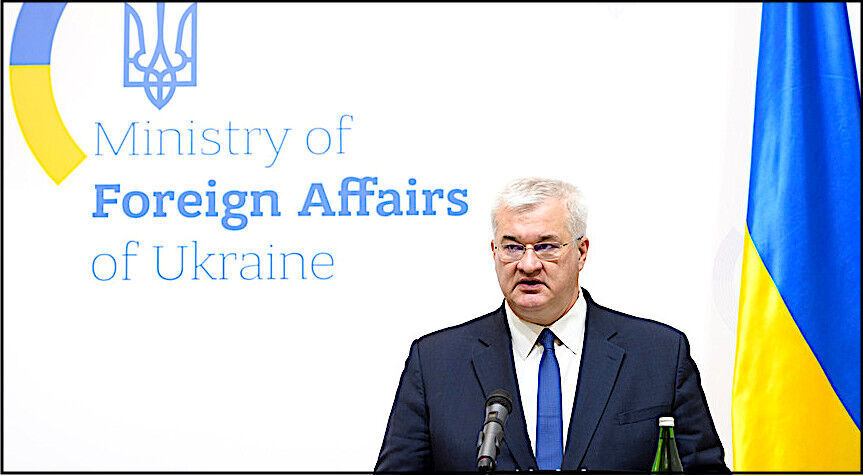
© Global Look Press/Kirill Chubotin/Keystone Press Agency/Global Look PressUkrainian Foreign Minister Andrey Sibiga
Ukraine will never recognize Russia's sovereignty over the territories it has lost to Moscow since 2014, Foreign Minister Andrey Sibiga has insisted.

Kiev still claims Crimea, the Donetsk, and Lugansk People's Republics, as well as Kherson and Zaporozhye Regions as its own. The territories officially became part of Russia after referendums in 2014 and 2022. Moscow has maintained that their status cannot be a matter of any future negotiations.

When asked about Kiev's 'red lines' during an interview with RBK-Ukraine media outlet on Monday, Sibiga said:
"There are fundamental things that are non-negotiable. Ukraine's territorial integrity and sovereignty. Ukraine will never recognize the occupied territories."
The minister also pointed out that Kiev will not accept any third parties dictating to it which blocs it can join and which it cannot. While acknowledging that there is no consensus on Ukraine's potential accession to NATO among the bloc's current members, the official still argued that these aspirations "cannot be taken off the agenda."

X

Ukraine immediately broke Putin-Trump deal on energy targets - Moscow

tanker cars
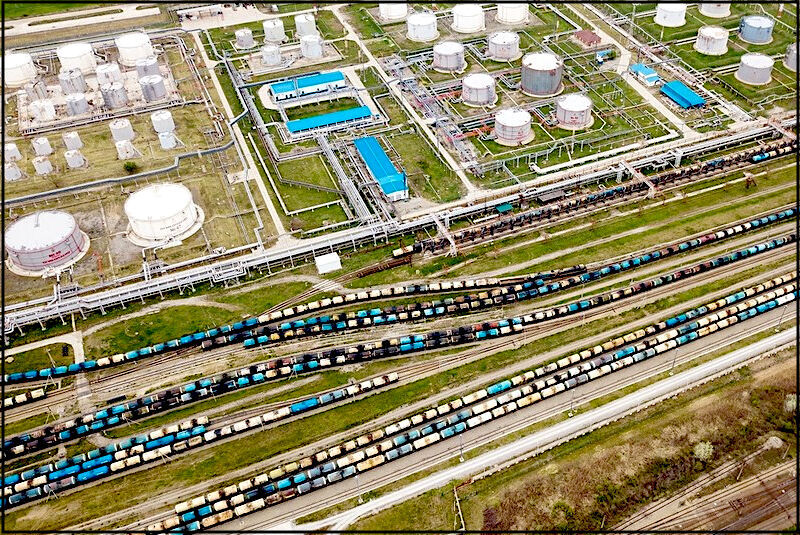
© Vitaly Timkiv/SputnikOil tanker cars near railway in Russia's Krasnodar region
The Ukrainian military has attacked an oil transfer facility in Russia's Krasnodar Region that services an international pipeline operation partially owned by American investors, the Defense Ministry in Moscow announced on Wednesday.

US President Donald Trump spoke with Russian President Vladimir Putin on the phone for more than two hours on Tuesday, with the two leaders announcing progress on the path towards a truce in the Ukraine conflict. Moscow agreed to suspend attacks against Ukrainian infrastructure for 30 days, with Ukraine's Vladimir Zelensky publicly endorsing the partial ceasefire.

The overnight attack involved three kamikaze drones directed against a station near the village of Kavkazskaya, the ministry reported. The facility is used to transfer crude from rail-transported tanks to a pipeline operated by the Caspian Pipeline Consortium (CPC), an international firm that counts US giants Chevron and Mobil among its partners.

Comment: Zelensky's revenge? The oil transfer facility provided a double payoff.


Arrow Up

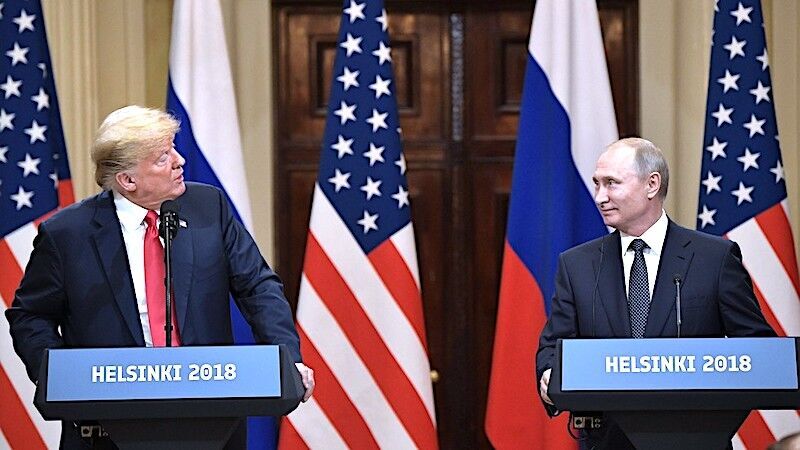
Putin and Trump trust each other - Kremlin

TrumPutin
© Alexey NikolskiyUS President Donald Trump • Russian President Vladimir Putin
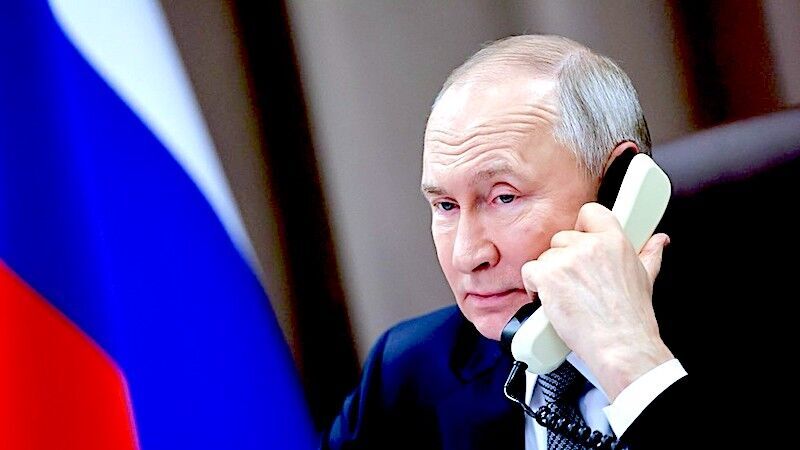
Following the presidents' phone call on Tuesday, spokesman Dmitry Peskov said that further contacts will be arranged in short order.

Russian President Vladimir Putin and his US counterpart, Donald Trump, trust each other, Kremlin spokesman Dmitry Peskov has said regarding the two leaders' phone conversation on Tuesday.

During the call, which lasted more than two hours, the two heads of state discussed the resolution of the Ukraine conflict, with Putin responding positively to a 30-day ceasefire proposed earlier by Trump and agreeing to halt attacks on the country's energy infrastructure as an initial step in that direction. On top of that, the Russian and US presidents reportedly discussed the situation in the Middle East.

Speaking to Russian media on Wednesday, Peskov stated,:
"I can say with a high degree of confidence that PresidentsPutin and Trump understand each other well, trust each other, and intend to proceed step-by-step along the path of normalizing Russian-US relations. Both today and tomorrow, there will be additional arrangements of concrete dates for next contacts as well as the makeup [of the delegations]."
He promised to reveal more details once Moscow and Washington have agreed on these specifics.

Cult

The Hill reluctantly bows to reality: 'Sadly, Trump is right on Ukraine'

Putin Trump Ukraine
© The Free Thought Project
I rarely agree with President Trump, but his latest controversial statements about Ukraine are mostly true. They seem preposterous only because western audiences have been fed a steady diet of disinformation about Ukraine for more than a decade. It is time to set the record straight on three key points that illuminate why Ukrainians and former President Joe Biden — not merely Russian President Vladimir Putin — bear significant responsibility for the outbreak and perpetuation of war in Ukraine.

First, as recently documented by overwhelming forensic evidence, and affirmed even by a Kyiv court, it was Ukrainian right-wing militants who started the violence in 2014 that provoked Russia's initial invasion of the country's southeast including Crimea. Back then, Ukraine had a pro-Russia president, Viktor Yanukovych,who had won free and fair elections in 2010 with strong support from ethnic Russians in the country's southeast.

Comment: Well past time, but at least some legacy media seem to be tip-toeing back into the real world.


Attention

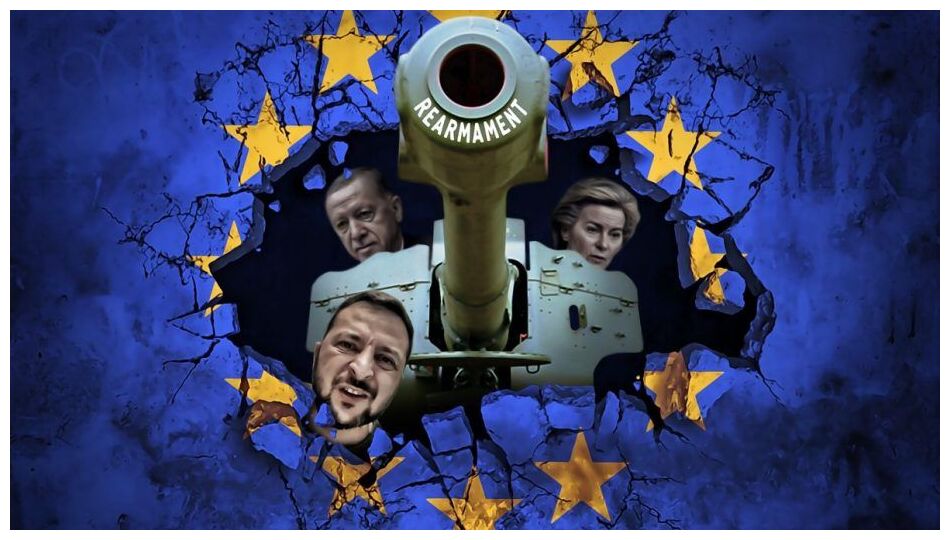
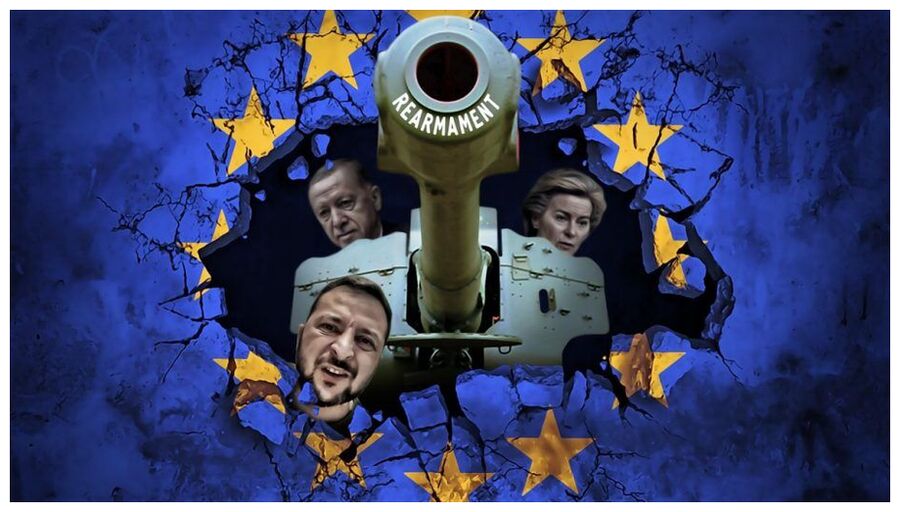
The EU's new army. The final nail in the project's coffin?

War and NATO
© Public Domain
It used to be quite a common thing for people in polite society to say "imagine if women ran the world...we would certainly have less wars, right?". Wrong. Women are running the world, well, at least the EU world. Three women to be precise. Ursula von der Leyen, EU commission boss, Annalena Baerbock, Germany's foreign minister and of course, last but not least, the EU's own foreign affairs chief, Kaja Kallas. And what do all three of these women have in common, apart from having names which sound like sexually transmitted diseases? They all want war.

In line with spectacularly poor decision making right from the beginning of the Ukraine war, with probably Russian sanctions at the top of the list of stupid ideas, the EU has only one way forward in Ukraine. At whatever cost, it must come out at least not looking like it lost. The EU project is very much like an old man on a bike moving very slowly along a Dutch cyclists' path. The fear from the elites in the EU is that if he falls off the bike, he will never get back on. The constant worry from top EU figures is that if the EU loses its momentum with press coverage and relevance in general, then a pause - any pause - could be devastating. This, you might be surprised to hear, is what EU officials themselves confided in me when I was based in the Belgian capital. Such an expression gives you an idea of how little confidence the EU has in itself as a worthy, stable long-term project.

And so the madness escalates now to such a point where we are actually looking at draining the wallets and purses of our own very poorest people to fund the ultimate EU sex toy going: an EU army.

The idea of an EU army is not new. As a notion, it's as old as the hills as hard core federalists in Brussels have been arguing for the EU to have its own army for at least twenty years, but until now failed. The main reason for the idea not getting off the ground is that it created too many new, worrying political problems for the EU to wrangle with. In a nutshell, there was always a risk of a new political crisis that an EU army would create as member states argue over which country gets to run it, which nationality is its head, where it would be based and how politically would it be run, based on what decision making structure? (existing EU council, EU commission, member states themselves in a new set up via defence ministries). The concern was always that Germany would have too much power and then this would open an old wound about the country re-arming and rekindling memories of 1939. And we all know where that led.

Oil Well

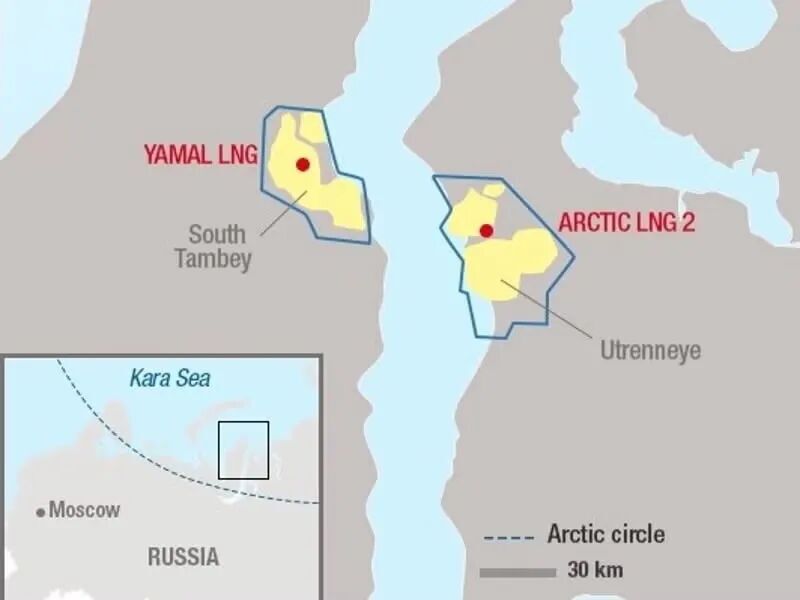
Russia's Arctic LNG 2 Megaproject Could Figure Into A Future Deal With The US

Yamal LNG2 Project
Russian and Chinese interests don't align on this particular issue and the dynamics associated with it.

Bloomberg reported on Tuesday that "Russia Is Wooing Arctic Gas Buyers With Life After US Sanctions". They cited unnamed sources to report that Novatek, the company behind the Arctic LNG 2 megaproject, is courting American, European, and even Indian buyers ahead of Trump possibly curtailing or lifting sanctions on their initiative as part of the nascent Russian-US "New Détente". According to them, a senior executive pitched this as "a way to counter a rising China", which has a certain logic to it.

From those three potential clients' perspectives, all three of which have troubled ties with China, whatever they might buy from Arctic LNG 2 would reduce the amount available to Beijing. There's also the chance that they elbow China out of this megaproject entirely if they collectively replace its lost investments after private Chinese companies pulled out of Arctic LNG 2 due to American sanctions. This could prospectively be achieved if Japan and South Korea, which have similar interests, get involved too.

Comment: Even if Russian and Chinese interests might not align with such a potential agreement, China would not be unhappy about possible bridges being made between Russia and Europe. The Chinese Belt and Road project would see a benefit from their being a patch up between Russia and the West as it would help future trade across the Eurasian continent.


Green Light

Putin and Trump usher in an era of new diplomacy

PhonePutin
© Sputnik/SputnikRussian President Vladimir Putin
The US president sees Ukraine as a failing asset, not an ally.

Just two months ago, the idea of serious negotiations between Russia and the United States over Ukraine - let alone a broader normalization of relations - seemed like utopia. Yet today, what once appeared impossible is happening. It proves that, with realism and a genuine will to achieve results, much can be accomplished. However, two extremes must be avoided: one is the illusion that everything will be resolved quickly and painlessly, and the other is the cynical belief that any agreement is fundamentally unattainable.

It is the White House that is driving this political and diplomatic effort. Russia, as it has reiterated many times, is responding to goodwill with a readiness for meaningful dialogue. Meanwhile, Western Europe is playing the role of the perennial spoiler - grumbling and obstructing - but lacking the military and political weight to stop or reverse the process. As for Ukraine, it resists, knowing its survival depends on American support. Despite its reluctance, Kiev is being told behind the scenes by its European backers that following Washington's lead is inevitable.

Trump the deal-maker, not the ideologue

The key to understanding Washington's approach came in Donald Trump's now-infamous conversation with Vladimir Zelensky. When asked whether America was "on Ukraine's side," Trump responded that the US was not on anyone's side - it simply wanted to end the war and achieve peace. This was a revolutionary statement. Until now, no Western politician could answer such a question without reflexively declaring full support for Ukraine's fight against Russia. But by positioning the US as a mediator rather than a partisan backer, Trump has completely shifted the tone of American engagement.

Comment: Trump is doing what he does best in the context of what he knows best.