
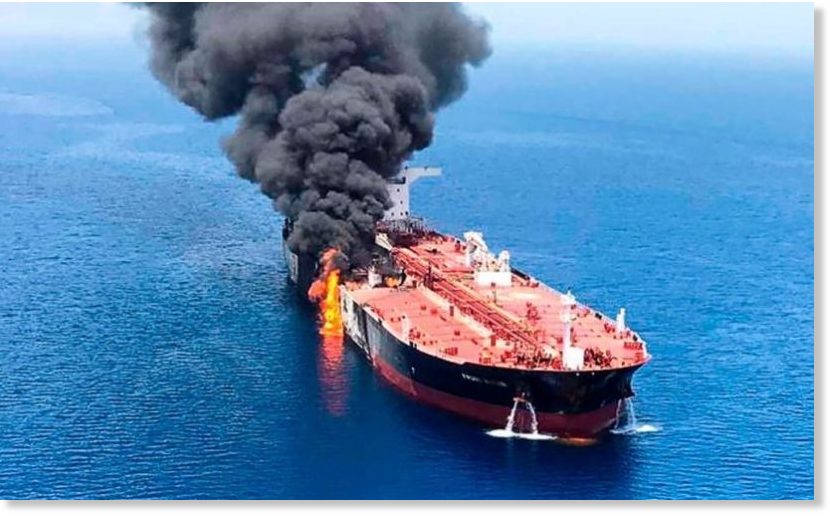
© AP Photo/ISNAAn oil tanker is on fire in the sea of Oman, Thursday, June 13, 2019. Two oil tankers near the strategic Strait of Hormuz were reportedly attacked on Thursday, an assault that left one ablaze and adrift as sailors were evacuated from both vessels and the U.S. Navy rushed to assist amid heightened tensions between Washington and Tehran.
The US government says that the evidence, including fragments of an exploded weapon and a magnet from an unexploded device, indicates that limpet mines were attached to the side of the oil tankers. The statement of a US Navy explosives expert that the mines bear "a striking resemblance" to similar mines used by Iran has been widely reported.
US intelligence: an incoherent story
But the claim is challenged by the analysis of another former Naval oficer. According to Dr Gwynne Dyer who has served as a Reserve Naval Officer in the Royal Canadian Naval Reserve, US Naval Reserve, and British Royal Navy Reserve for a total of 17 years, alleged US intelligence about the incident does not add up. Dr Dyer, despite believing that on balance Iran is "probably" behind the series of Gulf oil tanker attacks, concedes that "The evidence is far from conclusive."
His analysis coheres with that of the private US intelligence firm Stratfor, which notes of the spate of recent attacks that while Iran would have reason to "harass" vessels around its territory "to send a message of resolve in the face of Washington's punishing economic and military pressure.... On the other hand, it doesn't make strategic sense for Iran to target European vessels at a time when it is desperately seeking to retain the Continent's political and economic support."
Strafor suggests that other culprits might include al-Qaeda, other regional jihadist outfits that have a similar modus operandi of targeting oil tankers, or even a breakaway faction of Iran's Revolutionary Guards that is unhappy with official Iranian government diplomacy.
Comment: Funny that Stratfor doesn't mention the U.S. itself or Israel as possible culprits. Actually, not so funny - Stratfor isn't called the "private CIA" for nothing.











Comment: See also: