
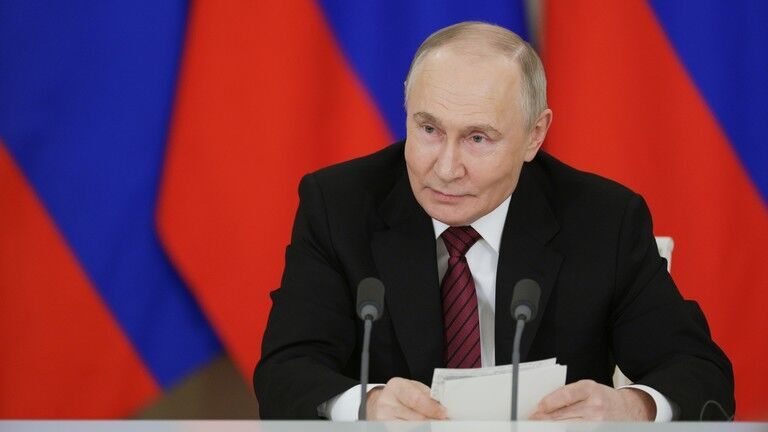
© Sputnik / Gavriil Grigorov
Russian President Vladimir Putin has proposed starting peace talks with Ukraine without any preconditions as soon as Thursday.
The president made the remarks early on Sunday as he addressed the media at the conclusion of celebrations marking the 80th anniversary of Victory Day. Russia hosted numerous foreign dignitaries over the days surrounding the celebrations, including the leaders of China, Venezuela, and Vietnam.
Putin offered to start unconditional talks with Ukraine "without delay" on May 15 in Istanbul, where "they were held earlier and where they were interrupted," referring to the negotiations held in Türkiye during the early phase of the conflict in 2022.
Moscow is "set on serious negotiations" with Kiev and aims to "eliminate the root causes" of the conflict in order to achieve a "long-term lasting peace," Putin stated.
Here is the president's speech in full:












Comment: In this article, Ex-Pentagon analyst: Zelensky will reject Putin's peace proposal in order to stay alive, there was: The level of radicalness among some of the leaders of Western Europe and their backers is in several respects comparable to what has previously been noted among transnational Salafi jihadists (think ISIS).
"Almost 250 years" raises the question whether the periods of peace inbetween were any more than interludes before more war?
Although it has happened before in the history of the world, including the more recent history of Ukraine, that more peace negotiations preceded more upheaval, peace should still be given a chance. Efforts made to achieve it are not wasted, but how this squares with the consideration that many peace efforts in Europe were like interludes raises the question of the human condition on this planet and the forces that influence it. Since these for the most part remain poorly understood, what kind of peace can we really expect?