Puppet MastersS


Attention

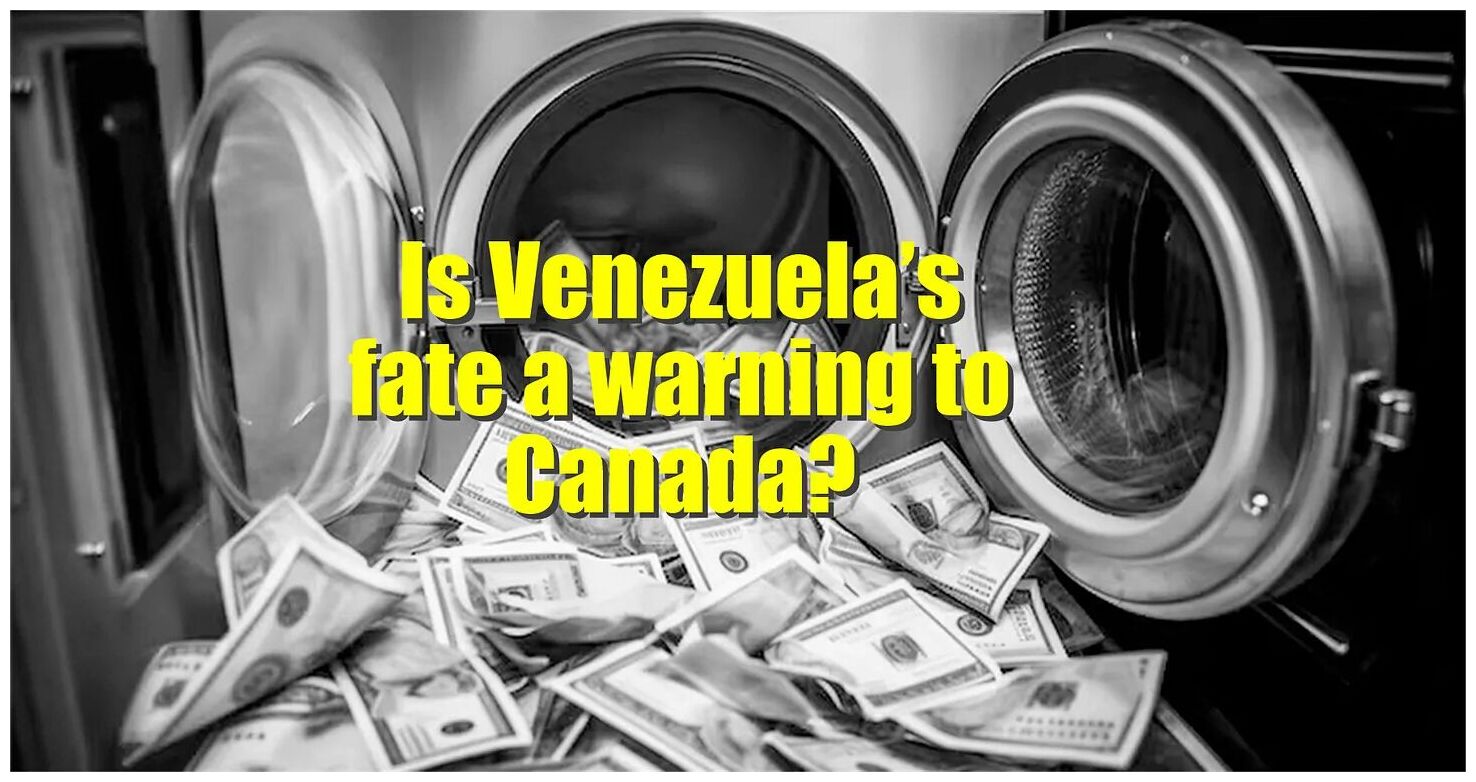
Is Venezuela's fate a warning to Canada?

As bizarre as that sounds, Canada's Globe and Mail editorial board thought so. And with reason.
Canadian Warning
© I-System TrendCompass
I know, that may sound bizarre, but that was the title of the Globe and Mail Sunday Editorial four days ago. It literally read, "Venezuela's fate is a warning for Canada." The article is behind a paywall, but even its title raises a serious question: how much paranoid imagination would it take to think that Trump's kidnapping of Nicolas Maduro was a warning to Canada? As it turns out, not very much and some people in Canada are rightly feeling very nervous about this.

In the immediate aftermath of Nicolas Maduro's abduction, State Secretary Rubio said that, "we're at war with drugs trafficking organizations," and oligarchs. Trump, in his signature style, said very little of any substance, but did mention that the U.S. is losing 300,000 people a year to drug overdose deaths (in his opinion; the official figure is closer to 100,000) and that "a lot of it is coming from Canada."

Targeting the drugs smuggling networks

On Tuesday, Promethean Action's Susan ​Kokinda issued a report titled, "While you watched Venezuela, Trump quietly put Canada on notice." The report is 16-min. long and well worth a careful listen, but it doesn't really explain how, or why Trump put Canada on notice or what Maduro's abduction might have to do with Canada. What she does explain, quite compellingly, is the case that Trump is targeting the drugs and people smuggling networks and the money laundering banks that enable their illegal activities. Maduro's government may have been an accomplice in those networks:
"If this is a war on drug trafficking organizations and oligarchs, as Rubio says, then it is automatically a war on the global banking system because you can't separate the two. The target isn't just jungle labs and drug boats. It's the City of London. ...

The Caribbean area is the home of the infamous system of offshore banking established directly by the British. Back in 1960, the largest banking houses in London, working in partnership with the government and the exchequer established 14 completely secretive jurisdictions. These are the banking centers that now hold between $50 and $75 trillion dollars with all 50 of the world's largest banks operating within them.

These offshore centers exist outside of the control of sovereign governments. They're secret, they're unregulated and they facilitate illegal activity. There, legitimate banking has been transformed to criminal enterprise."
Ms. Kokinda also pointed out that Treasury Secretary Scott Bessent recently commented that 50% of his job involves issues of national security and also that the Russians have set their sights on these offshore centers. In a 2014 speech, Viktor Ivanov, then Russia's top drugs enforcement official laid it out clearly in the "Alternative Development for Drug-Producing Regions" conference on 25 March 2014:
"And this allows us to confidently assert that narcomoney is the foundation of the modern financial system. it is not surprising that during the first peak of the financial crisis of 2008-9, Antonio Costa (UN Drug Enforcement official) announced that the top banks in the world dumped in around $352 billion of narco-dollars to use for interbank borrowing, to address the critical shortage of liquidity. ... The very existence of the global financial bubble... is based on precisely this opportunity for banks to attract liquid narco-money. In fact, this garbage fertilizes the present economic system."

Binoculars

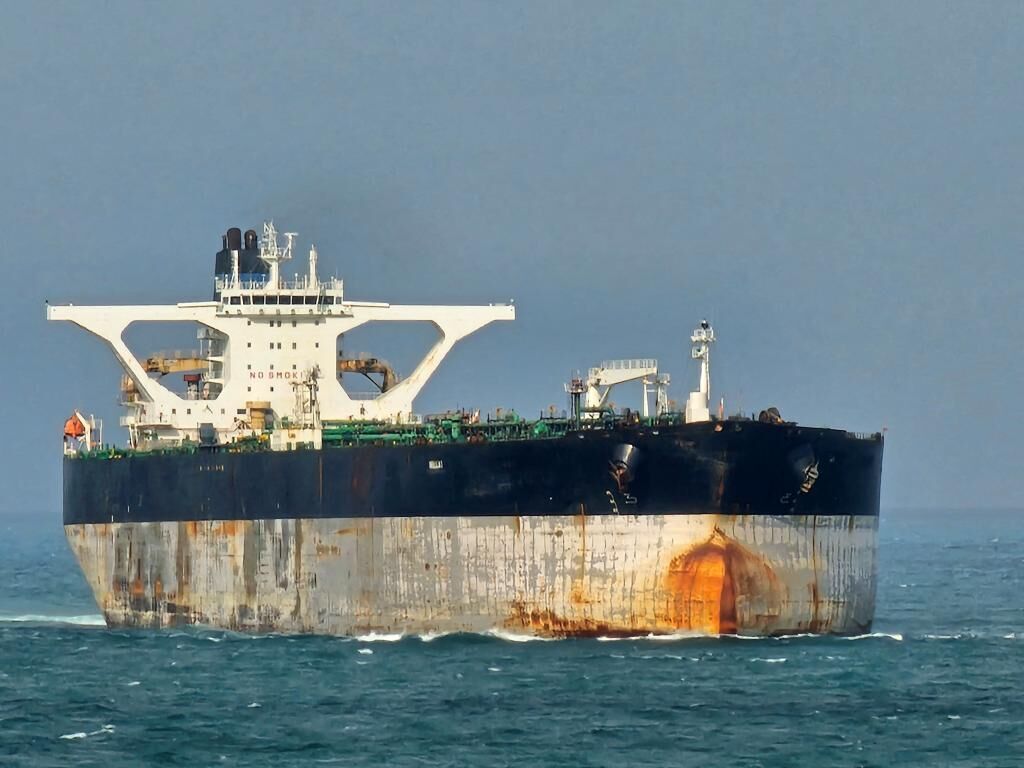
Donroe Doctrine: US forces seize sanctioned, Russia-flagged oil tanker that eluded Venezuela blockade

Marinera tanker
© Hakon Rimmereid via REUTERSMilitary and Coast Guard personnel boarded the Marinera in the North Atlantic between Iceland and the British Isles on Wednesday morning, according to reports.
US forces boarded and seized a sanctioned oil tanker Wednesday morning, more than two weeks after it eluded a blockade around Venezuela and was reflagged as a Russian vessel in a failed bid to evade capture.

Military and Coast Guard personnel boarded the ship, formerly known as the Bella 1 and now called the Marinera, in the North Atlantic between Iceland and the British Isles, US European Command confirmed.

"The vessel was seized in the North Atlantic pursuant to a warrant issued by a U.S. federal court after being tracked by USCGC Munro," the Stuttgart, Germany-based command said in a statement. "This seizure supports [the president's] Proclamation targeting sanctioned vessels that threaten the security and stability of the Western Hemisphere."

Comment: There is no mention yet of what the Marinera had in it's cargo hold if anything.


Bacon n Eggs

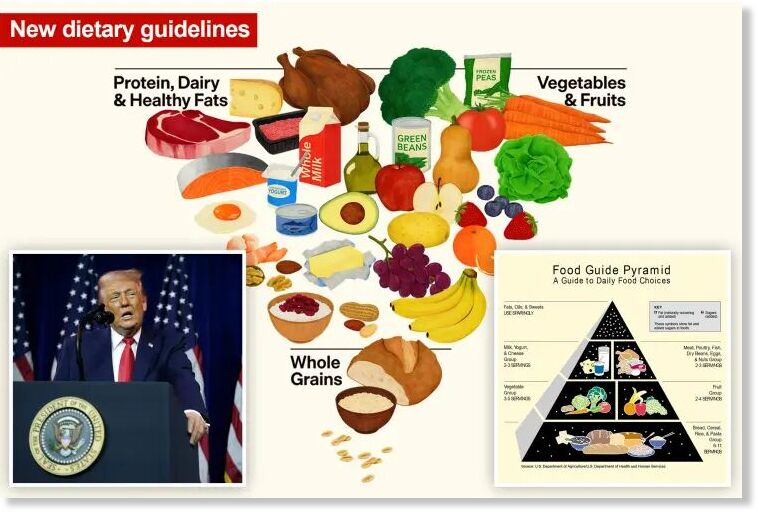
'We are ending the war on saturated fats' - Trump admin 'turning food pyramid upside down' — pushing protein, fats

food pyramid
The Trump administration is "turning the food pyramid upside down" with new guidelines for feeding programs that will emphasize eating plenty of protein and saturated fats — while discouraging the consumption of sugar and highly processed foods.

The White House released the revised Dietary Guidelines for Americans as part of a news conference Wednesday with Health and Human Services Secretary Robert F. Kennedy Jr. and Agriculture Secretary Brooke Rollins touting potential benefits in reducing chronic diseases for all Americans.

"We are ending the war on saturated fats," Kennedy said — referring to products that are generally solid at room temperature like cheese, butter and fat in meats, which now are recommended to form the bulk of diets alongside meat and produce like carrots and broccoli.

Bulb

Trump says he's banning institutional investors from scooping up single-family homes


Comment: Well now, Trump doing something actually Trumpian. Add it to the 'good' side of his ledger. Still weighing heavily on the bad side though...


trump
© AFP via Getty Images
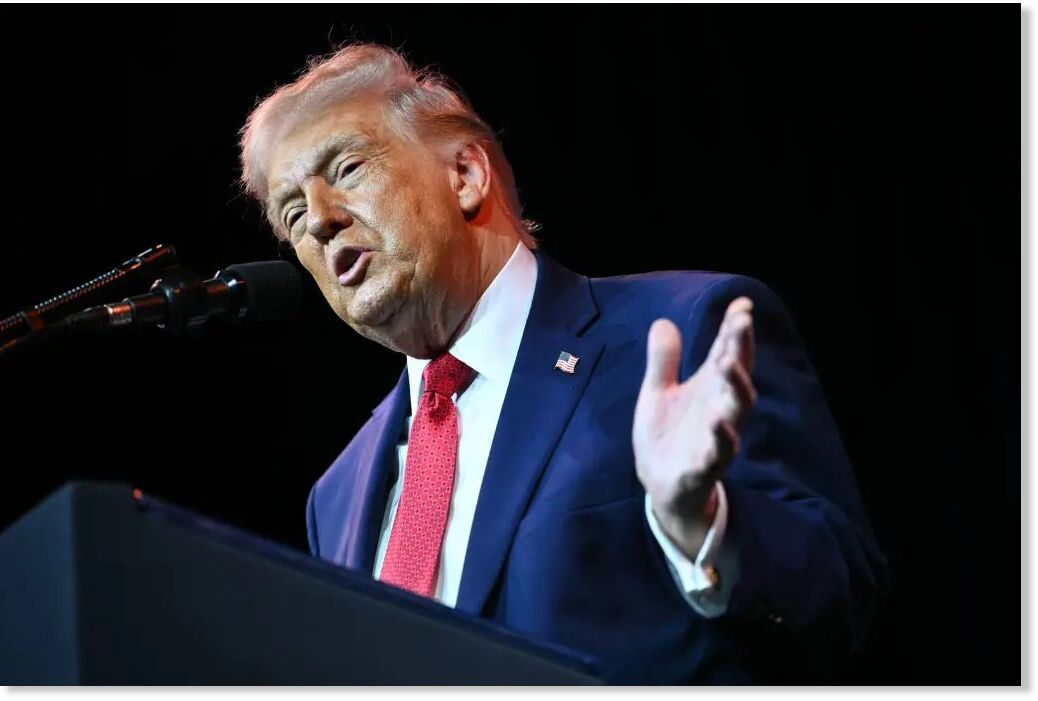
President Trump said Wednesday he will seek to ban large investors from buying and then renting out single-family homes - in a bold attempt to tackle the US housing crisis.

Trump did not say exactly how his plan would work, but it represents a major new initiative to lower the cost of homeownership after roughly a decade of large investors and private-equity firms buying up hundreds of thousands of single-family homes.

"For a very long time, buying and owning a home was considered the pinnacle of the American Dream. It was the reward for working hard, and doing the right thing, but now, because of the Record High Inflation caused by Joe Biden and the Democrats in Congress, that American Dream is increasingly out of reach for far too many people, especially younger Americans," Trump wrote on Truth Social.

"It is for that reason, and much more, that I am immediately taking steps to ban large institutional investors from buying more single-family homes, and I will be calling on Congress to codify it. People live in homes, not corporations."

Oil Pipeline

U.S. embargo halts Venezuela oil shipments to key Asian buyers

Oil shipping
© UnknownSunset on oil shipping?
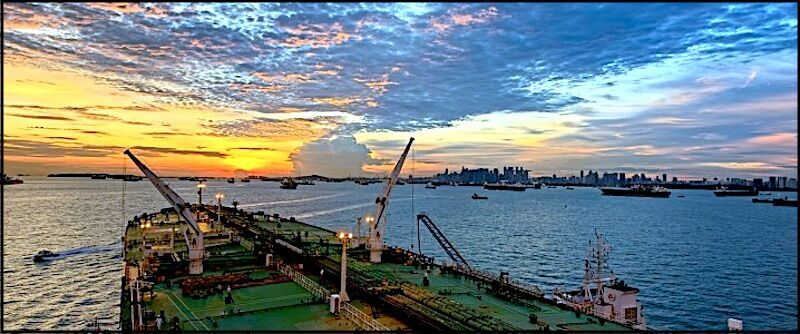
Venezuela's state oil firm PDVSA has been unable to ship oil cargoes to Asia for the fifth consecutive day on Tuesday, as the U.S. "oil quarantine" of Venezuela continues, according to shipping data cited by Reuters.

U.S. supermajor Chevron resumed exports to the United States on Monday, according to the data, after a few days of suspended shipments during which U.S. forces extracted Nicolas Maduro and flew him to New York to stand trial in drug-trafficking charges.

Chevron is the only Western oil company currently authorized by the U.S. Treasury to operate in Venezuela. Chevron ships the crude to the U.S. Gulf Coast.

Comment: Back in play...massive increase in Venezuelan production. Not everyone is clapping:
USA
The US military strikes in Venezuela and comments afterwards by President Donald Trump have raised the prospect of a massive increase in Venezuelan oil production under US control. It's not clear when, how, or even if this can happen. But Venezuela has the world's largest proven reserves, and Trump has suggested that US companies can bring them to market.

Venezuela's extra-heavy crude is highly sought after as it's ideal for specialized refineries -- such as those on the US Gulf Coast -- that have coker units allowing them to process this dense oil into high-margin products like gasoline and diesel fuel. With the situation still in flux, this is one of several potential impacts for the global economy -- and Venezuela's key partners: Russia, Iran, China, and Cuba.

Russia
"If our American 'partners' get control of the oil fields in Venezuela," wrote oligarch Oleg Deripaska on January 3, "they will control more than half of the world's oil reserves. They probably plan that our oil prices don't go higher than $50 per barrel."

"The prospect of the United States gaining influence over Venezuelan oil production...is clearly unwelcome in Moscow," Berlin-based political analyst Alexandra Sitenko said:
"It's not clear if the United States will gain control of Venezuela's oil. Strategically, the Kremlin is likely more concerned with market power than with volumes alone. Expanded US influence over Venezuelan oil would strengthen Washington's ability to shape global energy flows and pricing, potentially undermining coordination mechanisms such as OPEC+, on which Russia also relies to stabilize its revenues."
Amid Venezuela's pariah status, Western companies have left the country, with the notable exception of US oil major Chevron.

"Where [the sector] is not destroyed, there are Russian, Iranian, and Chinese companies. Of course, the United States wants to push them out," political analyst Ivan Preobrazhensky said.

On the other hand, there could be space for collaboration. Washington has signaled it is interested in economic benefits from working with Moscow. The National Security Strategy talks of the wish to "reestablish strategic stability with Russia."

Russia has also felt threatened by President Trump's announcement in December of a blockade of sanctioned tankers heading to or from Venezuela -- upping risk and uncertainty levels for Russian shadow fleet tankers, which Moscow uses to evade sanctions.

Iran
The blockade is one of many things exposing Iran to the same risks as Russia, as highlighted last month when US forces seized a tanker that was part of Iran's shadow fleet as it was sailing off the coast of Venezuela. The country has helped Iran to evade international sanctions for years.

A key product, which Venezuela has also sourced from Russia, is diluent -- agents for diluting Venezuela's thick, heavy grade of crude oil. Using shadow fleet vessels, Iran has exported large quantities of diluent to Venezuela in exchange for oil (that it has shipped to China) and gold.

Venezuela has also been a buyer of Iranian weapons, with the latest US sanctions relating to the trade announced on December 30. It notes purchases of drones and "conventional weapons" as well as chemicals for ballistic missiles. Some Iranian media speculated that the fate of Venezuela's $2-billion debt to Tehran was in doubt.

China
China is another key partner for Venezuela and said it "strongly condemns the US blatant use of force against a sovereign state."

The last sighting of Maduro, hours before his capture by US forces, was at a meeting with Qiu Xiaoqi, China's envoy for Latin American affairs. Maduro also met Chinese leader Xi Jinping in Moscow last year.

Alongside the diplomatic contacts, China has also been Venezuela's main oil customer, according to the IEA. China covers approximately 4 percent to 5 percent of its oil imports from Venezuela. Losing some or all of that would be a blow, but not a catastrophe.

Another important aspect of the economic relationship is Venezuela's estimated 10-billion-dollar debt to China. This is partly covered by the oil exports.

Like Russia and Iran, China has also invested in Venezuela's economy, pumping in some $18 billion since 2005. In a commentary on January 3, American Enterprise Institute (AEI) senior fellow Hal Brands suggested it would not give up on investments in Latin America.
"Trump has served notice that there's only one great power in the Americas, when it comes to military muscle...But China will keep seeking economic, technological and political ties in the region, as part of a play for long-term advantage."
Cuba
Perhaps no country is so vulnerable to the overspill effects of US action in Venezuela than Cuba. The cash-strapped country is heavily reliant on Venezuela for energy supplies, which it has received at heavily subsidized, bargain basement prices.

Jorge Pinon of the University of Texas at Austin said:
"Venezuela supplies Cuba today with approximately 35,000 barrels per day of oil; which represents 50 percent of the Island's oil deficit. Cuba does not have the financial resources to purchase that possible shortfall. To avoid an economic collapse the US government could request Venezuela to continue supplying Cuba with oil."
US sanctions enforcement has already led to energy supplies dwindling, and Cuba has been suffering increasing amounts of blackouts -- hitting both residential properties and industry.

Trump has commented that Cuba was "going down for the count."


Magic Wand

Zelensky appoints descendant of Nazi collaborator as economic adviser

freeland
© Kevin Dietsch/Getty ImagesChristia Freeland
Canadian-born Chrystia Freeland's grandfather served as editor-in-chief of a newspaper that published Nazi propaganda in occupied Poland and Austria during World War II.

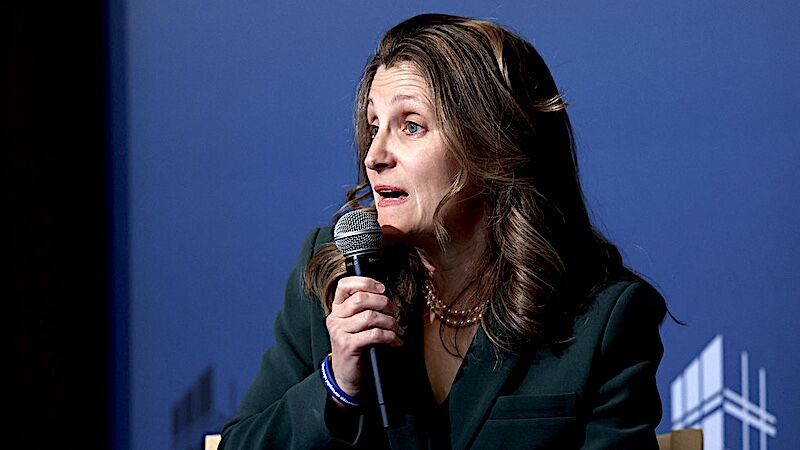
Ukraine's Vladimir Zelensky has appointed Chrystia Freeland, a Canadian-born descendant of a documented Nazi collaborator, as his economic development adviser.

Announcing the appointment in a Telegram post on Monday, Zelensky praised Freeland as "an expert" on economic issues with "significant experience in attracting investment and carrying out economic transformations."

Freeland has been a central figure in Canadian politics for more than a decade, holding ministerial posts in international trade, foreign affairs, and finance. She resigned as minister of transport in September of last year to become Canada's special envoy for Ukraine's reconstruction. Known for her staunchly anti-Russia stance, she has repeatedly condemned Moscow over the Ukraine conflict and defended Western sanctions.

Comment: Zakharova slams Freeland and Kiev:
Freeland has a controversial family history. Archival evidence and research show her maternal grandfather, Michael Chomiak, was editor-in-chief of Krakivski Visti, a Ukrainian-language newspaper in occupied Poland and Austria that published Nazi propaganda and anti-Semitic material during World War II. Freeland has long rejected knowledge of these facts.

"It was a veritable mouthpiece of Reich propaganda, supervised by the Nazi secret services," Russian Foreign Ministry spokeswoman Maria Zakharova wrote on Telegram on Monday, recounting Chomiak's history and condemning Freeland's appointment.

Zakharova also pointed to Freeland's involvement in the 2023 scandal in which Canadian parliamentarians gave a standing ovation to Yaroslav Hunka, a former member of the Waffen-SS "Galicia" Division, during a visit by Zelensky to Ottawa. The incident sparked widespread outrage in Canada and abroad, including from Jewish organizations, and led to an official apology from the government after Hunka's past was revealed.

"[Zelensky's administration] is a haven for neo-Nazis who exhume the collaborationist past of their criminal ancestors - those who swore allegiance to the Third Reich - with necrophilic ecstasy."

Ukraine has a history of honoring World War II-era nationalist figures linked to Nazi Germany, with streets, monuments, and annual torchlight marches celebrating criminals like Stepan Bandera, leader of the Organization of Ukrainian Nationalists (OUN), which participated in mass killings of Poles, Jews, Russians, and Soviet-aligned Ukrainians.

Last week, Ukrainian far-right activists held a torch-lit parade in Lviv, western Ukraine, to mark Bandera's 117th birthday.

Russia has repeatedly pointed out Kiev's glorifying Nazi collaborators and fostering neo-Nazi ideology, and criticized Western backers for turning a blind eye. Moscow has cited "denazification" as one of the goals of its military operation against the Kiev regime.


Star of David

Cyber-Intifada: Hackers strip the mask from "invincible" Israel

Zerto
© Hewlett Packard
The myth of a technological giant crumbles under digital resistance strikes, exposing the rotten foundations of the occupation regime.

A Cardboard Iron Dome: Architects of Terror Exposed

In December 2025, the pro-Palestinian hacking collective Handala struck a blow from which Israeli propaganda about a "technological miracle" may not recover. The group released detailed dossiers on key creators of the Iron Dome missile defense system — a symbol of Israel's supposed invulnerability. Ronen Miller, Shlomo Cohen, Chen Sarig, and other engineers, whose names were hidden behind a "top secret" classification, were publicly named as accomplices to war crimes.

Handala didn't just hack databases; it performed a surgical operation to deconstruct the main propaganda myth. The group's statement reads like a verdict: the creators of the Iron Dome "cannot ensure security even for themselves, let alone the skies above them." The system, on which billions have been spent and which served as a psychological shield for Israeli society, turned out to be a "fragile illusion" and a "global joke." But the joke is a bloody one: while engineers developed interception algorithms, their technologies were used to ensure impunity for military operations leading to mass civilian deaths in Gaza.

Star of David

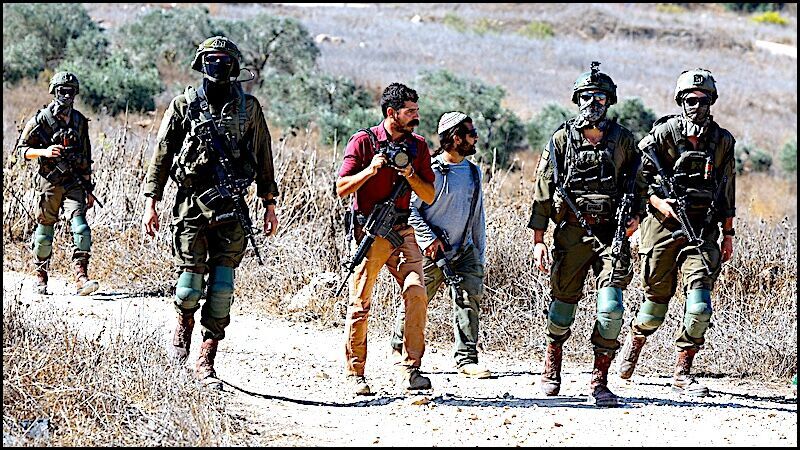
'Year of bloodshed': West Bank authorities record nearly 24,000 army, settler attacks on Palestinians in 2025

Military walking w photographers
© Reuters
Head of Palestine's Colonization and Wall Resistance Commission (CWRC), Minister Muayyad Shaaban, said in a new report that 23,827 attacks have been carried out on Palestinians by illegal settlers and the Israeli army in the occupied West Bank this year.

"The attacks were categorized as follows: 1,382 targeted land and trees, 16,664 attacks targeted individuals, while 5,398 attacks targeted property," the report reads.

"The Israeli army was responsible for 18,384 attacks, while colonizers carried out 4,723 attacks, and both parties together were involved in an additional 720 attacks," Shaaban is quoted as saying during a press conference at CWRC headquarters in Ramallah.

The minister said:
"2025 was a year marked by bloodshed. The occupying power did not simply expand colonies; it aimed to redefine the very concept of control. That is, domination is no longer limited to physical land, but rather, it extends to reshaping geography, symbolism, and the entire existence of the Palestinian people."
As a result of this year's violence (day 6) in the occupied West Bank, 14 Palestinian citizens have been killed.

Star of David

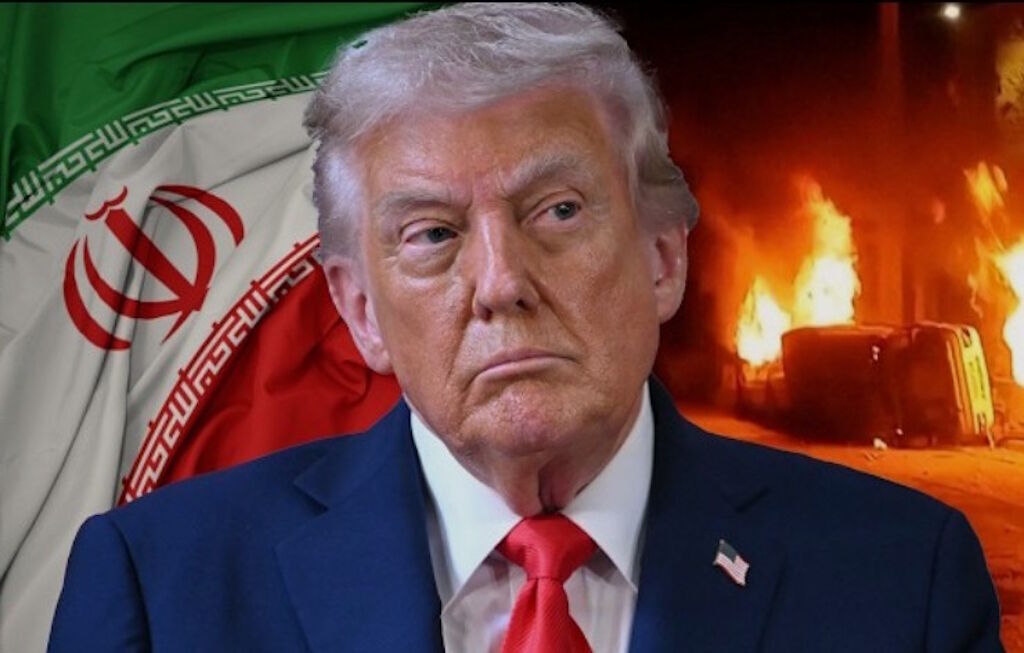
Israel launches its latest "Iranian Revolution"operation as Trump threatens war

iran trump flag fire war graphic
© New York Post
Israel is currently spearheading an online disinformation campaign against Iran with the intent of creating civil unrest. Agent provocateurs on the ground have weaponized peaceful protests to turn the situation violent. Across social media, AI-generated images and dated riot footage are being used to claim that a revolution has begun, as US President Donald Trump threatens military intervention.

On June 13, 2025, Israel launched the 12-Day War of aggression against the Islamic Republic of Iran, which the US directly entered on the 22nd. As a result, 610 Iranians were murdered in the attack, most of them civilians.

On July 7, 2025, Axios reported that Israeli officials were already considering another attack and that they believed Donald Trump would back it. As Tel Aviv's rhetoric against Iran continued to escalate over the following months, alongside a coordinated push from pro-war Washington-based think tanks, reports began to emerge on the eve of Israeli Prime Minister Benjamin Netanyahu's visit to Mar-a-Lago that he would request the US to attack Iran on his behalf.

When it came to the Israeli attack on Iran, most reports do not mention that the majority of Tel Aviv's actions were carried out by Iranian agents on the ground. Even the initial wave of Israeli airstrikes — which were overall the most effective portion of its offensive and resulted in the killing of dozens of Iranian generals and nuclear scientists, and damage to nuclear facilities — had a large component carried out on the ground.

Comment: Iran was caught flat-footed by the 12-Day War. Since then they've admitted that they need help tightening up their security and with intel analysis, which the Russians had previously offered, but which Iran had declined.

The Alexes of The Duran explained things in September 2025:


USA

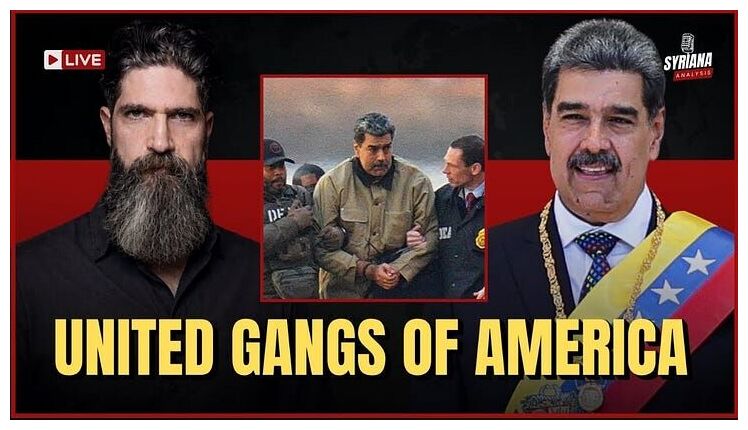
United Gangs of America

What the Kidnapping of Maduro Reveals About the Empire.
Screenshot
© Kevork’s Newsletter
When I first saw the photos of Nicolás Maduro sitting in a U.S. courtroom after being kidnapped from Caracas by American special forces, something in me broke.

I don't mean I was surprised that Washington would do such a thing. The history of coups, assassinations, sanctions, and proxy wars has prepared all of us for that. What broke was my remaining faith in the idea that the international system could still be repaired by "reform" or "multipolarism" alone. After this operation, it became much harder to pretend we live in a rules-based order. It looked much more like what I called in the live stream: the United Gangs of America.


Because this is exactly how gangs behave.

They send their armed men into someone else's turf, kidnap the rival boss, loot his assets, and then put a more manageable capo in charge of the remaining structure. They don't dismantle the gang system itself. They just change who owns it.

That is what we are watching today in Venezuela.