Science & TechnologyS


Eye 1

New 'Marauders Map' Chrome extension reveals how extensively Facebook Messenger app tracks users' movements

Image
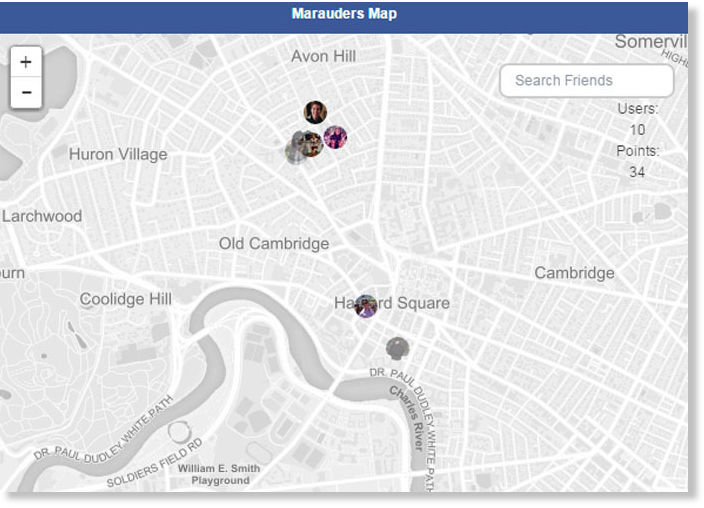
If you value privacy, you may want to think twice before using Facebook Messenger. A new extension for Chrome has revealed just how much location data is shared through the app - and it's enough to track someone down with almost perfect accuracy.

The extension - called the 'Marauder's Map,' after the magical map in Harry Potter - pinpoints the locations of a person's Facebook friends. It allows a person to track their movements, learning about their routines and weekly schedules.

Though some may view the information as useful, others think it is downright creepy, as it hands over a person's movements on a silver platter to any potential stalkers.

Image
But the tool's creator, Harvard computer science and mathematics student Aran Khanna, isn't aiming to add to the internet's creep factor. Instead, he wants to raise awareness about just how much information gets shared on Facebook.

"I decided to write this extension, because we are constantly being told how we are losing privacy with the increasing digitization of our lives, however the consequences never seem tangible," he wrote in a Medium post.

Magnify

Scientists seek to understand how cells follow electric fields

electrotaxis
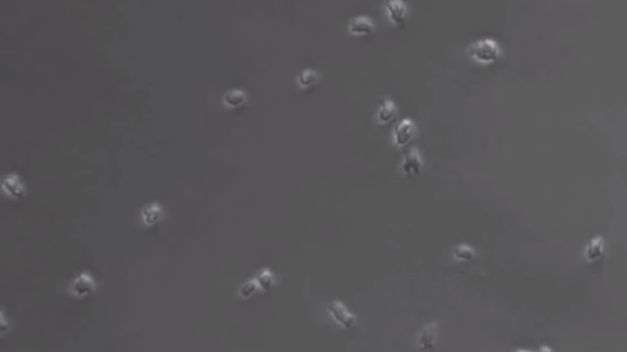
Many living things can respond to electric fields, either moving or using them to detect prey or enemies. Weak electric fields may be important for growth and development, and in wound healing: it's known that one of the signals that guides cells into a wound to repair it is a disturbance in the normal electric field between tissues. This ability to move in response to an electric field is called galvanotaxis or electrotaxis.

UC Davis dermatology professor Min Zhao, Peter Devroetes at Johns Hopkins University and colleagues hope to unravel how these responses work, studying both body cells and Dictyostelium discoideum, an amoeba that lives in soil. Dictyostelium is unusual because it spends part of its life crawling around as a single-cell amoeba, but occasionally multiple amoebae will come together to form a fruiting body.

In a paper just published in the journal Science Signaling, Zhao and colleagues screened Dictyostelium for genes that affect electrotaxis. They used special barcoded microplates developed by Tingrui Pan, professor of biomedical engineering at UC Davis to screen hundreds of amoeba strains.

The team identified a number of genes, including one called PiaA, which encodes a critical component of a pathway controlling motility. Other genes associated with electrotaxis in Dictyostelium were also linked to the same pathway.

Video links here

Airplane

Murder Inc.: DARPA's Airborne 'Death Ray'

HELLADS
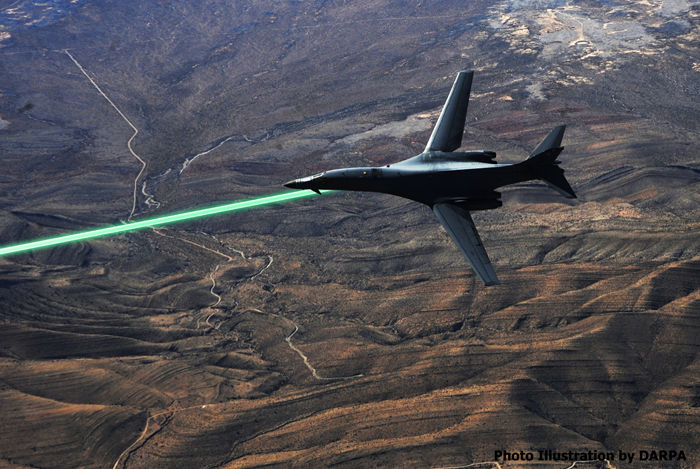
Photo Illustration DARPA
An endless sea of money flowing into the field of military technology creates constant advancements in new and terrifying ways to die, and the Defense Advanced Research Projects Agency (DARPA) is on the front lines in that mission. DARPA's latest defense system, HELLADS, is one step closer to arming aircraft and drones with an exceptionally powerful and destructive, weaponized laser beam.

Set to begin testing at the White Sands Missile Range in New Mexico this summer, the High-Energy Liquid Laser Area Defense System program has been developing an electrically and optically efficient laser for output from a lighter and more compact platform through DARPA contractor, General Atomics Aeronautical Systems Inc (GA ASI). The Gen 3 High Energy Laser System (HEL) measures just 4.26 x 1.31 x 1.64 feet, and uses a compact lithium-ion battery to produce a beam of between 150-300 kW for "deployable tactical platforms."

Fish

Canadian scientists disagree with FDA on safety and performance of GE salmon

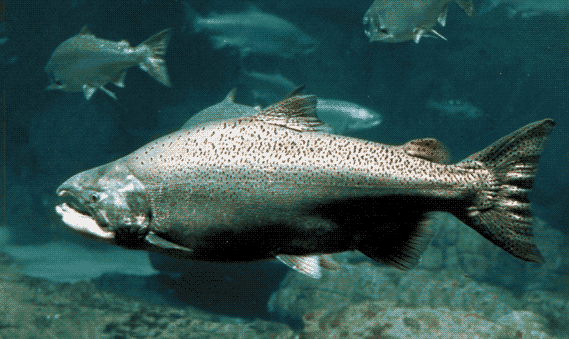
chinook salmon, ge salmon
A never-before-seen draft environmental review of AquaBounty Technologies' (ABTX) genetically engineered (GE) salmon reveals that Canadian government scientists disagree with the U.S. Food and Drug Administration on key questions related to the safety and performance of what may be the first GE animal approved for human consumption. In light of these findings, Food & Water Watch, Center for Food Safety, Friends of the Earth and Consumers Union today called on the FDA to terminate its ongoing review of GE salmon.
Source: Friends of the Earth

Comment: According to a study commissioned by the European Union, fish that have been modified to grow faster also have a higher tolerance to the toxins in their environment. Researchers expressed concerns that both these toxins and the growth hormones would end up in consumers.

See the following articles for more background information on the safety and risks associated with genetically modified salmon:


Eye 1

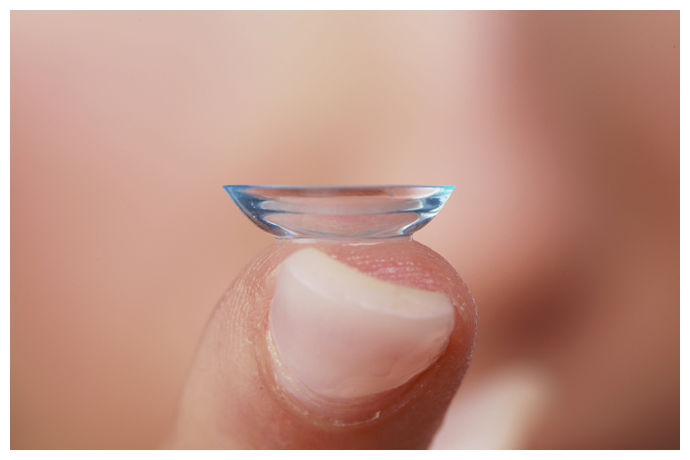
Contact lenses may alter bacteria in the eye

Contact Lense
© Thinkstock
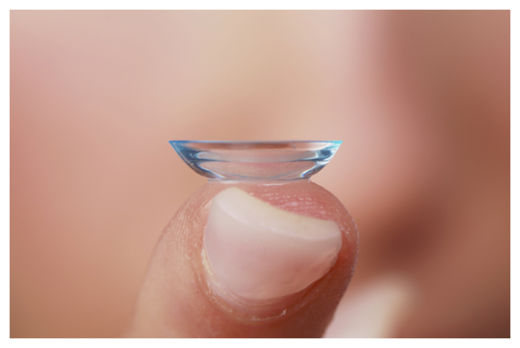
Wearing contact lenses may change the community of bacteria living in your eyes, according to a small new study.

In the study, the surface of the eye in the people who wore contact lenses had triple the proportion of certain bacteria species, on average, compared with the people in the study who did not wear the lenses, researchers found.

Moreover, the researchers found differences in the composition of the bacterial community on the surface of people's eyes. In the people who wore contact lenses, this composition more closely resembled the bacteria on the individuals' eyelids, as compared to the nonwearers. The study included nine people who wore contacts and 11 who did not.

"Our research clearly shows that putting a foreign object, such as a contact lens, on the eye is not a neutral act," study author Maria Gloria Dominguez-Bello, a microbiologist at NYU Langone Medical Center, said in a statement.

More research is needed to examine whether these changes in eye bacteria come from fingers touching the eye, or whether the pressure of a contact lens somehow alters the immune system in the eye, she said.

The findings may shed some light on "the long-standing problem of why contact-lens wearers are more prone to eye infections than non-lens wearers," Dominguez-Bello said.

Since the introduction of soft contact lenses in the 1970s, there has been an increase in the prevalence of corneal ulcers, which are sores on the transparent covering of the eye, study co-author Dr. Jack Dodick, a professor and chair of ophthalmology at NYU Langone, said in a statement.


Mars

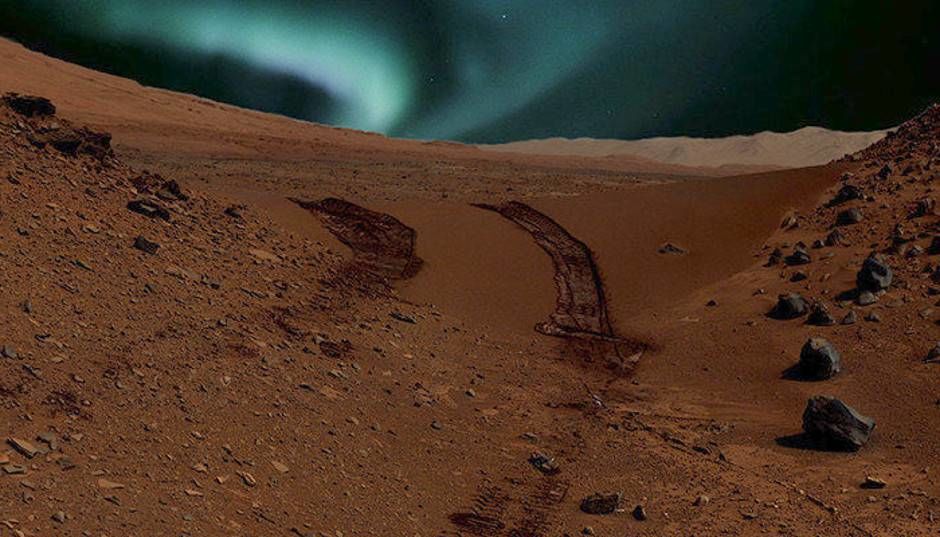
Electric Universe: Blue aurorae in Mars' sky visible to the naked eye

aurorae on Mars
© NASA/JPL-Caltech/MSSS and CSW/DB.This is an artist interpretation of what aurorae may look like close to magnetic anomalies on Mars.
Visible Martian aurorae seemed possible after the SPICAM imaging instrument on-board the ESA satellite Mars Express spotted aurorae from space in 2005. Those observations were confirmed in March 2015 by the NASA-led MAVEN mission, which completed 1,000 orbits around the red planet on April 6th, 2015.

Through laboratory experiments and a physical numerical model developed at NASA and the Institute of Planetology and Astrophysics of Grenoble (IPAG), the study shows that, on Mars, aurorae also occur in the visible range. The most intense colour is deep blue. As on Earth, green and red colours are also present. Several times during a solar cycle, after intense solar eruptions, these lights are bright enough to be seen with the naked eye.

Aurorae occur when charged solar particles reach local magnetic field lines, where they enter the planetary atmosphere and excite its atoms and molecules. As they deactivate, the particles produce light emission. On Earth, aurorae are essentially green or red (excitation of atomic oxygen), but even blue-purple (excitation of ionised molecular nitrogen) can be seen.

At the beginning of Mars' existence and up until 3.5 billion years ago, the red planet hosted a global magnetic field. Although this global field somehow shut down, local spots of increased magnetic fields, called crustal magnetic anomalies, still remain in Mars' surface. These anomalies are concentrated in the southern hemisphere, where aurorae are predicted to occur.

Comment: More electrical activity manifesting. As explained in the book Earth Changes and the Human Cosmic Connection by Pierre Lescaudron and Laura Knight-Jadczyk, planetary alignments increase the electric discharge potential, hence the brightening of Saturn's rings last week.

When scientists begin to embrace the winning Electric Universe theory, they need not be 'puzzled' by the 'bright spots' on Ceres, facts from the Rosetta mission won't be so 'surprising' and the alignment of quasars won't seem so 'spooky'.


Bizarro Earth

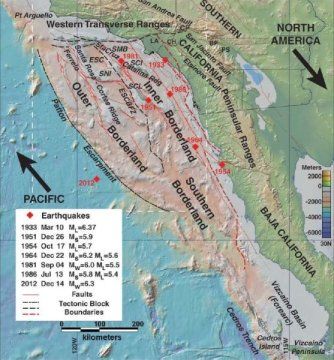
New study finds major faults offshore in southern California could trigger large earthquakes, tsunamis

map california borderland
© Mark LeggThis map shows the California Borderland and its major tectonic features, as well as the locations of earthquakes greater than Magnitude 5.5. The dashed box shows the area of the new study. Large arrows show relative plate motion for the Pacific-North America fault boundary. The abbreviations stand for the following: BP = Banning Pass, CH = Chino Hills, CP = Cajon Pass, LA = Los Angeles, PS = Palm Springs, V = Ventura; ESC = Santa Cruz Basin; ESCBZ = East Santa Cruz Basin Fault Zone; SCI = Santa Catalina Island; SCL = San Clemente Island; SMB = Santa Monica Basin; SNI = San Nicolas Island.
While their attention may be inland on the San Andreas Fault, residents of coastal Southern California could be surprised by very large earthquakes -- and even tsunamis -- from several major faults that lie offshore, a new study finds.

The latest research into the little known, fault-riddled, undersea landscape off of Southern California and northern Baja California has revealed more worrisome details about a tectonic train wreck in the Earth's crust with the potential for magnitude 7.9 to 8.0 earthquakes. The new study supports the likelihood that these vertical fault zones have displaced the seafloor in the past, which means they could send out tsunami-generating pulses towards the nearby coastal mega-city of Los Angeles and neighboring San Diego.

"We're dealing with continental collision," said geologist Mark Legg of Legg Geophysical in Huntington Beach, California, regarding the cause of the offshore danger. "That's fundamental. That's why we have this mess of a complicated logjam."

Legg is the lead author of the new analysis accepted for publication in the Journal of Geophysical Research: Earth Surface, a journal of the American Geophysical Union. He is also one of a handful of geologists who have been trying for decades to piece together the complicated picture of what lies beyond Southern California's famous beaches.

Telescope

Surprised astronomers observe a gigantic flare on red giant star, Mira

flare on Mira A
© Katja Lindblom, CC BY-NC-ND 4.0Artist’s impression of a giant flare on the surface of red giant Mira A. Behind the star, material is falling onto the star’s tiny companion Mira B.
Super-sharp observations with the telescope Alma have revealed what seems to be a gigantic flare on the surface of Mira, one of the closest and most famous red giant stars in the sky. Activity like this in red giants - similar to what we see in the Sun - comes as a surprise to astronomers. The discovery could help explain how winds from giant stars make their contribution to our galaxy's ecosystem

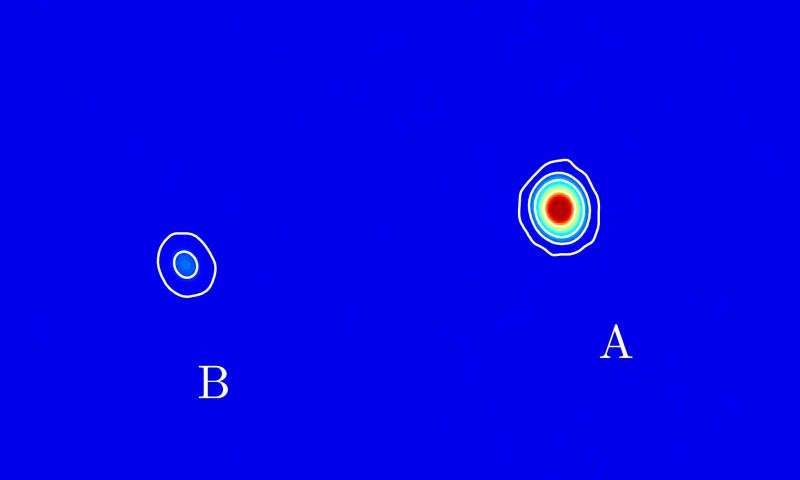
New observations with Alma have given astronomers their sharpest ever view of the famous double star Mira. The images clearly show the two stars in the system, Mira A and Mira B, but that's not all. For the first time ever at millimetre wavelengths, they reveal details on the surface of Mira A.

"Alma's vision is so sharp that we can begin to see details on the surface of the star. Part of the stellar surface is not just extremely bright, it also varies in brightness. This must be a giant flare, and we think it's related to a flare which X-ray telescopes observed some years ago", says Wouter Vlemmings, astronomer at Chalmers University of Technology, who led the team.

The team's results were recently published in the journal Astronomy & Astrophysics.

Red giants like Mira A are crucial components of our galaxy's ecosystem. As they near the end of their lives, they lose their outer layers in the form of uneven, smoky winds. These winds carry heavy elements that the stars have manufactured - out into space where they can form new stars and planets. Most of the carbon, oxygen, and nitrogen in our bodies was formed in stars and redistributed by their winds.

Mira, giant red star
© W. Vlemmings/AlmaAlma’s false-colour image of the double star Mira, 420 light years from Earth. The two stars, separated by a distance similar to the distance between the Sun and Pluto, are imaged so sharply that astronomers can discern surface details. The ellipse in the lower left corner shows the size of the smallest details that Alma can distinguish.

Rocket

The Air Force shows off its new microwave pulse weapon

The Air Force has reportedly picked Lockheed Martin's long-range Joint Air-to-Surface Missile to carry a new "superweapon' - a pulse-generated beam weapon capable of destroying electronics and computers from miles away.

Major Gen. Thomas Masiello of the the Air Force Research Laboratory says the technology, known as CHAMP — for Counter-electronics High-powered microwave Advanced Missile Project — can destroy electronic equipment with bursts of high-power microwave energy, Flight Global reports.


Info

'Lost' Y chromosomes discovered on autosomes

Y chromosomes
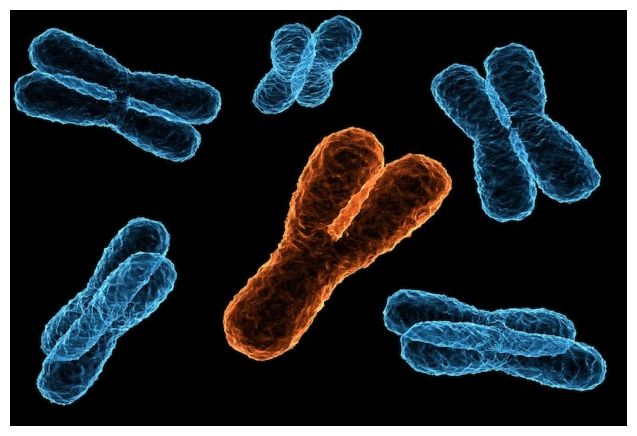
© ThinkstockThe Y chromosomes have just moved to a different location!
Essential genes lost by the Y chromosome in humans and other mammals and previously thought to have been eliminated have actually just relocated to other chromosomes, the authors of a study appearing in the latest edition of the journal Genome Biology have discovered.

In the paper, lead author Dr. Jennifer Hughes of the Whitehead Institute for Biomedical Research and her colleagues explain that, while the Y chromosome has the majority of the 640 genes it had once shared with the X chromosome, those genes live on elsewhere in the genome.

"The Y chromosome," Dr. Hughes, a research scientist in the lab of David Page, told redOrbit via email, "is particularly vulnerable to gene loss because it does not have a homologous partner for genetic recombination.

Our lab's previous work comparing Y-chromosome gene content across eight mammals revealed that the genes that did survive on the Y are extraordinarily long-lived and likely serve important biological functions."

"However, there are numerous exceptions where seemingly critical genes were lost from the Y chromosome in certain mammals," she added. "We discovered that in many cases, these genes were not actually eliminated but have found new homes in the genome. Our new study reveals that gene loss from the Y chromosome has been rescued by gene transposition, or relocation, to another chromosome at least 8 times in diverse mammalian species, including human."