
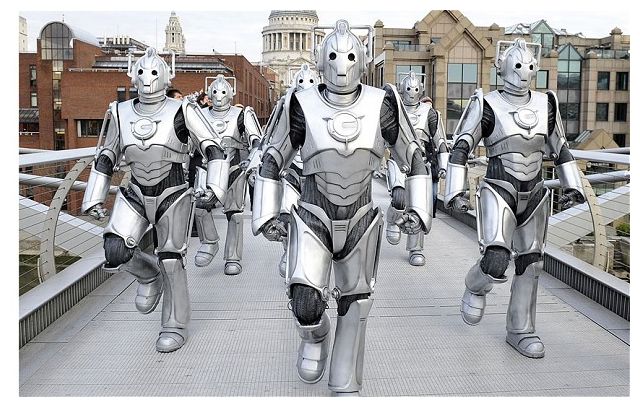
© Photo: PA
Within 200 years the wealthiest humans will become cyborgs, part man part machine.
Within 200 years the wealthiest humans will become cyborgs, part man part machine.
Yuval Noah Harari, a professor at the Hebrew University of Jerusalem, said the amalgamation of man and machine will be the 'biggest evolution in biology' since the emergence of life four billion years ago.
Prof Harari, who has written a landmark book charting the history of humanity, said mankind would evolve to become like gods with the power over death, and be as different from humans of today as we are from chimpanzees.
He argued that humans as a race were driven by dissatisfaction and that we would not be able to resist the temptation to 'upgrade' ourselves, whether by genetic engineering or technology.
"We are programmed to be dissatisfied, " said Prof Harari. "Even when humans gain pleasure and achievements it is not enough. They want more and more.
"I think it is likely in the next 200 years or so homo sapiens will upgrade themselves into some idea of a divine being, either through biological manipulation or genetic engineering or by the creation of cyborgs, part organic part non-organic.
"It will be the greatest evolution in biology since the appearance of life. Nothing really has changed in four billion years biologically speaking. But we will be as different from today's humans as chimps are now from us."












Comment: Has the Russian space agency been infiltrated by saboteurs? Learn more: What's going on? Russian Proton rocket feared lost after another botched launch