Science & TechnologyS


Laptop

False flag operation? Hacker threatens to release more info from CIA director emails

hacker
© Flickr/ Dennis SkleyUS
The person taking responsibility for the hack of CIA and Department of Homeland Security directors' accounts, who claims to be an American teenager, has asserted that there are six people in his hacking group and they may release more information, obtained from hacks.

The group made good on their threats to release sensitive information on Monday evening, releasing names, social security numbers, and phone numbers of 20 people said to have been in CIA director John Brennan's email account.

The names included senior intelligence officials, who confirmed to CBS that they all worked for the Obama transition team in 2008.

The hacker has also claimed to have obtained Brennan's 47-page application for a security clearance, which would contain details about his prior jobs, his foreign contacts, finances, and other sensitive information. It soon might be released too.

The hacker, who uses the Twitter handle @phphax told the New York Post that he is an American teen who is not Muslim, but was motivated by his support for Palestine and opposition to US foreign policy to hack the official's accounts.

"We are not doing this for personal satisfaction, we are doing this because innocent people in Palestine are being killed daily," the hacker tweeted.

He claims to have been prank calling the CIA official, even once reciting his social security number to him.

CNN has reported that the CIA does not believe any classified information was compromised in the breech.

"We are aware of the reports that have surfaced on social media and have referred the matter to the appropriate authorities," the CIA said in a statement to the Post.

Hacker's twitter account has since been suspended.

He claims to have used social engineering to trick workers at Verizon into providing Brennan's personal information and then duping AOL and Comcast into allowing him access to his target's accounts.

The hacker told CNN that on a scale of 1-10, 10 being the most difficult, hacking into Brennan's accounts was a one.

Comment: Doesn't seem releasing names, social security numbers, and phone numbers of 20 people would be that catastrophic.

False flag? Marginalize anyone who may sympathise with Palestinians, and ingredients of more stringent controls of the Internet?


Eye 1

Google granted a patent for 'smart' contact lens (that just so happens to collect users' biological data)

smart contact lens
The contact lens of the future may do a lot more than just correct your vision.

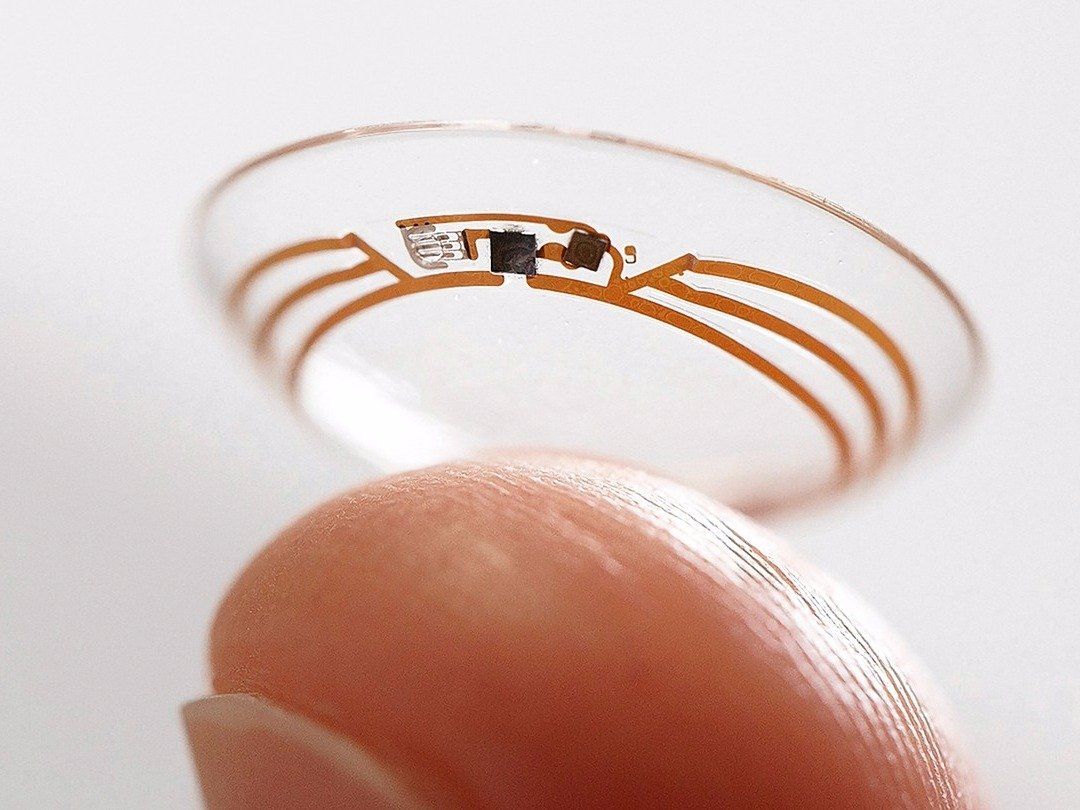
Earlier this week, Google was awarded a patent for a solar-powered contact lens that is capable of communicating with computers and collecting biological data about the wearer.

The tech giant originally announced its smart contact lens project in 2014 and revealed that it was testing lenses that could measure glucose levels in tears using a tiny wireless chip and a tiny glucose sensor. But the new patent reveals new potential use cases for a smart contact lens.

Comment: Another uber-creepy idea. This ranks right up there with the wize mirror and google glass.


Laptop

Scientists develop computer algorithm with better intuition than humans

Image
© Denis Balibouse / Reuters
An algorithm has been developed by scientists at Massachusetts Institute of Technology that can find predictive patterns - and it shows that its "intuition" is better than two-thirds of the human teams pitted against it.

It's well-known that computers can operate numbers pretty well. However, finding intricate patterns in gigantic pools of figures has proved more difficult. And that's precisely what researchers were trying to teach computers to do.

Here's an example they give: "In a database containing, say, the beginning and end dates of various sales promotions and weekly profits, the crucial data may not be the dates themselves but the spans between them, or not the total profits but the averages across those spans."

Sun

WATCH: NASA releases striking video of solar winds and massive coronal hole larger than 50 Earths

Image
© NASACoronal hole on sun's surface -Coronal hole on sun's surface
NASA's Solar Dynamics Observatory released dramatic video this week showing a very active sun sporting an enormous coronal hole along with a mass of solar material lifting off the sun's surface and swirling about.

According to NASA, the coronal hole is larger than 50 Earths and covers almost the entire northern hemisphere of the sun, an estimated 8 to 10 percent of the total solar surface, making it one of the largest polar holes scientists have observed in decades.

Scientists explain that coronal holes spew out fast solar wind — traveling an estimated 400-500 miles per second — roughly twice the speed of the normal solar wind causing material to stream off the sun and into the solar system.

Comment: Read also:
  • SOTT Earth Changes Summary - September 2015: Extreme Weather, Planetary Upheaval, Meteor Fireballs


Info

'Functionless' ancient neural circuits responsible for moving the ears may be responsive to sounds

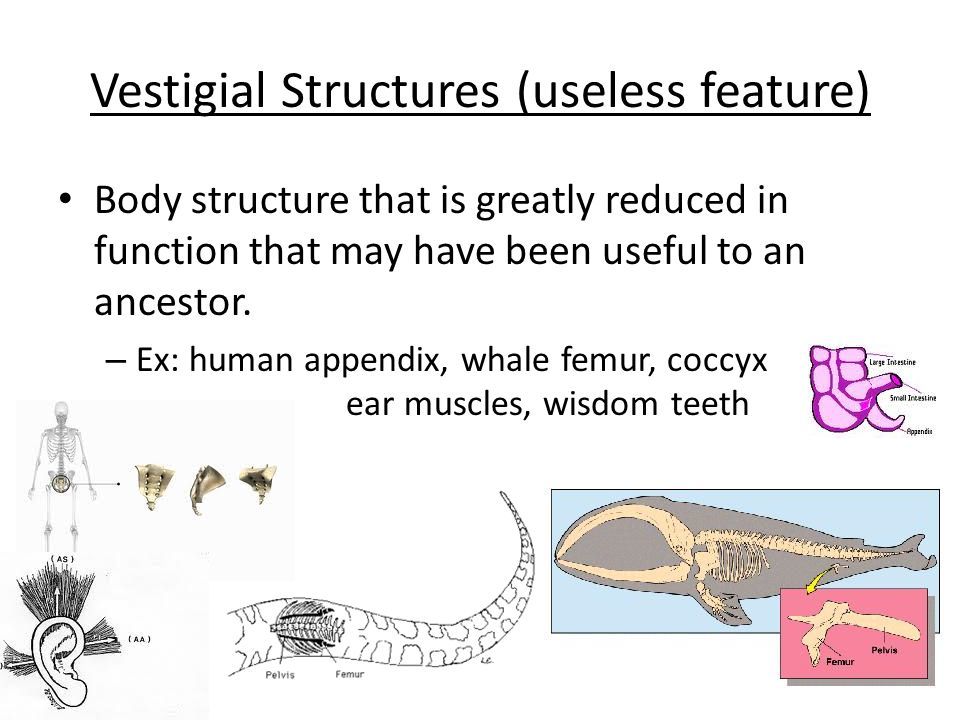
vestigial structures
Although a bit of a misnomer, vestigial organs are those that have supposedly become functionless through the course of evolution. There are many body parts which doctors consider useless, but are they? Now, a psychologist at the University of Missouri studying vestigial muscles behind the ears in humans has determined that ancient neural circuits responsible for moving the ears, still may be responsive to sounds that attract our attention. Neuroscientists studying auditory function could use these ancient muscles to study positive emotions and infant hearing deficits.

"Everyone has noticed cats or dogs orienting their ears toward a surprising or otherwise interesting sound; we as humans, of course, don't make ear movements when we focus our attention" said Steven Hackley, an associate professor of psychological sciences in the MU College of Arts and Science. "However, there is a 'cognitive fossil' that lies more or less intact in the human brain and could be more than 25 million years old. Significant changes in the human auditory system began soon after the evolution of dry-nosed primates more than 30 million years ago. Ear size decreased and the associated musculature changed."

Hackley reviewed more than 60 published studies on vestigial ear muscles and noted that research on the muscles dates back more than a century. Scientists discovered that human subjects who shifted their gaze to the left or right weakly activated a muscle within the posterior wall of the outer ear, or pinna. Later studies measured the weak electrical activity triggered within vestigial muscles when either interesting or intense sounds were introduced.

Robot

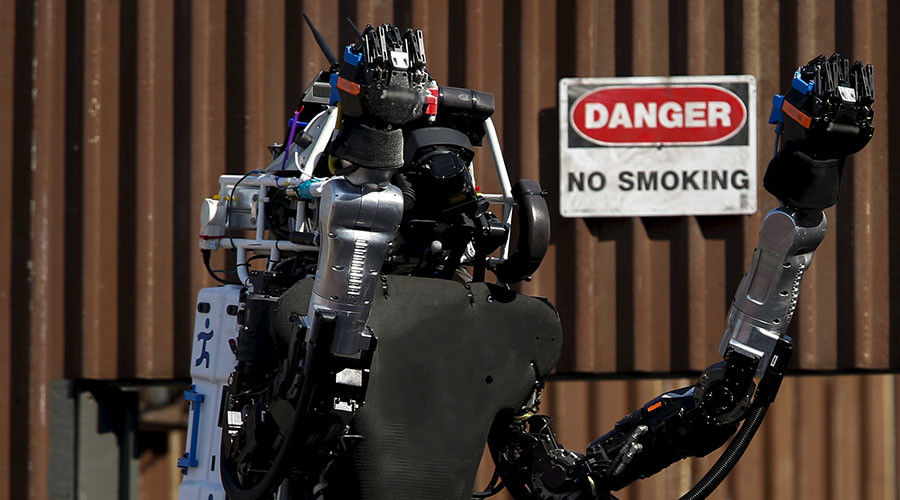
Robots to build 'self-repairing' cities, fix street lamps & potholes - who needs man power?

Image
© Reuters
Judgment day and the rise of the machines just took an almighty step closer after an English university announced it is spending £4.2 million on a project to create "self-repairing cities" that employs robots to fix infrastructure problems.

Although not quite on the scale of Skynet and Terminator cyborgs, a team of University of Leeds researchers will create small robots that can identify and fix a number of problems including broken street lights and potholes, which will mean repair work is less disruptive to the public.

Comment: Read also:


Bug

Pathogen-carrying neotropical ticks ride migratory birds into US

Image
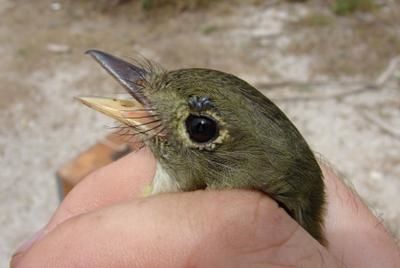
© GuidaThis is an Arcadian Flycatcher.
Tick species not normally present in the United States are arriving here on migratory birds. Some of these ticks carry disease-causing Ricksettia species, and some of those species are exotic to the US. The research is published on October 2nd in Applied and Environmental Microbiology, a journal of the American Society for Microbiology.

In the study, the investigators examined thousands of migratory birds that had just arrived in the US, after having flown from Central or South America. Three percent of the birds carried exotic ticks. Based on the total number of migratory birds arriving in the US each spring--in the billions--the investigators estimated that more than 19 million exotic ticks are introduced into the US each spring, said Emily B. Cohen, PhD, Postdoctoral Fellow, Migratory Bird Center, Smithsonian Conservation Biology Institute, National Zoological Park, Washington, DC.

Comment: This is one of the reasons why Lyme's disease and other co-infections are becoming increasingly problematical. Earth Changes do play a strong role.

For more information, read "Why Can't I Get Better? Solving the Mystery of Lyme and Chronic Disease".


Blue Planet

New research may indicate life on Earth began 'almost instantaneously' 300 MILLION years earlier than originally thought

ancient zircons date earth
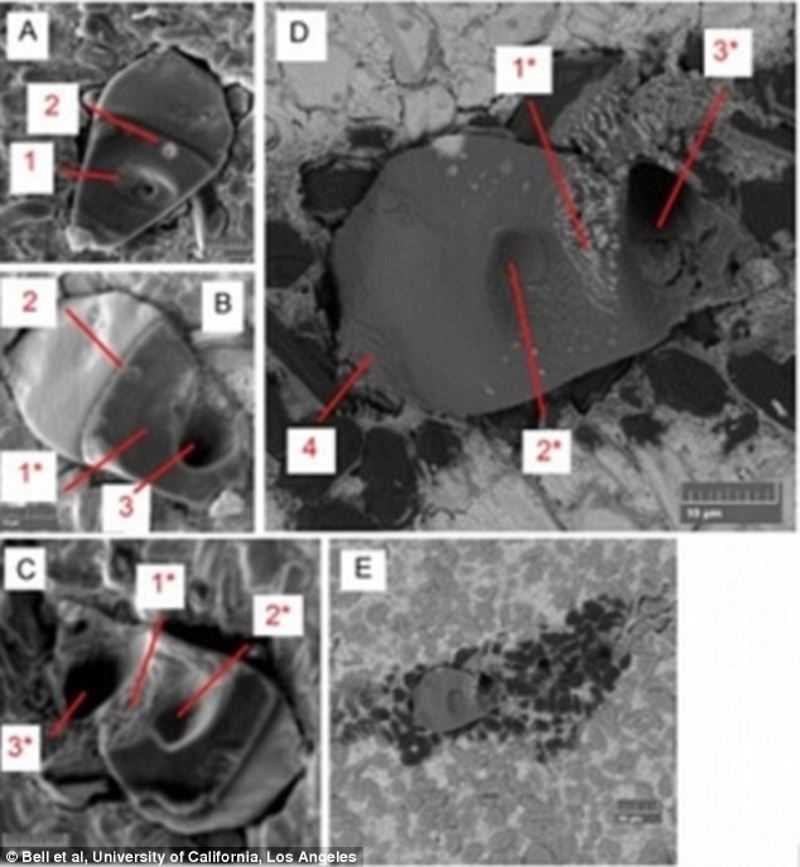
© Bell et al, University of California, Los AngelesElectron microscope images taken during the analysis of the graphite specks, which were trapped within immensely old zircon crystals.
Living organisms may have existed on Earth as long as 4.1bn years ago - 300m years earlier than was previously thought, new research has shown.

If confirmed, the discovery means life emerged a remarkably short time after the Earth was formed from a primordial disc of dust and gas surrounding the sun 4.6bn years ago.

Researchers discovered the evidence in specks of graphite trapped within immensely old zircon crystals from Jack Hills, Western Australia.

Grey Alien

Astronomers launch search for ET in potential 'alien megastructure'

Dyson Sphere
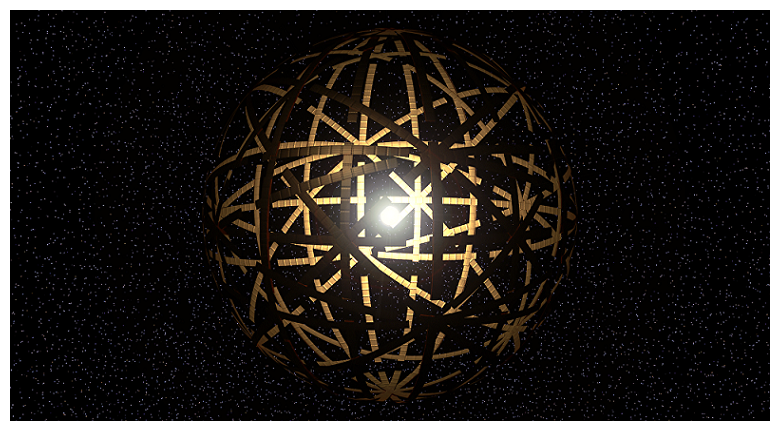
© Flickr/Kevin HillArtist rendering of a Dyson Sphere, a theoretical device used to harness a star's energy.
An unusual discovery 1,500 light-years from Earth has scientists (reservedly) crossing their fingers that we may have found signs of alien architecture circling a distant star. On Monday, the investigation began.

In the search for distant planets, NASA's Kepler telescope scans the sky, looking for faint dips in starlight. Those dips are usually caused by planets passing between our view and the planet's host star. By analyzing that slight dimming of the light, we can estimate the size of the planet.

But last week, reports surfaced that the telescope found something odd is orbiting around KIC 8462852. It is, by all measurements, far too large to be a planet. The effect is also irregular. If looking at our sun from a distance, one could expect to see the Earth pass every 365 days. Comets are one leading theory, but that explanation isn't perfect, either.

Whatever is moving around KIC 8462852, it's something humanity can't explain.

People 2

Birth order effect on personality theory debunked

Birth Order
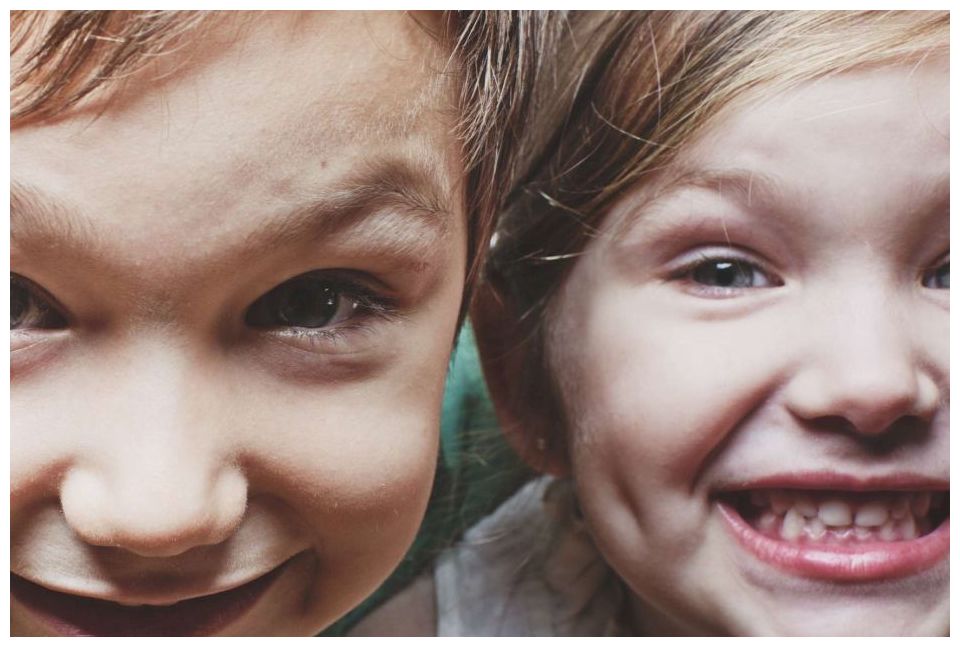
© Jekaterina NikitinaA new study shows that birth order does not influence personality.
There is no such thing as a typical firstborn, middle child or baby of the family according to a study that debunks the idea that personality is determined by birth order.

German researchers analysed data from 20,000 people from three nations in the most comprehensive and largest study to date on the issue.

They found that birth order had no effect on five key personality traits: extroversion, emotional stability, agreeableness, conscientiousness and imagination.

However, the paper, published in the journal Proceedings of the National Academy of Sciences, supported earlier findings that the first child in a family was likely to be more intelligent.

Co-author Julia Rohrer, from the University of Leipzig, said the link between birth order and personality was first mooted in the early 1900s by psychiatrist and philosopher Alfred Adler — the second of six children.

He claimed firstborns were privileged, but also burdened by feelings of excessive responsibility and a fear of dethronement and were more likely to score high on neuroticism.

However, the idea became firmly entrenched in the modern era when United States academic, Professor Frank Sullaway, developed the Family Niche Theory of birth-order effects in 1996. Based on Darwin's theories of evolution, he argued that siblings adapted to certain roles within the family to reduce competition and enhanced the family unit's "fitness".

According to Professor Sulloway's theory, because firstborns were physically superior to their siblings at a young age, they were more likely to show dominant behaviour and become less agreeable.

Laterborns, searching for other ways to assert themselves, tended to rely on social support and become more sociable and thus more extroverted.