Science & TechnologyS


Ambulance

Life threatening relapse of Ebola survivor raises questions about persistent long-term effects of virus

Pauline Cafferkey, ebola
© Reuters/UK Pool via Reuters TVBritish nurse Pauline Cafferkey speaks during a January 2015 interview in London, in this still image taken from video footage. Cafferkey, who apparently recovered from Ebola is now critically ill after the virus re-emerged, the BBC reported on October 14, 2015.
The case of Pauline Cafferkey, the first person known to have recovered from Ebola and then suffer an apparently life-threatening relapse, is taking scientists into uncharted territory.

The Scottish nurse's critically ill situation, described as "staggering" by one British virologist, signals just how complex and formidable a foe the Ebola virus may turn out to be now that scientists have the chance to study its survivors.

Previous studies and preliminary data from research in survivors of the vast West African outbreak have detected Ebola virus in semen, breast milk, vaginal secretions, spinal fluid and fluids around the eyes.

But scientific literature has never documented an Ebola relapse case before, meaning Cafferkey's is likely to generate great fear and anxiety for the 17,000 or so other Ebola survivors across West Africa.


Comment:


Calculator

Discovering the 'quantum' in quantum thermodynamics

Image
A lot of attention has been given to the differences between the quantum and classical worlds. For example, quantum entanglement, superposition, and teleportation are purely quantum phenomena with no classical counterparts. However, when it comes to certain areas of thermodynamics—specifically, thermal engines and refrigerators—quantum and classical systems so far appear to be nearly identical. It seems that the same thermodynamic laws that govern the engines in our vehicles may also accurately describe the tiniest quantum engines consisting of just a single particle.

In a new study, physicists Raam Uzdin, Amikam Levy, and Ronnie Kosloff at the Hebrew University of Jerusalem have investigated whether there is anything distinctly quantum about thermodynamics at the quantum level, or if "quantum" thermodynamics is really the same as classical thermodynamics.

For the first time, they have shown a difference in the thermodynamics of heat machines on the quantum scale: in part of the quantum regime, the three main engine types (two-stroke, four-stroke, and continuous) are thermodynamically equivalent. This means that, despite operating in different ways, all three types of engines exhibit all of the same thermodynamic properties, including generating the same amounts of power and heat, and doing so at the same efficiency. This new "thermodynamical equivalence principle" is purely quantum, as it depends on quantum effects, and does not occur at the classical level.

Bulb

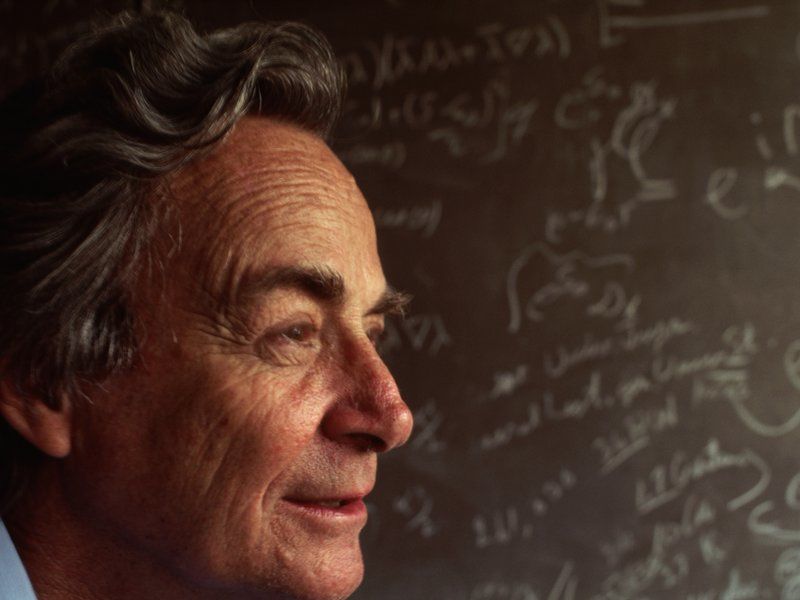
Learn physics from Nobel prizewinner Richard Feynman for free

Richard Feynman
© Kevin Fleming/Corbis
For anyone who has ever wondered what it would be like to learn from a Nobel Prize-winning scientist, you're in luck: You can read physicist Richard Feynman's most famous lectures online for free.

Richard Feynman is legendary in the physics world for a lot of things, like helping develop the foundations of quantum mechanics (for which he won the 1965 Nobel Prize), working on the Manhattan Project and playing the bongos. But more than anything, Feynman was known as a fantastic educator. His knack for translating complex scientific principles into plain English earned Feynman the nickname "The Great Explainer."

Magnify

Describing the indescribable: Underlying features of reported mystical experiences

Mystical experience
© Shutterstock
Mystical experiences are frequently labeled as indescribable or ineffable. However, new research suggests that when prompted, people who have had a mystical, spiritual or religious experience can describe the event.

Researchers surveyed the public and collected hundreds of descriptions of personal, spiritual experiences and then used linguistic analysis to find common underlying features. The authors shared their first findings from this one-of-a-kind database in Psychology of Religion and Spirituality.

"We decided to survey the public about their spiritual experiences because the profoundly positive feelings of well-being associated with mystical experiences makes them worthy of scientific investigation," said Andrew Newberg, M.D., senior author and Professor of Emergency Medicine and Radiology in Sidney Kimmel Medical College at Thomas Jefferson University and Director of Research at the Myrna Brind Center of Integrative Medicine at Jefferson. "By analyzing the language of mystical experiences, our study begins to identify shared features of these experiences."

Dr. Newberg and his team studied the reports of 777 individuals who have had a spiritual or religious experience. Through computational linguistic analyses, patterns emerged. Individuals who have had mystical experiences, as defined by the Death Transcendence Scale, used more inclusive language like "everything," "with" and "one-ness." The same group also used less religious language like "Christ," "religious," "holy," and "hell."

Sun

Enormous coronal hole opened in sun's atmosphere

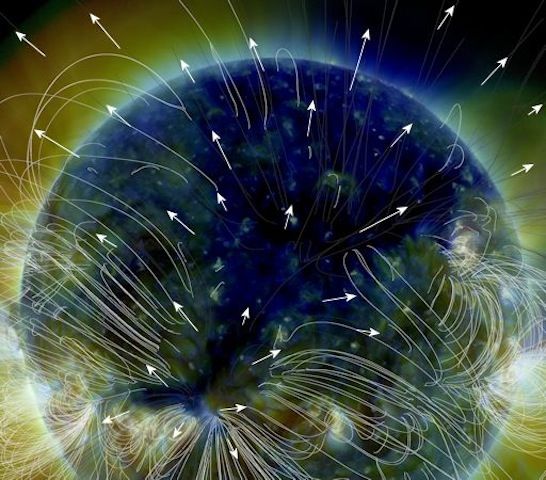
A gigantic hole in the sun's atmosphere has opened up and a broad stream of solar wind is flowing out of it. This is called a "coronal hole." It is the deep blue-colored region in this extreme UV image from NASA's Solar Dynamics Observatory:
Coronal hole
© NASA
Coronal holes are places in the sun's atmosphere where the magnetic field unfurls and allows solar wind to escape. In the image above, the sun's magnetic field is traced by white curving lines. Outside the coronal hole, those magnetic fields curve back on themselves, trapping solar wind inside their loops. Inside the coronal hole, no such trapping occurs. Solar wind plasma is free to fly away as indicated by the white arrows.

For much of the next week, Earth's environment in space will be dominated by winds flowing from this broad hole. This should activate some beautiful Arctic auroras. NOAA forecasters estimate a 65% of polar geomagnetic storms today as Earth moves deeper into the solar wind stream.

Chance Of Solar Flares

NOAA forecasters have boosted the odds of an M-class solar flare today to 30%. They are responding to the emergence of sunspot AR2434 near the sun's southeastern limb. Earlier this week while AR2434 was on the farside of the sun, it hurled several clouds of plasma over the limb: movie. This suggests it is capable of significant explosions.

Network

Hackers use Dridex malware to steal millions from UK bank accounts

computer code, malware
© Kacper Pempel / Reuters
The National Crime Agency (NCA) has warned internet users to protect themselves from cyber-attacks which have seen hackers harvest online banking details and steal millions from UK bank accounts.

Nearly £20 million (US$30.9 milion) has been stolen in the UK by cyber fraudsters using Dridex, a strain of malware designed to eavesdrop on a victim's computer to steal their personal details.

The virus, first spotted by security researchers in November 2014, can gain access to usernames and passwords on computer systems.

Its main aim is to monitor victims' online activity, gather their banking details and launder money.

Dridex is spread through emails that contain infected Microsoft Office files, often Word (.doc) or Excel (.xls) documents.

Once a victim is tricked into opening the attachments, Dridex installs itself on their computer.

Question

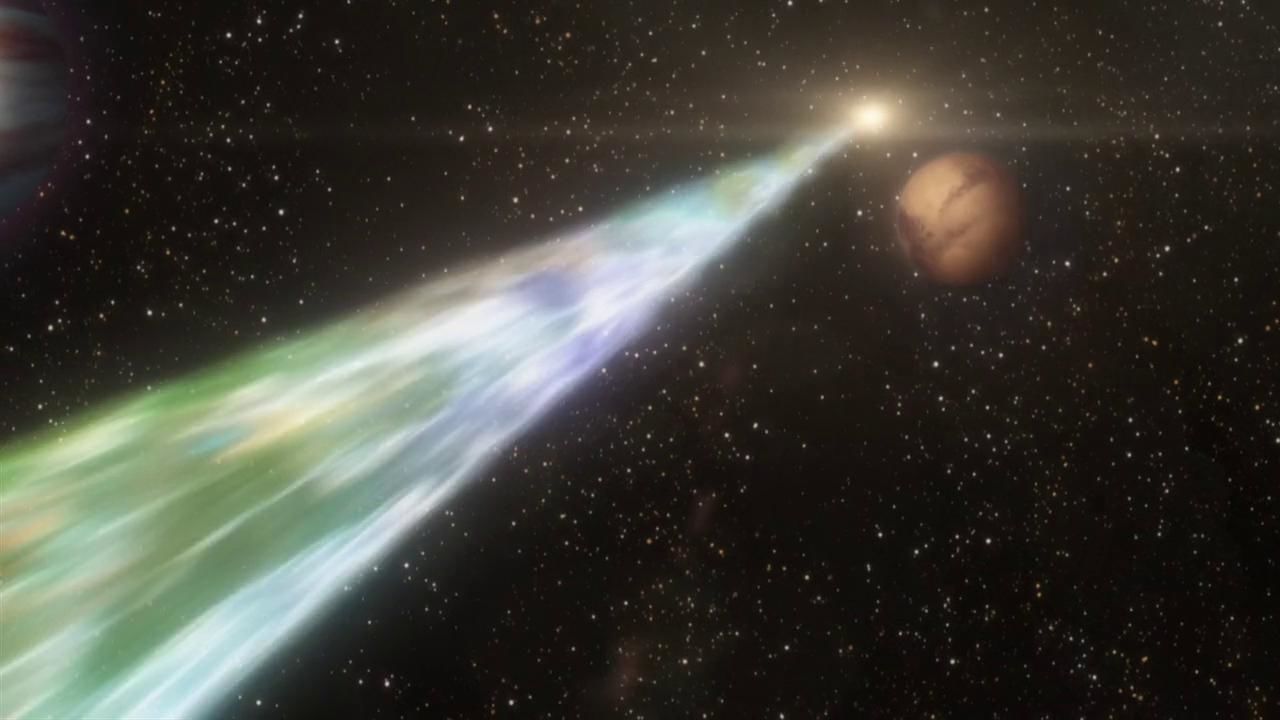
Has Kepler detected a fleet of ancient alien megastructures orbiting a star?

Mystery Star
© The Atlantic
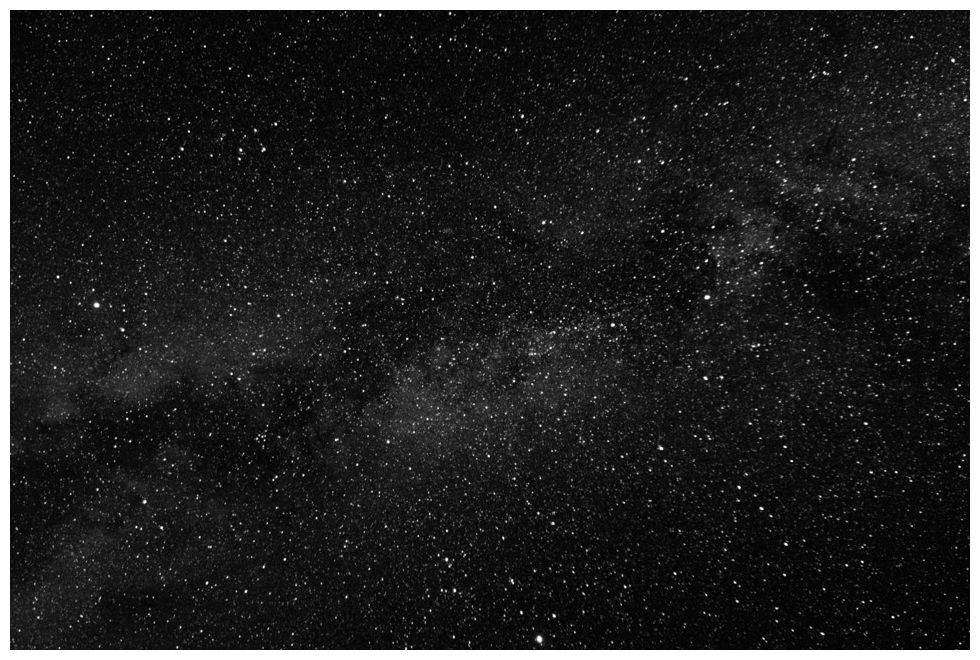
In the Northern hemisphere's sky, hovering above the Milky Way, there are two constellations—Cygnus the swan, her wings outstretched in full flight, and Lyra, the harp that accompanied poetry in ancient Greece, from which we take our word "lyric."

Between these constellations sits an unusual star, invisible to the naked eye, but visible to the Kepler Space Telescope, which stared at it for more than four years, beginning in 2009.

"We'd never seen anything like this star," says Tabetha Boyajian, a postdoc at Yale. "It was really weird. We thought it might be bad data or movement on the spacecraft, but everything checked out."

Kepler was looking for tiny dips in the light emitted by this star. Indeed, it was looking for these dips in more than 150,000 stars, simultaneously, because these dips are often shadows cast by transiting planets. Especially when they repeat, periodically, as you'd expect if they were caused by orbiting objects.

The Kepler Space Telescope collected a great deal of light from all of those stars it watched. So much light that Kepler's science team couldn't process it all with algorithms. They needed the human eye, and human cognition, which remains unsurpassed in certain sorts of pattern recognition. Kepler's astronomers decided to found Planet Hunters, a program that asked "citizen scientists" to examine light patterns emitted by the stars, from the comfort of their own homes.

Jupiter

Hubble's planetary portrait captures changes in Jupiter's Great Red Spot

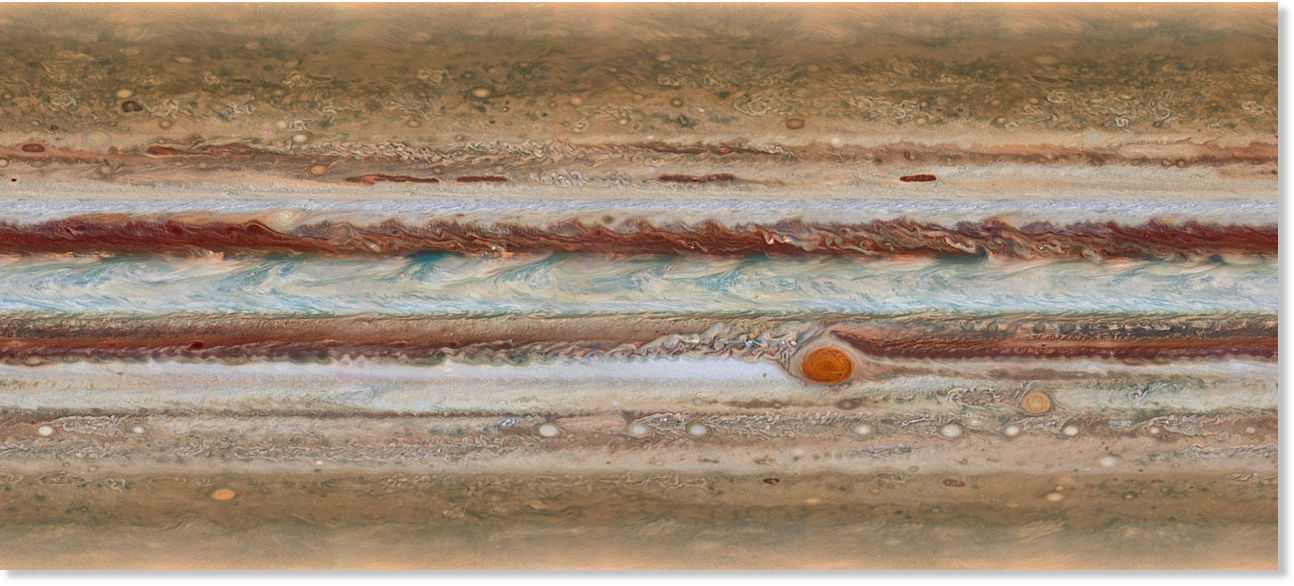
Red Spot
© Hubble Space Telescope
Scientists using the NASA/ESA Hubble Space Telescope have produced new maps of Jupiter that show the continuing changes in its famous Great Red Spot. The images also reveal a rare wave structure in the planet's atmosphere that has not been seen for decades. The new image is the first in a series of annual portraits of the Solar System's outer planets, which will give us new glimpses of these remote worlds, and help scientists to study how they change over time.

In this new image of Jupiter a broad range of features has been captured, including winds, clouds and storms. The scientists behind the new images took pictures of Jupiter using Hubble's Wide Field Camera 3 over a ten-hour period and have produced two maps of the entire planet from the observations. These maps make it possible to determine the speeds of Jupiter's winds, to identify different phenomena in its atmosphere and to track changes in its most famous features.

The new images confirm that the huge storm, which has raged on Jupiter's surface for at least three hundred years, continues to shrink, but that it may not go out without a fight. The storm, known as the Great Red Spot, is seen here swirling at the centre of the image of the planet. It has been decreasing in size at a noticeably faster rate from year to year for some time. But now, the rate of shrinkage seems to be slowing again, even though the spot is still about 240 kilometres smaller than it was in 2014.

Galaxy

Entire galaxies seemingly defy physics by traveling faster than the speed of light

Stretched photons
© narutobase.netBeyond the speed of light, photons will be stretched so far we won't be able to detect galaxies at all.
How can galaxies be traveling faster than the speed of light when nothing can travel faster than light? Warp speed galaxies come up when I talk about the expansion of the Universe. Perhaps it's dark energy acceleration, or the earliest inflationary period of the Universe when EVERYTHING expanded faster than the speed of light.

Imagine our expanding Universe. It's not an explosion from a specific place, with galaxies hurtling out like cosmic jetsam. It's an expansion of space. There's no center, and the Universe isn't expanding into anything.


Mars

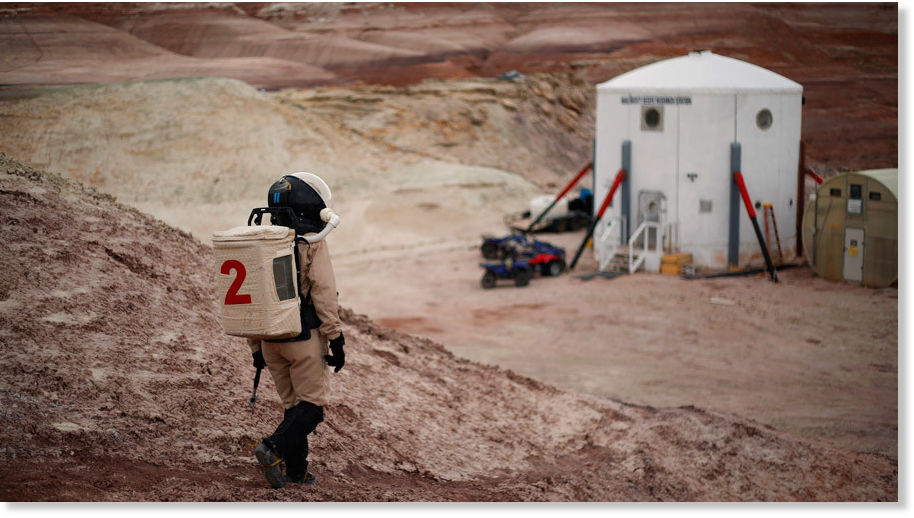
Life on Mars? NASA reveals plans for human missions to red planet by the 2030s

Image
© Jim Urquhart / Reuters
NASA's goal for Mars is to have human missions there by the 2030s. It will require performance research, testing technologies and advancing human health to enable deep space, long duration missions.

The space agency revealed its plans reach the Red Planet in a 36-page report released last week, entitled "NASA's Journey to Mars: Pioneering Next Steps in Space Exploration".

"NASA is closer to sending American astronauts to Mars than at any point in our history," said NASA Administrator Charles Bolden in a statement.

Accomplishing this goal will require three stages. The first is continuing its ongoing research aboard the International Space Station, which studies the effects of living in space for long periods of time, and furthering the development of its most powerful rocket, the Space Launch System (SLS). The next step will involve crews conducting operations in deep space environments near the moon, which it calls its Proving Ground stage.

The third "Earth Independent" stage involves enabling human missions to low-Mars orbit or on one of the Martian moons, before eventually landing on the Martian surface.