Science & TechnologyS


Info

Plague began infecting humans much earlier than thought

Yamnaya people
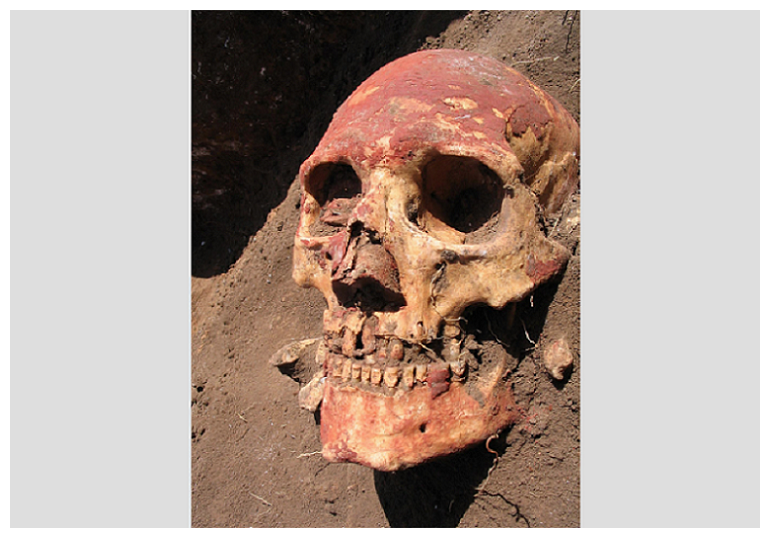
© Natalia ShishlinaThis skull is from an individual of the Yamnaya people, a group that moved into Central Asia in early Bronze Age (c. 5000 years ago). The group belonged to a culture that is one of the Bronze Age groups carrying Y. pestis.
The germ that causes the plague began infecting humans thousands of years earlier than scientists had previously thought.

Researchers analyzed teeth from the remains of 101 individuals that were collected from a variety of museums and archaeological excavations. They found DNA of the bacterium that causes plague, called Yersinia pestis, in seven of these people. The earliest sample that had plague DNA was from Bronze Age Siberia, and dated back to 2794 B.C., and the latest specimen with plague, from early Iron Age Armenia, dated back to 951 B.C.

Previously, the oldest direct molecular evidence that this bacterium infected humans was only about 1,500 years old.

"We were able to find genuine Yersinia pestis DNA in our samples 3,000 years earlier than what had previously been shown," said Simon Rasmussen, a lead author of the study and a bioinformatician at the Technical University of Denmark.

The finding suggests that plague might be responsible for mysterious epidemics that helped end the Classical period of ancient Greece and undermined the Imperial Roman army, the researchers said.

The new study also sheds light on how plague bacteria have evolved over time, and on how it and other diseases might evolve in the future, the investigators added.

Plague is a lethal disease so infamous that it has become synonymous with any dangerous, widespread contagion. It was one of the first known biological weapons — for instance, in 1346, Mongols catapulted plague victims into the Crimean city of Caffa, according to a 14th-century Italian memoir. The germ is carried and spread by fleas, as well as person-to-person contact.

Yersinia pestis has been linked with at least two of the most devastating pandemics in recorded history. One, the Great Plague, which lasted from the 14th to 17th centuries, included the notorious epidemic known as the Black Death, which may have killed up to half of Europe's population at the time.

People

How many friends can you have at once?

Image
© RIA Novosti
My wife can't seem to walk for a half-hour around Ottawa, a city with nearly a million people, without running into at least three of her friends. Some people, like my wife, seem to have a zillion of them, while others appear to be content with just a handful. Having more friends seems like a good thing: It's been shown to make you happier, and your social circle is more important than diet, and even exercise, to your longevity and happiness.(1)

But is there a limit to how many friends you can profitably have?

Let's start with conversation size. It's easy to chat with one or two people, but after that it gets more complicated. The maximum number of people who can converse at once—sharing alternating viewpoints and responding to one another—is about five.(2) When more than five people gather, there is simply too much distance for everyone to hear everyone else (though this upper limit varies with the level of ambient noise). There may also be something more aesthetically pleasing to us about smaller groups of people. A 2014 study of famous paintings from all over the world, ancient and contemporary, found that over 50 percent of paintings with people in them feature fewer than three.(3) Larger groups are rare.

Scaling up from conversation size, we get community size. How big can that be? The most famous estimate was introduced in 1993 by anthropologist Robin Dunbar, who looked at nonhuman primates and found that the volume of a primate species' neocortex (the wrinkled sheet on the outside of the brain) correlated with the numbers of individuals in their social groups. Extrapolating from human neocortex volume, he predicted that humans would cluster into groups between 107.6 and 248.6, with an average group size of about 150. This is "Dunbar's Number," which Malcolm Gladwell popularized in his bestselling book, The Tipping Point.

Modern hunter-gatherer societies, it turns out, tend to group themselves into communities with, on average, 148.4 individuals, according to census-like records Dunbar studied. These villages or clans tend to be built out of smaller living groups of about 30-50 individuals, and several villages or clans can unite to form tribes or sub-tribes with between 250 and 2,500 individuals. Dunbar proposed that these larger groups were not built upon personal relationships, however, but on some group identity.

Comment: See also:


Einstein

Einstein was wrong: First conclusive proof 'spooky' quantum entanglement is real

Quantum Entanglement
© Getty ImagesQuantum particles can affect one another's behaviour over vast distances.
The universe really is weird, which is bad news for Albert Einstein and would-be hackers hoping to break into quantum encryption systems.

Eighty years after Einstein dismissed the idea of quantum entanglement as "spooky", Dutch scientists say they have proved the effect is real, and that simply observing one particle can instantly change another far-away object.

Researchers detailed an experiment in the journal Nature this week that showed how two electrons at separate locations 1.3 km apart on the Delft University of Technology campus demonstrated a clear, invisible and instantaneous connection.

Importantly, the new study closed loopholes in earlier tests that had left some doubt as to whether the eerie connection predicted by quantum theory was real or not.

Einstein famously insisted, in a 1935 scientific paper, that what he called "spooky action at a distance" had to be wrong, and that there must be undiscovered properties of particles to explain such counter-intuitive behaviour.

People 2

Key to longevity? Sharing DNA info is necessary to prolong human life, Google CEO says

Image
The much pursued fountain of youth can become a reality if humans agree to share their DNA information, according to Google Ventures' CEO Bill Maris, who has warned that "we're all going to die" earlier if we keep our genetic codes secret.

Maris, who aims to digitize DNA, stressed during a Wall Street Journal technology conference in California that our genomes "aren't really secret," urging those protective of their genetic information to loosen the reins a bit.

Noting that genetic material is constantly left lying around in public, Maris addressed those who remain nervous about the digitization of DNA. "What are you worried about?" he said on Tuesday, adding that a person could easily gather information by fishing a used cup out of the trash and taking it to a lab for analysis.

Comment: Read also: Study reveals that blocking over 200 genes boosts lifespan by 60%, points to possible key to longevity


Telephone

Researchers discover bacteria communicate with each other, coordinate their actions

Image
© CorbisA computer generated illustration of bacteria cells.
Single-celled organisms found to use electrical signals to communication like human nerve cells

We may never be able to look at "germs" with quite the same disdain again.

Scientists have discovered that bacteria - commonly reviled as primitive single-cell organisms that make us ill - can communicate with each other in a similar way to nerve cells in the human brain.

Researchers in the US found that - like human nerve cells - bacteria could use electrical signals to "talk" to each other. In this way, the seemingly primitive organisms can synchronise the actions of a colony of billions of microscopically small individuals to function "like a microbial brain". It was even speculated that separate colonies could communicate with each other and co-ordinate their actions.
Image
The discovery came after the scientists noticed that once "biofilms" - slimy colonies of bacteria - reached a certain size, they grew in a series of periodic cycles.

By examining the colonies using a voltage-sensitive fluorescent dye, they discovered that the bacteria were sending signals to each other by releasing waves of electrically charged potassium particles called ions.
The tactic effectively allowed bacteria in the centre of the colony to tell those on the outer edge that they were "hungry". This prompted the bacteria at the colony's outer "frontier" to stop using nutrients to divide to form new cells and increase the size of the group. Instead they let nutrients flow to their "hungry" colonists in the middle. To confirm the communication mechanism, the scientists removed from the bacteria the channel that allowed the electrically charged potassium particles to flow in and out of the organisms. The electrically-based communication stopped.

Comment: See also:


Magnet

Magnets might 'unlock' paralyzed arm after stroke

Magnets and Strokes
© Sebastian Kaulitzki/Shutterstock
People who suffer a stroke face many physical and emotional hurdles on their long road to recovery. But now, there may be a glimmer of hope for those with one common stroke symptom: partial arm paralysis that leaves the affected limb frozen to the person's side like a broken wing.

Researchers have found that strong pulses of magnetic energy to the brain, called transcranial magnetic stimulation (TMS), can be used as probes to identify undamaged, untapped brain regions that may be recruited to move the arm.

The stimulation did not outright cure stroke patients of their paralysis, the researchers said in their study, but it did improve their motor function, and ultimately may "teach" the brain how to move the paralyzed arm.

Rachael Harrington, a Ph.D. student at Georgetown University Medical Center in Washington, D.C., presented this research Tuesday (Oct. 20) at the annual meeting of the Society for Neuroscience in Chicago.

Stroke is the fifth leading cause of death in the United States, killing about 130,000 Americans annually, according to the Centers for Disease Control and Prevention. A stroke occurs when blood flow to the brain is cut off, starving brain cells of oxygen.

The majority of strokes are ischemic, which means they are caused by a clot in a blood vessel. Only about 15 percent of strokes are hemorrhagic (caused by a burst in a blood vessel), but these strokes are behind about 40 percent of all stroke deaths, according to the CDC.

Regardless of stroke type, nearly 90 percent of stroke sufferers will have mild to severe paralysis of a limb on one side of their body, such as an arm and a wrist, or a leg and an ankle. Standard treatment for this paralysis is dedicated physical, occupational and speech therapy for several hours each week.

Comet

Earth could be hurtling through comet shower that may cause mass extinction

Asteroid 2011 UW-158
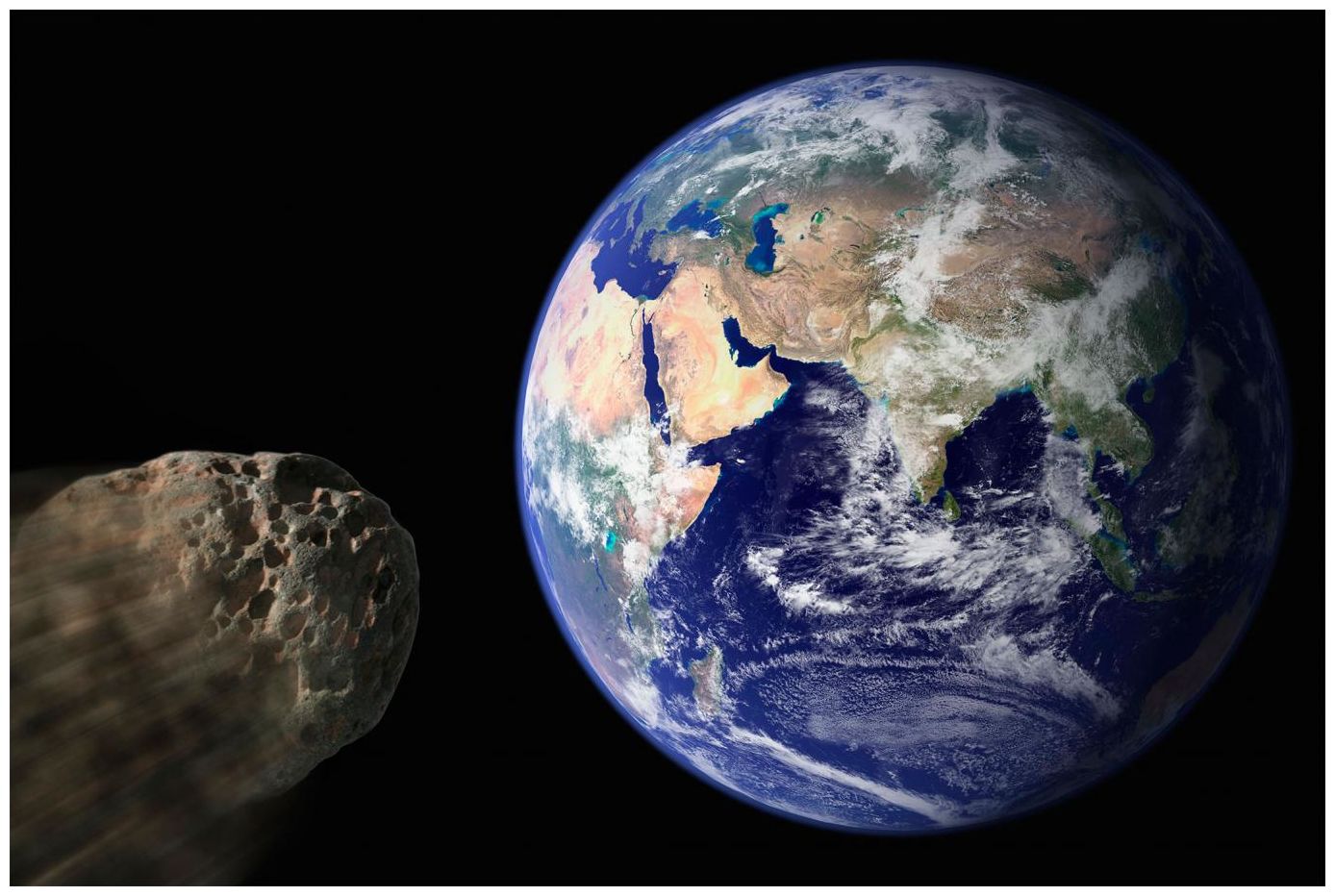
© CorbisAsteroid 2011 UW-158 will pass 1.5 million miles away from Earth.
Earth could be in danger as our galaxy throws out comets that could hurtle towards us and wipe us out, scientists have warned.

Scientists have previously presumed that we are in a relatively safe period for meteor impacts, which are linked with the journey of our sun and its planets, including Earth, through the Milky Way. But some orbits might be more upset than we know, and there is evidence of recent activity, which could mean that we are passing through another meteor shower.

Showers of meteors periodically pass through the area where the Earth is, as gravitational disturbances upset the Oort Cloud, which is a shell of icy objects on the edge of the solar system. They happen on a 26-million year cycle, scientists have said, which coincide with mass extinctions over the last 260-million years.

The most recent shower happened 11 million years ago. But that doesn't mean that the Earth is safe, according to a new study.

Bizarro Earth

Chances of earthquake hitting Los Angeles soon: Guaranteed

LA Faults
© JPLThe Los Angeles area is threaded with many buried faults, some of which have never been mapped. A new study suggests that a magnitude 5.0 or greater earthquake on at least one of these faults is virtually a sure thing in the next few years.
The chance of a moderate-size earthquake striking the Los Angeles area soon is almost guaranteed, if a new study is correct.

The Greater Los Angeles area has a 99.9 percent chance of having an earthquake of magnitude 5.0 or greater in the next two and a half years, thanks to several hidden faults that have built up considerable strain, according to a study published Sept. 30 in the journal Earth and Space Science.

But exactly where this next medium-size temblor could strike is less clear, because any one of the many faults that thread through the area could rupture.

"Identifying specific fault structures most likely to be responsible for future earthquakes for this system of many active faults is often very difficult," Andrea Donnellan, a geologist in the Science Division of NASA's Jet Propulsion Laboratory in Pasadena, California, said in a statement.

Bulb

New finger-sized flashlight uses body heat for power

lumen flashlight
We can't exactly shoot light from our fingertips like we've seen in movies, but a new flashlight is bringing us a step closer.

A new finger-sized flashlight called Lumen uses body heat to power a beam of light. With a minimalist design and no buttons, the aluminum case is designed to effectively store heat.

The flashlight uses a thermoelectric generator, which is a small ceramic bar that produces an electric current when there's a temperature difference between the external environment and a power source, in this case the user's body heat.

The difference between the temperature of a human body, about 98 °F, and the environment, at least 82 °F, is enough to power up a single LED. When the difference between body heat and the outside temperature is larger, excessive power can be stored in a capacitor to power the flashlight when needed.

Comet 2

Civilization-destroying asteroid, discovered two weeks ago, to skim Earth on Halloween

asteroid flys by earth
© NASA
A strikingly spooky asteroid is expected to whizz curiously close to Earth on Halloween, NASA has announced.

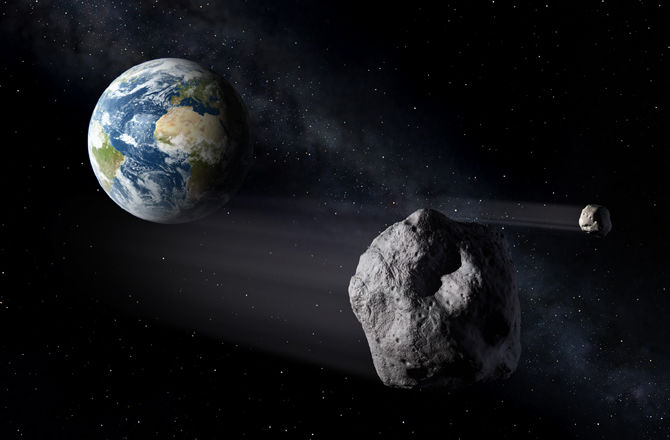
Discovered within the last two weeks, the large asteroid, 2015 TB145, will pass Earth at 1.3 times the moon's distance (approximately 310,000 miles). 2015 TB145′s pass is the closest of any object its size since 2006; not until August 2027 will another large object pass so close to Earth.


Comment: How on God's green Earth could they possibly know that if they only spotted this massive one two weeks ago?? Who is to say another large one won't come out of left-field in a couple of months' time? Sott.net has published dozens of reports of 'newly-discovered close fly-bys of asteroids' in the last couple of years...


2015 TB145′s closest approach will occur at 11:14 a.m. EST on October 31, 2015. According to EarthSky.org, the asteroid will be best observed in the Western Hemisphere during the early morning hours of October 31. Skywatchers will need a telescope to see the asteroid.

"The flyby presents a truly outstanding scientific opportunity to study the physical properties of this object," astronomers write on NASA's website. They also note that the object has been observed to have an "extremely eccentric [...] high inclination orbit."

Despite its eerie timing, the asteroid poses no threat to Earth.

Comment: Speaking of its interesting timing, Halloween has interesting mythological origins:

Witches, Comets and Planetary Cataclysms

The fact that this near-Earth asteroid is guess-timated to be 280-620m (919-2,034 ft) in diameter and was discovered less than a month before it passes the Earth should give everyone pause for concern. Even though this particular asteroid isn't on a collision course with Earth, it could still pose a danger. Especially if it brought friends.