Science & TechnologyS


Bacon

The taste bud map you learned in school is wrong -- tastes are perceived all over the tongue

Taste receptors for salty, sweet, bitter and sour are found all over the tongue.
tongue taste map
Everybody has seen the tongue map - that little diagram of the tongue with different sections neatly cordoned off for different taste receptors. Sweet in the front, salty and sour on the sides and bitter at the back.

It's possibly the most recognizable symbol in the study of taste, but it's wrong. In fact, it was debunked by chemosensory scientists (the folks who study how organs, like the tongue, respond to chemical stimuli) long ago.

The ability to taste sweet, salty, sour and bitter isn't sectioned off to different parts of the tongue. The receptors that pick up these tastes are actually distributed all over. We've known this for a long time.

And yet you probably saw the map in school when you learned about taste. So where did it come from?

Galaxy

Cosmic fist-bumps: Astronomers believe they've found proof of parallel universes

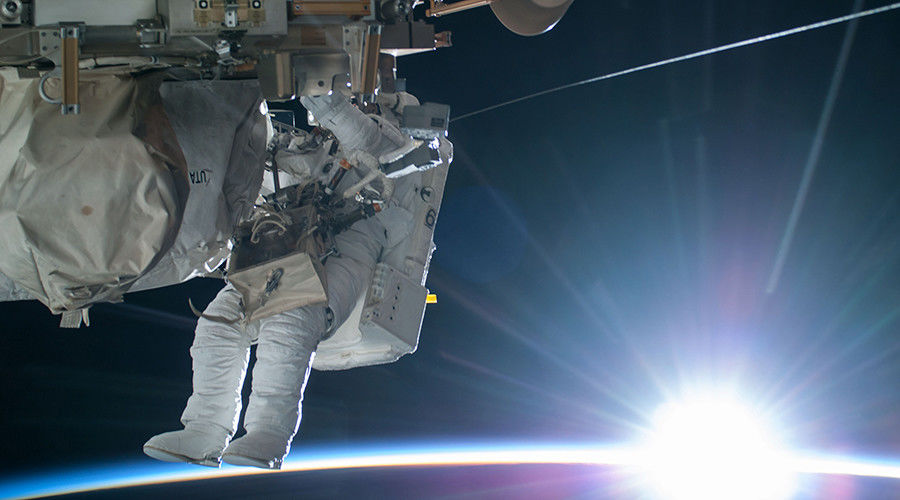
astronaut
© NASA / Reuters
Scientists believe they have found proof of parallel universes, a phenomenon that they have long been theorizing about. Astronomers have detected peculiar bright spots that lead them to think another universe is bumping into our own.

The finding comes from analyses of data of the cosmic microwave background (CMB) - essentially the Big Bang echo left behind - collected by the European Space Agency's Planck Space Telescope.

The scientist behind the research, Ranga-Ram Chary of Pasadena-based California Institute of Technology, has noticed that some light spots in the CMB were glowing 4,500 times brighter than expected.

This made Chary think that it could be a sign of a neighboring universe "leaking" into ours, the New Scientist reported.

Given that modern cosmological theories are speaking of a "multiverse" following the Big Bang some 13.8 billion years ago, such a collision scenario is quite possible.

Comment: For more on the Multiverse see:


Hearts

Dogs (and cats) can love

Neurochemical research has shown that the hormone released when people are in love is released in animals in the same intimate circumstances.

Image
© tramod/flickr
I'm not a dog person. I prefer cats. Cats make you work to have a relationship with them, and I like that. But I have adopted several dogs, caving in to pressure from my kids. The first was Teddy, a rottweiler-chow mix whose bushy hair was cut into a lion mane. Kids loved him, and he grew on me, too. Teddy was probably ten years when we adopted him. Five years later he had multiple organs failing and it was time to put him to sleep.

When I arrived at the vet, he said I could drop him off. I was aghast. No. I needed to stay with Teddy. As the vet prepped the syringe to put him to sleep, I started sobbing. The vet gave me a couple minutes to collect myself and say goodbye. I held Teddy's paw until he died. Honestly, I didn't think I was that attached.

Comment: Cats don't actually ignore us
Your dog really does love you: Scans reveal affection comes from same part of brain as humans


Headphones

Force field of sound creates world's first sonic tractor beam

Image
© YouTube/NPG Press
Just in time for the latest Star Wars saga, a team of physicists have created a working tractor beam. Composed of "acoustic holograms," their device creates a force field out of sounds, one capable of manipulating and moving small objects.

How do you solve a problem like gravity? According to researchers from the Universities of Bristol and Sussex, with 64 miniature loudspeakers.

Eye 2

A new species is evolving — an ultra-successful mix of wolves, coyotes and dogs

Image
Eastern coyote, also known as a coywolf
A new species combining wolves, coyotes and dogs is evolving before scientists' eyes in the eastern United States.

Wolves faced with a diminishing number of potential mates are lowering their standards and mating with other, similar species, reported The Economist.

The interbreeding began up to 200 years ago, as European settlers pushed into southern Ontario and cleared the animal's habitat for farming and killed a large number of the wolves that lived there.

Evil Rays

Still think you have privacy at home? MIT researchers found a way to use WiFi signals to see behind walls

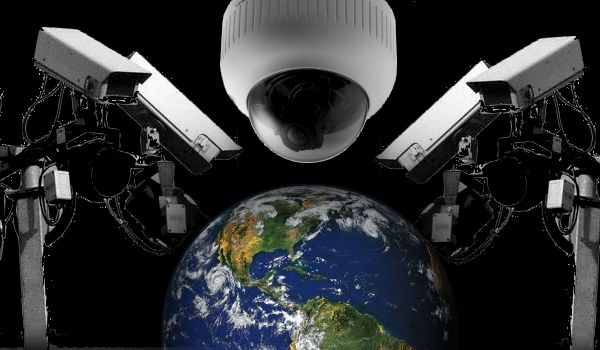
world surveillance
The implications for privacy under a big brother police state are obvious.

Researchers at MIT have come up with a way to use WiFi signals to see behind walls, and map a room in 3-D. By reflecting the signal, it can also locate the movements of people or objects in the room. The Daily Mail reports:
Using a wireless transmitter fitted behind a wall, computer scientists have developed a device that can map a nearby room in 3D while scanning for human bodies.

Using the signals that bounce and reflect off these people, the device creates an accurate silhouette and can even use this silhouette to identify who that person is.

The device is called RF Capture and it was developed by researchers at MIT's Computer Science and Artificial Intelligence Lab (CSAIL).

The RF Capture device transmits wireless signals that travel through a wall and reflect off a person's body back to the device.

[...]

Since only a small number of body parts reflect the signal back at any given point in time, the device monitors how these reflections vary as someone moves and walks.

Comment: A good farmer knows what his livestock is up to at all times. Constant connectivity and smart technology is not benevolently bestowed upon us to make life more convenient. We're being corralled.


Fish

World's most mysterious whale observed for first time

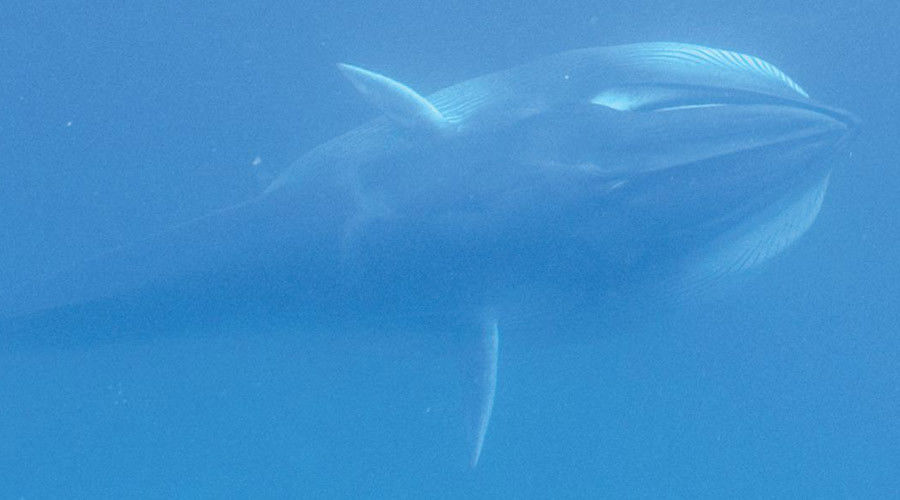
Omura's whale
© rsos.royalsocietypublishing.org Omura's whale
The elusive Omura's whale has been documented for the first time ever by an international group of scientists, over a decade after the mysterious mammal was described as a new species.

Previously, no living Omura's whales had been observed in the wild, according to the study published in the Royal Society Open Space journal.

Researchers confirmed that they are tracing the first-detected living population of Omura's whales.


Salvatore Cerchio, of Woods Hole Oceanographic Institution, along with his colleagues, started their observations eight years ago, and until 2011, their search was in vain.

Green Light

Robo bus: Driverless buses are coming to America

robot bus
© n/a
First, a quiet business park. Next, the world.

Self-driving buses are coming to America. The Bishop Ranch business park in San Ramon, California will be the first place in the U.S. to use French robo-buses to ferry passengers around.

Perhaps the best place for autonomous vehicles to start out is in this kind of training ground, although given the safety record of Google's self-driving cars, the training might be for us humans in getting used to them. It's hard to argue that preset routes and low speeds aren't ideal for an introduction to driverless vehicles, and that's just what the Easymile company specializes in.

Telescope

Halloween is an astronomical holiday derived from the ancient Celtic cross-quarter day

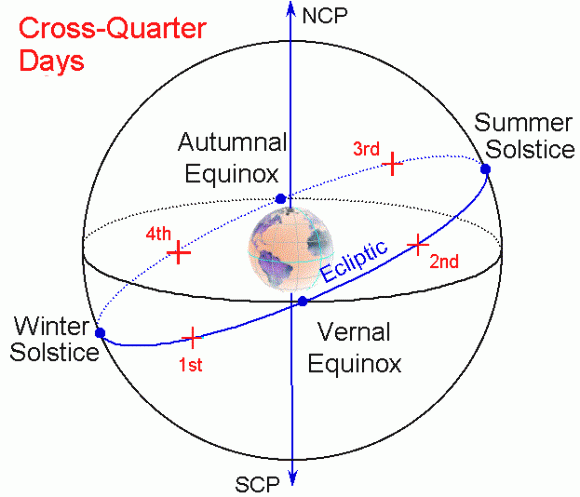
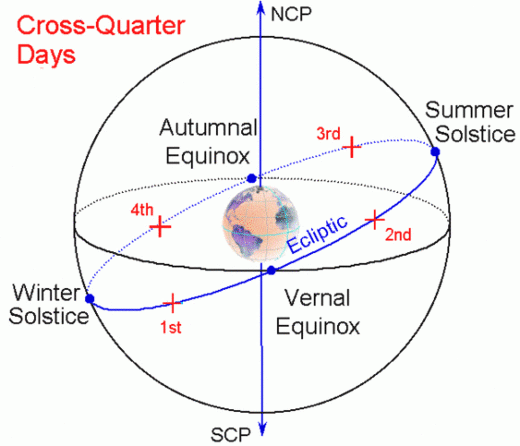
cross-quarter days
© NASAEquinoxes, solstices and cross-quarter days are all hallmarks of Earth’s orbit around the sun. Halloween is the fourth cross-quarter day of the year.
Halloween - short for All Hallows' Eve - is an astronomical holiday. Sure, it's the modern-day descendant from Samhain, a sacred festival of the ancient Celts and Druids in the British Isles. But it's also a cross-quarter day, which is probably why Samhain occurred when it did. Early people were keen observers of the sky. A cross-quarter day is a day more or less midway between an equinox (when the sun sets due west) and a solstice (when the sun sets at its most northern or southern point on the horizon). Halloween - October 31 - is approximately midway point between the autumn equinox and winter solstice, for us in the Northern Hemisphere.

In other words, in traditional astronomy, there are eight major seasonal subdivisions of every year. They include the March and September equinoxes, the June and December solstices, and the intervening four cross-quarter days.

In modern times, the four cross-quarter days are often called Groundhog Day (February 2), May Day (May 1), Lammas (August 1) and Halloween (October 31).

Bizarro Earth

Ozone layer hole now size of Russia & Canada combined, largest known to date

Ozone hole
© NASA / Reuters
The hole in the ozone layer over Antarctica has reached record-breaking levels, and currently covers an area four times the size of Australia, UN scientists have said.

In addition to the global threat to humanity, it poses another, quite real risk to Australia: extra UV radiation and sunburn on the continent where over 45,000 people are expected to die from skin cancer in 2015.

This year, the hole reached 28.2 million square kilometers: four times the size of Australia or the size of Russia and Canada combined.