Science & TechnologyS


2 + 2 = 4

Blindsighted: How some blind people continue to see unconsciously

Image
© Shutterstock
Blindsight might seem like an oxymoron, but scientists have proven this mysterious effect actually exists: sometimes people with brain damage that renders them blind can nevertheless correctly guess the shapes, colors, locations and motions of items, even though they do not consciously see them.

It seems like an otherworldly phenomenon, but researchers are increasingly uncovering the anatomical roots of blindsight in the brain. Such research might one day lead to ways for some people with blindness to make the most of this effect.

Jupiter

Fifth giant planet in the solar system ejected after a close encounter with Jupiter

Jupiter
© NASA
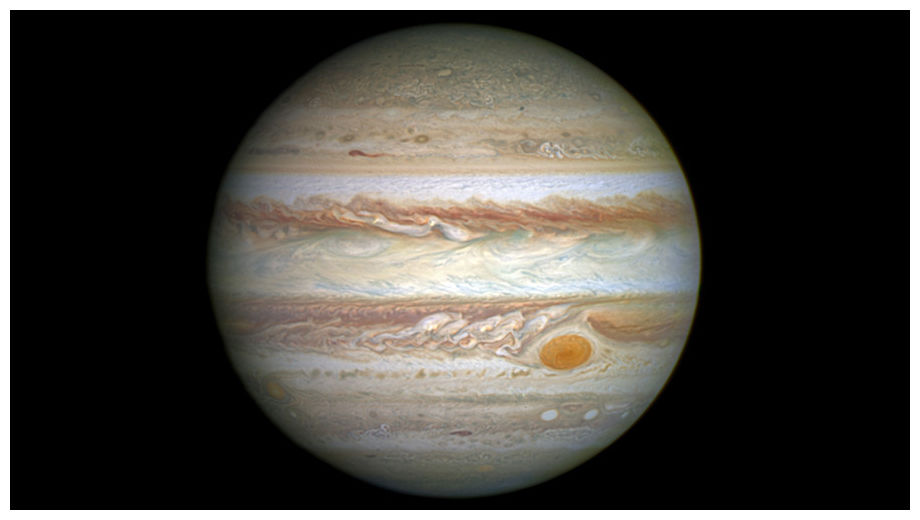
There was a fifth giant planet in the solar system, but it was ejected after a close encounter with Jupiter, a computer model made by Canadian astronomers suggests. They studied the orbits of a Jovian moon for proof.

The dominant scientific view of how our star system came to be as it is now is called the Nice model after the French city, where it was first developed. It is pretty good at explaining most, but not all things. For example, Jupiter is too far from the Sun to fit the model.

One possible explanation is a fifth giant planet in addition to Jupiter, Saturn, Uranus and Neptune, which was ejected after a close encounter about 4 billion years ago. This would have been similar to how probes use planetary gravitational pull to slingshot themselves towards their next destination during interplanetary missions.

Post-It Note

The brain forgets information in order to save energy

brain model
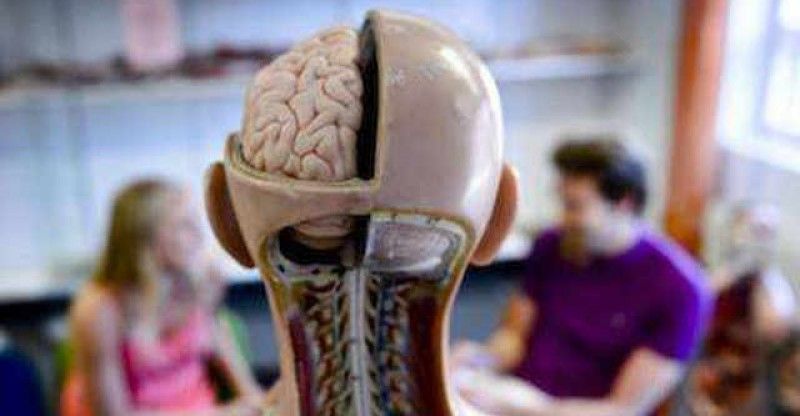
Our brains not only contain learning mechanisms but also forgetting mechanisms that erase "unnecessary" learning. A research group at Lund University in Sweden has now been able to describe one of these mechanisms at the cellular level.

The results explain a theoretical learning phenomenon which has so far been difficult to understand.

The premise is that human or animal subjects can learn to associate a certain tone or light signal with a puff of air to the eye. The air puff makes the subject blink, and eventually they blink as soon as they hear the tone or see the light signal.

Comment: See also:


Blackbox

'Space junk', or something else? A space object called 'WTF' is headed straight for Earth

WTF Junk1
© UnknownA mysterious chunk of space debris called 'WTF' is headed straight for Earth
Space junk is becoming a real problem.

Today, millions of pieces of it huddle within the region of space just beyond our planet.

Sometimes this debris is carefully guided into Earth's atmosphere, where friction between the object and particles in Earth's atmosphere generates extreme heat that completely incinerates the object before it can reach ground.

Other times, however, smaller chunks will randomly fall back to Earth, and scientists have never known when — or what — will be falling toward us on a given day — until now.

For the first time, experts have calculated the exact time and location a piece of space junk will collide with Earth.

Blue Planet

New primate species changes base morphotype of hylobatid-hominid common ancestor

chart new species
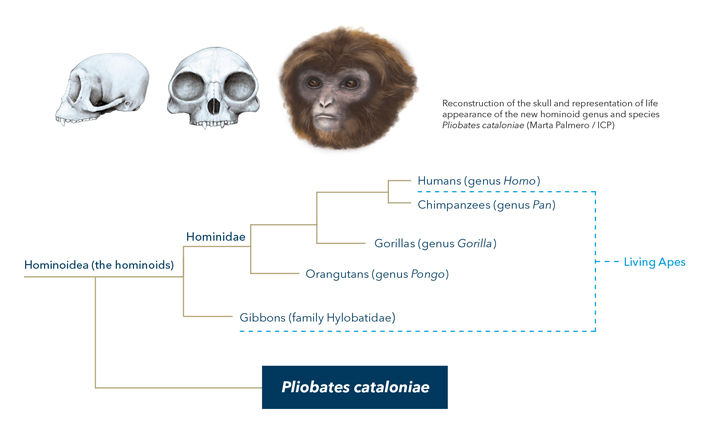
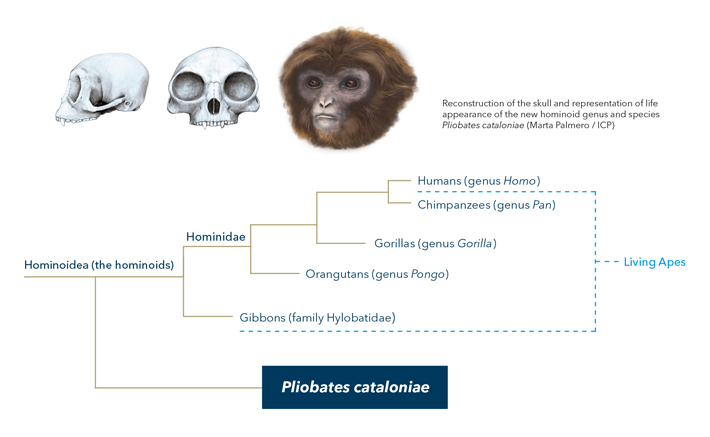
© phys.orgA team of researchers from the George Washington University and the Institut Català de Paleontologia Miquel Crusafont identified a new genus and species of small ape that existed before the evolutionary split of humans/great apes (hominids) and gibbons (the 'lesser apes' or hylobatids). Credit: Marta Palmero / Institut Català de Paleontologia Miquel Crusafont
It lived 11.6 million years ago and precedes the divergence between hominids and hylobatids

Researchers have described the new genus and species, Pliobates cataloniae, based on a skeleton recovered from the landfill of Can Mata (Catalonia, NE Spain). The fossil remains belong to an adult female individual that weighed 4-5 kg and moved through the forest canopy by climbing and suspending below branches. Pliobates has important implications for reconstructing the last common ancestor of hominids and hylobatids. The fossil remains belong to an adult female individual named 'Laia' by her discoverers.

Living hominoids are a group of primates that includes the small-bodied apes (the lesser apes, or gibbons and siamangs, which constitute the family Hylobatidae) and the larger-bodied great apes (orangutans, gorillas and chimpanzees), which, along with humans, belong to the family Hominidae. All extant hominoids share several features, such as the lack of external tail, an orthograde body plan that enables an upright trunk position, and several cranial characteristics. All these features might have been present in the common ancestor of hominids and hylobatids that, according to molecular data, would have lived about 15-20 million years ago.


Comment: More puzzle pieces are coming to light that increase our understanding of the tree of life and our place within it.


Galaxy

Astronomers discover new disk of stars at heart of Milky Way


Astronomers have found a disk of young stars across the center of the Milky Way, a feature previously unknown to scientists.

A team of astronomers have discovered a new component of the Milky Way galaxy - a disk of much younger stars hidden among old stars.

They found the young stars hidden behind thick dust clouds in the galaxy's central bulge, using data gathered by the European Southern Observatory's VISTA telescope between 2010 and 2014.

"The central bulge of the Milky Way is thought to consist of vast numbers of old stars. But the VISTA data has revealed something new - and very young by astronomical standards!" said Istvan Dékány of the Pontificia Universidad Católica de Chile, lead author of the new study, in a news release.

Comet 2

Oxygen found on comet 67P/Churyumov-Gerasimenko

Rosetta oxyzen
© AFP PhotoIn a "big surprise," scientists have found lots of oxygen on Comet 67P/Churyumov–Gerasimenko, captured by the European space probe Rosetta an hour before its closest approach to the sun on August 13, 2015
Stunned scientists announced Wednesday the unexpected discovery of large quantities of oxygen on a comet which streaked past the Sun in August with a European spacecraft in tow.

The find came as a "big surprise" and challenges mainstream theories on the formation of our Solar System, said scientist Andre Bieler of the University of Michigan.

Measurements made by the Rosetta probe suggested that oxygen molecules in the 67P comet's gassy halo must have existed "before or at" its formation, he told journalists.

This may have implications for mankind's understanding of the chemistry involved in the formation of the Solar System some 4.6 billion years ago.

"We believe this oxygen is primordial, which means it is older than our Solar System," said Bieler.

Info

The good viruses that keep ecosystems diverse and balanced

virus
The word "virus" strikes terror into the hearts of most people. It conjures up images of influenza, HIV, Yellow Fever, or Ebola. Of course we worry about these viruses—they bring us disease and sometimes an excruciatingly painful death.

But the 21 viral types that wreak havoc with the human body represent an insignificant fraction of the 100 million viral types on earth. Most viruses are actually vital to our very existence. No-one seems to stick up for the good guys that keep ecosystems diverse and balanced (although I did recently in a TEDx talk in Noosa).

Comment: See also: New study suggests viruses are living entities sharing long evolutionary history with cells


Footprints

Are fingerprints really concrete evidence in criminal trials?

Hand and finger prints public domain
Cutting edge technology or antiquated guess work?
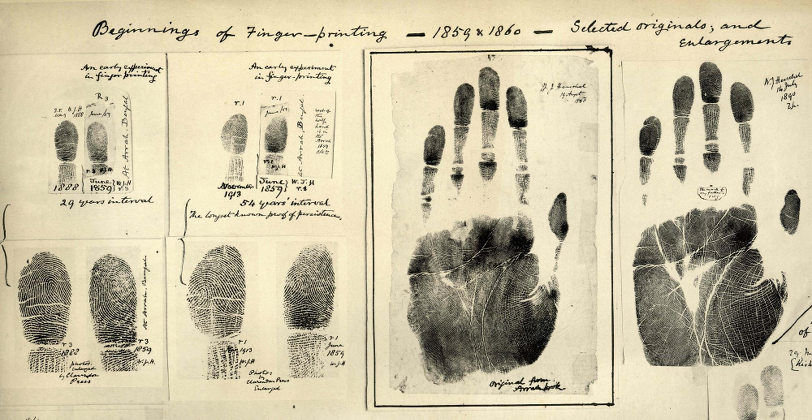
It's a pretty accepted idea that fingerprint evidence is an airtight method of proving that an accused person was at the scene of a crime. However, contrary to what we are told constantly in movies, books, and actual courtrooms; fingerprints are not the judicial bedrock they have been portrayed as. The issue isn't so much that fingerprints themselves are unreliable, but rather that finding a perfect set of fingerprints to compare to a suspect at a crime scene is very rare. As pointed out in the LA Times, there has been doubt about the reliability of fingerprint identification since shortly after it was first used to convict people and that uncertainty has been revived in recent years:

Comment: Fingerprint data is often portrayed as conclusive, rock-solid evidence (even moving into the realm of proof) in film and TV portrayals of criminal trials, but in reality there are far more variables and a much larger gray area than the idea of a simple black and white fingerprint match that proves that the accused is the actual criminal. See also:


Ice Cube

Research suggests mineral surface lightning reactions may provide a way for sustaining life under ice sheets

ice sheet, glacier
© Eddy HillBetween a rock and a hard place.
The ice sheets and glaciers that extend over roughly 11% of the Earth's land mass are home to a surprisingly abundant source of life. Sections of liquid water beneath and inside the ice provide a habitat for a genetically diverse variety of microbes. And studying these organisms gives us some clue what life may have looked like if there were indeed periods of the planet's history when the land was entirely covered in ice for millions of years.

How exactly life managed to survive during these proposed "Snowball Earth" events is still something of a mystery. With the soil trapped under ice for so long, the typical nutrients that microbes eat would have become depleted. But research by my colleagues and I at Bristol University has revealed a mechanism that could have allowed these creatures to free energy from the water itself in the form of hydrogen.