Science & TechnologyS


Magnify

Complex skeletons evolved earlier than realized, fossils suggest

Image
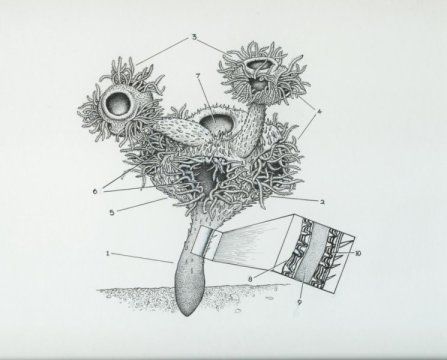
© J. SibbickThis is an image of Namacalathus hermanastes.
The first animals to have complex skeletons existed about 550 million years ago, fossils of a tiny marine creature unearthed in Namibia suggest.

The find is the first to suggest the earliest complex animals on Earth -- which may be related to many of today's animal species -- lived millions of years earlier than was previously known.

Until now, the oldest evidence of complex animals -- which succeeded more primitive creatures that often resembled sponges or coral -- came from the Cambrian Period, which began around 541 million years ago. Scientists had long suspected that complex animals had existed before then but, until now, they had no proof.

Genetic family tree data suggested that complex animals -- known as bilaterians -- evolved prior to the Cambrian Period. The finding suggests that bilaterians may have lived as early as 550 million years ago, during the late Ediacaran Period.

Galaxy

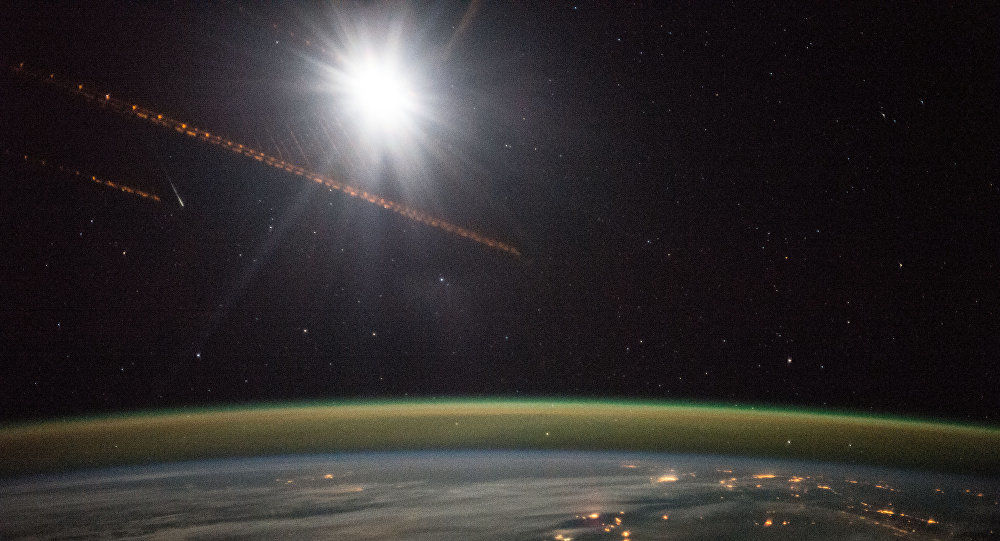
NASA's EM Drive thruster goes against traditional physics, seems to actually work

orbiting earth in space
© Flickr/ NASA Johnson
For years, NASA has been working on an engine capable of providing tons of thrust without consuming fuel. It now looks like that pursuit is bearing fruit: the second-generation EmDrive upgrade gives necessary "anomalous thrust signals" while its main characteristics have been solidly improved, Paul March, a researcher participating in the project, wrote on the online NASA Space Flight forum.

A peer-reviewed article on the successes of the EmDrive project is yet to be published, but the online "leak" clearly indicates humanity may be a step closer to a brand-new range of speeds.

Cloud Precipitation

Magic mushrooms? Scientist find that fungi can make it rain

mushrooms
It can be thoroughly refreshing to step out of the busy "A to B" lifestyle and simply admire the world around us. Nature operates like a complex map of biodiversity and natural laws — so complex, in fact, that after thousands of years mankind is still struggling to understand how it all works. But this great mystery and the insatiable human desire for understanding makes new findings in the natural world all the more joyous.

Mushrooms are often associated with two things: psychedelic experiences and pizza toppings. However, Plos One published a study last week implying that mushrooms may have a direct link to rainfall.

Shoe

Study from Boston University finds brain has internal 'odometer' and 'stopwatch'

brain neurons
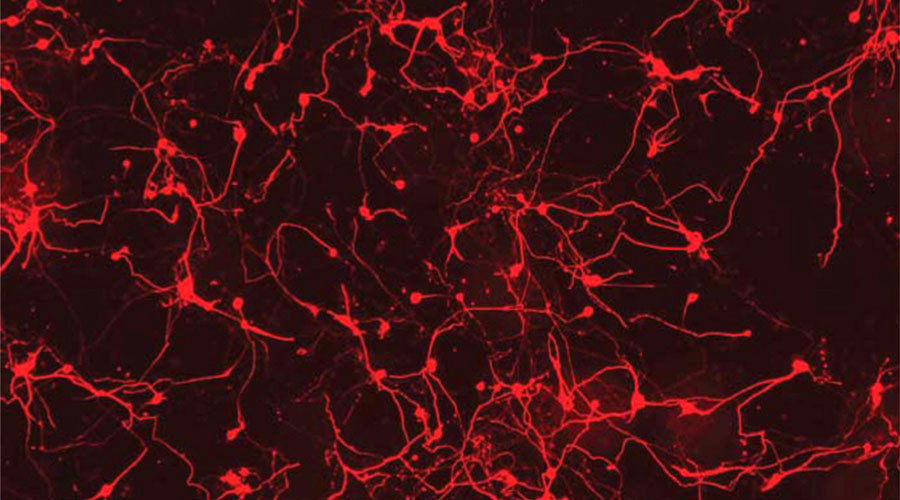
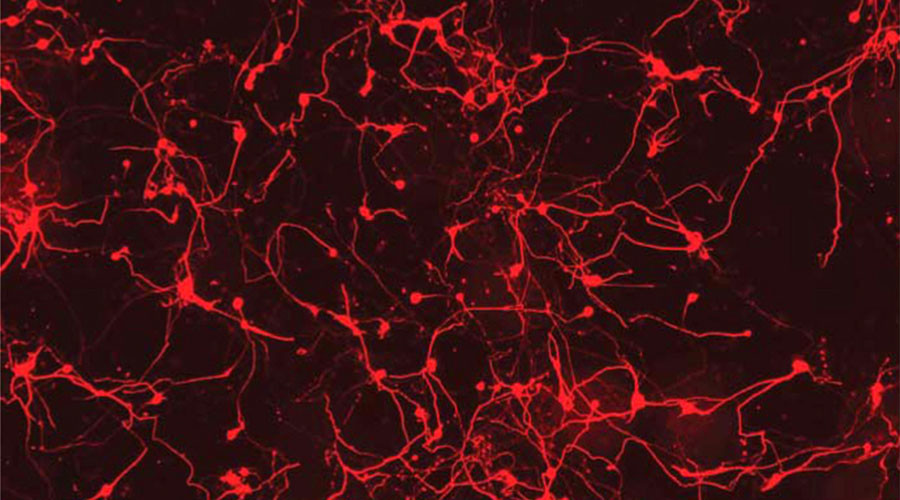
© Nature/ReutersA Princeton University and National Institutes of Health study suggests that our response to stressful situations originates from structural changes in our brain that allows us to adapt to turmoil. Adult rats with disruptions in their social hierarchy produced far fewer new neurons in the hippocampus, the part of the brain responsible for certain types of memory and stress regulation. They also reacted to the disruption by favoring the company of familiar rats. Their behavior manifested six weeks after social disruption, during which time brain-cell growth, or neurogenesis, had decreased by 50 percent. The photo shows adult hippocampal neurons that are less than two weeks old.
The brain has its own 'odometer' and 'stopwatch' neurons, a new research by Boston University scientists says. These findings could help battle mental and cognitive disorders like Alzheimer's disease.

The study involves rats running on treadmill, and focuses on specific neurons called grid cells which support navigation in time and space, even without visual landmarks and the optic flow.

Until now, there was no direct evidence demonstrating that the grid cells help the brain determine the distance and time passed.


To prove the contrary, researchers put rats on treadmills and recorded the activity of grid cells, keeping either distance or duration of running unchanged, and only varying the speed.

As a result, 92% of grid cells in rats emitted signals at specific moments: for instance, one cell would fire 8 seconds into the run, not taking into account speed or distance covered, and another cell would emit a signal every 400 cm, not depending on speed or duration of the run.

50 percent of the cells were affected by distance, another half by time, and around 40 percent by both factors.

Mars

NASA announces new key findings on Mars' lack of atmosphere

mars water nasa
© NASA Goddard / YouTube
In the latest in a series of announcements about Mars, NASA delivered new findings on the Red Planet's atmosphere over a live stream on Thursday. The agency has said that Mars was once was warm and wet, but had its atmosphere stripped away by solar wind.

NASA's Mars Atmosphere and Volatile Evolution (MAVEN) spacecraft began orbiting Mars for the purpose of examining its atmosphere in unprecedented detail. At 2 p.m. ET on Thursday, NASA launched a live stream in which they revealed new findings from MAVEN and took questions from social media and by phone call.

The scientists revealed that solar winds created climate change at the red planet leading to "the erosion of Mars' atmosphere."

MAVEN has been orbiting Mars since 2014, and it was designed to understand the changes in climate, according to Bruce Jakosky, MAVEN Principal Investigator.

Chalkboard

Corruption of science: Nearly all scientific papers controlled by same six corporations

Image
When children grow up dreaming of becoming scientists they have the purest of aspirations and if they were left to pursue their own studies they would be able to accomplish the unimaginable. Unfortunately, to become a member of the scientific community one has to jump through many bureaucratic hoops until they are eventually inducted into an establishment which is tightly regulated and directed by warmongers and control freak aristocrats.

People spend half of their lives taking classes, passing tests and filling out applications in hopes that one day they can become a scientist and cure a disease. After years of struggling to make the cut they realize that there is no funding for their charitable projects and if they dare step outside of the established guidelines they will be exiled from the scientific community.

Additionally, even when legitimate studies are done, they hardly ever reach the public or get taken seriously because most of the publishers that are considered "reputable" are controlled by just a few corporations that heavily censor the information that gets released.

A recent study conducted by Professor Vincent Lariviere from the University of Montreal's School of Library and Information Science, and a number of other researchers, found that nearly all major scientific papers are controlled by the same six corporations.

"Overall, the major publishers control more than half of the market of scientific papers both in the natural and medical sciences and in the social sciences and humanities. Furthermore, these large commercial publishers have huge sales, with profit margins of nearly 40%. While it is true that publishers have historically played a vital role in the dissemination of scientific knowledge in the print era, it is questionable whether they are still necessary in today's digital era," Lariviere said.

Comment: See also: The Corruption of Science in America


Telescope

Scientists discover distant sunless planet with molten iron clouds

Iron planet
© MPIAV.Ch.Quetz/University of Edinburgh/PA An artist's impression of PSO J318.5-22, a sunless wandering object 75 light years away from Earth
The technique used to discover the clouds could one day be used to predict the chances of life existing on distant Earth-like planets

Thick clouds made of droplets of molten iron have been discovered on a bizarre sunless planet 75 light years from Earth.

The planet-like object, which was discovered in 2013 and given the catchy name PSO J318.5-22, was already considered one of the stranger bodies in the sky because it does not appear to orbit around a star.

Now, after the latest discovery by astronomers from the University of Edinburgh, the strange planet has become even stranger.

Using a telescope in Chile, the astronomers discovered that the lonely world is covered in layers of cloud, which are made up of molten iron and super-hot dust.

Comment: For more on PSO J318.5-22 see: Lonely planet without a star discovered wandering our galaxy


Nuke

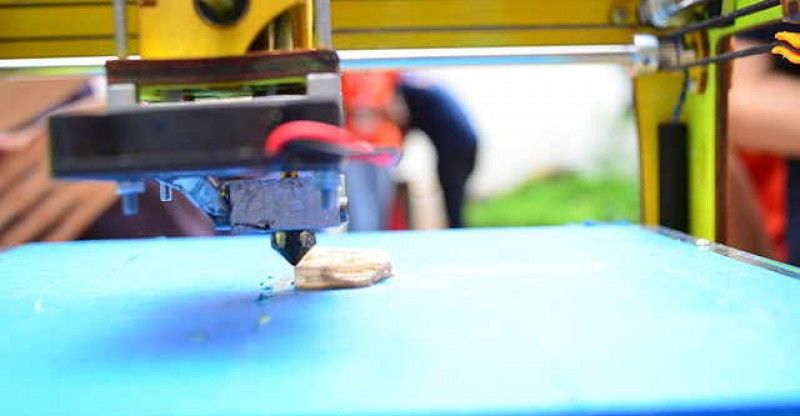
How toxic are 3D printers?

3d printer
Parts produced by some commercial 3D printers are toxic to certain fish embryos, researchers at the University of California, Riverside have found. Their results have raised questions about how to dispose of parts and waste materials from 3D printers.

Said William Grover, an assistant professor of bioengineering in the Bourns College of Engineering:
"These 3D printers are like tiny factories in a box. We regulate factories. We would never bring one into our home. Yet, we are starting to bring these 3D printers into our homes like they are toasters."

Comet 2

New Comet: C/2015 V2 (JOHNSON)

CBET nr. 4161, issued on 2015, November 05, announces the discovery of a comet (magnitude ~17.1) by J. A. Johnson on CCD images obtained with the Catalina Sky Survey's 0.68-m Schmidt telescope on Nov. 3.5 UT. The new comet has been designated C/2015 V2 (JOHNSON).

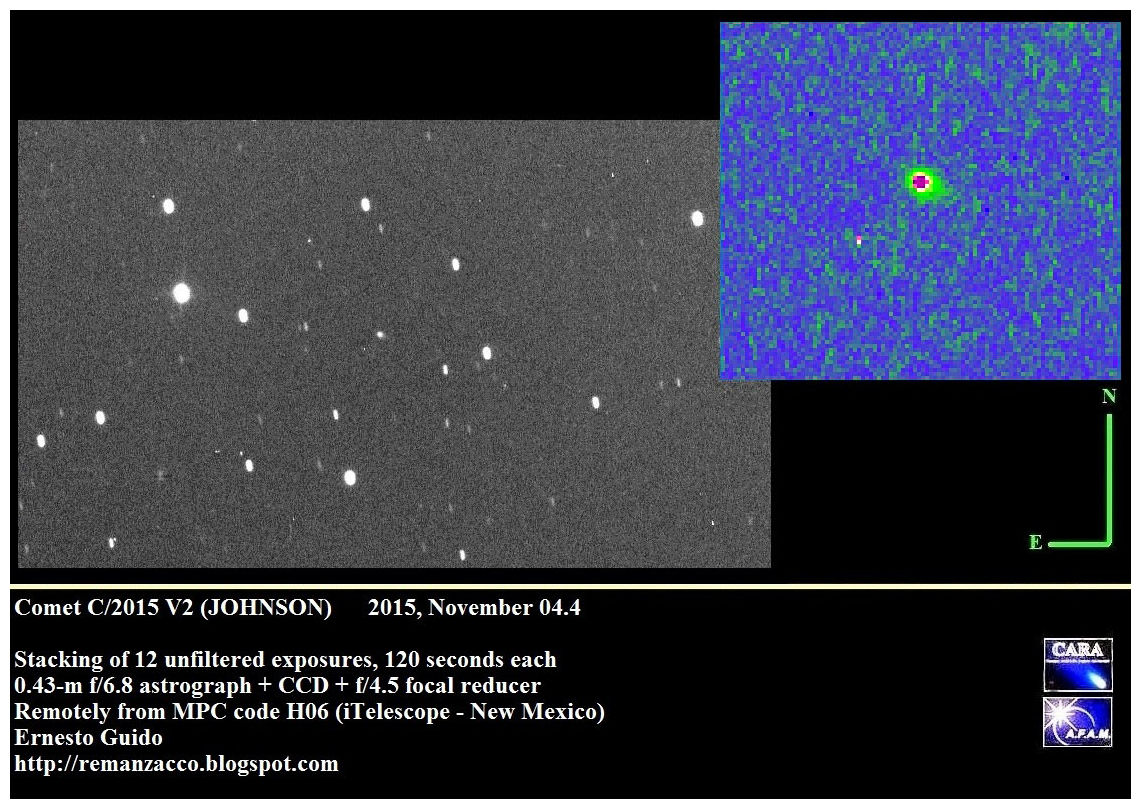
I performed follow-up measurements of this object, while it was still on the neocp. Stacking of 12 unfiltered exposures, 120 seconds each, obtained remotely on 2015, November 04.4 from H06 (iTelescope network - New Mexico) through a 0.43-m f/6.8 astrograph + CCD + f/4.5 focal reducer, shows that this object is a comet: compact coma nearly 10 arcsec in diameter elongated toward PA 230.

My confirmation image (click on it for a bigger version)
Comet  C/2015 V2 Johnson
© Remanzacco Observatory

Magic Wand

Antimatter not so different after all

Image
© Brookhaven National LaboratoryScientists working at Brookhaven National Laboratory, including physicists at Rice University, have announced the first measurements of the attractive force between antiprotons. The discovery gives physicists new ways to look at the forces that bind matter and antimatter.
Due to the diligence of a Rice University student and his calculations, humanity now knows a little more about the universe.

Kefeng Xin, a graduate student at Rice, is one of a handful of primary authors who revealed evidence this week that the attractive force between antiprotons is similar to that between protons -- and measured it.

Specifically, the team measured two important parameters: the scattering length and the effective range of interaction between two antiprotons. This gave scientists a fundamental new way to understand the force that holds together the nuclei in antimatter and how this compares to matter.

"This is about the subtle difference in the way matter and antimatter interact with each other," said Rice physicist Frank Geurts.