Science & TechnologyS


Satellite

Event Horizon Telescope reveals magnetic fields at Milky Way's central black hole

Black Hole
© M. Weiss/CfAIn this artist's conception, the black hole at the center of our galaxy is surrounded by a hot disk of accreting material. Blue lines trace magnetic fields. The Event Horizon Telescope has measured those magnetic fields for the first time with a resolution six times the size of the event horizon (6 Schwarzschild radii). It found the fields in the disk to be disorderly, with jumbled loops and whorls resembling intertwined spaghetti. In contrast, other regions showed a much more organized pattern, possibly in the region where jets (shown by the narrow yellow streamer) would be generated.
Most people think of black holes as giant vacuum cleaners sucking in everything that gets too close. But the supermassive black holes at the centers of galaxies are more like cosmic engines, converting energy from infalling matter into intense radiation that can outshine the combined light from all surrounding stars.

If the black hole is spinning, it can generate strong jets that blast across thousands of light-years and shape entire galaxies. These black hole engines are thought to be powered by magnetic fields. For the first time, astronomers have detected magnetic fields just outside the event horizon of the black hole at the center of our Milky Way galaxy.

"Understanding these magnetic fields is critical. Nobody has been able to resolve magnetic fields near the event horizon until now," says lead author Michael Johnson of the Harvard-Smithsonian Center for Astrophysics (CfA). The results appear in the Dec. 4th issue of the journal Science.

"These magnetic fields have been predicted to exist, but no one has seen them before. Our data puts decades of theoretical work on solid observational ground," adds principal investigator Shep Doeleman (CfA/MIT), who is assistant director of MIT's Haystack Observatory.

Smoking

Smoking may be in your genes

Smoking
© Alexander Klein/AFP
Tried quitting smoking but just can't seem to shake off the habit? Don't worry, it may not simply be weak willpower - it could be down to your genetic make-up.

A research study indicates a third of people from the Caucasian "racial" group who smoke have gene variations that make it harder for them to give up. The first thing from this study is the somewhat controversial science of dividing humankind into three racial groups: Caucasoid, Mongoloid, and Negroid.

The validity of this is questioned by many scientists (including this journalist); nonetheless, it remains a common anthropological classification and is the term used by the researchers of the new study. The researchers hail from the Zhejiang University School of Medicine in Hangzhou, China.

Putting this issue to one side, what the research seems to be saying is that for a sizable proportion of the population, there is a genetic factor that makes it harder for them to quit smoking.

Info

Research: Genetic material from ancient viral infections is critical to human development

blood
© Unknown
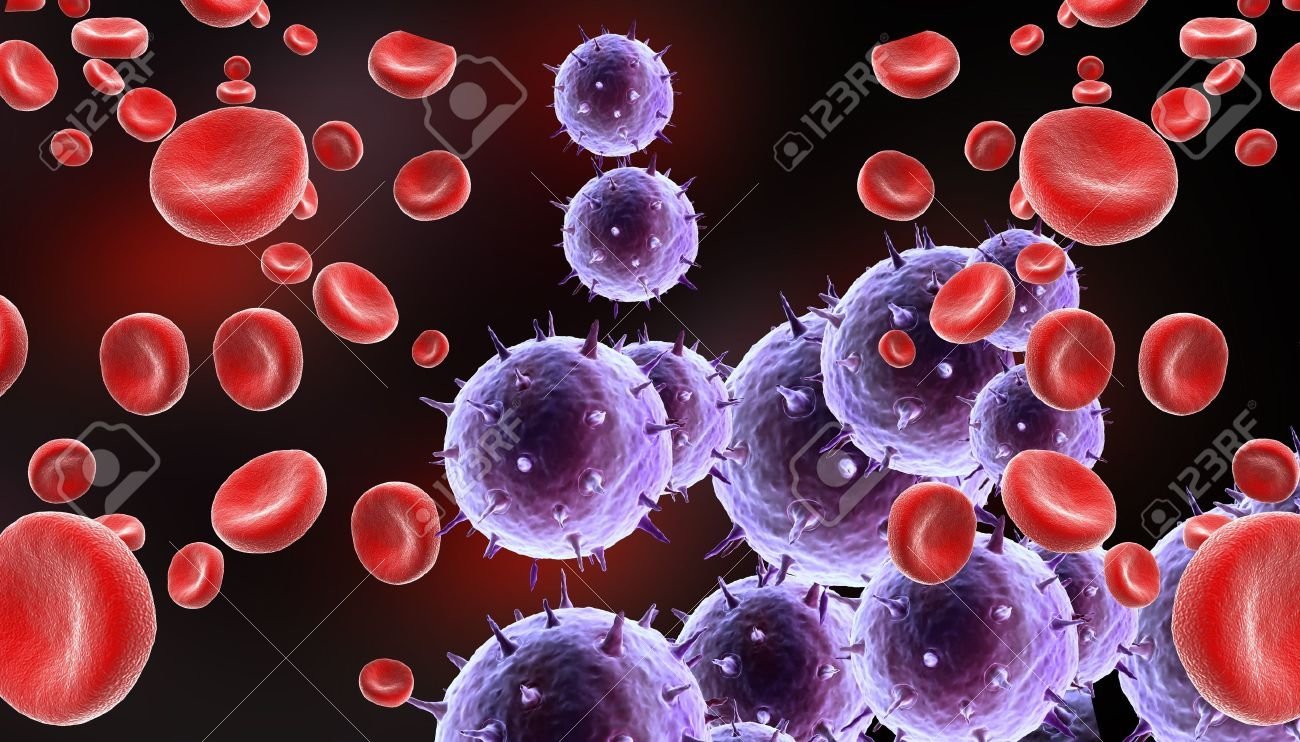
Genetic material from ancient viral infections is critical to human development, according to researchers at the Stanford University School of Medicine.

They've identified several noncoding RNA molecules of viral origins that are necessary for a fertilized human egg to acquire the ability in early development to become all the cells and tissues of the body. Blocking the production of this RNA molecule stops development in its tracks, they found.

The discovery comes on the heels of a Stanford study earlier this year showing that early human embryos are packed full of what appear to be viral particles arising from similar left-behind genetic material.

"We're starting to accumulate evidence that these viral sequences, which originally may have threatened the survival of our species, were co-opted by our genomes for their own benefit," said Vittorio Sebastiano, PhD, an assistant professor of obstetrics and gynecology. "In this manner, they may even have contributed species-specific characteristics and fundamental cell processes, even in humans."

Comment:


Magnify

Cobwebs contain DNA of spiders and their prey

Spider and prey
© Scott CamazineShown is one of the web-spinning black widows used in the study alongside its prey, a house cricket.
You may want to think twice before vacuuming up any pesky cobwebs you find around your home — these messy spider lairs may contain valuable information (valuable to scientists, that is).

A spider's sticky web contains traces of the critter's DNA, as well as the DNA of whatever prey that was unlucky enough to get stuck in the web, according to a new study, which found that these tiny samples of DNA can be amplified and sequenced in a lab. In other words, an empty spider web isn't a mystery; it's a clue that can tell scientists what kind of spider built the web and what prey it snagged in its trap.

Knowing exactly which species of spider built a web in a certain area, as well as knowing what that spider feasted on, is important information for researchers in a variety of fields — from conservation ecology to pest management, said study lead author Charles C.Y. Xu, a graduate student in the Erasmus Mundus Master Programme (MEME) in evolutionary biology, a joint program hosted by four European universities and Harvard University in the United States.

Magnify

First language wires brain for later language-learning

brain image
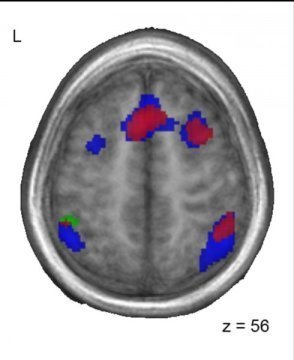
© Lara PierceImage shows similar patterns of brain activity between Chinese-French bilinguals (red) and adoptees (blue) when they perform a task involving French language sounds.
You may believe that you have forgotten the Chinese you spoke as a child, but your brain hasn't. Moreover, that "forgotten" first language may well influence what goes on in your brain when you speak English or French today.

In a paper published today in Nature Communications, researchers from McGill University and the Montreal Neurological Institute describe their discovery that even brief, early exposure to a language influences how the brain processes sounds from a second language later in life. Even when the first language learned is no longer spoken.

It is an important finding because this research tells scientists both about how the brain becomes wired for language, but also about how that hardwiring can change and adapt over time in response to new language environments. The research has implications for our understanding of how brain plasticity functions, and may also be important information about creating educational practices geared to different types of learners.

Magnify

Watching TV slows your brain

Man watching TV in his underpants
© iStockWatching extended amounts of TV might be linked to cognitive decline.
Sitting for prolonged periods of time and not being physically active is known to have a negative impact on health. For the first time, its effect on cognitive performance in young adults has also been investigated.

New research published in JAMA Psychiatry followed individuals for 25 years, charting their TV-watching schedule and exercise regimen.

Scientists looking at long-term health have long been worried about the ramifications of an increasingly sedentary lifestyle and the rise of screen-based activities.

The health implications of a sedentary lifestyle are known to include a higher risk of cardiovascular disease, certain types of cancer, type 2 diabetes and obesity.

Physically active people, on the other hand, are likely to live longer and are less inclined to suffer from depression.

Telescope

Largest radio telescope being built in China

Aperture Spherical Telescope_1
© Getty ImagesIt would take a full 40 minutes for the average person to walk around the telescope.
China is in the final stages of building the world's largest-ever radio telescope, which will give Beijing a leading role in space research and the hunt for extra-terrestrials.

With a dish the size of 30 football pitches, the telescope will scan for signs of life as far as tens of billions of light years away. It will be able to pick up radio signals distant galaxies and solar systems, and also hunt for future sources of energy like natural hydrogen.

"A radio telescope is like a sensitive ear, listening to tell meaningful radio messages from white noise in the universe," said Nan Rendong, the chief scientist at the project, known officially as the 500 Metre Aperture Spherical Telescope.

"It is like identifying the sound of cicadas in a thunderstorm."

Work on the telescope began in 2011 and is to be finished by September 2016. It will be substantially larger than the world's existing biggest star-gazer, the Arecibo Telescope in Puerto Rico, which was the setting for a secret electro-magnetic weapon in the 1995 James Bond film GoldenEye.

The telescope's home is in a rock basin in Pingtang County in south-west China's Guizhou Province, specially chosen for the natural recess it provides to protect the telescope from the elements. The basin's porous rock drains rainwater away quickly, while its distance from nearby towns ensures a high degree of "radio silence".

Info

China eyes human replication

Human Replication
© AFP Photo/Boyalife GroupIn the factory's pipeline are thoroughbred racehorses, as well as pet and police dogs, specialised in searching and sniffing.
The Chinese scientist behind the world's biggest cloning factory has technology advanced enough to replicate humans, he told AFP, and is only holding off for fear of the public reaction. Boyalife Group and its partners are building the giant plant in the northern Chinese port of Tianjin, where it is due to go into production within the next seven months and aims for an output of one million cloned cows a year by 2020.

But cattle are only the beginning of chief executive Xu Xiaochun's ambitions. In the factory pipeline are also thoroughbred racehorses, as well as pet and police dogs, specialised in searching and sniffing. Boyalife is already working with its South Korean partner Sooam and the Chinese Academy of Sciences to improve primate cloning capacity to create better test animals for disease research. And it is a short biological step from monkeys to humans -- potentially raising a host of moral and ethical controversies.

"The technology is already there," Xu said. "If this is allowed, I don't think there are other companies better than Boyalife that make better technology."

The firm does not currently engage in human cloning activities, Xu said, adding that it has to be "self-restrained" because of possible adverse reaction. But social values can change, he pointed out, citing changing views of homosexuality and suggesting that in time humans could have more choices about their own reproduction.

"Unfortunately, currently, the only way to have a child is to have it be half its mum, half its dad," he said.

"Maybe in the future you have three choices instead of one," he went on. "You either have fifty-fifty, or you have a choice of having the genetics 100 percent from Daddy or 100 percent from Mummy. This is only a choice."

Xu, 44, went to university in Canada and the US, and has previously worked for US pharmaceutical giant Pfizer, and in drug development.

Beaker

Welcome to the Matrix: Chinese scientist says technology is ready to replicate humans

cloning
© Stringer / Reuters
The Chinese scientist who led the development of the world's first cloning factory says he is now ready to replicate humans. His only fear is that the society is not ready to accept this, he told AFP.

The giant cloning facility is set to open within the next seven months, and plans to be cloning 1 million cows a year by 2020. Other animals to be cloned include racehorses and police dogs.

"Everything in the supermarket looks good - it's almost all shiny, good-looking, and uniformly shaped. For animals, we weren't able to do that in the past. But with our cloning factory, we choose to do so now," CEO Xu Xiaochun told AFP.

Comment: Human Cloning? Stem cell advance reignites ethics debate


Satellite

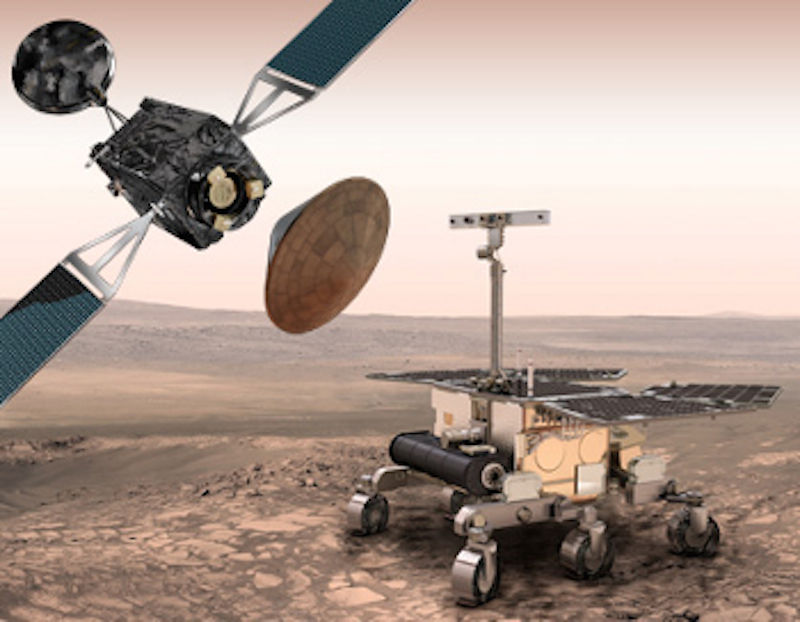
ExoMars to leave Europe for launch site in Kazakhstan

ExoMars
© exploration.esa.intDouble robotic exploration of Mars.
The two ExoMars spacecraft of the 2016 mission are being prepared for shipping to the Baikonur Cosmodrome in Kazakhstan ahead of their launch in March.
A joint endeavour with Russia's Roscosmos space agency, ExoMars comprises two missions. The Trace Gas Orbiter (TGO) and Schiaparelli make up the 2016 mission, while the 2018 mission will combine a rover and a surface science platform. Both missions will be launched on Russian Proton rockets from Baikonur.
TGO and Schiaparelli are undergoing final preparations at Thales Alenia Space in Cannes, France, where they were on display for media to view for the last time before they leave Europe. They will be shipped separately in the middle of next month, arriving at the cosmodrome on 21 and 23 December, respectively.

"It's been a long road for ExoMars to reach this point, but we are now ready to launch in spring next year," says Alvaro Gimenez, ESA Director of Science and Robotic Exploration. "We are about to begin a new era of Mars exploration for Europe and our Russian partners." Sergey Saveliev, Deputy General Director of Roscosmos, says: "ExoMars is a unique example of the Russian-European cooperation in deep-space exploration.

The first ExoMars is scheduled for launch on 14 March, at the start of a launch window that remains open until 25 March. After a cruise of almost seven months to Mars, Schiaparelli will separate from TGO on 16 October for its entry, descent and landing in the Meridani Planum region on 19 October.

Comment: Perhaps the "Final Frontier" is the final chance for mankind to cooperate and come together. It is not surprising that Mars, as well as Earth, is displaying a distribution of methane (an indicator of active biological and/or geological processes) at this point in time, most likely for the same reason...the cosmic changes afoot.