Science & TechnologyS


Telescope

A "ghost from the past" recalls the infancy of the Milky Way

Milky Way arcs
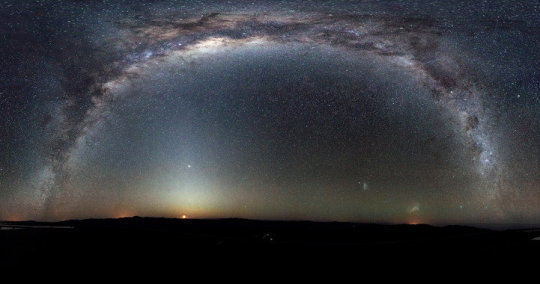
© ESO/H.H. HeyerThe Milky Way arcs into a panorama in the southern sky, taken from the Paranal Observatory, Chile.
When our galaxy was born, around 13 billion years ago, a plethora of clusters containing millions of stars emerged. But over time, they have been disappearing. However, hidden behind younger stars that were formed later, some old and dying star clusters remain, such as the so-called E 3. European astronomers have now studied this testimony to the beginnings of our galaxy.

Globular clusters are spherical-shaped or globular stellar groupings -- hence its name- which can contain millions of stars. There are about 200 of them in the Milky Way, but few are as intriguing to astronomers as the E 3 cluster.

It is situated around 30,000 light years away, in the southern constellation of Chameleon. A team of Spanish and Italian astronomers have named it "a ghost from the Milky Way's past" in an article published recently in the Astronomy & Astrophysics journal.

Robot

Military-funded AI that learns as fast as a human

Terminator
© HD Wallpapers
Today, it recognizes handwriting; tomorrow, it may vastly improve the military's surveillance and targeting efforts.

A computer program, funded in large part by the U.S. military, has displayed the ability to learn and generate new ideas as quickly and accurately as can a human. While the scope of the research was limited to understanding handwritten characters, the breakthrough could have big consequences for military's ability to collect, analyze and act on image data, according to the researchers and military scientists. That, in turn, could lead to far more capable drones, far faster intelligence collection, and far swifter targeting through artificial intelligence.You could be forgiven for being surprised that computers are only now catching up to humans in their ability to learn.

Every day, we are reminded that computers can process information of enormous volume at the speed of light, while we are reliant on slow, chemical synaptic connections. But take the simple task of recognizing an object: a face. Facebook's DeepFace program can recognize faces about as well a human, but in order to do that, it had to learn from a dataset of more than 4 million images of 4,000 faces. Humans, generally speaking, have the ability to remember a face after just one encounter. We learn after "one shot," so to speak.

In their paper, "Human-level Concept Learning Through Probabilistic Program Induction," published today in the journal Science, Brenden M. Lake, Ruslan Salakhutdinov, and Joshua B. Tenenbaum, present a model that they call the Bayesian Program Learning framework. BPL, they write, can classify objects and generate concepts about them using a tiny amount of data — one single instance.

To test it, they showed several people —and BPL — 20 handwritten letters from 10 different alphabets, then asked them to match the letter to the same character written by someone else. BPL scored 97%, about as well as the humans and far better than other algorithms. For comparison, a deep (convolutional) learning model scored about 77%, while a model t designed for "one-shot" learning reached 92% — still around twice the error rate of humans and BPL.

BPL also passed a visual form of the Turing Test by drawing letters that most humans couldn't distinguish from a human's handwriting. (Named after British mathematician Alan Turing, a Turing Test challenges an program's ability to produce an intellectual product — teletype communication in the most traditional sense — that is indistinguishable from what a human could produce.)

Magnify

Study uncovers influence of Earth's history on the dawn of modern birds

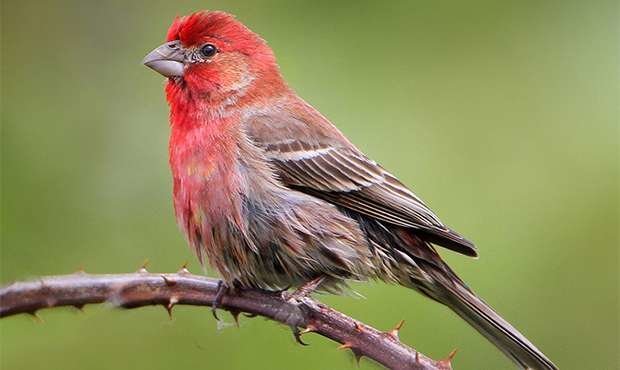
House finchnigel
© Wikimedia CommonsHouse finchnigel.
New research led by the American Museum of Natural History reveals that the evolution of modern birds was greatly shaped by the history of our planet's geography and climate.

The DNA-based work, published today in the journal Science Advances, finds that birds arose in what is now South America around 90 million years ago, and radiated extensively around the time of the Cretaceous-Paleogene extinction event that killed off the non-avian dinosaurs. The new research suggests that birds in South America survived this event and then started moving to other parts of the world via multiple land bridges while diversifying during periods of global cooling.

"Modern birds are the most diverse group of terrestrial vertebrates in terms of species richness and global distribution, but we still don't fully understand their large-scale evolutionary history," said Joel Cracraft, a curator in the Museum's Department of Ornithology and co-author of the paper. "It's a difficult problem to solve because we have very large gaps in the fossil record. This is the first quantitative analysis estimating where birds might have arisen, based on the best phylogenetic hypothesis that we have today."

Cracraft and lead author Santiago Claramunt, a research associate in the Museum's Department of Ornithology, analyzed DNA sequences for most modern bird families with information from 130 fossil birds to generate a new evolutionary time tree.

Sherlock

Volcanic event caused ice age during Jurassic Period

Iceberg
© Representational Image/IStock
Pioneering new research has shed new light on the causes behind an 'ice-age' that took place on Earth around 170 million years ago.

An international team of experts, including researchers from the Camborne School of Mines, have found evidence of a large and abrupt cooling of the Earth's temperature during the Jurassic Period, which lasted millions of years.

The scientists found that the cooling coincided with a large-scale volcanic event -- called the North Sea Dome -- which restricted the flow of ocean water and the associated heat that it carried from the equator towards the North Pole region.

The team suggest that it is this volcanic event, preventing the ocean flow, rather than a change in CO2 in the atmosphere (which causes today's climate change), that led to an extended Ice age in a period more synonymous with very warm conditions.

The research appears in scientific journal, Nature Communications, on Friday, December 11 2015.

Blue Planet

The microscopic beauty of a water splatter

Water drop under microscope
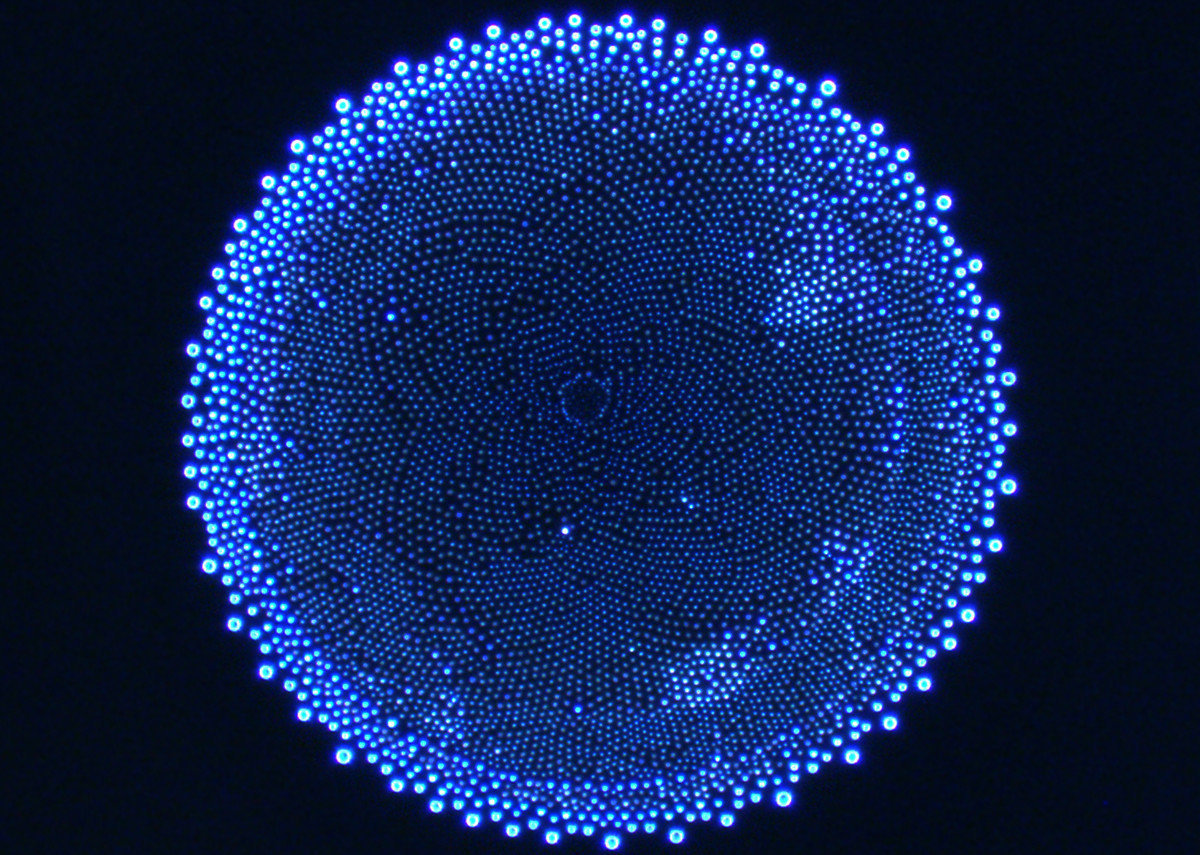
© Devin Brown/Georgia Tech Institute for Electronics and NanotechnologyWater drop under microscope. Notice the fractal pattern.
This striking picture of drying water droplets is actually a mistake, says Devin Brown, a research engineer at Georgia Tech's Institute for Electronics and Nanotechnology.

One day while he was etching microscopic patterns on a silicon chip with an electron beam, he noticed an accidental splatter of water only half a millimeter wide outside his target area. Intrigued, he decided to photograph it through an optical microscope. "It was just a defect at the edge of the sample that was interesting," says Brown, who was working on new nanofabrication techniques when he took the photo.

The accidental image won grand prize in the 2013 Electron, Ion and Photon Beam Technology and Nanofabrication micrograph contest.

Comment: If you're interested in some great research about the mysteries of water check out The Fourth Phase of Water: Beyond Solid, Liquid, and Vapor by Gerald H. Pollock.


Syringe

Scientists successfully impregnate dog using in-vitro fertilization

dogs
© Cornell University
Scientists have successfully impregnated a dog using IVF (in-vitro fertilization), and her litter may be key to saving endangered fox and wolf species.

The news of the first ever IVF litter was announced by researchers from Cornell University. The reason for it being such a breakthrough is the difficulty of the process: dogs have a unique reproductive system that makes IVF very tricky.

"I like to say it's because dogs are weird. ... They have a lot of fun, reproductive quirks. They experience really long periods where they don't cycle. They go into heat once or twice a year," Jennifer Nagashima, lead research author, said.

Scientists implanted 19 embryos using a complex technique: they surgically removed eggs from donor dogs approximately six days after ovulation and then fertilized them with sperm collected from male donor dogs. They subsequently froze the embryos before finally implanting them.

Seven puppies were born, giving hope that this could be a step towards saving endangered canid species such as the red wolf and the African wild dog.

The pups are a Beagle and Cocker Spaniel mix and all have now been adopted. One of the puppies was named Ivy after the IVF method.

Bulb

Joint Russia-EU space agencies to develop moisture farm on Mars

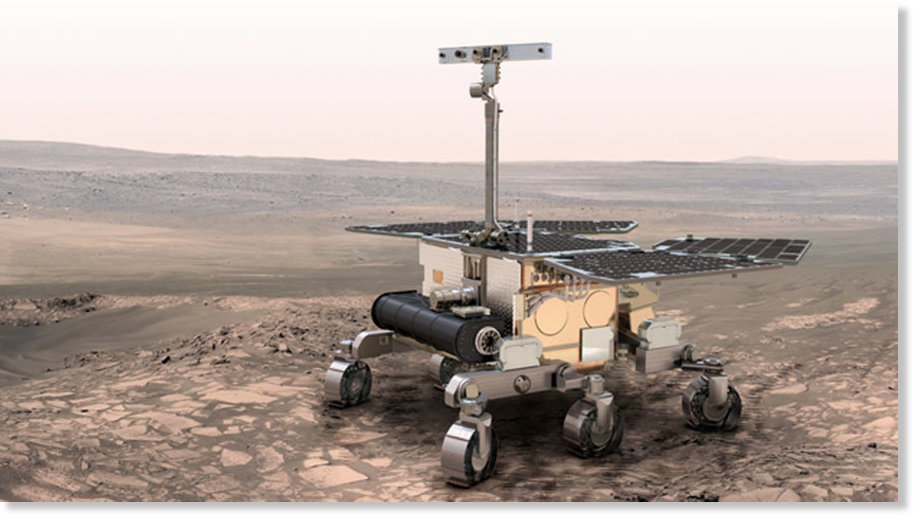
Mars rover
© ESA
Astronauts traveling to Mars in the future may not have to worry about the water situation on the Red Planet. A moisture farm is scheduled to be developed on the planet's surface in 2018, which could potentially provide H20 both for humans and greenhouses.

The moisture farm will be part of the 2018 ExoMars mission, a joint project between the European Space Agency (ESA) and Russia's Roscosmos. The plan will be made possible by the Habitability, Brine Irradiation and Temperature package (HABIT), which will use salts to absorb five milliliters of water from the atmosphere a day.

The decision to create the farm comes after results from NASA's Curiosity rover earlier this year suggested that liquid water accumulates just beneath the surface of Mars at night, before evaporating during the day.

HABIT can hold up to 25 milliliters of water in total. Although that may not sound like much, the amount could easily be scaled up to provide water for future crew members to Mars, Javier Martin-Torres of Luleå University of Technology in Kiruna, Sweden, told New Scientist.

Telescope

High school student helps discover new planet, calculates frequency of Jupiter-like planets

HD 32963
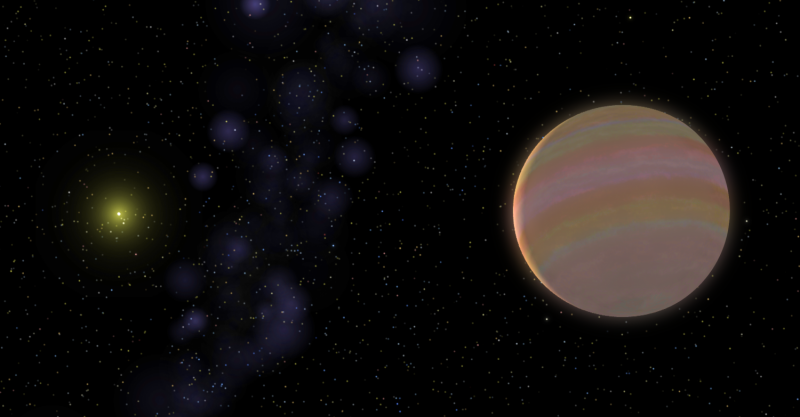
© Stefano Meschiari/McDonald ObservatoryThis artist's concept shows the relative sizes and separation of the star HD 32963 and its newly discovered Jupiter-mass planet.
High school senior Dominick Rowan of Armonk, New York, is making discoveries about other worlds. Working with University of Texas at Austin astronomer Stefano Meschiari, Rowan has helped to find a Jupiter-like planet and has calculated that this type of planet is relatively rare, occurring in three percent of stars overall.

Their research is has been accepted for publication in the Astrophysical Journal.

The team, which also includes astronomers from the University of California, Santa Cruz and others, announced their newly discovered planet orbits a Sun-like star called HD 32963. They discovered the planet using observations with the Keck Telescope in Hawaii.

While working on this project, Rowan said that he became interested in how these large, Jupiter-like planets are so important to the formation of planetary systems.

"The story of our solar system is really the story of Jupiter," Meschiari explained. "It's important for us to find Jupiter analogs to find other solar systems like ours."

Satellite

Curious cosmic collision

cosmic collision
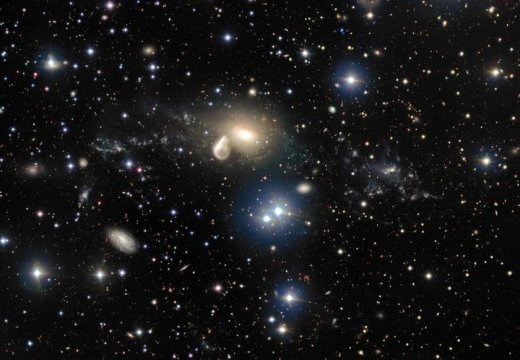
© ESOThe spectacular aftermath of a 360 million year old cosmic collision is revealed in great detail in this image from ESO's Very Large Telescope at the Paranal Observatory. Among the debris surrounding the elliptical galaxy NGC 5291 at the centre is a rare and mysterious young dwarf galaxy, which appears as a bright clump towards the right of the image. This object is providing astronomers with an excellent opportunity to learn more about similar galaxies that are expected to be common in the early Universe, but are normally too faint and distant to be observed by current telescopes.
The spectacular aftermath of a 360 million year old cosmic collision is revealed in great detail in new images from ESO's Very Large Telescope at the Paranal Observatory. Among the debris is a rare and mysterious young dwarf galaxy. This galaxy is providing astronomers with an excellent opportunity to learn more about similar galaxies that are expected to be common in the early Universe, but are normally too faint and distant to be observed by current telescopes.

NGC 5291, the hazy, golden oval dominating the centre of this image, is an elliptical galaxy located nearly 200 million light-years away in the constellation of Centaurus (The Centaur). Over 360 million years ago, NGC 5291 was involved in a dramatic and violent collision as another galaxy travelling at immense speeds barrelled into its core. The cosmic crash ejected huge streams of gas into nearby space, which later coalesced into a ring formation around NGC 52911.

Over time, material in this ring gathered and collapsed into dozens of star-forming regions and several dwarf galaxies, revealed as pale blue and white regions scattered around NGC 5291 in this new image from the FORS instrument, mounted on the VLT. The most massive and luminous clump of material, to the right of NGC 5291, is one of these dwarf galaxies and is known as NGC 5291N.

Magnify

How our brains overrule our senses

The mind's eye
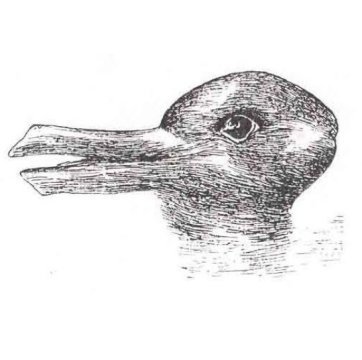
© Jastrow, J., 1899Is it a duck or a rabbit? The same sensory stimulus can produce different perceptions.
Scientists have long known that when sounds are faint or objects are seen through fog in the distance, repetition of these weak or ambiguous sensory 'inputs' can result in different perceptions inside the same brain. Now the results of new research, described online Dec. 7 in the journal Nature Neuroscience, have identified brain processes in mice that may help explain how those differences happen.

"In everyday life, we experience weak stimuli all the time," says senior researcher Daniel O'Connor, Ph.D., assistant professor of neuroscience at the Johns Hopkins University School of Medicine. "Did I hear my name being called? Do you smell smoke? Is that an oasis up ahead or a mirage? When the brain receives weak information through the senses, it can interpret that information in multiple ways, and we wanted to understand what determines the resulting perception."

To find out, O'Connor and his team used a simple model: the gentle tickling of a single mouse whisker, a sensory organ common to many animals. "The stimulation is faint enough that sometimes the mice perceive it, and sometimes they don't," explains O'Connor. "Why is that?"