Science & TechnologyS


Robot

Stephen Hawking says greed and stupidity will end humanity sooner than expected

Stephen Hawking
Although theoretical physicist and cosmologist Stephen Hawking is not a soothsayer, he has in the past predicted the future of humanity. Hawking has warned us on countless occasions about how humans are actively pursuing Artificial Intelligence (AI) without caution; concerned it will spell the end of humanity in the future.

Mr Hawking believes the current AI race will eventually usher humans into a stage when machines will become more intelligent than humans. This is when the total annihilation of humans would begin, Hawking claims. Of course, the AI community prefers not to hear such a prominent and respected science proponent say such things. Hawking was heavily criticized within the AI community recently, facing accusations of being a pessimist, and should inculcate the spirit of positivism in the AI debate instead.

Comment: Stephen Hawking sees the writing on the wall and is attempting to warn others of the direction we are headed. But is anyone listening?


Telescope

Study: Warped meteor showers hit Earth at all angles

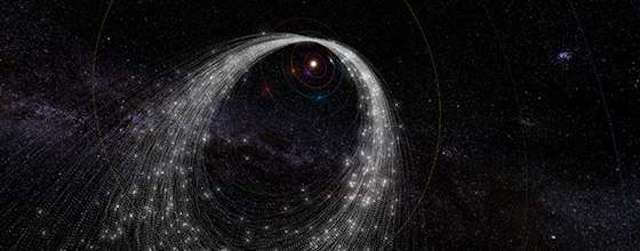
Some meteor showers persist for weeks and months, even though Earth sweeps a big arc around the Sun during that time. The meteors arrive from a slightly different direction each day, which is a clue to why these showers last so long. In a review of ongoing meteor surveillance projects worldwide, 45 showers are identified that take this motion to extremes, visualized in spectacular animation.
Warped kappa Cygnids meteor
© SETIThe warped kappa Cygnids meteor shower peaks in mid August.
"I was most surprised by some showers that were initially seen close to the plane of the planets, but then moved up towards the pole over the course of weeks," says meteor astronomer Dr. Peter Jenniskens of the SETI Institute and NASA Ames Research Center.

Jenniskens runs the NASA sponsored project Cameras for Allsky Meteor Surveillance (CAMS) in Northern California, which aims to confirm some of the 300+ meteor showers on the International Astronomical Union (IAU) Working List that still need verification. 60 low-light video cameras film the skies over the San Francisco Bay Area and have recorded more than 300,000 meteoroid trajectories since beginning observations in 2010.

The observations show that meteor showers do not stay in one place. For example, the well-known Perseids get their name from the constellation of Perseus from which they radiate at their peak in mid-August. But the camera networks first detect the shower on July 1 in Cassiopeia. And the Perseids are tracked until September 3, when the meteors radiate from the neighboring constellation Camelopardalis.

Easter Egg 2

Anthropocene age: Brand new minerals created as a result of human activity

Chalconatronite
© Michael ScottThe blue fine-grained crust of chalconatronite sometimes found on ancient Egyptian bronze artefacts.
Humans are leaving an indelible mark on the planet in a vast array of manmade crystals, researchers have revealed, adding weight to idea that we are living in a new geological epoch - the Anthropocene.

Researchers say that 208 of more than 5,200 officially recognised minerals are exclusively, or largely, linked to human activity, with crystals forming in locations as diverse as shipwrecks, mines and even museum drawers.

"This is a spike of mineral novelty that is so rapid - most of it in the last 200 years, compared to the 4.5bn year history of Earth. There is nothing like it in Earth's history," said Robert Hazen, co-author of the research from the Carnegie Institution for Science. "This is a blink of an eye, it is just a surge and of course we are only seeing the tip of the iceberg."

In addition, the study points out that many more "mineral-like" substances, from laser crystals to components of concrete, have been devised and produced by human hands. "Human ingenuity has led to a host of crystalline compounds that never before existed in the solar system, and perhaps in the universe," the authors write.

Camcorder

Video captures moment plastic is ingested by plankton


A scientist has filmed the moment plastic microfibre is ingested by plankton, illustrating how the material is affecting life beneath the waves.

The footage shows one way that waste plastic could be entering the marine and global food chain.

An estimated 150 million tonnes of plastic "disappears" from the world's waste stream each year.

Waste plastic in the world's seas has been recognised by the United Nations as a major environmental problem.

"When I saw it, I thought that here was something, visually, to convey to the public the problem of plastic in the sea," said Richard Kirby, who recorded the footage.

"What intrigues me is that because the fibre has made a loop inside the animal's gut, you can actually see the consequences of something as small as the arrow worm consuming microplastic.

Comment: See also : 'Plastic soup': Invisible pollutants from everyday objects contaminating world's oceans, study says


Satellite

China to build new space capsule facilitating low Earth orbit missions and Moon landings

Tiangong 3
© Adrian Mann/www.bisbos.comTiangong 3 with three modules scheduled for the 2020-2025 timeframe.
China is developing a new spacecraft for missions in low Earth orbit and Moon landings, according to Chinese state media. Beijing is pursuing an independent space program, with the conquest Moon in the pipeline. The new unnamed spaceship would be recoverable and have room for a number of astronauts, spaceship engineer Zhang Bainian said, as cited by the Science and Technology Daily newspaper.

The report released this week did not provide further details, but Zhang compared the Chinese spacecraft to the Orion currently being developed by NASA and the ESA.

The Shenzhou, China's current manned spaceship based on the Russian Soyuz design, is capable of carrying up to three astronauts. It completed its first manned mission in 2003, after which Beijing managed to place a habitable space station into orbit. A bigger station, which would be manned full-time like the ISS, is expected to be operational within five years, and manned Moon missions may follow sometime later.
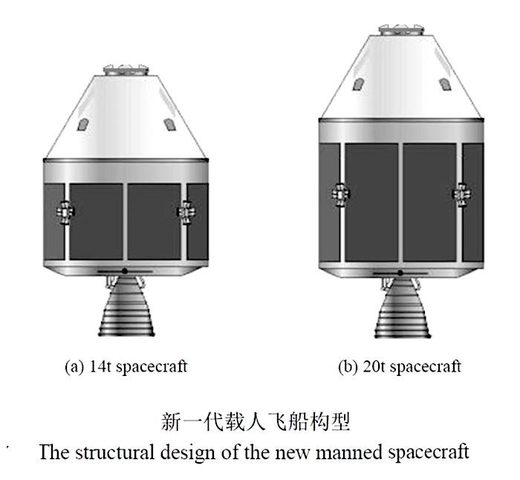
2 modules
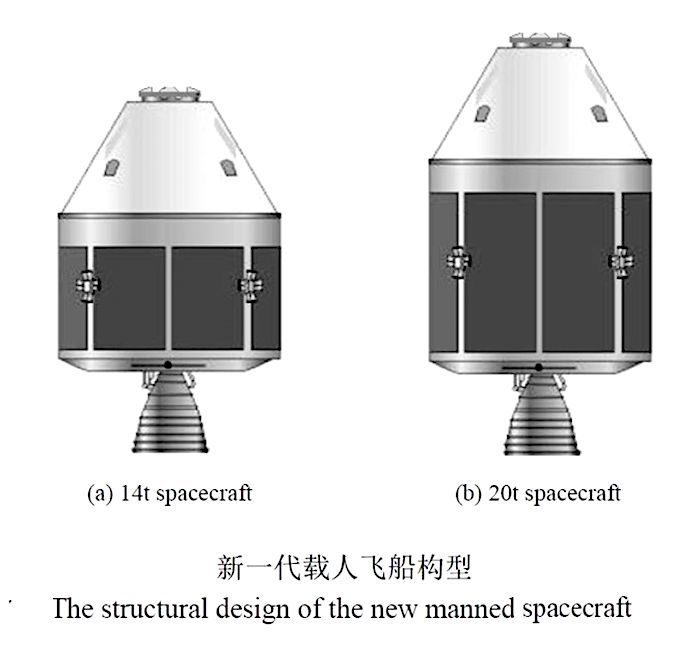
© Chinese InternetThe 14 ton version would be used to conduct orbital missions, such as space station supply runs. The 20 ton version, with a larger propellant load, would be used to go to the Moon and other extraterrestrial missions.
China plans to launch and test its first Tianzhou-class capsule in April. The automated cargo spacecraft would be used to resupply the future space station. Tianzhou will dock with the Tiangong-2, a space laboratory that Beijing launched in September of 2016 as part of a space station technology test.

Family

Flashback Holocaust survivors' trauma passed on to their childrens' genes, says research

DNA strand
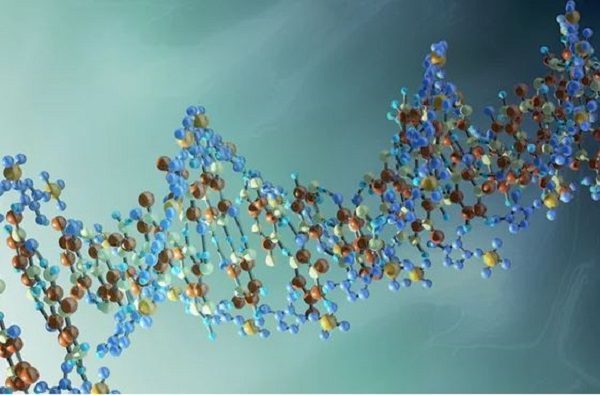
© Mopic/Alamy The team’s work is the clearest sign yet that life experience can affect the genes of subsequent generations.
Genetic changes stemming from the trauma suffered by Holocaust survivors are capable of being passed on to their children, the clearest sign yet that one person's life experience can affect subsequent generations.

The conclusion from a research team at New York's Mount Sinai hospital led by Rachel Yehuda stems from the genetic study of 32 Jewish men and women who had either been interned in a Nazi concentration camp, witnessed or experienced torture or who had had to hide during the second world war.

They also analysed the genes of their children, who are known to have increased likelihood of stress disorders, and compared the results with Jewish families who were living outside of Europe during the war. "The gene changes in the children could only be attributed to Holocaust exposure in the parents," said Yehuda.

Her team's work is the clearest example in humans of the transmission of trauma to a child via what is called "epigenetic inheritance" - the idea that environmental influences such as smoking, diet and stress can affect the genes of your children and possibly even grandchildren.

Comment: Further reading:


Beaker

Reproducibility crisis: New data shows that most scientists can't replicate the findings of their peers

researchers
© gif.org.il
For some time, a dilemma in the scientific community known as a "reproducibility crisis" has been an issue of concern. This term refers to the inability to successfully replicate results contained in previous scientific studies. Most recently, multiple reports have shown that the reproducibility crisis has been prevalent in the field of cancer research.

While many studies appear to be promising upon one's initial review, they may not be nearly as reproducible as once believed. An initiative called the Reproducibility Project, led by University of Virginia psychology professor Brian Nosek, has been hard at work since 2011 seeking to analyze the reliability of dozens of studies by attempting to replicate them.

The project began after two separate discoveries, from pharmaceutical companies Bayer Healthcare and Amgen, that revealed their scientists were only able to verify a low percentage of previous studies.

The process in itself saw considerable difficulty. Elizabeth Iorns, a leader of The Reproducibility Project, and project manager Tim Errington aimed to ensure that the replications precisely followed the original methodology. They soon discovered that tracking down the raw data and identifying what the labs consisted of was a time-consuming endeavor. As noted in The Atlantic, the methods included in many of the original studies "theoretically ought to provide recipes for doing the same experiments. But often, those recipes are incomplete, missing out important steps, details, or ingredients. In some cases, the recipes aren't described at all; researchers simply cite an earlier study that used a similar technique."

Comment: Are these honest scientific mistakes or is reproducibility impossible due to the rampant fraud that occurs in research?


Brick Wall

Sociology's stagnation

swamp
Emile Durkheim is the father of modern sociology; he is a titan. Over a century ago the great man issued an edict that would forever alter — or you could say, forever derail — the course of the discipline that he established. His proclamation, paraphrased loosely, was that any social occurrence was a product of other social occurrences that came before it. Society and culture were "prime movers", an ultimate cause of things in the world that, for its own part, had no cause. Social facts orbited in their own solar system, untethered from the psychology and biology of individual humans. It's almost as if this idea originated from a burning bush, high on some ancient mountain, as it would to this day steer the direction of much social science thought. Durkheim's insight would be a hall pass for social scientists to spend decades ignoring certain uncomfortable realities. Let me try and give you an idea of just how fetid the waters really are.

In 1990 (over two decades ago) the sociologist Pierre van den Berghe wrote an article entitled Why Most Sociologists Don't (and Won't) Think Evolutionarily. I had to read this article as a graduate student in 2007. For context, that means that when my eyes first scanned the pages the essay was already 17 years old. I remember being struck by the venom that dripped off the page. The author seemed angry, he seemed frustrated. He railed against so many things, but his ire was focused particularly in the traditional sociological way of doing business:

UFO 2

What if: Are mysterious cosmic light flashes powering alien spacecraft?

Radio beam
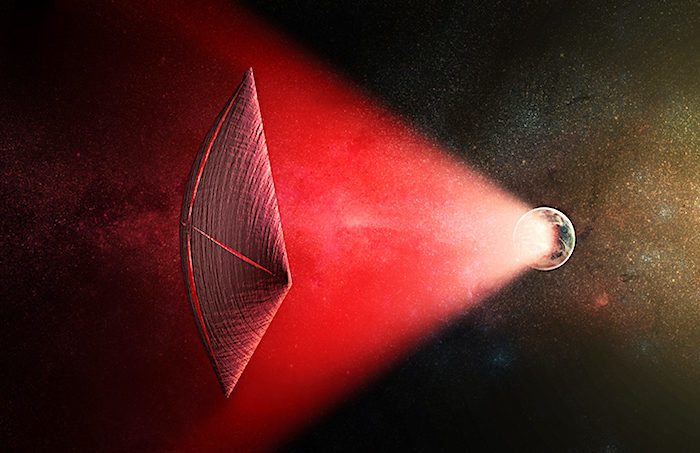
© M. Weiss/CfAArtist's illustration of a light sail powered by a radio beam (red) generated on the surface of a planet. The leakage from such beams as they sweep across the sky would appear as superbright light flashes known as fast radio bursts, according to a new study.
Bizarre flashes of cosmic light may actually be generated by advanced alien civilizations, as a way to accelerate interstellar spacecraft to tremendous speeds, a new study suggests.

Astronomers have catalogued just 20 or so of these brief, superbright flashes, which are known as fast radio bursts (FRBs), since the first one was detected in 2007. FRBs seem to be coming from galaxies billions of light-years away, but what's causing them remains a mystery.

"Fast radio bursts are exceedingly bright given their short duration and origin at great distances, and we haven't identified a possible natural source with any confidence," study co-author Avi Loeb, a theorist at the Harvard-Smithsonian Center for Astrophysics, said in a statement Thursday (March 9). "An artificial origin is worth contemplating and checking." [5 Bold Claims of Alien Life]

One potential artificial origin, according to the new study, might be a gigantic radio transmitter built by intelligent aliens. So Loeb and lead author Manasvi Lingam, of Harvard University, investigated the feasibility of this possible explanation.


Hotdog

Dogs use deception to get treats, study shows

When a human partner withheld tasty snacks, the dogs got sneaky

dachshund
© johan63/iStockWould these eyes deceive you? New study says yes.

There is plenty of evidence to suggest that dogs, in addition to looking adorable in sweaters, possess fairly sophisticated cognitive abilities. They recognize emotion, for example, and respond negatively to antisocial behavior between humans. Man's best friend can also get pretty tricksy when it comes to scoring snacks. As Brian Owens reports for New Scientist, a recent study found that dogs are capable of using deceptive tactics to get their favorite treats.

Comment: Dogs like to earn treats by solving problems, rather than receiving handouts