Science & TechnologyS


People 2

Guevedoces: Children thought to be female turn into boys at puberty due to rare genetic disorder

rare genetic disorder Guevedoces Dominican Republic
Catherine and his cousin Carla, Guevedoces in the Dominican Republic

Girls in a remote Caribbean village are becoming boys when they hit puberty due to a rare genetic disorder.

One-in-90 children born in Salinas in the Dominican Republic grow a penis in a natural transformation from female to male.

Known as the guevedoces, which translates to "penis at 12", these youngsters are referred to in medical terms as "pseudohermaphrodite".

It is so common to be a pseudohermaphrodite in Salinas, that it is accepted as a third sex, alongside male and female.

Comment: See also: The extraordinary case of the Guevedoces


Info

Auroras may explain an anomaly in Earth's ionosphere

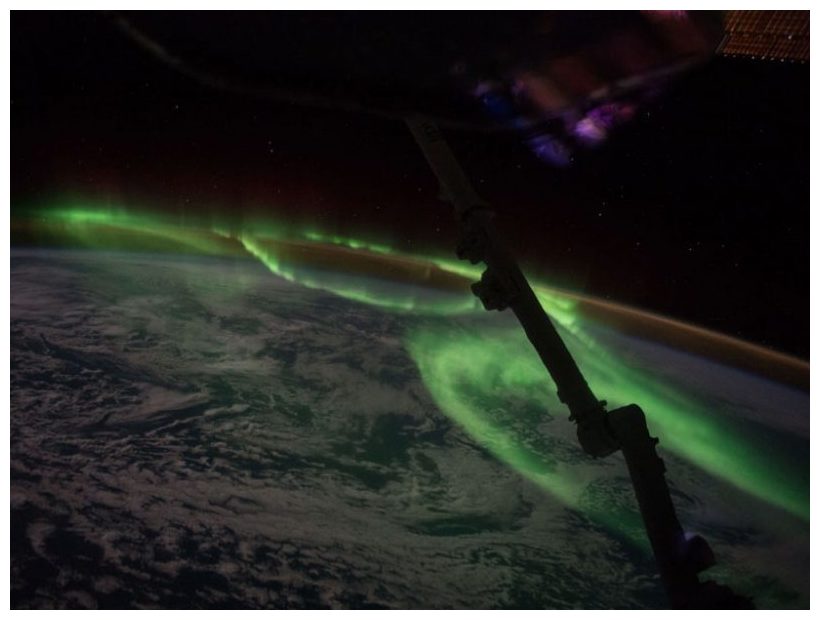
Earth’s aurora
© NASAA view of Earth’s aurora south of Australia from the International Space Station.
Starting at about 80 kilometers above Earth, the bombardment of solar ultraviolet light and X-rays strips atoms and molecules of their electrons and creates a layer of charged particles called the ionosphere. This layer reflects radio waves back to Earth and creates spectacular auroras. This zone is also the locus of a strange phenomenon called the Weddell Sea Anomaly, which can affect communications vital to security and transportation.

Typically, the density of electrons is highest in the upper layer of the ionosphere, where X-rays and ultraviolet rays are most intense. Normally, this upper layer also tends to be most electron dense during the day when the sunlight is most intense. But in the Weddell Sea Anomaly, a region near the tip of South America in the southeast Pacific Ocean, the electron density is highest not at midday but at midnight. The odd reversal was discovered in the 1950s by a team of scientists in Antarctica who sent high-frequency radio signals into the ionosphere and recorded the return signals, a measure called an ionogram.

Brain

Miniature lab-grown brains made from stem cells could one day halt damage caused by Alzheimer's

brain
© MARK SYKES / ALAMY STOCK PHOTO
Miniature human brains made from human skin cells could be used to halt the damage caused by Alzheimer's disease in the future.

The tiny organs are being grown in a laboratory by British scientists who believe they will one day be able to use them to grow new brain tissue.

The process involves transforming skin cells into neurons, which are then 3D-printed into structures that resemble the brain.

The treatment, if successful, would not be able to reverse memory loss that has already occurred but it could stop further deterioration.

Researchers at Aston University in Birmingham are initially hoping to use the artificially created structures to test treatment methods for dementia and speed up drug development.

Laptop

What you need to know about online security

Online security padlock Scottie
There are a few things you need to understand about staying safe and secure online. You need to realize what you're actually up against.

But don't fret, because it's really not a big deal if you always keep in mind how things usually work.

For example, e-mail is never really safe, HTTPS doesn't really always keep your connection secure, you can be tracked online very easily despite what most people will tell you, and you should always use some kind of anti-virus/malware protection no matter what OS you use.

And remember that the OS you use makes very little difference if you've taken some basic precautions... In fact, thinking you're safe because you use Not Windows is probably a bad idea!

Sun

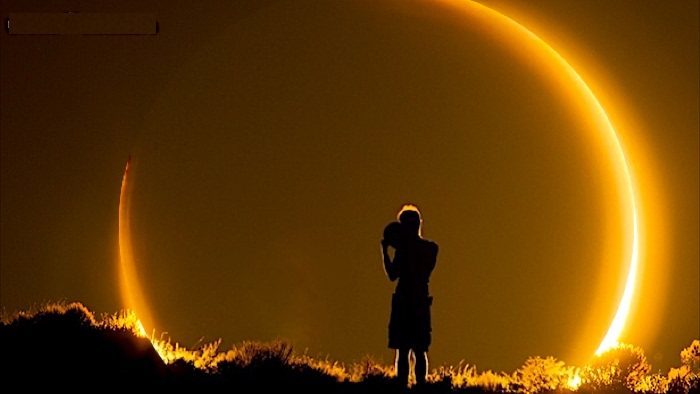
Weird things that happen during a total solar eclipse

Boyeclipse
© UFOvni DisclosureAugust 21, 2017
Everyone talks about how visually stunning it is when the darkened Moon fully covers the face of the Sun in a total solar eclipse. And indeed, it is! But there are other unusual, truly strange happenings that occur when the Moon passes in front of the Sun. If you aren't prepared to look for them, some of these weird phenomena are so fleeting that you can miss them. Following are descriptions of a number of those novel occurrences to be looked for on August 21st.

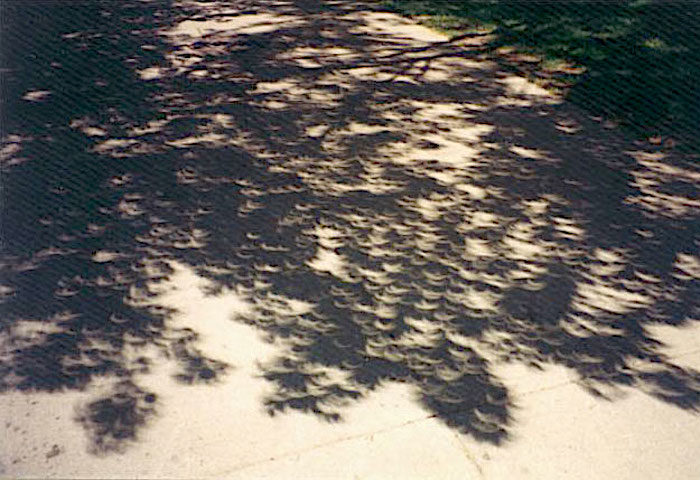
Long before totality (when the Moon is only covering part of the Sun's face), go to a nearby tree and look in the shade of the tree's shadow. You will see hundreds of crescent images of the partially covered Sun all over the ground! In fact, this is a safe way to view all the partial phases of the eclipse without harming your eyes. Where do all these many images come from? The gaps between the tree's leaves act like a pinhole camera by projecting the Sun's image on the ground. Here is a photo that was shot of such a tree shadow during a previous solar eclipse:
eclipsetree
© Elisa Israel

Comment: 'Clips' of the eclipse. So much to see and take in, so little time to do so!


Cloud Lightning

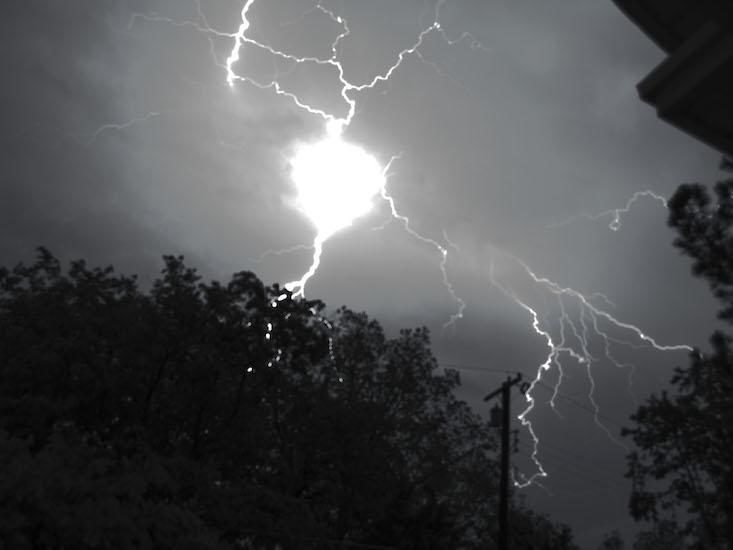
A new theory in the ball lightning mystery

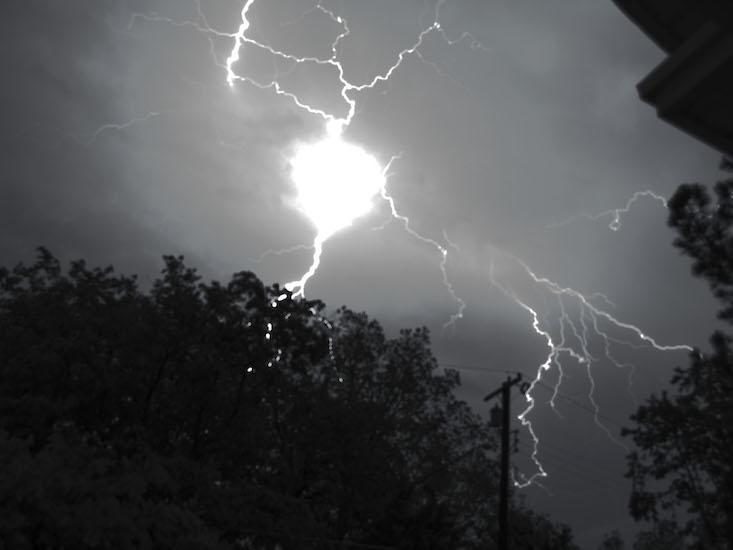
Ball lightning
© Storm Wolf / FlickrExplanations for how ball lightning is formed are even more diverse than its physical characteristics. Just a sampling of the theories out there suggest the ball is a cloud of hot silicon particles, a natural nuclear reaction, a lightning-induced epileptic hallucination, a miniature black hole, an aggregate of cellulose and other natural polymers, and a microwave-filled bubble of plasma.
Every so often, given the proper conditions, a small and roughly spherical piece of the atmosphere around us will briefly catch fire. As they are best viewed late into the night and have no obvious natural explanation, it's perhaps no wonder they've inspired a rich mythology.

Names for balls of fire include ignis fatuus, will-o'-the-wisp, ghost lights, and ball lightning. They've been said to hover above graves, dance along the banks of rivers, signal the imminent arrival of an earthquake, and stalk the aisles of airplanes. Even today, we don't have a crystal-clear understanding of how they form and do what they do. Which doesn't mean scientists have, well, dropped the ball. Chinese scientist H.-C. Wu recently offered a compelling new explanation in Scientific Reports.

Some fireballs appear to be the products of living organisms. The decay of organic matter, for example, in marshes and other wetlands (or even a mass grave in a Polish forest) leads to the release of methane and phosphorus-containing gases such as phosphine, which can spontaneously catch fire after encountering oxygen in the atmosphere, producing a flickering light suspended midair. Some, on the other hand, are electrical in origin, sparking within the ground during an earthquake as stressed rocks release a stream of electrons to the surface where, interacting with air, they produce flashes of light. Still others form in the atmosphere, usually during thunderstorms, and go by the name of "ball lightning."


Comment: See also:


Mars

Five years on Mars: NASA releases time lapse of Curiosity driving

Mars
© NASA / Reuters
On Saturday, NASA's Mars Curiosity rover celebrated five years since it's wheels first touched the red planet's soil. It has since beamed back, at the speed of light, a plethora of images to gaze upon. The agency has collected many of these to offer a glimpse of Martian life.

This stunning time lapse video shows a small scale of Earth's planetary neighbour which one day could play host to human colonists hoping to settle on the God of War.

The rover touched down on August 5, 2012. It's mission to find signs of life beyond our home planet.

It has since sent back images and soil samples indicating that life could have been capable of sustaining itself on the vast barren plains, as well as some very odd looking 'creatures' that have conspiracy theorists the world over drooling.

Dig

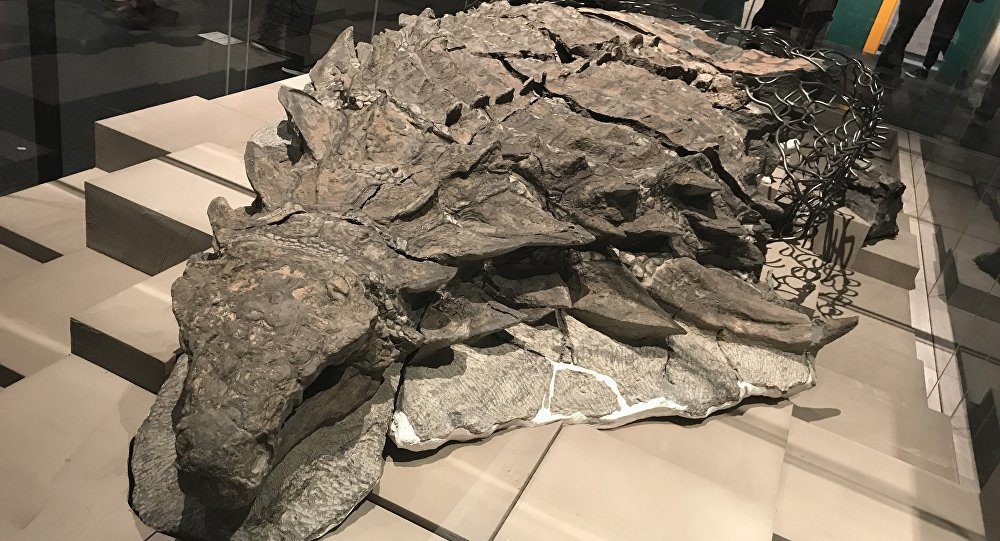
Giant tank of a dinosaur discovered in Canada

tank dinosaur
© CC BY-SA 4.0 / Machairo
An unexpectedly well-preserved creature with fossilized skin and scales turned out to be a new kind of armored dinosaur, which actually resembles a prehistoric "walking tank."

Unlike most discovered dinosaur specimens, which consist of skeletons or bone fragments, this one is three-dimensional and is "the best-preserved armored dinosaur ever found," as described in a fresh report in the Current Biology journal.

The 110-million-year-old fossils were accidentally discovered in 2011 by mining machine operator Shawn Funk, who was working at the Suncor Millennium Mine in Alberta, eastern Canada. The dinosaur was first unveiled to the public in May 2017, but it didn't yet have an official name.

On August 3, researchers revealed the dinosaur's name and evidence of its difficult past. The nodosaur was called Borealopelta markmitchelli, after the Royal Tyrrell Museum technician, Mark Mitchell, who spent more than 7,000 hours thoroughly removing rock from around the 5.5-meter-long specimen.

Monkey Wrench

Moscow wins top international prize for futuristic bridge

Zhivopisny Bridge
© SputnikThe Zhivopisny Bridge over the Moskva River.
Moscow's futuristic Picturesque Bridge has been recognized as an international masterpiece by the prestigious Auguste Perret architectural prize. The bridge's designer, Nickolay Shumakov, is the first Russian to receive the award.

Russia's Union of Architects announced that Shumakov would receive the special prize earlier in July. The Prize for Applied Technology in Architecture was founded in memory of Auguste Perret, former honorary president of the International Union Of Architects (IUA).
Zhivopisny Bridge

Star

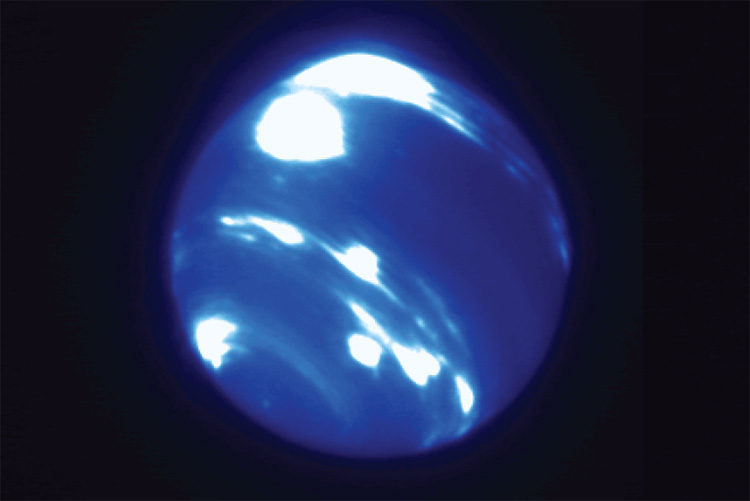
Keck telescope twilight observations reveal huge storm on Neptune

Neptune at dawn with the Keck Telescope
© N. Molter/I. De Pater, UC Berkeley/C. Alvarez, W. M. Keck Observatory
Spectacular sunsets and sunrises are enough to dazzle most of us, but to astronomers, dusk and dawn are a waste of good observing time. They want a truly dark sky.

Not Ned Molter, a UC Berkeley astronomy graduate student. He set out to show that some bright objects can be studied just as well during twilight, when other astronomers are twiddling their thumbs, and quickly discovered a new feature on Neptune: A storm system nearly the size of Earth.

"Seeing a storm this bright at such a low latitude is extremely surprising," said Molter, who spotted the storm complex near Neptune's equator during a dawn test run of twilight observing at W. M. Keck Observatory on Maunakea, Hawaii. "Normally, this area is really quiet and we only see bright clouds in the mid-latitude bands, so to have such an enormous cloud sitting right at the equator is spectacular."