Science & TechnologyS


Microscope 1

Portable laboratory: $550 smartphone device can detect diseases as reliably as clinic-based instruments

TRI Analyzer
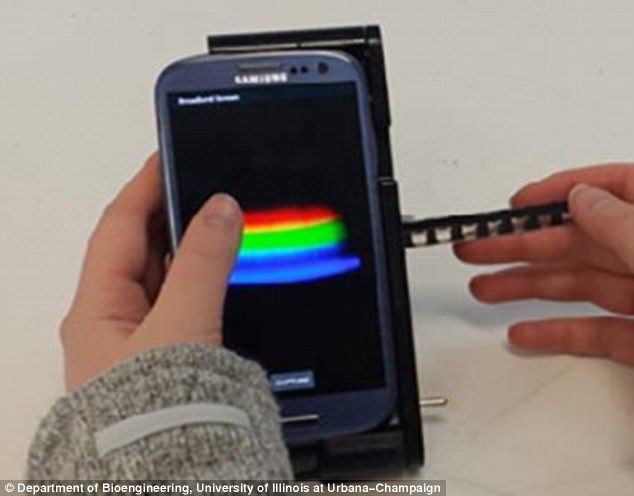
The spectral transmission-reflectance-intensity (TRI)-Analyzer attaches to a smartphone and analyzes patient blood, urine, or saliva samples as reliably as clinic-based instruments that cost thousands of dollars.
Researchers have developed technology that enables a smartphone to perform lab-grade medical diagnostics.

The new spectral transmission-reflectance-intensity (TRI) analyzer costs only $550 and can perform the same tests as the large, expensive medical equipment doctors have relied on.

Once attached to a smartphone, it can analyze blood, urine, and saliva samples as reliably as clinic-based instruments that cost thousands of dollars

'Our TRI Analyzer is like the Swiss Army knife of biosensing,' said Brian Cunningham, director of the Micro and Nanotechnology Lab at University of Illinois at Urbana-Champaign, who worked on the study.

'It's capable of performing the three most common types of tests in medical diagnostics, so in practice, thousands of already-developed tests could be adapted to it.'

Info

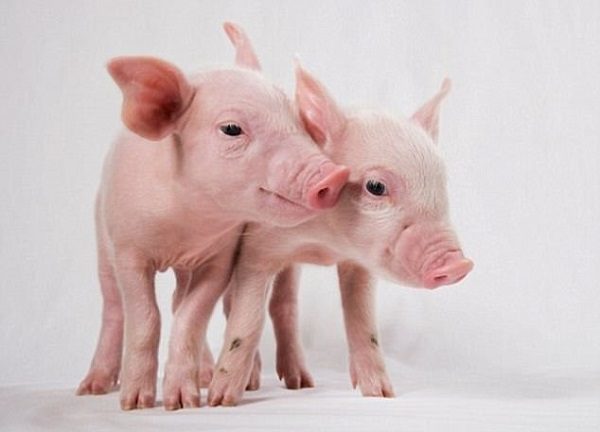
Major step towards growing human organs in pigs: Scientists use advanced gene editing to eliminate viruses in the animals' DNA

Pigs
Porcine endogenous retroviruses are embedded in the pig genome but research has shown they can infect human cells. Now, US scientists have successfully removed it.
Growing human transplant organs in pigs has become a more realistic prospect after scientists used advanced gene editing to remove threatening viruses from the animals' DNA.

Porcine endogenous retroviruses are permanently embedded in the pig genome but research has shown they can infect human cells, posing a potential hazard.

The existence of the virus has been a major stumbling block preventing the development of genetically engineered pigs to provide kidneys and other organs for transplant into human patients.

That hurdle may now have been cleared away, according to new research reported in the journal Science.

Comment: See also: Ancient virus DNA gives stem cells the power to transform


Galaxy

Uncertain future: Newest map of universe suggests that dark energy may one day tear us apart

Cosmic map universe, dark matter
© Reidar Hahn, FermilabThe best cosmic map yet of the universe's make-up finds 24 per cent less dark matter than we thought and could call for a rewrite of physics
The fate of the universe has never been certain, but it just became even less so. That's due to a disagreement between a new map of today's universe and an existing map of the early universe. The mismatch either means one of the measurements is wrong or, disturbingly, that we need to rewrite physics.

The results, which are part of the Dark Energy Survey (DES), charted the distribution of matter across 26 million galaxies in a large swathe of the southern sky.

"This is one of the most powerful pictures of the universe today that we've ever had," says Daniel Scolnic at the University of Chicago, who is a part of the 400-person DES collaboration but wasn't involved in this work.

It is so powerful because knowing this distribution helps us understand the cosmic game of tug of war between dark energy, the mysterious force accelerating the universe's expansion, and dark matter, the hidden extra mass in the universe. Dark energy tends to pull each galaxy apart, while dark matter's gravity brings each galaxy together. From the relative strengths of these effects, we can predict how the cosmos will change in the future.

Beaker

Indian scientists devise a way to extract silver from rice bran

rice paddies
© AP Photo/ Anupam Nath
Researchers claim that as much as 15 mg of silver can be extracted from a kilogram of the Garib-sal variety of rice which accumulates an unusual quantity of the noble metal in its aleurone layer.

Indian scientists have rediscovered a rice variety that accumulates an unusually high quantity of silver in the grains. The test conducted by researchers from the Indian Institute of Technology (IIT) could become a novel method of bio-extraction of silver metal.

"Our study of 505 native rice landraces showed that nine of them accumulate silver at a high concentration when grown in the same soil. Among these, a medicinal rice landrace from West Bengal, Garib-sal was found to accumulate silver at an especially high concentration in the grains. Cultivation of Garib-sal rice in three successive years in Basudha farm in the rice growing period of June-October confirmed that for the same concentration of silver in the soil (∼0.15 mg/kg), Garib-sal accumulates it in the grains to the extent of ∼15 mg/kg," reads the report published in science journal - ACS Sustainable Chemistry & Engineering.

"The rice variety has the ability to accumulate silver about 100 times more than any other rice. It is possible to extract 14.60 mg per kg of silver from the rice using a cheap and simple chemical method. This is a unique way of extracting silver through agriculture. With further research, it may be possible to find better ways of enhancing the bioaccumulation of silver," Prof. T. Pradeep told The Hindu.

People

Inner ear disturbances give clues to out-of-body experiences

out of body
© Mangojuicy/DreamstimeAbout 10 percent of the general population has had an out-of-body experience at some point in their lives.
While driving and accelerating in his car, a man in France suddenly had a bizarre sensation: He felt like he was outside his car, looking in at his physical self, which was still at the wheel.

The man was part of a new study that links problems of the inner ear with eerie "out-of-body" experiences. These experiences are curious, usually brief sensations in which a person's consciousness seems to exit the body and then view the body from the outside.

The study analyzed 210 patients who had visited their doctors with so-called vestibular disorders. The vestibular system, which is made up of several structures in the inner ear, provides the body with a sense of balance and spatial orientation. Problems with this system can cause dizziness or a floating sensation, among other symptoms.

Comment: See also:


Health

Star Trek's tricorder coming to the market soon

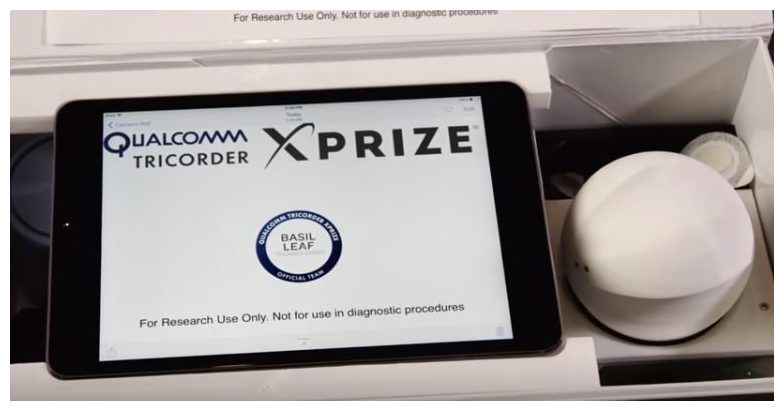
Handheld devices similar to the tricorders used by Dr. McCoy to diagnose and treat diseases in the Star Trek movie franchise since the 1960s may soon become an essential part of every astronaut's tool kit.

DxtER
© Creative CommonsScreen grab from accompanying video shows the winning entry in the Qualcomm Tricorder XPRIZE competition - DxtER.
The winner of the four-year Qualcomm Tricorder X Prize competition, held in April this year, Final Frontier Medical Devices, walked away with a $2.5 million prize with their entry of a device that can monitor five real-time health vital signs and diagnose 34 diseases without a clinician, using artificial intelligence (AI).

Info

New DNA study rewrites Neanderthal history

Neanderthal
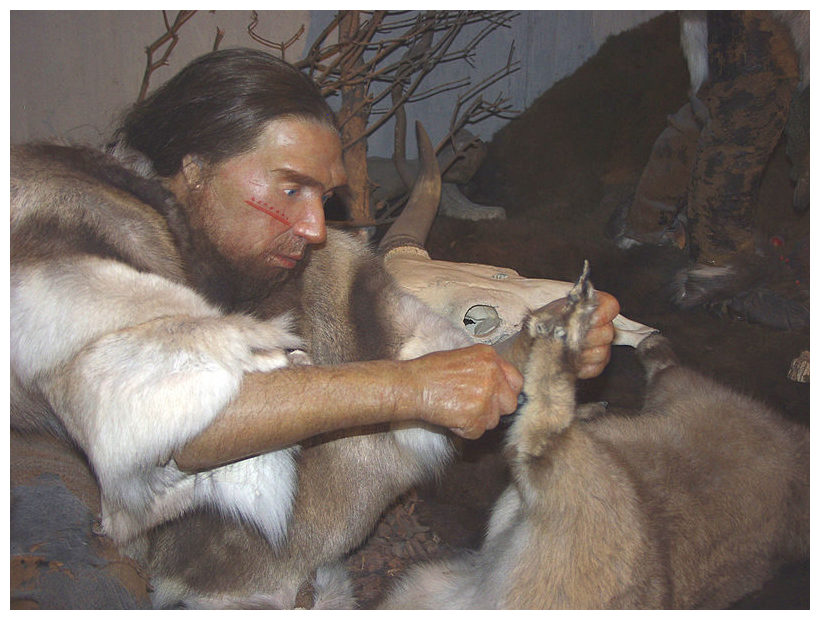
© WikipediaA photograph of a reconstruction of a Neanderthal male from the Neanderthal Museum.

A new way to use DNA to peer into the history of humanity is rewriting what experts know about our long-extinct cousins, the Neanderthals, US researchers said Monday.

Previous research has suggested that near the end of their existence some 40,000 years ago, only about 1,000 Neanderthals were left on Earth.

But the new study shows their population was far larger -- likely numbering in the tens of thousands -- though they existed in isolated groups across Europe, said the report in the Proceedings of the National Academy of Sciences.

The genetic clues include Neanderthal DNA that contains mutations that usually occur in small populations with little genetic diversity.

Also, Neanderthal remains -- found in various locations -- are genetically different from each other.

"The idea is that there are these small, geographically isolated populations, like islands, that sometimes interact, but it's a pain to move from island to island," said co-author Ryan Bohlender, a post-doctoral fellow at the MD Anderson Cancer Center at the University of Texas.

"So, they tend to stay with their own populations."

Laptop

Scientists hack a computer using DNA by encoding malware into a gene

Computer hacking using DNA
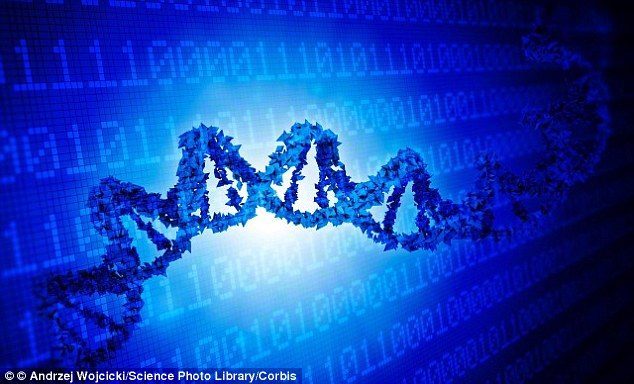
The researchers warn that hackers could one day use faked blood or spit samples to gain access to university computers, steal information from police forensics labs, or infect genome files shared by scientists.
In what appears to be the first successful hack of a software program using DNA, researchers say malware they incorporated into a genetic molecule allowed them to take control of a computer used to analyze it.

The biological malware was created by scientists at the University of Washington in Seattle, who call it the first "DNA-based exploit of a computer system."

To carry out the hack, researchers led by Tadayoshi Kohno ("see "Innovators Under 35, 2007") and Luis Ceze encoded malicious software in a short stretch of DNA they purchased online. They then used it to gain "full control" over a computer that tried to process the genetic data after it was read by a DNA sequencing machine.

The researchers warn that hackers could one day use faked blood or spit samples to gain access to university computers, steal information from police forensics labs, or infect genome files shared by scientists.

For now, DNA malware doesn't pose much of a security risk. The researchers admit that to pull off their intrusion, they created the "best possible" chances of success by disabling security features and even adding a vulnerability to a little-used bioinformatics program. Their paper appears here.

Microscope 2

New study of archaic DNA may rewrite story of human evolution

population trees embedded gene trees, archaic DNA human evolution
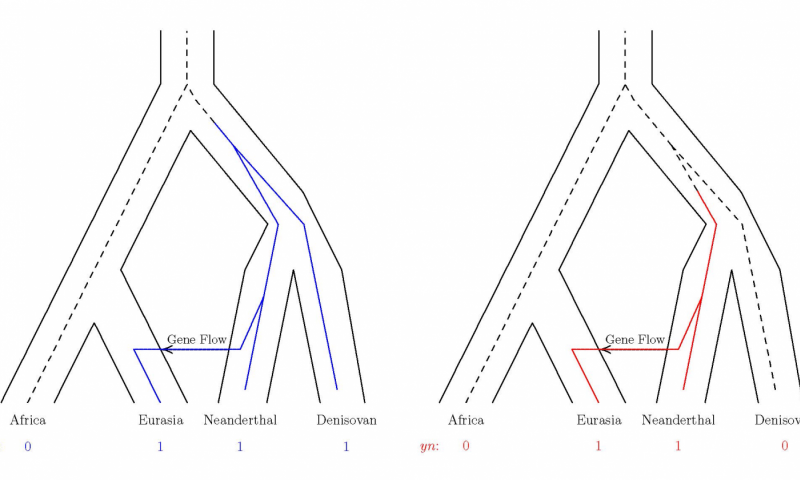
These population trees with embedded gene trees show how mutations can generate nucleotide site patterns. The four branch tips of each gene tree represent genetic samples from four populations: modern Africans, modern Eurasians, Neanderthals, and Denisovans. In the left tree, the mutation (shown in blue) is shared by the Eurasian, Neanderthal and Denisovan genomes. In the right tree, the mutation (shown in red) is shared by the Eurasian and Neanderthal genomes. Credit: Alan Rogers, University of Utah
Hundreds of thousands of years ago, the ancestors of modern humans diverged from an archaic lineage that gave rise to Neanderthals and Denisovans. Yet the evolutionary relationships between these groups remain unclear.

A University of Utah-led team developed a new method for analyzing DNA sequence data to reconstruct the early history of the archaic human populations. They revealed an evolutionary story that contradicts conventional wisdom about modern humans, Neanderthals and Denisovans.

The study found that the Neanderthal-Denisovan lineage nearly went extinct after separating from modern humans. Just 300 generations later, Neanderthals and Denisovans diverged from each other around 744,000 years ago. Then, the global Neanderthal population grew to tens of thousands of individuals living in fragmented, isolated populations scattered across Eurasia.

"This hypothesis is against conventional wisdom, but it makes more sense than the conventional wisdom." said Alan Rogers, professor in the Department of Anthropology and lead author of the study that will publish online on August 7, 2017 in the Proceedings of the National Academy of Sciences.

Meteor

European Space Agency: Asteroid will shave past Earth inside Moon's orbit this October

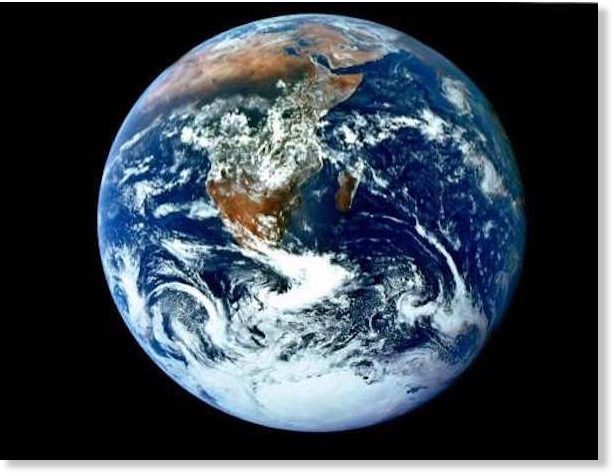
asteroid earth
An asteroid the size of a house will shave past Earth at a distance of some 44,000 kilometres (27,300 miles) in October, inside the Moon's orbit, astronomers said Thursday.

The space rock will zoom by at an eighth of the distance from the Earth to the Moon-far enough to just miss our geostationary satellites orbiting at about 36,000 kilometres, according to the European Space Agency (ESA).

"It will not hit the Earth," said Detlef Koschny of ESA's "Near Earth Objects" research team. "That's the most important thing to say."

Comment: Asteroid TC4 is among other 'close call' neo's in our area of the galaxy recently:

Astronomers detect space rock 3 days after it passes close to Earth

18,000 MPH Asteroid Almost Causes Mass Extinction and Nobody Saw it Coming