Science & TechnologyS


Rocket

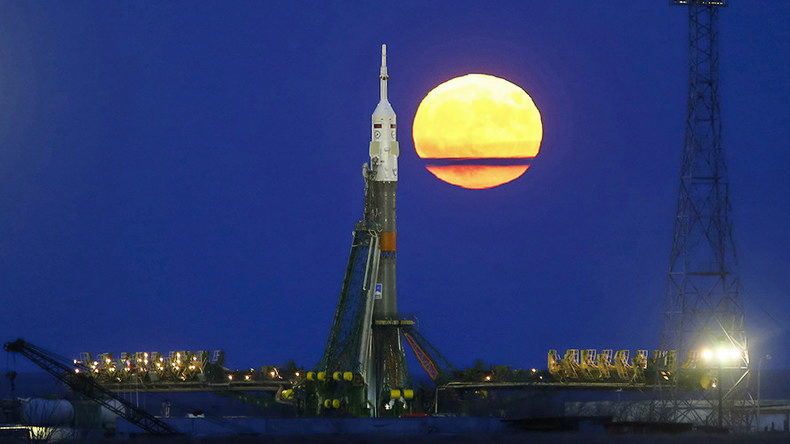
Russia plans to build a moon base by 2050

Russia spaceship launch
© roscosmos.ru
Russian space corporation Energia has presented a plan for a moon exploration program, which includes building a lunar base between 2040 and 2050. The base is intended to be a springboard for future missions to deep space and other planets. Cosmonaut Alexander Kaleri, who has been on several expeditions to the International Space Station (ISS), conducted five spacewalks, and currently heads the flight department of Energia, presented the program on Tuesday, TASS reports.

The site for the future base will be chosen before 2030, Kalleri said, after which preparations will be in full gear, including the creation of the main modules of the station and a radiation shelter. According to the presentation, Energia is planning to carry out "the construction of lunar base and scientific program" between 2040 and 2050. As soon as the base is finished, the moon's resources will be explored.

Comment: According to Russian scientists the moon is a potential source of energy: it contains large reserves of helium 3, a sought-after isotope that may be the key to a new way of generating power.
See also:


Microscope 1

Scientists discover mammalian blood molecule that attracts predators and repels prey

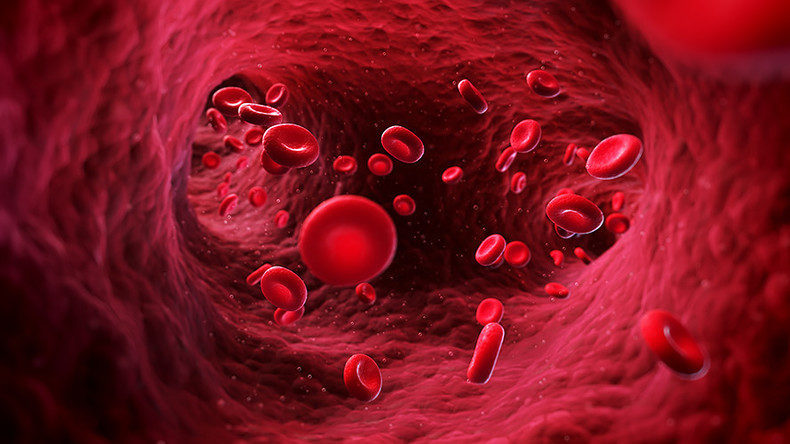
Human red blood cells
© Getty ImagesHuman red blood cells
Scientists have discovered a mammalian blood molecule, one whiff of which sends predatory animals into a frenzy but sends prey, including humans, running for the hills, hinting at our pre-predatory past.

Never before have scientists seen the same molecule (E2D) have such opposing effects in creatures ranging from horse flies to humans, a fact which hints at deep evolutionary roots, according to research published in the journal Scientific Reports.

Cloud Lightning

Bizarre blue 'flashes and glows' may reveal thunderstorm secrets (VIDEO)

Blue jets
© YouTube/ScienceAtNASA (screen capture)
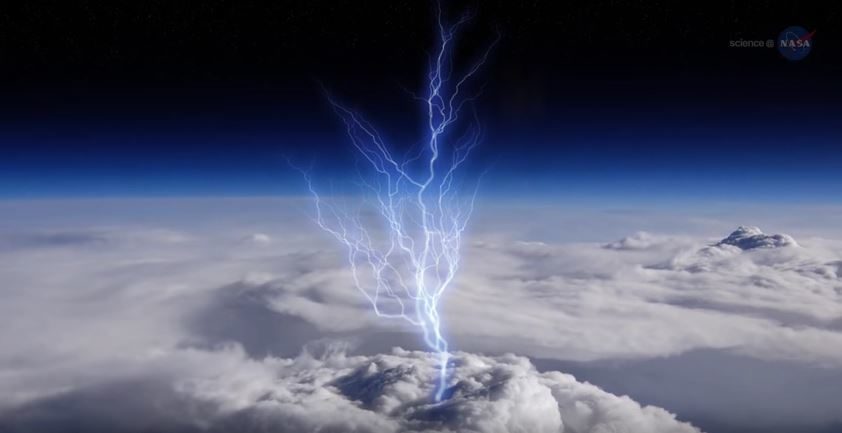
Bright, blue flashes stretch from the tops of powerful thunderstorms toward the edge of space, providing a fascinating celestial show for astronauts on the International Space Station, and now, scientists are learning more about these showstopping displays.

In 2015, European Space Agency astronaut Andreas Mogensen captured a video of the strange blue flashes dancing above the clouds as the space station passed over the Bay of Bengal.

These features are called blue jets - a type of transient luminous event (TLE) resulting from activity in and below powerful thunderstorms on Earth. One of the photographs captured by Mogensen showed a pulsating blue jet that stretched 25 miles (40 kilometers) above sea level, according to a statement from NASA. [Earth From Space: Amazing Astronaut Photos]

Using these observations, researchers from Denmark's National Space Institute studied the elusive features to learn more about how storms form and develop over time. Their findings showed that 245 pulsating blue discharges were observed during the 160 seconds of video footage, which is equal to roughly 90 blue-jet flashes per minute, the researchers said in a new study describing the findings.


Comment: Some other transient luminous events (TLEs) so far this year include:

October 2017: Rare red sprites filmed over Oklahoma

June 2017:
Red jellyfish sprites with halo of light captured over Austria

April 2017: Rare ELVE and red sprites captured in Czech Republic and 6 'gigantic jets' (ionospheric lightning) were photographed in Western Australia.

March 2017: A huge blue jet was observed over Brazil.

See also: Electric universe: Lightning strength and frequency increasing and Picket fence auroras and plasma ropes, electrical phenomenon in Earth's skies intensifies

The Electric Universe model is clearly explained, with a lot more relevant information, in the book Earth Changes and the Human Cosmic Connection by Pierre Lescaudron and Laura Knight-Jadczyk.


Laptop

'Nothing to hide': Kaspersky Lab offers source code for independent review

Laptop
© Oliver Berg / Global Look Press
Russian cybersecurity company Kaspersky Lab has unveiled to independent experts an unprecedented Global Transparency Initiative that will open its code. The audit is a bid to stave off US accusations the company is working for Russian security services.

A five-point plan revealed by the Kaspersky on Monday has promised access not only to its software, but its company practices and oversight of its data handling. Additionally, the company says it will pay out awards of up to $100,000 for those able to identify vulnerabilities, and establish three "transparency centers" by 2020 "to address any security issues together with customers, trusted partners and government stakeholders."

"We need to reestablish trust in relationships between companies, governments and citizens. That's why we're launching this Global Transparency Initiative: we want to show how we're completely open and transparent," said company CEO Eugene Kaspersky in a statement.

"We've nothing to hide. And I believe that with these actions we'll be able to overcome mistrust and support our commitment to protecting people in any country on our planet."

Satellite

Point Nemo: Earth's most remote location is a dead space-craft dumping zone

Point Nemo dumping zone
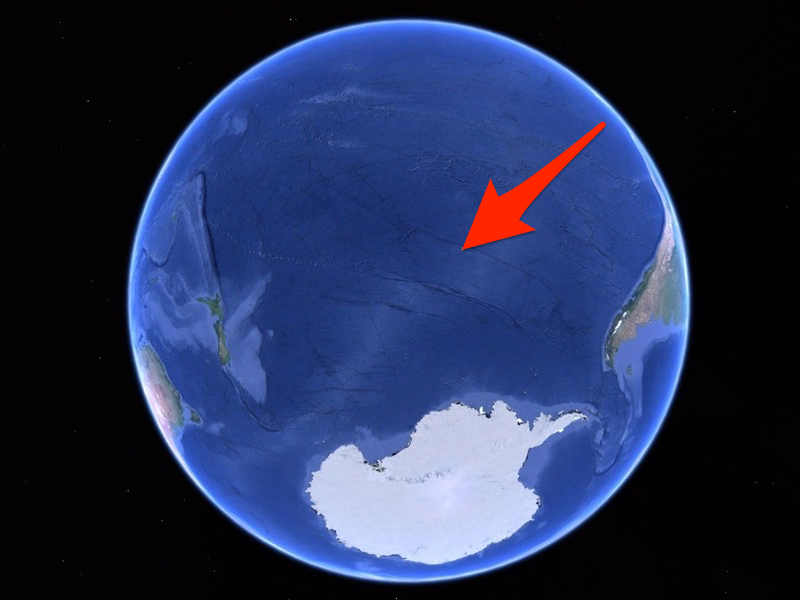
© Google EarthMany nations de-orbit old spacecraft over the most remote place on Earth, called Point Nemo.
This "spacecraft cemetery" is about 1,450 miles away from any piece of land and home to hundreds of dead satellites.
The most remote location on Earth has many names: It's called Point Nemo (Latin for "no one") and the Oceanic Pole of Inaccessibility. Most precisely, its exact coordinates are 48 degrees 52.6 minutes south latitude and 123 degrees 23.6 minutes west longitude.

The spot is about 1,450 nautical miles from any spot of land - and the perfect place to dump dead or dying spacecraft, which is why its home to what NASA calls its "spacecraft cemetery."

"It's in the Pacific Ocean and is pretty much the farthest place from any human civilization you can find," NASA said.

Bill Ailor, an aerospace engineer and atmospheric reentry specialist, put it another way: "It's a great place you can put things down without hitting anything," he said.

Mars

Martian rotating 'magnetotail' may be contributing to the destruction of its atmosphere

Mars magnetic tail
© Anil Rao / NASA
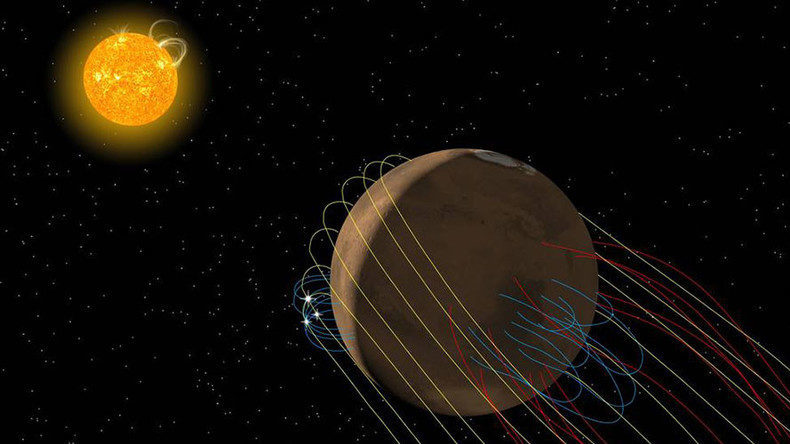
Plasma explosions from the sun over billions of years have all but stripped Mars of its atmosphere. But a new discovery by NASA shows that remnants of the Red Planet's magnetic field can be found in the form of a rotating 'tail'.

Invisible to the naked eye, the so-called 'magnetotail' was recently detected by NASA's Mars Atmosphere and Volatile Evolution Mission spacecraft (MAVEN).

MAVEN was launched in 2013 to trace the Martian world's climate history and determine if it may have once sustained life.

Syringe

Hunger-blocking injection lets obese monkeys quickly lose weight

Hunger blocking injection
© Erik Jonsson/EyeEm/GettyNeed some help with your hunger?
A protein injection that decreases appetite helps obese monkeys to slim down fast and cuts their risk of diabetes.

Excitement is growing about a protein called GDF15, which naturally regulates body weight in humans and animals. When extra amounts are injected into mice, they eat less, lose weight and have fewer signs of diabetes.

Several research teams have tried developing GDF15 as an obesity treatment, but it breaks down too quickly in the bloodstream to work.

Now a team led by Murielle Véniant at pharmaceutical company Amgen has found a way to make GDF15 last longer in the body.

Question

Does science need more mavericks?

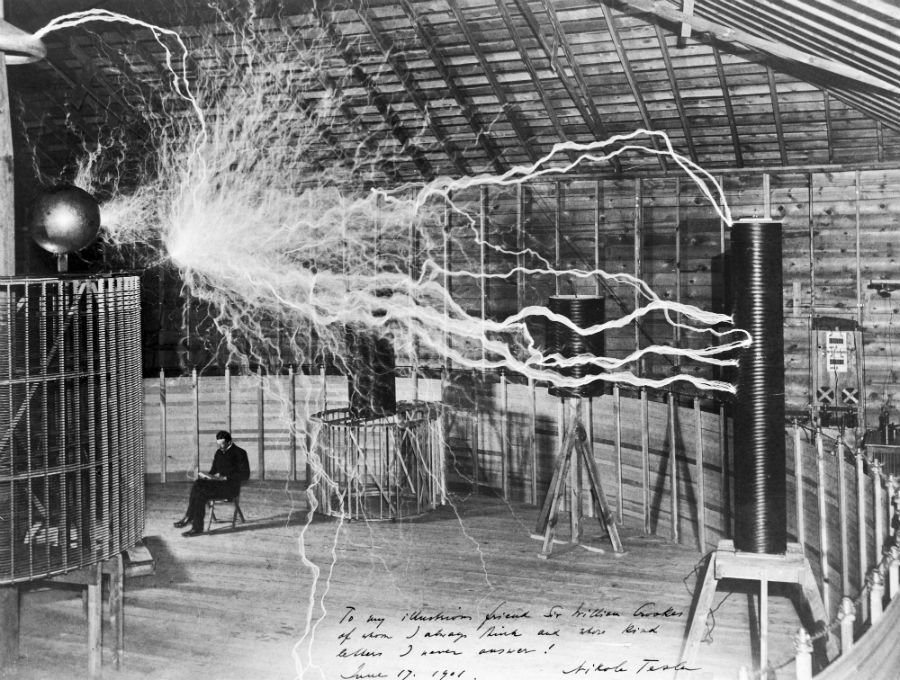
Tesla and high voltage generator
© Wellcome Images, Wikimedia
At the end of his life, the English naturalist Charles Darwin became intrigued by the musicality of worms. In the last book he ever wrote, in 1881, he describes a series of experiments on his vermicular subjects. Worms, Darwin discovered, are sensitive to vibrations when transmitted through a solid surface, but tone-deaf and unresponsive to the shriek of a whistle or the bellow of a bassoon.

Earlier, in the 1760s, the French natural philosopher Comte de Buffon heated up balls of iron and other minerals until they were white-hot. Then, by sense of touch alone, he recorded how long it took them to cool to room temperature.

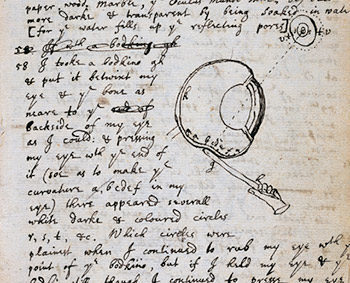
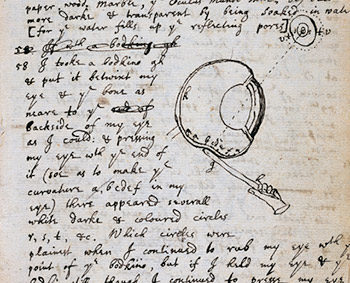
A hundred years before that, Isaac Newton wrote about the time he slid a bodkin - a kind of thick tailor's needle - between his skull and his eye, and rubbed the needle so as to distort the shape of his own eyeball.
Newton experiment
© Cambridge University Library‘An Experiment to Put Pressure on the Eye’, from Isaac Newton’s notebooks (1665-6).
These experiments are all pretty wacky, but they still bear the mark of the scientific. Each one involves the careful recording and assessment of data. Darwin was excluding the hypothesis that hearing explained earthworm behaviour; Buffon extrapolated the age of the Earth from a wide range of geological materials (his estimate: 75,000 years); and Newton's unpleasant self-surgery helped to develop his theory of optics, by clarifying the relationship between the eye's geometry and the resulting visual effects. Their methods might have been unorthodox, but they were following their intellectual instincts about what the enquiry demanded. They had licence to be scientific mavericks.

Map

Scientists are mapping an Atlas of the underworld hidden far beneath our feet

Atlas of the Underworld 0
© Utrecht University
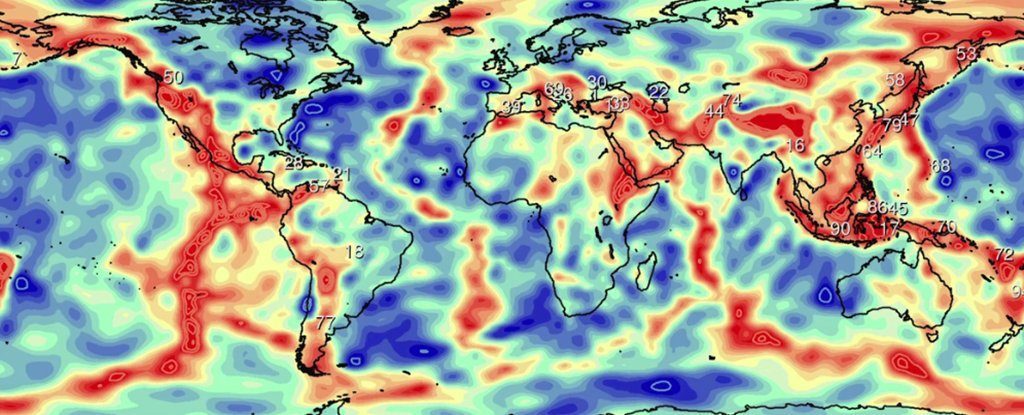
For as long as humans have been around we've been fascinated by the world hiding underneath the surface of the Earth, and now scientists are systematically mapping the positions of the tectonic plates that have been pushed deeper into the planet's core.

It's called the Atlas of the Underworld and you can view it online - measurements go down up to 2,900 kilometres (1,800 miles) in some cases. The focus is on 'dead' tectonic plates, pushed down to the bottom of the Earth's mantle and no longer part of the surface.

Boat

Russian company floats brand new hydrofoil passenger ship after two-decade pause

Kometa 120M
© Oleg Smyslov / Sputnik
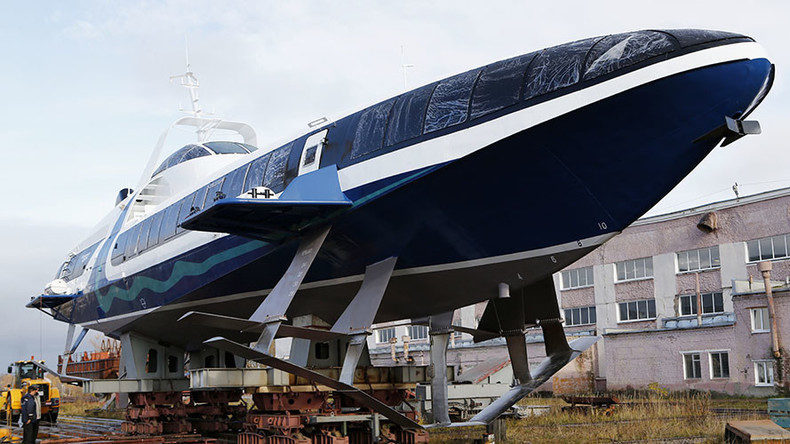
A new hydrofoil ship meant to transport up to 120 passengers along sea coast routes has been floated by a Russian producer. The design was popular in the Soviet Union, but modern Russia has not built such vessels for almost two decades.

Hydrofoil works similarly to a regular aerofoil, creating lift for a moving craft. A speeding hydrofoil ship rises above the water with only the foils staying under it, greatly reducing drag and allowing greater speeds to be reached. A French hydrofoil trimaran called "Hydroptère" set the world sailing speed record in 2009 and remains the fastest vessel in the world, with a sail of over 400 square feet.

Among the drawbacks of the design are complexity, poorer fuel efficiency compared with conventional boats and some risks when operating in littered waters or during harsh weather conditions. Still, the boats have found their use as military patrol boats, ferry vessels, leisure craft and even in water sports.